Hello! Welcome to the final lesson of our course.
In our last session, you developed a powerful evaluation framework to systematically assess new AI tools, moving from an initial triage to a deep dive on security and ROI. You now have a process to determine if a tool is worth considering.
However, in the fast-paced world of AI, a new question immediately follows: just because a tool is good, should you adopt it? This brings us to our final learning outcome: Identify when to adopt a new AI tool versus deepening expertise with existing ones.
This lesson is about strategy. We'll move beyond evaluating individual tools to building a personal policy for your "AI stack." You'll learn to resist the "shiny new object syndrome" by weighing the benefits of a new tool against the often-hidden costs of switching. This will help you decide whether to invest your time in mastering the tools you have, like Gemini Pro, or in adopting something new.
1. The Hidden Cost of "More": Tool Overload
The promise of AI is to increase productivity, but the sheer volume of new tools can have the opposite effect. Subscribing to every promising tool leads to what one expert calls "tool paralysis"—spending more time managing your AI stack than using it to create value.
This next article powerfully articulates the problem and proposes a radical solution. It will serve as the foundation for our "deepen vs. adopt" framework.
AI Tool Overload Is Killing Your Workflow
The article 'Why More AI Tools Make You Less Productive (And the 2-Tool Rule That Fixes It)' by Dr. Reza Motaghi argues that mastery of a few core tools is more effective than superficial knowledge of many.
Please read from the beginning of the article down to the end of the section titled 'The 2-Tool Rule: A Framework for Real Productivity'. Focus on these key concepts: Tool Paralysis & Cognitive Overhead: The mental cost of switching between different tools. Foundation Over Features: The idea that most AI tools are 'wrappers' around core models like those powering Gemini or ChatGPT. Depth Over Variety: The argument for building transferable skills (like advanced prompting) instead of learning tool-specific features.
The core argument is that your long-term advantage comes from building skills, not collecting tools. Your expertise in prompt engineering, designing workflows, and critically evaluating AI output will transfer to any new model. In contrast, expertise in a specific tool's interface can become obsolete overnight.
2. The Case for Depth: The Power of Context and Mastery
There are compounding benefits to sticking with a primary tool. The more you use a sophisticated chatbot like Gemini Pro, the more efficient your interactions become. This is not just about your own learning curve; it's about the value of continuity.
This next video clip explains why switching tools too often can be counterproductive.
Don’t Waste Money: Which AI Subscription Is Worth It?
In this concluding segment from 'Don’t Waste Money: Which AI Subscription Is Worth It?', Ali H. Salem offers practical advice on managing AI subscriptions. His point on context is particularly relevant.
Please watch from 00:11:39 to 00:13:19. Pay close attention to his second piece of advice: 'don't switch too often.' He explains that context and memory make a tool more valuable the longer you use it.
As the video highlights, sticking with a tool allows you to leverage:
- Context Continuity: The AI learns your preferences, style, and recurring needs from past conversations (where memory features are enabled).
- Reduced Friction: You develop "muscle memory" for how to prompt the tool effectively for your specific tasks, whether it's drafting financial commentary or brainstorming code logic. You spend less time thinking about how to ask and more time thinking about what to ask.
3. Calculating the Switching Costs
Your finance background provides the perfect lens for this decision: every choice has an opportunity cost. Adopting a new tool isn't free, even if the tool itself is. These "switching costs" can be categorized into three areas.
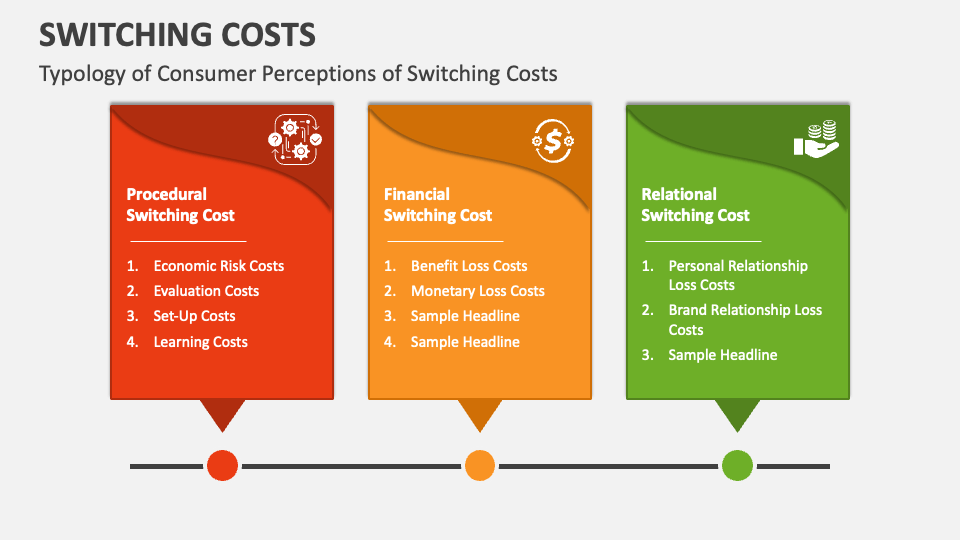
Let's translate this business concept to your AI workflow:
-
Procedural Switching Costs: These are the friction and effort involved in the transition.
- Learning Cost: Time spent learning a new user interface, unique prompt syntax, and its specific limitations.
- Set-up Cost: Time spent configuring the new tool, setting up integrations, and transferring any custom instructions or templates.
- Evaluation Cost: The time you've already invested in vetting the new tool (as we covered in the last lesson).
-
Financial Switching Costs: These are the tangible and intangible monetary costs.
- Monetary Loss: The direct cost of a new subscription.
- Benefit Loss Cost: This is a crucial, often overlooked cost. You lose the efficiency and accumulated context you've built in your current tool. Your productivity may temporarily dip as you climb the learning curve of the new tool.
-
Relational Switching Costs: These relate to the established connection with your current tool.
- Personal Relationship Loss: You lose your chat history, which serves as a repository of past work and successful prompts.
- Brand Relationship Loss: You lose the benefits of being a long-term user in a single ecosystem (e.g., the deep integration of Gemini within the Google Workspace you're already familiar with).
Before deciding to adopt, you must be confident that the new tool's benefits clearly outweigh these combined switching costs.
4. The Triggers for Change: Knowing When to Adopt
So, when is it worth paying the switching cost? Adoption should be a strategic decision driven by a clear, unmet need—not by novelty. A new tool should only be added to your workflow if it solves a problem that your current, mastered tools cannot.
The following video does an excellent job of explaining how different "everyday AI" tools have distinct strengths or "superpowers."
The Only AI Tools You Need (12-Minute Guide)
In 'The Only AI Tools You Need', Jeff Su breaks down the unique advantages of the major AI chatbots and specialized tools. This will help you identify what kind of 'superpower' might justify an adoption.
This video provides a great overview of the competitive landscape. Please watch the following segments: ChatGPT's Superpower (00:00:33 - 00:02:39): Obedience for complex tasks. Gemini's Superpower (00:02:39 - 00:04:13): Multimodality and large context. Claude's Superpower (00:05:09 - 00:07:07): High-quality first drafts, especially for code and writing. When to Adopt (00:07:29 - 00:08:05): The key principle for this lesson. Specialist Tools (00:08:31 - 00:11:35): Perplexity for search and NotebookLM for source-grounded analysis.
As Jeff Su states, "We should only add [tools] to our toolkit when they solve an actual problem we have." Based on this, here are four clear triggers that justify adopting a new tool:
-
The Capability Trigger: The tool offers a critical, game-changing capability your core tool lacks. For example:
- Your work requires analyzing a 500-page annual report in one go, and only a tool with a massive context window can handle it.
- You need to analyze a set of documents with a guarantee that the AI will only use those sources and not hallucinate, making a specialized tool like NotebookLM the right choice.
-
The 10x Workflow Trigger: The tool is not just incrementally better—it's an order of magnitude more efficient for a frequent, high-value task. For example, if a new AI coding assistant writes 90% of your Python scripts flawlessly on the first try, compared to 50% with your current tool, the time savings could justify the switch.
-
The Integration Trigger: The tool integrates seamlessly into a critical part of your workflow where your current tool can't. For instance, an AI plugin that lives directly inside a specific financial modeling software you use would be a compelling reason to adopt it for that specific context.
-
The Ecosystem Trigger: The tool is part of a broader ecosystem you are already invested in. For you, Gemini's deep integration with Google Docs, Sheets, and the broader Google ecosystem is a powerful reason to make it your primary tool. A new feature within this ecosystem is easier to adopt than a completely separate tool.
5. Your "Adopt vs. Deepen" Decision Framework
Let's synthesize this into a simple, practical decision model. When you encounter a new tool that passes your initial evaluation from the last lesson, ask yourself these questions in order:

The Decision Tree:
-
Does the new tool meet a critical need that my primary tool (e.g., Gemini Pro) cannot? (Capability Trigger)
- If Yes, proceed to question 3.
- If No, proceed to question 2.
-
Does it provide a 10x improvement for a frequent, high-value task? (Workflow Trigger)
- If Yes, proceed to question 3.
- If No, your decision is likely DEEPEN. Invest your time in mastering your current tool. The new tool offers only marginal gains and isn't worth the switching cost.
-
Do the unique benefits of this tool clearly outweigh the combined switching costs (procedural, financial, relational)?
- If Yes, your decision is ADOPT. Define its role: will it replace your primary tool or serve as a specialist tool for specific tasks?
- If No, the decision is DEEPEN. The benefits are not significant enough to justify the friction of switching.
Conclusion and Course Wrap-Up
Congratulations on completing the course! Today, you've built the final piece of your system for navigating the world of AI: a strategic framework for deciding when to adopt new tools versus when to deepen your expertise.
Key Takeaways from this Lesson:
- Favor Depth Over Breadth: Your long-term advantage lies in mastering core AI skills with a few foundational tools, not in collecting a large number of specialized apps.
- Calculate the Switching Costs: Before adopting, always account for the procedural, financial, and relational costs of making a change.
- Wait for a Clear Trigger: Adopt new tools strategically when they offer a unique capability, a 10x workflow improvement, or critical integration—not just because they are new.
Over the past seven lessons, you've gone from using AI as a simple assistant to building a sophisticated, personalized system for leveraging it in your professional and entrepreneurial life. You've learned advanced prompting techniques, harnessed the specific features of Gemini Pro, applied AI to complex finance tasks, explored the broader AI toolkit, planned for a startup, and finally, built a system to stay current.
The AI landscape will continue to change at a breathtaking pace. But the frameworks and skills you've developed—critical evaluation, strategic adoption, and a focus on building transferable skills—will remain your most valuable assets. Keep experimenting, keep learning, and keep building.