Hello! Welcome back to our study of time-related vocabulary.
In our last lesson, we took a deep dive into the individual characters 今 (jīn), 天 (tiān), and 明 (míng). We analyzed their origins, meanings, and stroke order, establishing a solid foundation. As you requested in your learning goals, this "characters-first" approach prepares us for the next logical step: combining these characters to form high-frequency words.
Today, we will do exactly that. This lesson is focused on forming two of the most essential words for daily conversation: 今天 (jīntiān, today) and 明天 (míngtiān, tomorrow). We will examine how the meanings of the individual characters logically combine, and we'll practice the correct pronunciation for each new word.
1. 今天 (jīntiān) - Today
Let's begin by forming the word for "today." This word is a straightforward combination of two characters you now know well.
- 今 (jīn): "now," "the present" — Pinyin: (first tone)
- 天 (tiān): "day," "sky" — Pinyin: (first tone)
When you combine 今 (the present) and 天 (day), you get 今天 (the present day), which logically means "today."
Pronunciation and Writing
The pinyin is jīntiān. Notice that both characters are in the first tone, so you should pronounce them with a high, flat pitch.
Let's watch a short video to hear the correct pronunciation and see the word used in context.
【NEW HSK1】 _#hsk1 _今天/jintian (today) How to Pronounce & Write Chinese Vocabulary/Character Story
This video from E's Chinese Class will help you practice the pronunciation of 今天 (jīntiān).
Watch from the beginning to 00:30. The speaker will repeat the word '今天' several times. Listen carefully and try to mimic the high, flat tones. The video also shows other time words, but for now, just focus your attention on 今天.
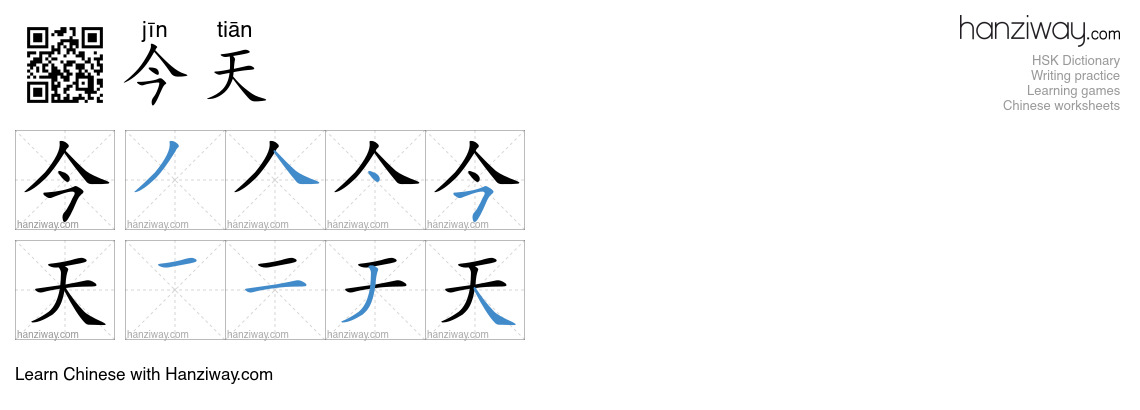
For writing, let's quickly review the stroke order for both characters. As you practice writing the full word 今天, remember to apply the left-to-right principle, completing 今 before starting 天.
2. 明天 (míngtiān) - Tomorrow
Next, we'll form the word for "tomorrow." This word is a wonderful example of the poetic logic embedded in Chinese characters.
- 明 (míng): "bright," "next" — Pinyin: (second tone)
- 天 (tiān): "day," "sky" — Pinyin: (first tone)
In the last lesson, we saw that 明 (míng) is a compound of 日 (sun) and 月 (moon), meaning "bright." When combined with 天 (day), the word 明天 (míngtiān) literally means "the bright day" or "the next day"—a hopeful way to refer to "tomorrow."
Pronunciation and Writing
The pinyin is míngtiān. This combination involves a second tone (rising) followed by a first tone (high and flat). Pay close attention to this pitch change when you practice.
The following video provides a great explanation of the character 明 and the word 明天.
【NEW HSK1】_#hsk1 _明天/mingtian/(tomorrow) How to Pronounce & Write Chinese Vocabulary/Character Story
This video, also from E's Chinese Class, breaks down the word 明天 (míngtiān).
Please watch from the beginning to 01:47. The first part (until 00:52) provides pronunciation practice for 明天. The second part (from 00:52 to 01:47) details the fascinating origin of the character 明, which should reinforce your understanding.
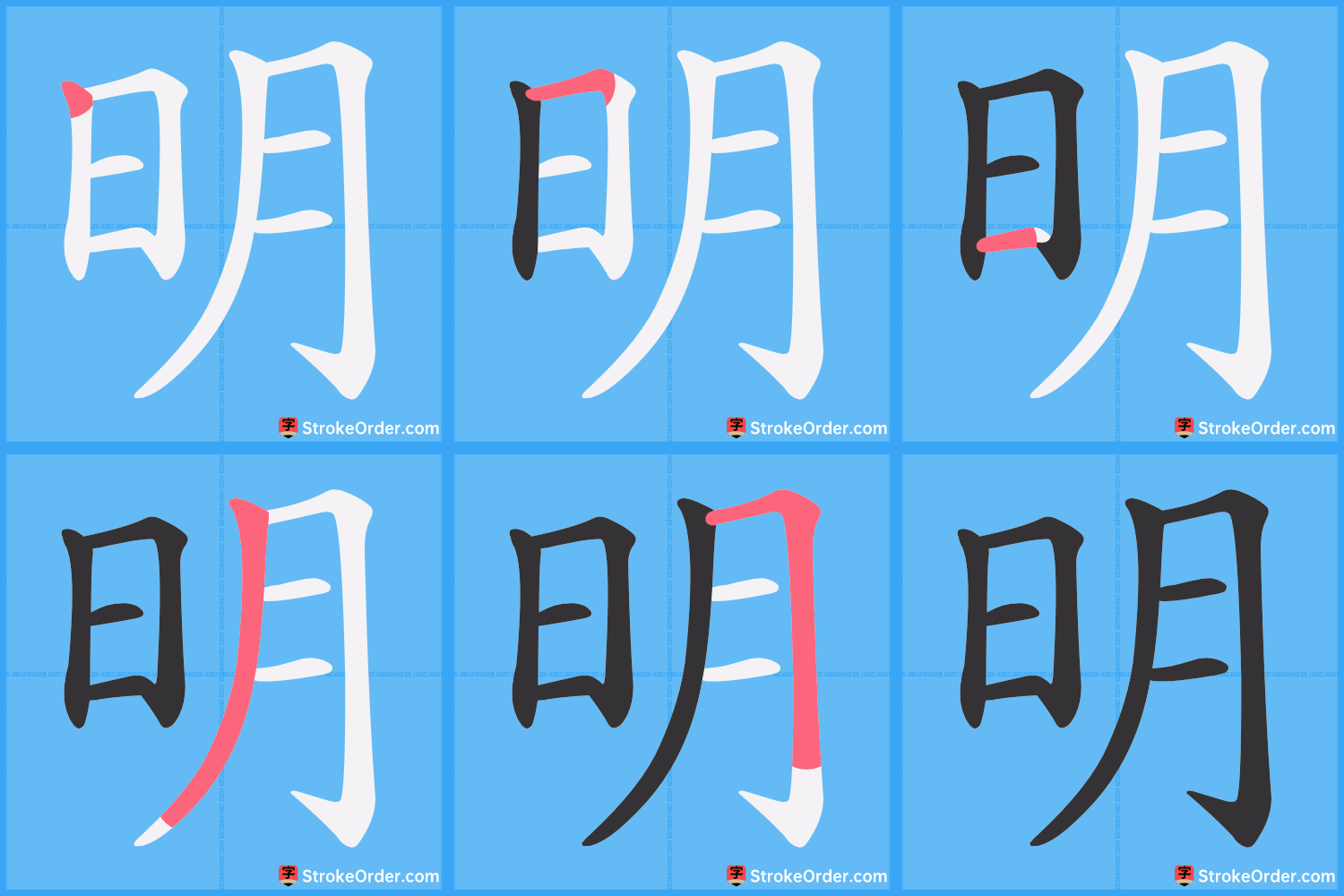
To review the writing of 明, here is the animated stroke order. It follows the left-to-right rule, where you first complete the 日 (rì) radical on the left, then the 月 (yuè) radical on the right.
Summary and Consolidation
You have now successfully built your first two time-words by combining characters you previously mastered. This process of moving from components to characters to words is the core of our structured approach.
Here is a summary of what we covered:
| Word | Pinyin | Component 1 | Component 2 | Meaning |
|---|---|---|---|---|
| 今天 | 今 (jīn) - now | 天 (tiān) - day | today | |
| 明天 | 明 (míng) - bright | 天 (tiān) - day | tomorrow |
Take a moment to review these, saying them aloud and writing them down to solidify your memory.
Conclusion
Well done. In this lesson, you have learned to form and pronounce 今天 (jīntiān) and 明天 (míngtiān). By understanding how the meaning of each word is derived from its constituent characters, you are not just memorizing vocabulary but also appreciating the internal logic of the language.
Key Takeaways:
- 今天 (jīntiān): Formed from 今 (now) + 天 (day). Both characters are first tone.
- 明天 (míngtiān): Formed from 明 (bright/next) + 天 (day). The tones are second tone followed by first tone.
- The principle of combining characters to create new meanings is a fundamental aspect of Chinese vocabulary.
Preview of the Next Lesson:
Now that you have these two essential time words, the next question is how to use them. In our next lesson, we will learn how to place time expressions like 今天 and 明天 correctly within a sentence, allowing you to start describing when actions take place. We will also learn the conjunction 和 (hé), which means "and".