Hello! Welcome back to your Chinese studies.
In our last lesson, we put together your first complete sentences by learning the fundamental Subject-Verb-Object (SVO) structure. You successfully formed sentences like 我吃饭 (Wǒ chī fàn) and 你喝茶 (Nǐ hē chá), marking a significant milestone in your ability to communicate.
Today, we will expand your action vocabulary by introducing a new, very common verb: 说 (shuō), which means "to speak" or "to say." Following your preferred analytical approach, we will begin by deconstructing this character. We'll examine its components to understand how its meaning and sound are constructed, starting with its core radical.
1. The "Speech" Radical: 讠(yán)
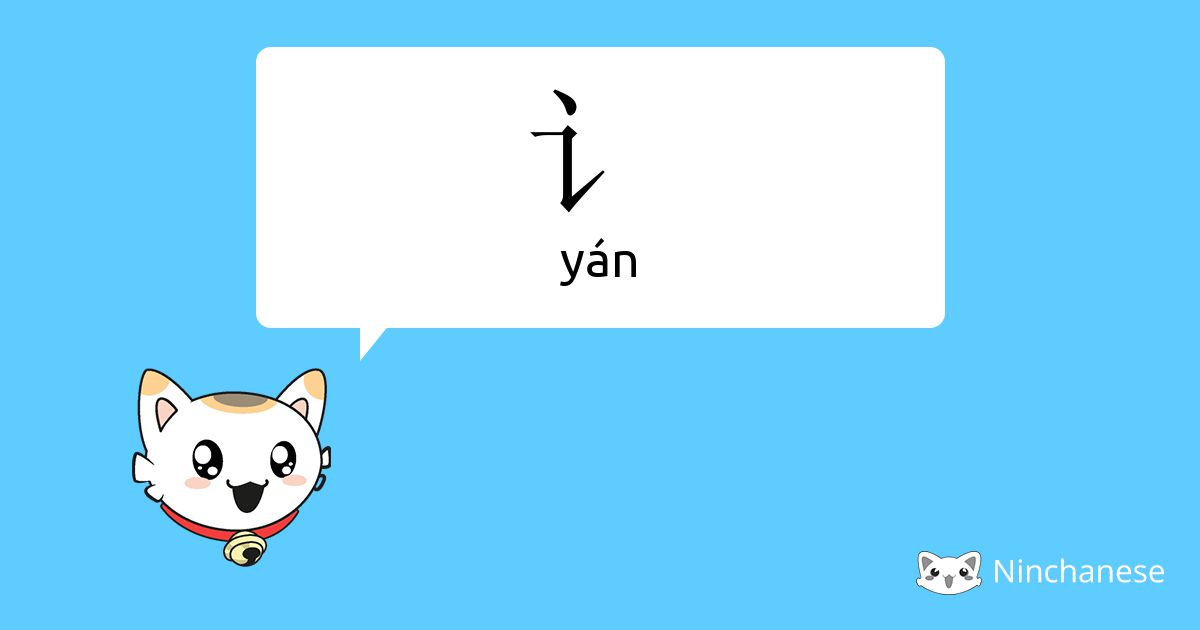
You've already seen how radicals can give clues to a character's meaning, like the "mouth" radical (口) in 吃 (chī, to eat) and 喝 (hē, to drink). Today, we'll focus on the radical for "speech."
The traditional form of this radical is 言 (yán), which is a character in its own right meaning "word" or "speech." In modern simplified Chinese, when used as a component on the left side of a character, it is written as 讠.
To explore this concept further, let's watch a short video that explains the origin of this radical.
Learn Chinese Characters | 言 讠| 说 话 讲 训 | Chinese radical 讠
The video 'Learn Chinese Characters | 言 讠' from the YiQi Hanzi channel provides a clear explanation of the 'speech' radical, from its original form to its simplified version.
Watch the following two clips: From the beginning until 00:50 to understand the origin and meaning of the character/radical 言 (yán). From 02:20 to 02:54 to see how 言 is simplified to 讠 and used as a radical in other characters.
Seeing this radical is a powerful shortcut. It immediately narrows down the possible meanings of an unfamiliar character to the domain of communication.
2. Deconstructing 说 (shuō)
Now, let's analyze the character for "to speak," 说 (shuō). This character is a perfect example of a phono-semantic compound (形声字, xíngshēngzì), the most common type of Chinese character. This structure combines a semantic component (which hints at the meaning) with a phonetic component (which hints at the sound).
For an analytical breakdown, the following reading is very helpful.
说shuō - English Meaning | HSK 1 - Mandarin Temple
The webpage from 'Mandarin Temple' clearly explains the structure of 说 (shuō).
Please read the sections titled 'About 说 shuì' and 'Etymology of 说 shuì'. Focus on how it identifies the character type, the radical, and breaks down the 'positional decomposition' into semantic and phonetic parts.
As you saw in the reading, the character 说 (shuō) is composed of two parts, arranged in a left-right structure:
-
Semantic Component (Left): 讠(yán)
This is the "speech" radical we just discussed. It tells you the character's meaning is related to speaking. -
Phonetic Component (Right): 兑 (duì)
This part provides the sound clue. While the pronunciation of 兑 (duì) isn't identical to 说 (shuō), you can hear a phonetic similarity. This is common with phonetic components; they provide a guide, not always an exact match.
So, the logic of the character is: Speech (讠) + a sound component (兑) = 说 (shuō).
To reinforce this and hear the native pronunciation, please explore the next resource.
Chinese character shuō 说 to speak
The 'Chinasage' webpage offers another clear breakdown and, importantly, includes an audio file for pronunciation and a stroke order animation.
First, read the brief text at the top, which confirms the breakdown of the character into its radical and phonetic part. Then, under the 'Pronunciation' heading, click the audio player to hear how 'shuō' is pronounced. Listen to it several times to familiarize yourself with the first tone.
3. Writing 说 (shuō)
The final step is to learn how to write the character. Writing reinforces your memory and deepens your understanding of its structure. Remember the fundamental stroke order rule: from left to right. You will write the entire "speech" radical (讠) first, followed by the "phonetic" component (兑).
The character has 9 strokes in total.
Here is an animation showing the precise stroke order for 说 (shuō).
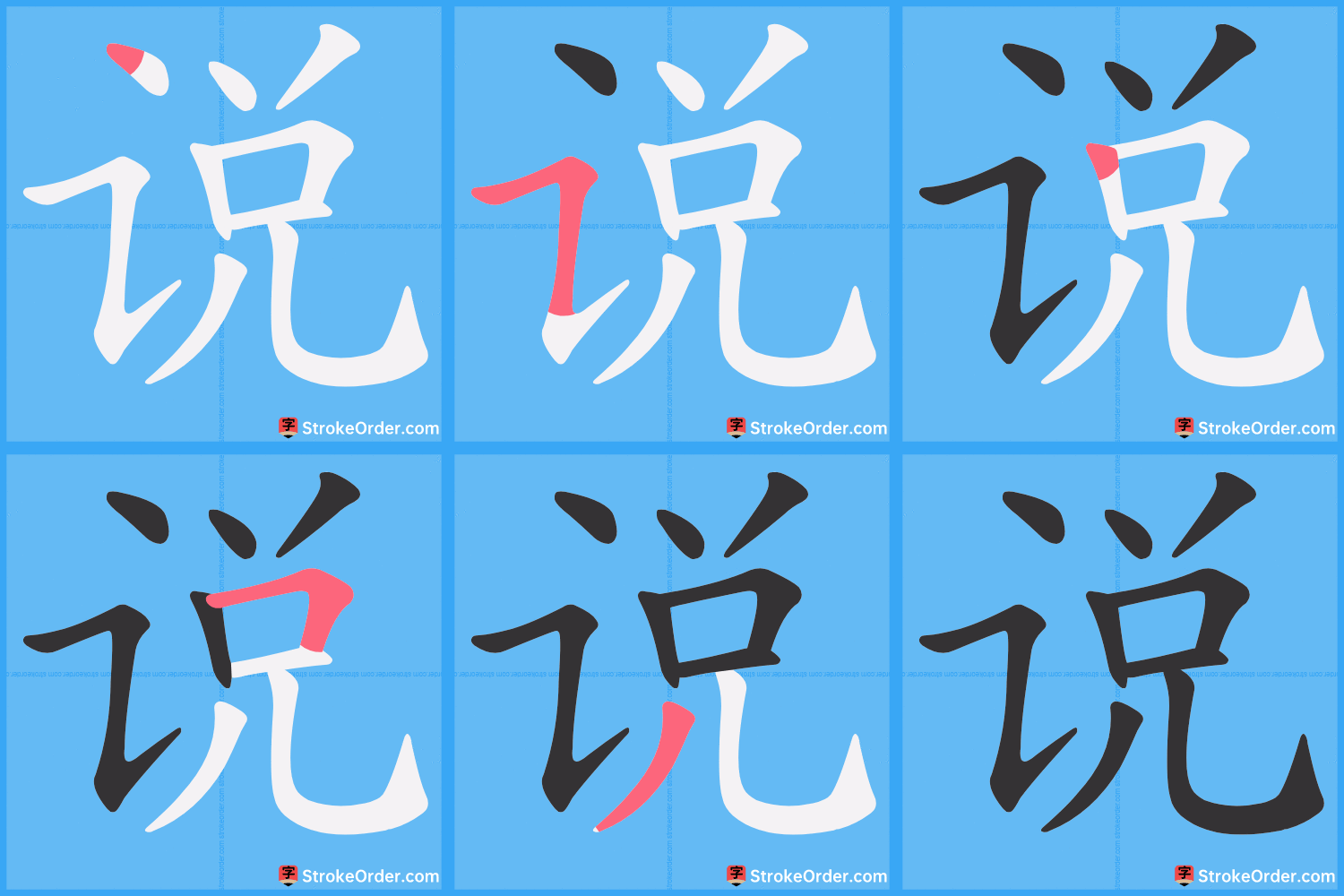
Take a moment to practice. On a piece of paper, trace the character along with the animation several times. Then, try writing it from memory, focusing on:
- The left-to-right structure.
- The correct stroke order for each component.
- Maintaining balanced proportions between the left and right sides.
Conclusion
Excellent work today. You have thoroughly analyzed and learned a crucial new verb, moving from its smallest component to its complete form.
Key Takeaways:
- The radical 讠 (yán) is the simplified "speech" radical and indicates a character's meaning is related to communication.
- 说 (shuō) is a phono-semantic compound character, combining the semantic radical 讠 (meaning: speech) and the phonetic component 兑 (duì) (sound: a clue for shuō).
- You learned to recognize and write 说 (shuō) using the correct 9-stroke order, following the left-to-right principle.
Preview of the Next Lesson:
Now that you have mastered the character 说, we will put it into action. In the next lesson, you will learn how to use it in sentences, including how to form simple negative statements like "He does not speak." This will build directly on the SVO sentence structure you already know.