Introduction
Welcome back! In our last lesson, we explored the complex web of liability and accountability, establishing that you, the clinician, remain the ultimate authority in patient care, even when using AI. We ended by asking a crucial question: when you use an AI tool, what happens to your patient's data?
That question brings us directly to today's topic. As a healthcare provider, your responsibility extends beyond clinical decisions to the safeguarding of your patient's most sensitive information. This lesson will address the learning outcome: Describe patient privacy and data protection considerations specific to AI systems.
We'll examine why AI amplifies traditional privacy risks and explore the core principles and regulations designed to protect patient data. You will learn about the key challenges that the dental community is currently navigating, from securing informed consent to determining data ownership.
Why AI Amplifies Privacy Concerns
All patient health information is sensitive and protected. However, the way AI systems function introduces unique and amplified challenges to data privacy. Health data isn't like travel or shopping data; it represents a person's most intimate stories and vulnerabilities.
To begin, let's watch a short segment from a discussion at the Harvard T.H. Chan School of Public Health that beautifully articulates the special nature of health data.
This clip emphasizes why we must treat health data with a higher level of respect and privacy, especially as we integrate new technologies.
Please watch from 00:19:12 to 00:20:20. Focus on the speaker's distinction between health data and other types of consumer data.
The speaker's point is critical. AI systems, particularly those for diagnostics, differ from other software in a few key ways that magnify privacy risks:
- Massive Data Requirements: AI models are "trained" on vast datasets containing thousands or even millions of patient records and images. The more data they have, the better they generally perform.
- Third-Party Processing: Most dental AI software is cloud-based. This means when you upload a radiograph for analysis, it is sent from your clinic to the AI company's servers. This creates a chain of custody where data could be vulnerable.
- Potential for Re-identification: Even when data is "anonymized" by removing names and birthdates, there is a non-zero risk that sophisticated algorithms could cross-reference information and re-identify an individual, especially when combining datasets.
This next video provides a clear, structured overview of these data privacy and security issues within the context of AI in healthcare.
Artificial Intelligence In Healthcare Course | Introduction To AI In Healthcare | Simplilearn
This video from Simplilearn directly outlines the data privacy challenges that arise from AI's reliance on large datasets.
Please watch from 00:30:14 to 00:31:00 and from 00:37:26 to 00:39:02. Pay attention to the specific data protection measures mentioned, such as encryption and access controls, and the major regulations cited (HIPAA and GDPR).
Core Principles and Regulations for Data Protection
Now that we understand the unique risks, let's look at the framework of rules and principles designed to mitigate them. A fantastic article in the Oral Health Group journal provides a detailed, dentistry-specific guide to these legal and ethical considerations.
Regulations and considerations needed to legally use patient data ...
This article is a comprehensive resource for understanding the legal and ethical rules governing patient data in dental AI. It will form the foundation of our discussion.
Please read the sections titled 'Introduction,' 'Key legal issues,' 'Key ethical issues,' and 'Informed Consent.' As you read, focus on: The key differences between HIPAA and GDPR. The specific challenges of getting truly 'informed' consent for AI data use. The process and importance of data anonymization.
The article you just read covers a lot of ground. Let's synthesize the key protection measures into a clear framework. These five pillars are essential for the ethical use of patient data in AI.

-
Explicit Patient Consent: As the article highlights, this is more than just a signature on a form. True informed consent means the patient understands how their data will be used to train or validate an AI, who might see it, and what the potential risks are. This is a conversation, not just a document.
-
Data Anonymization/De-identification: This is the process of stripping all personally identifiable information (PII) from patient records before they are used for AI training. Regulations like the U.S. Health Insurance Portability and Accountability Act (HIPAA) specify 18 identifiers (name, address, social security number, etc.) that must be removed for data to be considered de-identified.
-
Access Controls and Cybersecurity: When data is sent to an AI vendor, there must be strict technical safeguards. This includes encryption (scrambling the data so it's unreadable if intercepted) and role-based access controls (ensuring only authorized personnel can view the data for specific, legitimate purposes).
-
Transparency: Patients and clinicians have a right to know when AI is being used and how the data is being handled. Hiding this information erodes trust, which is the bedrock of the doctor-patient relationship.
-
Regulatory Compliance: Adherence to established legal frameworks is non-negotiable. The two most important are:
- HIPAA (U.S.): Sets the standard for protecting patient health information.
- GDPR (Europe): The General Data Protection Regulation is even stricter in some ways, granting patients the "right to be forgotten" (the right to have their data deleted upon request).
Unresolved Challenges and the Path Forward
While the principles above provide a strong foundation, AI is a rapidly evolving field that pushes the boundaries of our current rules. Several significant challenges remain subjects of intense debate.
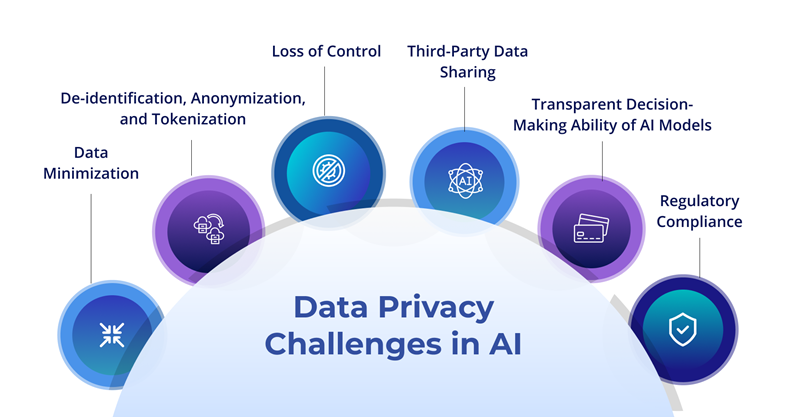
Let's focus on two of the most pressing challenges mentioned in both the Oral Health Group article and this diagram:
1. Data Ownership and Control:
Who truly owns a patient's radiograph?
- Is it the patient, because it's their personal health information?
- Is it the dental practice, which purchased the equipment and employs the staff to take the image?
- Is it the AI company, which adds value by analyzing it and uses it to improve its algorithm?
There is no simple answer, and this is a central ethical and legal problem. The GDPR leans toward patient ownership by granting them rights to access and delete their data. Clear data-sharing agreements between clinics and AI vendors are crucial to define these rights and responsibilities.
2. A Fragmented Regulatory Landscape:
As noted in the Harvard discussion video, in the U.S., the situation is complicated by a patchwork of state-level privacy laws on top of the federal HIPAA standard. This makes it incredibly difficult for developers to create products that comply with dozens of different rules, which can stifle innovation. Many experts advocate for a unified federal privacy law to create a clear, consistent standard for everyone. Professional bodies like the FDI World Dental Federation are also stepping in to provide recommendations and promote best practices in the absence of perfect legal clarity.
Conclusion
In this lesson, we've navigated the critical landscape of patient privacy and data protection in the age of AI. You've learned that while the principles are rooted in traditional medical ethics, their application requires a new level of diligence.
Key Takeaways:
- AI Amplifies Risk: The need for vast datasets and reliance on third-party cloud vendors create unique privacy challenges not present with traditional, localized software.
- Core Protective Measures: The pillars of data protection are explicit informed consent, robust anonymization, strong cybersecurity, transparency with patients, and adherence to regulations like HIPAA and GDPR.
- Unresolved Issues: The dental and medical communities are still grappling with complex questions, most notably around data ownership and the need for a more unified regulatory framework.
- Your Role: As a future clinician, your responsibility is to understand these issues, choose AI partners who prioritize data protection, and be transparent with your patients about how their data is being used to improve care.
Preview of the Next Lesson
Our discussions on liability, ethics, and privacy have set the stage for looking toward the horizon. How we resolve these challenges will directly shape the future of our profession. In our final lesson of the course, we will explore the exciting possibilities ahead as we identify emerging trends and future directions for AI in dental practice. We will look beyond today's diagnostic tools to see how AI might transform everything from treatment planning to patient communication and practice management.