Introduction
Welcome back! In our previous lesson, we detailed how to structure the equity portion of your portfolio by diversifying across geography, economic sectors, and company size. You learned that a well-diversified portfolio shouldn't be over-exposed to any single country, industry, or type of company.
This lesson builds directly on that foundation by answering the "why." Why is diversification so important? It's a tool for managing risk. Today, we will explore two of the most significant portfolio-level risks that diversification helps to mitigate: concentration risk and correlation risk.
Your goal for this lesson is to learn how to identify these risks in your own portfolio and, more importantly, how to manage them. As someone focused on personal wealth management, mastering these concepts is crucial for protecting your capital and building a resilient long-term portfolio.
Part 1: Concentration Risk - The Danger of a Single Bet
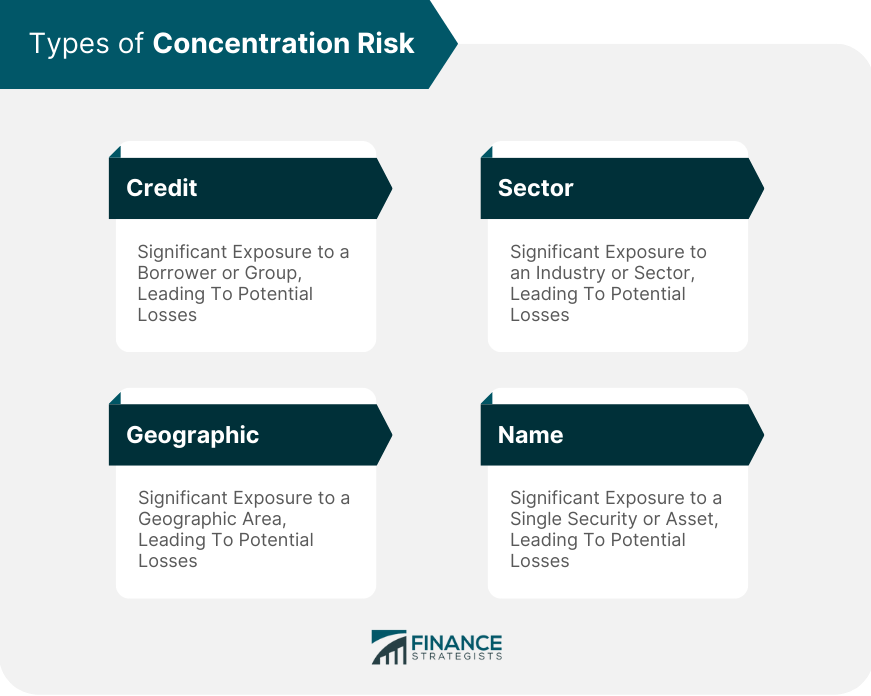
Concentration risk is the risk of amplified losses that can occur when you have a large portion of your portfolio in a single investment. While it might be tempting to "go big" on a stock you believe in, the data on individual stock performance reveals a sobering reality. This is a risk that can build up intentionally or creep in without you noticing.
To start, let's get a clear definition of concentration risk and the common ways it materializes in a portfolio.
Concentrate on Concentration Risk
This article from FINRA, 'Concentrate on Concentration Risk,' provides a concise overview of what concentration risk is and the different forms it can take.
Please read the introduction and the section titled 'The first step in managing concentration risk is to understand how it might occur.' As you read, think about how a successful stock you own could, over time, create concentration risk even if you didn't intend it to.
As the article notes, concentration can come from a winning stock growing to be a huge part of your portfolio, or from unintentionally owning many assets that are highly related, such as multiple tech funds.
The Harsh Reality of Individual Stock Returns
Your background in business and marketing gives you insight into how competitive markets are. The stock market is no different. For every major success story, there are countless companies that struggle or fail. Relying on a small number of stocks means you are betting you can pick the few long-term winners, which is statistically very difficult.
The following video presents a data-driven case for why holding concentrated positions is far riskier than most investors realize. It introduces the crucial concept of idiosyncratic risk—the unique, company-specific risks that diversification can protect you from.
The Risk of (Individual) Stocks
In 'The Risk of (Individual) Stocks,' Ben Felix uses decades of market data to show just how likely individual stocks are to underperform or even suffer catastrophic losses.
Please watch the following segments, paying close attention to the statistics presented: Uncompensated Risk (01:32 - 02:12): This part defines idiosyncratic risk and explains why the market doesn't reward you for taking it on. The Frequency of Catastrophic Loss (02:12 - 03:45): Focus on the staggering statistic about how many stocks in the Russell 3000 index experienced a permanent 70%+ decline. Positive Skewness (03:45 - 06:18): This is a key concept. Understand why the skewed nature of stock returns means that by picking just a few stocks, you are more likely to select an underperformer than an outperformer.
The key takeaways from the video are powerful:
- A large percentage (44%) of all stocks that were in a major index from 1980-2020 suffered permanent, catastrophic losses.
- Most individual stocks actually underperform the market average. The overall market's positive return is driven by a small number of "mega winners."
- This makes diversification not just a defensive move, but a strategy to ensure you capture the returns of the market's big winners, as it's nearly impossible to identify them in advance.

Managing Concentration Risk
So, how do you actively manage this risk? The FINRA article you read earlier provides a clear checklist.
Concentrate on Concentration Risk
Let's return to the FINRA article to review the actionable strategies for managing concentration risk.
Please read the section 'Tips to Manage Concentration Risk.' Note how these tips, like 'look under the hood' of your ETFs and rebalancing, directly address the issues of ETF overlap and portfolio drift we've discussed.
In practice, this means:
- Setting a Rule: As we noted in the last lesson, a common rule of thumb is to not let any single stock exceed 5-10% of your total portfolio value.
- Rebalancing: Periodically sell a portion of your oversized positions and reinvest the proceeds into underweight areas of your portfolio. This forces you to take profits and maintain your desired diversification.
- Monitoring your ETFs: Use tools to look through your ETFs and ensure you don't have hidden concentration in a few large stocks (like Apple or Microsoft) that appear in multiple funds.
Part 2: Correlation Risk - The Danger of Moving in Lockstep
Diversifying your portfolio by owning 20 different stocks seems like a good idea. But what if all 20 are in the financial sector? When an economic crisis hits, they will likely all fall together. This is correlation risk.
Correlation is a statistical measure of how two assets move in relation to each other. It's the engine of diversification. By combining assets with low or negative correlation, you build a portfolio where the failure of one part doesn't pull down the whole.
Let's get a formal definition.
How correlation impacts diversification: A guide to smarter investing
This guide from Saxo Bank clearly explains the concept of correlation and its central role in diversification.
Please read the sections 'What is correlation?' and 'Correlation in portfolio risk management.' Focus on understanding the scale from +1.0 to -1.0 and the difference between systematic and unsystematic risk.
To summarize:
- +1.0 (Perfect Positive Correlation): Assets move in perfect lockstep.
- 0.0 (No Correlation): Asset movements are random relative to each other.
- -1.0 (Perfect Negative Correlation): Assets move in exact opposite directions.
For diversification to work, you want to combine assets with correlations as close to 0 or, ideally, as negative as possible. The following video provides a great visual explanation and a simple example of why this matters for your returns.
Correlation - Constructing Portfolios with Less Risk
This video from Stock Rover, 'Correlation - Constructing Portfolios with Less Risk,' gives a practical overview of what correlation means and how it impacts portfolio volatility.
Please watch the first 3 minutes of the video (00:00 - 02:52). The example given at the 1-minute mark about a portfolio going up 20% then down 20% is a simple but powerful illustration of why reducing volatility through diversification can improve your compound returns.
The Challenge: Correlations Change
A critical point to understand is that correlations are not static. In a major market crisis, it's often said that "all correlations go to one." Assets that are normally uncorrelated can suddenly start moving together as investors sell everything indiscriminately.
The Saxo Bank article you read earlier makes this point well in its section on the limitations of correlation, noting that both stocks and bonds fell together during the high inflation of 2022, temporarily breaking their historical negative correlation. This doesn't mean diversification is useless, but it highlights that it's not a perfect shield against systematic risk (market-wide risk).
Managing Correlation Risk
Managing correlation is an active process of portfolio construction. Your goal is to build a collection of assets that are unlikely to all fall at the same time. The Stock Rover video demonstrates a practical workflow for this.
Correlation - Constructing Portfolios with Less Risk
Let's return to the Stock Rover video to see how to use correlation analysis to improve a portfolio.
Please watch these two key segments: Interpreting Correlation (04:41 - 06:55): This part gives you practical rules of thumb. For example, a correlation above 0.80 between two assets is high and might suggest one should be replaced. A Practical Example (17:32 - 20:49): This segment walks through the exact process of identifying a highly correlated stock in a portfolio and then screening for a less correlated replacement from a different sector. This is an excellent template for your own analysis.
This workflow is a powerful tool for your personal investing:
- Analyze Your Portfolio: Use a tool (many brokerages and platforms like Stock Rover or Portfolio Visualizer offer this) to generate a correlation matrix for your current holdings.
- Identify High Correlations: Look for pairs of stocks or ETFs with high positive correlations (e.g., > 0.70 or 0.80). These are your primary sources of correlation risk.
- Find Low-Correlation Replacements: If you decide to reduce a position, search for replacements in asset classes or sectors that have a low correlation with your overall portfolio (e.g., if you're heavy in tech, look at utilities or consumer staples).
- Verify: Before buying, check the correlation of the potential new asset against your existing portfolio to confirm it actually improves your diversification.
Conclusion
In this lesson, you've taken a deep dive into the "why" behind diversification. You now understand the specific portfolio-level risks that a well-structured portfolio is designed to control.
Key Takeaways:
- Concentration risk exposes you to the company-specific (idiosyncratic) risk of a single investment. Given that most individual stocks underperform the market, concentration is a statistically poor bet.
- Correlation risk is the danger that your diversified holdings will all move in the same direction, negating the benefits of diversification, especially during market downturns.
- Managing these risks is an active process. You must periodically review your portfolio to rebalance concentrated positions and intentionally seek out investments with low correlation to your existing holdings.
We've now covered the what (diversification pillars) and the why (concentration and correlation risk). In our next lesson, we will learn how to measure the outcome of these efforts. We'll explore how to calculate and interpret key portfolio risk metrics like volatility and maximum drawdown, giving you concrete numbers to assess the risk profile of your portfolio.