Hello! Welcome to the next lesson on building an exceptional experience for your beauty mini-market customers.
In our last session, we designed a loyalty program to encourage repeat business and reward your most dedicated shoppers. A key benefit of such a program is collecting customer contact information. Today, we'll learn how to use that information—and other methods—to listen to your customers.
This lesson focuses on how to establish methods for collecting customer feedback in a retail store. Hearing directly from your customers is the most powerful way to understand what you're doing right and where you can improve. For a physical store, this feedback is crucial for creating the personalized, high-quality experience that will set you apart from online-only retailers.
Drawing on your digital marketing background, you're already familiar with online feedback tools. We will bridge that knowledge to the unique environment of a brick-and-mortar store, exploring both digital and in-person strategies to gather valuable insights.
1. Why Customer Feedback is Vital for Your Store
In today's retail landscape, physical stores are making a comeback not by trying to be like online stores, but by offering something e-commerce can't: a tangible, human-centric experience. However, there's a perception gap. Many customers feel that physical stores don't understand their needs as well as online platforms do. Closing this gap is your opportunity.
48 retail survey questions for the customer feedback you need
To understand the importance of this, please read the introduction to the article '48 retail survey questions for the customer feedback you need' from Delighted.
Read the first two sections of the article, up to the heading 'What retail survey questions should you ask?'. Focus on the statistics about customer perceptions of brick-and-mortar stores.
As the article points out, over half of customers feel that physical stores don't take the time to understand their needs. By actively and systematically collecting feedback, your beauty mini-market can directly address this, showing customers you value their opinions and are committed to creating an experience they love.
2. What to Ask: The Key Areas of Feedback
Before deciding how to ask for feedback, you need to know what to ask. Your questions should be a mix of high-level satisfaction metrics and specific questions about the in-store experience.
The article from Delighted introduces four common survey-starting methods.
48 retail survey questions for the customer feedback you need
Let's continue with the same article to learn about the standard frameworks for survey questions.
Read the section 'What retail survey questions should you ask?'. Pay attention to the purpose of NPS, CSAT, CES, and Binary (yes/no) questions.
Here’s a quick summary of those metrics in the context of your store:
- Net Promoter Score (NPS): "How likely are you to recommend our store to a friend?" This measures overall loyalty and word-of-mouth potential.
- Customer Satisfaction (CSAT): "How satisfied were you with your visit today?" This gauges immediate satisfaction with a specific experience.
- Customer Effort Score (CES): "How easy was it to find what you were looking for?" This helps you identify and eliminate friction points in the shopping journey.
- Binary (Yes/No): "Did you find everything you needed today?" This is a simple way to segment customers for follow-up questions.
Beyond these initial questions, you'll want to dig into the details. For a beauty mini-market, your questions should cover these key areas:
- Product: Selection, stock levels, quality, and pricing.
- Store Environment: Cleanliness, lighting, music, and ease of navigation.
- Visual Merchandising: How appealing are the product displays and window?
- Staff: Were they friendly, knowledgeable, and helpful?
- Checkout: Was the process quick and easy?
The same Delighted article provides an excellent bank of questions you can adapt. I recommend bookmarking it for future reference.
3. How to Collect Feedback: A Multi-Channel Approach
Now for the most practical part: how do you actually get this feedback from customers in a physical store? The best strategy is to offer multiple, convenient options that blend in-person and digital methods.
In-Store and In-the-Moment Methods
These methods capture feedback while the experience is still fresh in the customer's mind.
-
Direct Conversation: Train your staff (and yourself!) to ask simple questions during checkout, especially with repeat customers. "Did you find everything you were looking for today?" or "We just got this new line in, what do you think?" is a simple yet powerful way to start a dialogue.
-
QR Codes: This is a perfect way to bridge the physical-digital gap. Place QR codes on receipts, shelves, or on a small sign by the exit. When scanned, the code can lead to a simple online survey. This is low-cost, easy to implement, and leverages a technology customers are now very comfortable with.
-
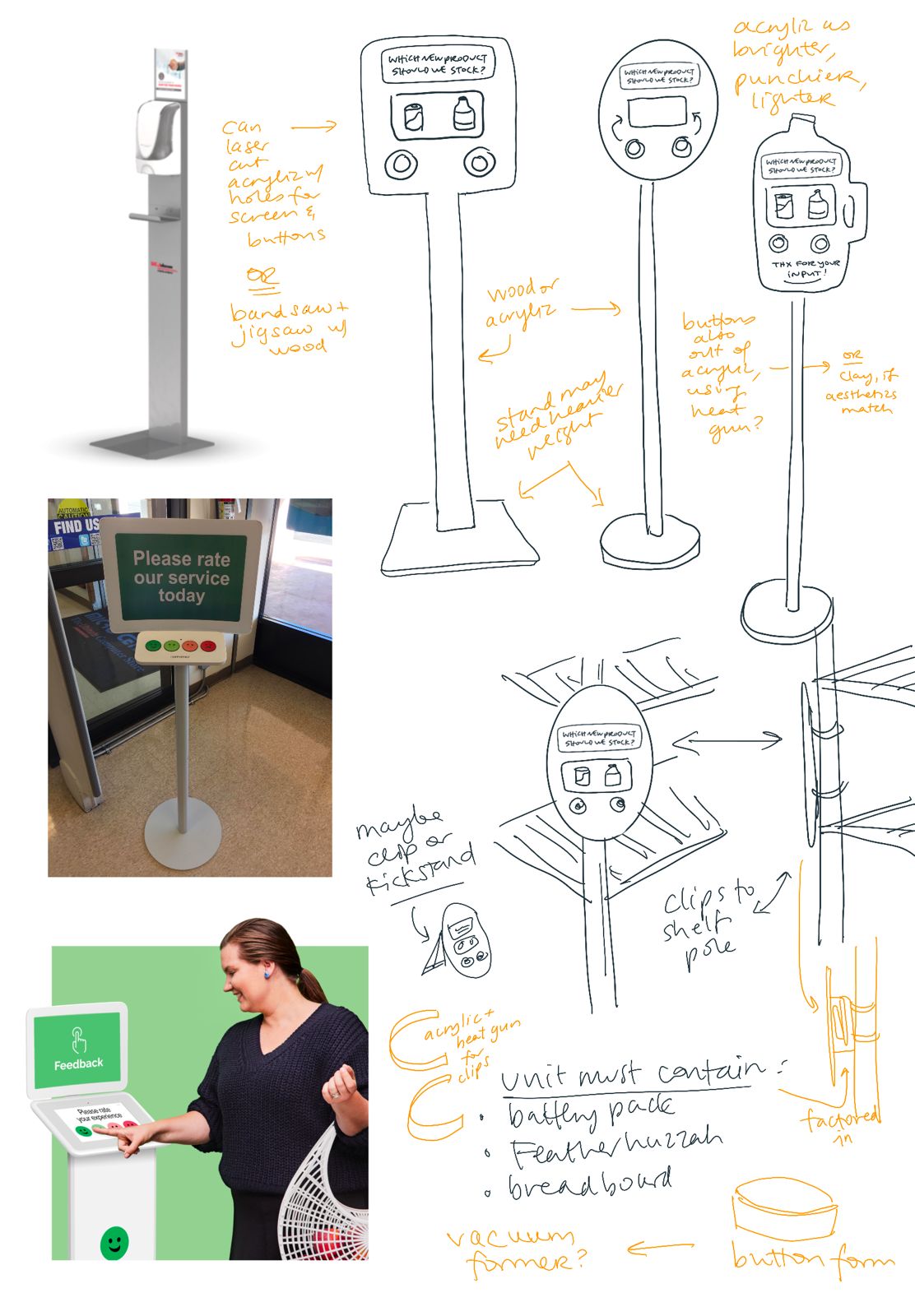
In-Store Kiosk: This doesn't have to be a big, expensive machine. A simple tablet securely mounted near the checkout or exit can serve as a feedback station. You can ask a single, quick question (like a CSAT smiley-face rating) or a very short survey.
Post-Visit Digital Methods
These methods are ideal for getting more detailed feedback after the customer has had time to reflect. This is where your digital marketing experience is a direct asset.
Surprising Ways Small Businesses Can Find Customer Success
The previous lesson on loyalty programs highlighted the importance of collecting customer emails. This short video from GoDaddy reinforces how to get that contact info and why it's so valuable for feedback.
Watch from 1:10 to 2:20. Notice the connection between signing up for a simple loyalty list and opening a channel for customer feedback.
Once you have a customer's email or phone number (with their permission, of course), you can:
- Send Email or SMS Surveys: A day after their purchase, send a short, automated email or text message asking for feedback. You can link directly to a survey or ask a simple NPS question right in the email.
- Offer an Incentive: As the Shopify article "6 Proven Ways to Get Customer Reviews" suggests, you can encourage more responses by offering a small incentive, such as 10% off their next purchase or entry into a monthly gift card drawing.
Public Online Review Platforms
Your work in digital marketing has likely shown you the power of online reviews. For a local retail store, your online profiles are not just for marketing—they are critical, unsolicited feedback channels.
6 Proven Ways to Get Customer Reviews for Your Retail Store
This article from Shopify's retail blog offers practical advice on encouraging reviews, which are a form of public feedback.
Read the sections 'How to get customer reviews' and 'Reduce friction for customer reviews'. Focus on the importance of setting up your Google Business Profile and making the review process as easy as possible.
Key Action: Before you even open, set up and claim your Google Business Profile. This is non-negotiable for a local retail business. Encourage customers to leave reviews there and on other relevant platforms like Yelp or your store's Facebook page. Monitor these platforms daily and, most importantly, respond to all reviews—both positive and negative. Responding shows that you are listening and care about the customer experience.
4. Application: Create Your Feedback Collection Plan
Let's put this into a structured plan. A good feedback system doesn't have to be complicated, but it does need to be intentional.
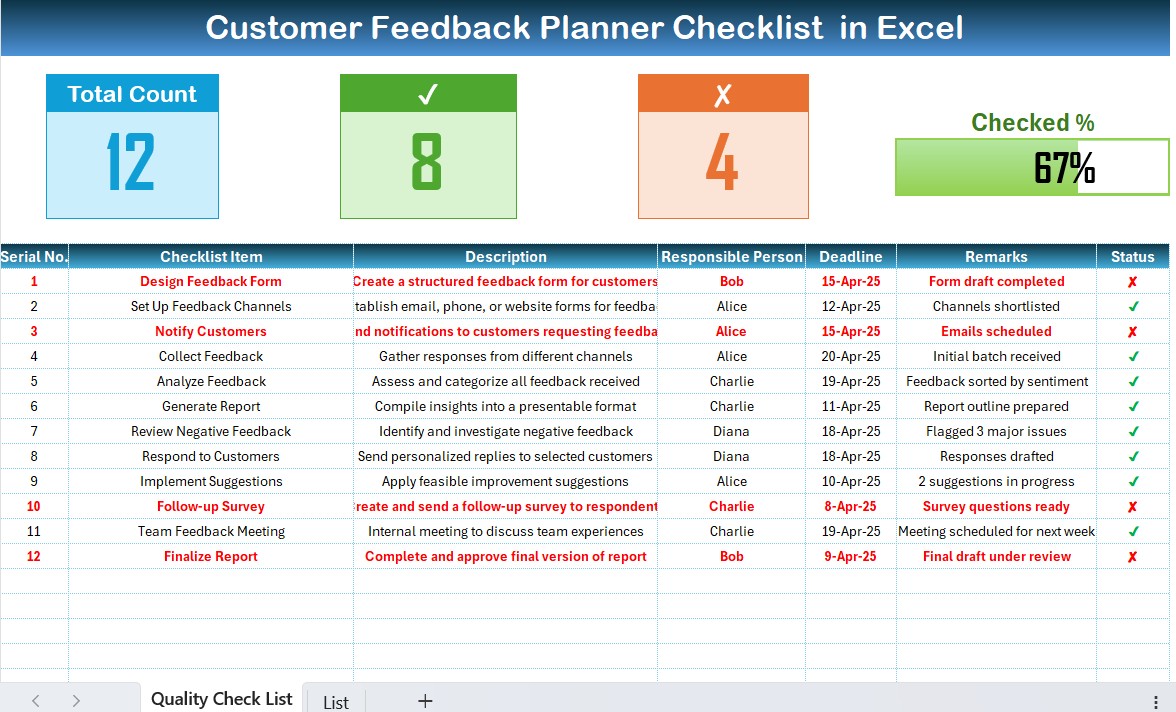
Inspired by this checklist, your task is to outline a simple, multi-channel feedback strategy for your beauty mini-market.
Exercise: Answer the following questions to create your initial plan.
-
Primary In-Store Method: Choose one primary method you will use to collect feedback inside the store. (e.g., QR code on receipts, simple tablet kiosk, personal requests at checkout). Why did you choose this method?
-
Primary Post-Visit Method: Choose one primary method you will use to collect feedback after a customer leaves. (e.g., automated email survey 24 hours after purchase).
-
Draft Your Survey Questions: Draft 3-5 key questions for your post-visit survey. Make sure they are specific to your beauty store. For example:
- Question 1 (CSAT): How satisfied were you with your overall experience today? (Star or number rating)
- Question 2 (CES): How easy was it to find the products you were looking for? (Scale from Very Difficult to Very Easy)
- Question 3 (Staff): Did our staff provide helpful advice or recommendations? (Yes/No)
- Question 4 (Open-ended): What is one thing we could do to make your next visit even better?
- Question 5 (Product): Are there any brands or product types you wish we carried?
This plan will be a crucial part of your store's operational strategy, ensuring you are constantly listening and adapting to your customers' needs from day one.
Conclusion
Establishing robust methods for collecting customer feedback is like giving your business a compass. It tells you where you are and guides you where you need to go. By blending simple in-store tactics with the digital follow-up strategies you're already familiar with, you can create a powerful listening engine for your beauty mini-market.
Key Takeaways:
- Actively collecting feedback is crucial for a physical store to compete and deliver a superior, personalized experience.
- Use a mix of methods: in-person conversations, in-store digital tools (QR codes/kiosks), post-visit follow-ups (email/SMS), and public review sites.
- Your questions should cover key aspects of the retail experience: product, store environment, staff, and overall satisfaction.
- Set up your Google Business Profile immediately and make a habit of monitoring and responding to all online reviews.
Next Lesson Preview:
Collecting feedback is the first step. The real value comes from what you do with it. In our next lesson, we will cover how to analyze customer feedback to identify and implement improvements to store operations.