Hello! Welcome to your next lesson in building and managing your beauty mini-market.
In our last session, we focused on reactive customer retention—how to turn a negative experience like a complaint or a return into a positive one. Now, we'll shift to proactive strategies for building long-term relationships.
This lesson is about how to design a customer loyalty program for repeat purchases. A well-designed program is one of the most powerful tools for turning first-time visitors into loyal, repeat customers who feel connected to your brand. For a new store, building this core group of regulars is essential for sustainable success.
Given your background in digital marketing, you're likely familiar with online loyalty systems. We'll explore how to adapt those principles for the unique, high-touch environment of a physical retail store.
1. The Value of Loyalty in the Beauty Business
Before we get into how to build a program, let's establish why it's such a critical investment. Acquiring new customers is important, but retaining existing ones is far more profitable. A loyalty program formalizes this by creating a structured system to reward and appreciate your best customers.
10 Innovative Customer Loyalty Programs (And How To Start Yours)
To start, let's watch a segment from this Learn With Shopify video. It clearly explains the business case for focusing on customer retention and the fundamental purpose of loyalty programs.
Watch from the beginning until the 3:57 mark. Pay close attention to the statistics on customer retention versus acquisition and the reasons why customers appreciate these programs.
As the video highlights, not only is retaining customers more cost-effective, but loyal customers also tend to spend more over time. This is especially true in the beauty industry.
Customer Loyalty Programs for Beauty & Cosmetics
The following article from Appstle provides context specific to the beauty and cosmetics sector. It explains how loyalty programs address the industry's unique characteristics.
Read the first two sections: 'What is a customer loyalty program for beauty and cosmetics brands?' and 'Why is a customer loyalty program essential for beauty and cosmetics brands?'. Note the points about purchase frequency and the power of brand advocacy.
For your beauty mini-market, a loyalty program will help you:
- Encourage repeat purchases for replenishable items like cleansers, serums, and foundations.
- Gather valuable data on your customers' preferences, which you can use for personalized recommendations and smarter inventory management.
- Build a community around your store, turning satisfied shoppers into vocal brand advocates.
- Compete effectively by giving customers a compelling reason to choose your store over larger chains or online retailers.
2. Common Types of Loyalty Programs
There are several ways to structure a loyalty program. Your choice will depend on your brand identity, your customers, and your operational capacity. The most common models are points-based, tiered, paid, and value-based.
10 Innovative Customer Loyalty Programs (And How To Start Yours)
Let's return to the Learn With Shopify video. This next segment provides a clear and concise breakdown of the four main types of loyalty programs, outlining their mechanics and key considerations.
Watch from 3:57 to 8:52. As you watch, think about which of these models might be the best fit for a new, small-scale beauty store.
Let's summarize these for your context:
-
Points-Based Program:
- How it works: Customers earn points for every dollar spent and can redeem them for discounts or free products. (e.g., 100 points = $5 off).
- Pros: Simple to understand and implement. Directly rewards purchase behavior.
- Cons: Can feel purely transactional if not combined with other elements.
-
Tiered Program:
- How it works: Customers unlock higher levels of status and better perks based on their spending or engagement over time.
- Pros: Creates aspiration and encourages customers to increase their spending to reach the next level. Fosters a feeling of exclusivity and status.
- Cons: Can be more complex to manage. The benefits for higher tiers need to be genuinely valuable.
-
Paid (or VIP) Program:
- How it works: Customers pay an annual or monthly fee for instant access to exclusive benefits (e.g., Amazon Prime).
- Pros: Generates a new revenue stream and identifies your most committed customers.
- Cons: A difficult sell for a new, unknown store. The value proposition must be exceptionally strong.
-
Value-Based Program:
- How it works: The program aligns with customers' values by, for example, donating a portion of their purchase to a charity.
- Pros: Builds a deep, emotional connection with customers who share your values.
- Cons: May not be a primary motivator for all customers and works best when social responsibility is already core to your brand identity.
For a new beauty mini-market, a points-based or a simple tiered program (or a hybrid of the two) is often the most effective and manageable starting point. They are easy for customers to understand and provide clear incentives for repeat business.

3. How to Design Your Loyalty Program
Now, let's move from theory to practice. Designing your program involves making a series of strategic choices that align with your brand and what your target customers will find most motivating.
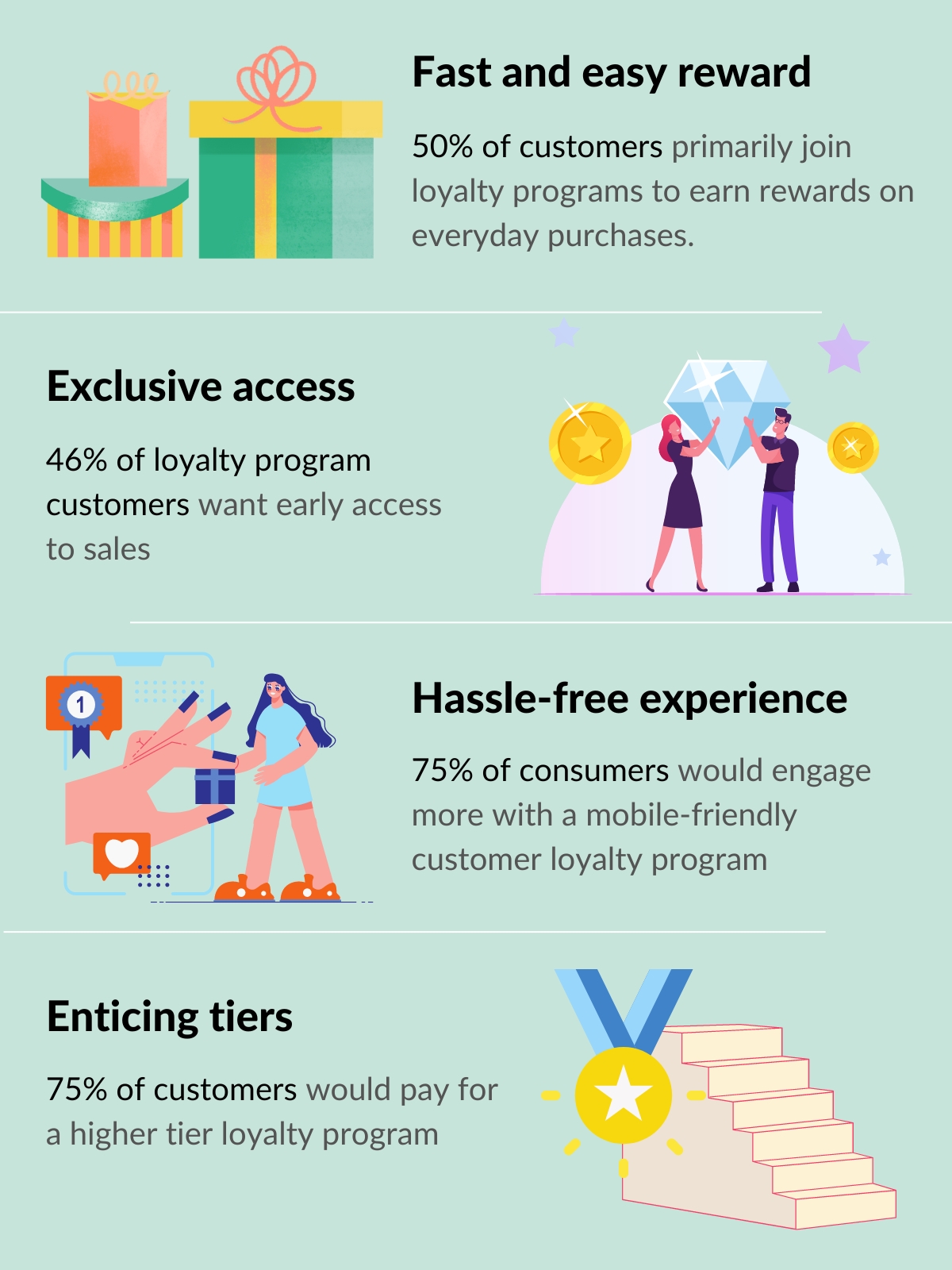
The following guide breaks down the design process into actionable steps.
Customer Loyalty Programs for Beauty & Cosmetics
This section of the Appstle article provides a fantastic step-by-step plan for creating your program. It covers everything from the initial design to promotion.
Read the entire section titled 'How to create a customer loyalty program for beauty, cosmetics and skincare brands'. Use these steps as a checklist for your own planning.
Here are the key decisions you'll need to make, tailored for your beauty mini-market:
1. Choose a Structure and Name:
- Structure: Will it be points-based, tiered, or a simple "buy 10, get one free" punch card? A hybrid model is very popular (e.g., earn points, and your point balance also determines your tier).
- Name: Give it a name that reflects your brand. Instead of just "Store Rewards," consider something more creative like "The Beauty Circle," "Glow Rewards," or similar, tying into your store's theme. The brand Blume's program, "Blumetopia," is a great example of creative branding.
2. Define Earning and Redeeming Rules:
- Earning:
- Purchases: The standard is 1 point for every $1 spent.
- Beyond Purchases: To build community, reward other actions! The article from Antavo, "Cosmetics and Beauty Loyalty Programs," suggests rewarding customers for writing product reviews, referring a friend, or following your store on social media. This leverages your digital marketing skills to drive offline loyalty.
- Redeeming:
- Discounts: e.g., 100 points = $5 off.
- Free Products: Offer specific freebies, like a travel-size product or a popular sheet mask. This is a great way to get customers to try new things.
- Exclusive Access: For top-tier members, offer early access to new product arrivals or invitations to small in-store events.
3. Incorporate Perks Specific to Beauty:
Beauty customers are often motivated by more than just discounts. Consider offering:
- Birthday Gifts: A free mini product during their birthday month is a delightful and highly personal perk.
- Free Samples: Give loyal customers first dibs on new samples you receive from suppliers.
- Personalized Service: Offer free 15-minute consultations for top-tier members.
4. Practical Implementation for Your Store
You don't need a complex, custom-built system to run an effective loyalty program. Many modern Point of Sale (POS) systems have built-in loyalty features. Alternatively, you can use standalone digital loyalty card apps.
This approach combines the convenience of digital tracking with the personal touch of an in-store experience.
GOING DIGITAL, PART1 - LOYALTY CARDS | THE PINK BEAUTIE
This video from a small business owner provides a real-world look at implementing a simple, digital loyalty card system using a service called Loopy Loyalty. It's a great example of how to manage a program without a big budget or technical team.
Watch the following clips: 0:20 - 1:25 (Why go digital?) 3:10 - 4:14 (Customizing the card) 4:14 - 4:46 (What the customer sees) 4:46 - 5:24 (How to sign up customers) This will give you a concrete idea of how these systems work for both the business and the customer.
Using a digital card that customers can save in their phone's wallet (like Apple Wallet or Google Pay) is a perfect fit for you. It bridges your digital expertise with your physical store operations, is eco-friendly, and ensures the customer always has their "loyalty card" with them.
Application Exercise
Now it's your turn to design a program. Based on what we've covered, outline a loyalty program for your planned women's beauty mini-market. Don't worry about getting every detail perfect; focus on the core structure.
Answer the following questions:
- Program Name: What will you call it?
- Program Type: Will you use a points-based, tiered, or hybrid system? Why?
- Earning Points/Status:
- How many points will customers earn per dollar spent?
- List 2-3 non-purchase activities you will reward (e.g., leaving a review, referring a friend).
- Rewards & Tiers:
- If using a points system, what are 2-3 rewards customers can redeem points for (e.g., $5 off, free product)?
- If using a tiered system, create two simple tiers (e.g., "Beauty Fan" and "Beauty VIP"). What is the spending required to reach the second tier, and what are 1-2 extra perks a VIP gets?
- Customer Onboarding: How will you sign customers up in-store? (e.g., using a QR code at the counter, sending a link via email).
Take some time to think through this. This outline will be a valuable component of your business plan.
Conclusion
Creating a loyalty program is a proactive investment in your customers and your business's future. It transforms the customer relationship from a series of individual transactions into a long-term, mutually beneficial partnership.
Key Takeaways:
- Loyalty programs are essential for customer retention in the competitive beauty market, driving repeat sales and increasing customer lifetime value.
- The most successful programs for small retail are often simple, well-executed points-based or tiered systems.
- Your program should reward more than just purchases; incentivize engagement like reviews and referrals to build a strong community.
- Modern digital tools make it easy and affordable for a small business to run a professional loyalty program without physical cards.
Next Lesson Preview:
A loyalty program helps you identify your best customers. But how do you know what they—and all your other customers—are truly thinking? In the next lesson, we will focus on how to establish methods for collecting customer feedback in a retail store to continuously improve your offerings and service.