Hello! Welcome to your next lesson.
In our last session, we focused on analyzing customer feedback to drive improvements in your store. A key insight from that process is that for a specialty store like yours, the quality of staff interaction is paramount. Customers don't just want products; they want guidance and expertise.
Today, we'll build directly on that by designing a system to deliver precisely that. Our learning outcome is to design a repeatable process for delivering personalized product recommendations to customers. This isn't about pushy sales tactics; it's about becoming a trusted advisor, which will be a major competitive advantage for your beauty mini-market.
1. The Strategy: From Transaction to Relationship with Clienteling
In your digital marketing work, you use data to create personalized user experiences. We're going to apply the same strategic thinking to the in-store experience through a practice called clienteling.
Clienteling is the process of building long-term relationships with customers by using their data—like purchase history and personal preferences—to provide tailored service and recommendations. It's the difference between a one-time sale and creating a loyal, repeat customer.
To understand this foundational concept, let's look at a brief overview.
The beginner's guide to clienteling in 2026
This guide from Tulip clearly defines clienteling and explains why it's so critical in modern retail. It will provide the 'why' behind the process we're about to build.
Please read the first two sections: 'What is clienteling, and why does it matter for your retail business?' and 'How does clienteling work in practice?'. Focus on how clienteling uses data to create a hyper-personalized shopping experience.
As the article states, clienteling transforms every interaction into an opportunity for deeper engagement. Instead of waiting for a customer to ask for help, you proactively guide them based on what you know about them.
2. The Foundation: Building and Using Customer Profiles
Effective clienteling starts with data. You can't personalize an experience for someone you don't know. The first step in our repeatable process is to systematically collect and organize key customer information.
For a small store, this doesn't require complex software. You can start with a digital spreadsheet or even physical index cards. The tool is less important than the quality of the information you gather.
So, what information should you collect?
The Store Associate's Guide to Clienteling Techniques
This article from Endear provides a fantastic, practical checklist of the information you should aim to capture in a customer profile.
Read the section titled '1. Master the Art of the Customer Profile'. Pay close attention to the bulleted list of data points, from purchase history to lifestyle indicators. This is your blueprint for what to record.
Based on that reading, a customer profile for your beauty mini-market should include:
- Purchase History: What products have they bought? How often?
- Key Concerns: What are their skin/beauty goals (e.g., anti-aging, hydration, acne control)?
- Preferences: Do they prefer vegan products? Fragrance-free? Are they drawn to specific brands?
- Personal Notes: Note their skin type if you discover it, any allergies they mention, or even a comment like "training for a marathon" (which might suggest a need for sweat-proof products).
Here's what a simple customer profile could look like:
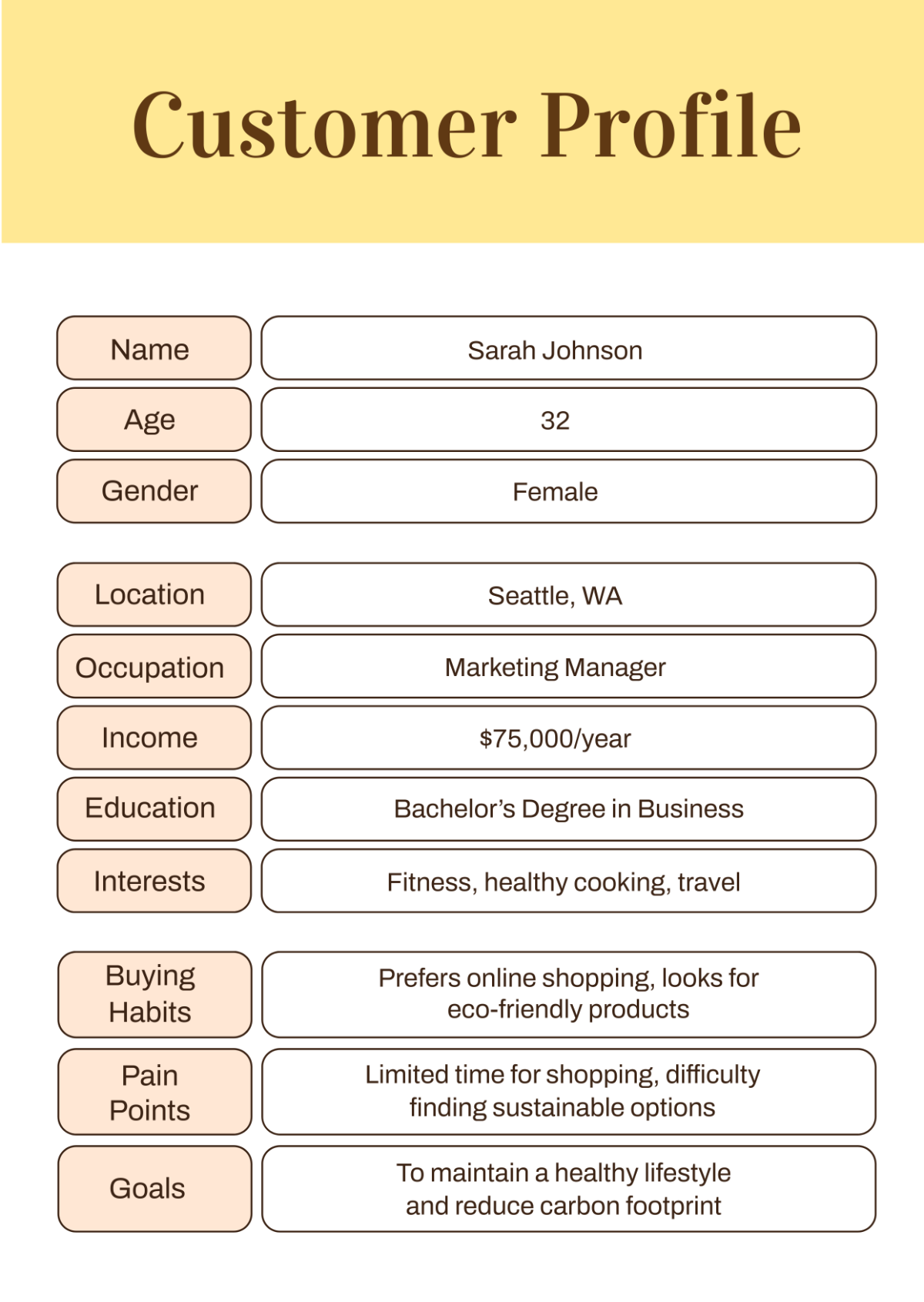
3. The Process: A 4-Step In-Store Conversation Flow
Once you have a system for capturing data, the next step is using it to guide your in-store conversations. This is where you bring personalization to life. We will model our process on the techniques used by professional estheticians, who excel at this.
HOW TO SELL SKINCARE TO CLIENTS | CONVINCE SOMEONE TO BUY YOUR PRODUCT | UPSELLING AND RETAIL
This video from esthetician Kristen Marie provides a brilliant, step-by-step demonstration of how to have a natural, helpful conversation that leads to a sale. We'll watch it in segments to break down her repeatable process.
You'll be watching several sections of this video, which will walk you through an entire client interaction, from mindset to closing the sale. I will guide you through each part.
Let's break this down into a four-step process.
Step 1: Set the Right Mindset and Open the Conversation
Before you even speak, your mindset should be one of helping, not selling. Your goal is to solve a customer's problem.
Action: Start the conversation with open-ended questions.
- Instead of: "Can I help you find something?" (which invites a "No, thanks" response)
- Try: "What brings you in today?" or "What are you hoping to work on with your skin at the moment?"
HOW TO SELL SKINCARE TO CLIENTS | CONVINCE SOMEONE TO BUY YOUR PRODUCT | UPSELLING AND RETAIL
First, watch this segment where the presenter discusses the importance of mindset and opening a genuine dialogue.
Watch from 02:36 to 04:38. Notice her emphasis on being genuine and aiming to help, not to be 'salesy'.
Step 2: Gather Information Through Active Listening
This step is about building your customer profile in real-time. Use the conversation to understand their needs, current routine, and frustrations.
Action: Listen for key phrases and repeat them back to show you've understood.
- Customer: "I feel like my skin is just so dry and dull."
- You: "Okay, so hydration and brightness are your main goals. Let's look at a few things that can help with that."
HOW TO SELL SKINCARE TO CLIENTS | CONVINCE SOMEONE TO BUY YOUR PRODUCT | UPSELLING AND RETAIL
Now, let's see how information is gathered during the service. Even though you won't be performing facials, the principles of asking questions and analyzing needs are the same at the retail counter.
Watch from 04:38 to 08:12 to see how she uses intake forms and initial consultation. Then, continue watching the role-play from 08:12 to 14:00, focusing on the types of questions she asks and how she uses the client's own words ('fine lines and wrinkles').
Step 3: Integrate Recommendations Naturally
Don't save all your recommendations for a big sales pitch at the end. Weave them into the conversation as you discuss the customer's needs.
Action: Explain the why behind each product, connecting its ingredients or benefits directly to the customer's stated goals.
- "You mentioned you're concerned about dehydration. This serum contains hyaluronic acid, which is amazing for that because it helps your skin hold onto moisture."
HOW TO SELL SKINCARE TO CLIENTS | CONVINCE SOMEONE TO BUY YOUR PRODUCT | UPSELLING AND RETAIL
This next segment of the role-play demonstrates how to talk about products and their benefits during the interaction, making the final recommendations feel like a natural conclusion.
Continue watching from 14:00 to 18:42. Pay attention to how she casually introduces different product types (cleanser, serum, SPF) and explains their purpose in relation to the client's concerns.
Step 4: Curate and Close
Instead of overwhelming the customer with options, present a small, curated selection. This showcases your expertise and makes the decision easier for them.
Action:
- Select 3 key products: A good strategy is to pick a "must-have" (like an SPF or a targeted serum), an entry-level item (like a cleanser), and a complementary product.
- Physically present them: Place the products on the counter for the customer to see and hold.
- Use an open-ended closing question: This empowers the customer to make a choice.
- Instead of: "Do you want to get any of these?"
- Try: "Which of these do you see yourself incorporating into your routine first?"
HOW TO SELL SKINCARE TO CLIENTS | CONVINCE SOMEONE TO BUY YOUR PRODUCT | UPSELLING AND RETAIL
Finally, let's watch how she closes the sale. This is a masterclass in making the final step feel helpful and pressure-free.
Watch from 18:42 to 25:05. Note how she displays the products, gives a quick recap, and uses the brilliant question: 'Which one of these do you see yourself incorporating into your routine?'
4. Completing the Cycle: Post-Purchase Follow-Up
The relationship doesn't end when the customer leaves the store. A key part of the clienteling process is the follow-up. This reinforces their purchase decision and provides another opportunity to gather data.
The Store Associate's Guide to Clienteling Techniques
The Endear article we looked at earlier has an excellent section on this final, crucial step.
Please read the section '3. Perfect the Post-Purchase Follow-Up'. Focus on the different types of follow-up, such as providing usage guidance and checking on their satisfaction.
For your store, a simple follow-up might be an email a week later asking: "Hi [Customer Name], just wanted to see how you're enjoying the [Product Name]? Let me know if you have any questions about how to use it!" This shows you care beyond the transaction and keeps the relationship warm.
Application Exercise
To put this all together, let's design the starting point of your process.
Task: Design a simple customer profile card (this could be a template in a spreadsheet or a design for a 5x7 inch physical card). List the 5-7 most important pieces of information you would want to capture for every new customer to begin offering personalized recommendations. Think back to the resources and our discussion.
This will be the foundational tool for your entire clienteling process.
Conclusion
Today you've designed a complete, repeatable process for delivering personalized recommendations—a cornerstone of the boutique experience you want to create.
Key Takeaways:
- Adopt a Clienteling Mindset: Your goal is to build long-term relationships, not just complete short-term transactions.
- Data is the Foundation: Systematically collect customer information in profiles to enable true personalization.
- Follow the 4-Step Conversation Flow: 1) Set a helpful mindset, 2) Actively listen and gather information, 3) Integrate recommendations naturally, and 4) Curate and close with open-ended questions.
- The Sale is Not the End: Use post-purchase follow-ups to strengthen the relationship and gather more feedback.
Next Lesson Preview:
Now that you have processes for improving customer experience, the next step is to measure their impact. In our next lesson, we will begin a new module on Performance Tracking, starting with how to identify key performance indicators (KPIs) for a beauty mini market. This will allow you to see exactly how your personalized recommendation strategy is affecting metrics like your conversion rate, average sale, and customer loyalty.