Introduction
Welcome back! In our last lesson, you learned how to negotiate key payment and delivery terms, which are foundational for building a healthy, long-term relationship with your suppliers. Once those agreements are in place, the focus must shift to the products themselves. The success of your beauty mini-market hinges on the trust your customers have in the quality and safety of what you sell.
This lesson is the final quality gate before a product earns its place on your shelf. Your background in digital marketing has taught you the importance of brand reputation, and in physical retail, your product quality is your brand reputation.
Today, we will focus on how to establish a process for sampling and quality-checking beauty products before stocking. By the end of this 60-minute lesson, you will have a practical, step-by-step framework to ensure every item in your store meets your high standards.
1. The Foundation of Quality: Understanding Good Manufacturing Practices (GMP)
Before we dive into the "how-to" of checking products, it's important to understand the "why." In the cosmetics industry, quality is built upon a framework called Good Manufacturing Practices (GMP). While you are a retailer and not a manufacturer, understanding GMP helps you know what to expect from a high-quality supplier and what questions to ask.
GMP is a set of guidelines that ensures products are consistently produced and controlled according to quality standards.
All About Cosmetic GMP (Good Manufacturing Practices ...
To understand these core principles, let's read an article from New Directions Aromatics titled 'All About Cosmetic GMP'. This will provide the theoretical grounding for our practical steps.
Please read the first two main sections: 'WHAT IS COSMETIC GMP (GOOD MANUFACTURING PRACTICES)?': Focus on the definitions of Safety, Consistency, and Quality. 'WHAT ARE THE BENEFITS OF FOLLOWING GMP FOR A SKINCARE OR COSMETICS BUSINESS?': Pay attention to the list of issues that can arise when GMP is not implemented.
As you read, consider this: GMP is your supplier's responsibility, but verifying it is yours. A supplier who follows GMP is less likely to have issues with contamination, incorrect labeling, or batch-to-batch variations. When you evaluate suppliers, asking if they are GMP-certified (e.g., to the ISO 22716 standard) is a powerful first step in your quality control process.
2. The "What": Building Your Quality Control Checklist
Now for the practical part. You need a systematic way to inspect product samples and, later, incoming shipments. The best way to do this is with a detailed checklist. You don't need to create this from scratch; we can adapt a professional template for your store's specific needs.
This checklist will become your master document for quality control, used both when you receive initial samples from a new supplier and when you receive a full order.
Skincare & Cosmetics Inspection Checklist and Template
The website QC Advisor provides an excellent 'Skincare & Cosmetics Inspection Checklist'. We will use this as the basis for creating your own personalized QC document.
First, review the bulleted list under the heading 'What to look for when inspecting Skincare & Cosmetics?' to see the range of possible checks. Then, read the numbered list under 'General Inspection Process' to see how these checks are put into action.
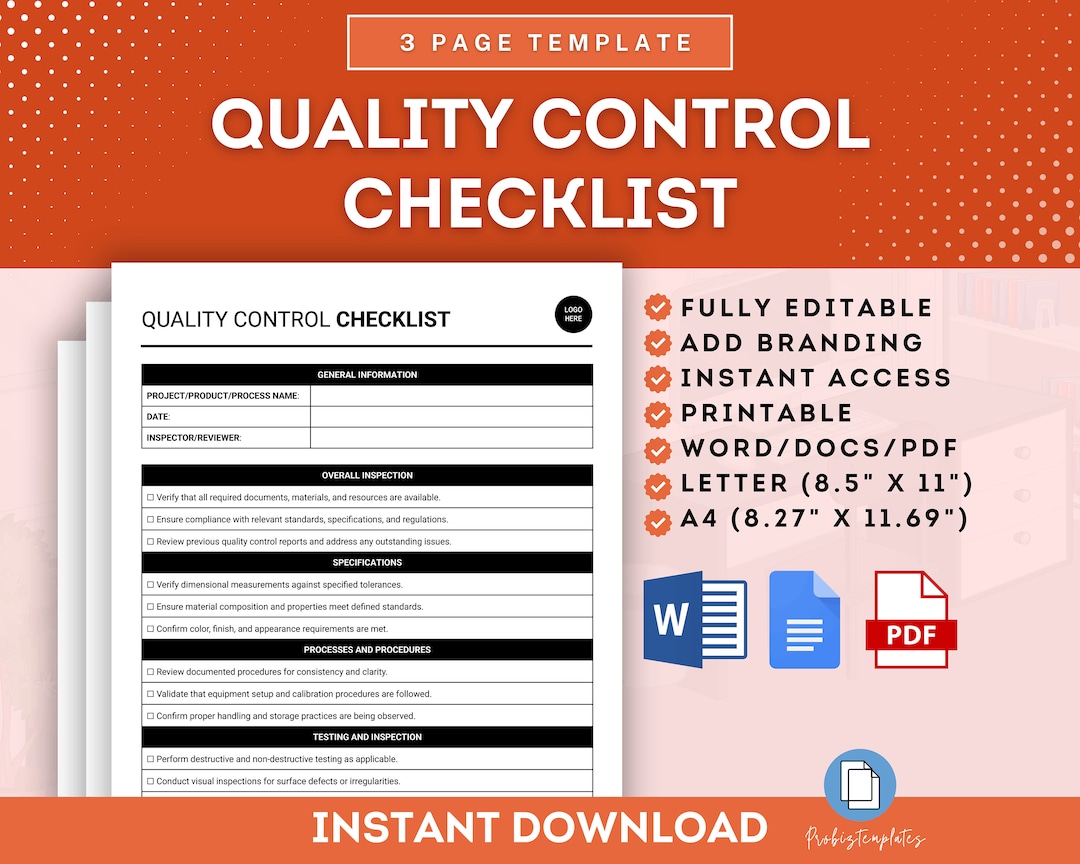
Let's organize these points into a structured checklist. Here are the key categories you should include:
Your Beauty Mini-Market QC Checklist
Part A: Packaging & Labeling (The First Impression)
- Packaging Integrity: Is the box dented, torn, or damaged?
- Seal Integrity: Is the product's safety seal present and intact?
- Labeling Accuracy: Does the label match the product? Are there typos? Is the ingredient list present and compliant with local regulations?
- Expiration Date & Batch Code: Is there a clear, legible expiration date and a batch number (for traceability)?
Part B: Product Characteristics (The Sensory Experience)
- Visuals: Is the color and consistency what you expect? Are there signs of separation or contamination?
- Scent: Does it smell right? Are there any off-putting, chemical, or rancid odors?
- Texture: How does the product feel? Is it smooth, gritty, sticky, or watery as expected?
- Quantity: Does the container feel appropriately full? (You can spot-check weight with a small kitchen scale).
Part C: Functionality & Safety (The User Experience)
- Container Quality: Does the jar, bottle, or tube feel sturdy?
- Applicator Functionality: Does the pump, sprayer, or dropper work correctly and dispense a reasonable amount of product?
- Leakage: Are there any signs of leakage around the cap or seal?
Here are some examples of what a final checklist document might look like:

3. The "How": A Step-by-Step QC Process
Having a checklist is the first step. Now, let's create the process for using it.
Step 1: Request and Test Initial Samples
Before committing to a large order, always get a final production sample from your supplier. This is the "master" sample against which all future deliveries will be judged.
- Action: Perform a full inspection using your QC Checklist.
- Action: Conduct an in-house "use test." Since you're selling beauty products, you or a small group of trusted testers should use the product for several days. Does it perform as claimed? Does it cause any irritation? The user experience is paramount.
Step 2: Inspect Incoming Shipments
When your first big order arrives, the work isn't over. You need to ensure the entire batch matches the quality of the sample you approved. You don't need to check every single item, but you must perform a spot-check.
- Action: Select a random sample from the shipment. A common practice is to check 5-10% of the units.
- Action: Perform the same QC Checklist inspection on these units. Compare them directly to your master sample. Are the color, scent, and texture identical?
Step 3: Document Everything
This is a critical step that links back to GMP principles. Keep records of your QC checks.
- Action: For each shipment, fill out your checklist and save it. If there are issues, take clear photos.
- Why? This documentation is your evidence if you need to report a problem to a supplier. It also helps you track if a supplier's quality is declining over time.
All About Cosmetic GMP (Good Manufacturing Practices ...
The importance of documentation and record-keeping is a core part of GMP. Let's revisit the GMP article to see why this is so crucial.
Quickly review the sections on 'Documentation & Records' and 'Complaints, Adverse Events, and Recalls'. The key takeaway is that systematic record-keeping is essential for identifying problems and executing recalls if necessary.
4. What If a Product Fails the Check?
It's inevitable that you will eventually encounter a quality issue. Here’s how to handle it professionally:
- Isolate the Products: Separate the affected items to ensure they don't get mixed with good stock.
- Document the Issue: Use your QC checklist and take detailed photos of the problem (e.g., a broken seal, discoloration, leaking bottle).
- Contact Your Supplier Immediately: Email your contact person with a clear, professional message. Attach your documentation.
- Refer to Your Agreement: Your supplier contract (which you negotiated in the last lesson!) should ideally have clauses covering returns, refunds, or credits for defective goods.
- Propose a Solution: State what you would like to happen. Do you want a refund for the defective units? A replacement shipment?
A reputable supplier who values your partnership will work with you to resolve the issue quickly. This is where the "win-win" relationship you've built pays dividends.
5. A Note on Lab Testing & Compliance
Your QC checklist covers things you can see, smell, and touch. But what about safety aspects you can't see, like microbial contamination or the presence of heavy metals?
This is where lab testing and compliance documentation come in. As a small retailer, you won't be conducting these expensive tests yourself. Your role is to verify that your supplier has.
Skincare & Cosmetics Inspection Checklist and Template
The QC Advisor checklist and the GMP article both mention different types of lab tests. Let's quickly review what they are so you know what to ask for.
Skim the section 'Compliance & Lab Standards for Skincare & Cosmetics' for your region (e.g., United States) to see mandatory requirements. Then, look at the list of test types under 'What is inside this checklist' (e.g., Microbiological testing, Heavy metal testing).
When you are onboarding a new supplier, ask them for:
- A Certificate of Analysis (CoA) for the product batch. This document shows the results of tests performed on that specific batch.
- Proof of GMP certification for their manufacturing facility.
- Any other relevant safety or compliance documents, such as stability testing results.
A trustworthy supplier will have this documentation readily available. If a supplier is hesitant or unable to provide it, consider it a major red flag.
Conclusion
Establishing a robust quality control process is not just a bureaucratic task; it is an essential activity that protects your customers, your investment, and your brand's reputation. It is the bridge between sourcing a product and confidently placing it in a customer's hands.
Key Takeaways:
- Understand the "Why": Familiarity with GMP principles helps you select better suppliers and set clear quality expectations.
- Build Your QC Checklist: Create a detailed checklist covering packaging, product characteristics, and functionality to systematize your inspections.
- Follow a Step-by-Step Process: Implement a clear workflow for testing initial samples and spot-checking all incoming shipments.
- Document Everything: Meticulous records are your best tool for managing supplier relationships and resolving quality issues.
- Verify, Don't Assume: Your job isn't to run lab tests but to verify that your suppliers have done so by requesting compliance documents like a Certificate of Analysis.
Preview of the Next Lesson:
Now that your high-quality products have passed inspection and are ready to be stocked, the next challenge is managing them. How do you know what you have, how much you have, and when you need to order more? In our next lesson, we will compare common inventory tracking methods to find the right system for your new beauty mini-market.