Introduction
Welcome to the first lesson of our second module, "Market Research and Business Planning." In our previous lesson, we explored the unique challenges and opportunities within the women's beauty retail industry. A key takeaway was that success often comes from serving a specific, sometimes overlooked, segment of the market rather than trying to appeal to everyone.
Today, we will turn that insight into a practical, foundational tool for your business. The learning outcome for this lesson is to define the target customer profile for a women's beauty mini-market.
Your background in digital marketing and e-commerce has likely given you experience with creating online user personas. The process we'll cover is similar in principle but tailored to the unique context of a physical retail store. We'll focus on understanding the customer not just as an online user, but as a person who will walk through your door. By the end of this lesson, you will have a clear framework for identifying and describing your ideal customer, a crucial step that will guide your decisions on everything from product selection to store design.
Part 1: What is a Customer Profile and Why Is It Essential?
A customer profile, often called a buyer persona, is a detailed, semi-fictional description of your ideal customer. It's not just a collection of data; it's a narrative that brings your target audience to life. It helps you move from thinking about a vague "market" to a specific person with needs, motivations, and pain points.
To get a formal definition and understand why this is such a critical exercise, please start with this reading from Forbes Advisor.
Customer Profile Template And Examples
This article, 'Customer Profile Template And Examples,' clearly defines what a customer profile is and outlines its strategic importance for any business.
Please read the first two parts of the article: 'What Is a Customer Profile?': Focus on the distinction between demographic information and customer behaviors/interests. 'Why Customer Profiles Are Important': Pay close attention to the benefits listed, such as 'Better Targeting' and 'Competitive Advantage'.
As the article explains, a well-defined profile allows you to make data-driven decisions. For your beauty mini-market, this means:
- Better Targeting: This influences your location choice (where does your ideal customer live or work?), product sourcing (what brands and product types solve her problems?), and marketing (how do you reach her to let her know your store exists?).
- Improved Customer Service: It helps you train staff on the specific needs and questions your customers are likely to have.
- Competitive Advantage: By deeply understanding and catering to a specific niche, you can create a loyal following that larger, more generic retailers might be ignoring.
This aligns with the Pareto Principle, or 80/20 rule, which suggests that roughly 80% of your revenue will come from 20% of your customers. By identifying and focusing on that vital 20%, you make every aspect of your business more effective.
Part 2: The Core Components of a Customer Profile
A robust customer profile is built on three pillars of information: Demographics, Psychographics, and Behaviors. Let's watch a video that provides a great overview of these components in the context of creating a beauty brand.
How to Launch A Skincare (Beauty) Brand in 2025
In this video, Kenna Whitnell explains the crucial steps of finding a niche and defining a target audience for a beauty brand. Her breakdown is directly applicable to your retail store concept.
Please watch the segment from 02:18 to 04:40. Pay close attention to the six steps she outlines, particularly the breakdown into demographics, psychographics, and shopping behaviors.
Let's break these components down further.
1. Demographics: The "Who"
This is the statistical data about your customer. It's the most straightforward information to gather.
- Age: Are you targeting Gen Z, millennials, Gen X? This heavily influences product needs (e.g., acne vs. pro-aging) and communication style.
- Location: For a physical store, this is paramount. You need to define a realistic geographic radius. Do they live in the neighborhood? Do they commute through it?
- Income Level / Occupation: This indicates their purchasing power and helps you align your product pricing.
- Education Level: This can inform the tone and complexity of your marketing and in-store communication.
- Family Status: A busy mother has different needs and time constraints than a single young professional.
2. Psychographics: The "Why"
This is arguably the most important component. It delves into your customer's inner world—their values, motivations, and lifestyle.
- Lifestyle & Interests: What are their hobbies? Are they into wellness, yoga, and natural living? Or are they high-achievers focused on performance and efficiency?
- Values & Beliefs: Do they prioritize sustainability? Are they passionate about cruelty-free products? Do they value scientific evidence in formulations?
- Pain Points: What frustrates them about their current beauty shopping experience? Do they feel overwhelmed, unseen, or confused by ingredients?
- Goals & Aspirations: What are they trying to achieve with beauty products? Is it self-expression, confidence, relaxation, or solving a specific skin concern?
3. Behaviors: The "How"
This describes your customer's actions, especially related to shopping.
- Shopping Habits: Where do they currently buy beauty products (online, department stores, pharmacies)? Do they prefer to research online and buy in-store (ROBO)?
- Purchase Influences: What convinces them to buy? Is it a friend's recommendation, an influencer's review, scientific claims, or beautiful packaging?
- Media Consumption: What social media platforms do they use? What blogs or magazines do they read? This tells you where to find them.
This article, though focused on private label, provides an excellent checklist of these identifiers. You can use it as a reference.
How to Create the Perfect Buyer Persona for Your Beauty Brand
The article 'How to Create the Perfect Buyer Persona for Your Beauty Brand' offers a concise but comprehensive list of factors to consider when building your profile.
Scan the bulleted list under the 'Where Do I Start?' section. You don't need to read the whole article, just review this list of identifiers as a practical checklist.
Part 3: A Practical Guide to Creating Your Customer Profile
Now let's move from theory to action. Creating a persona isn't just guesswork; it's a process of research and synthesis.
The video below, while from the UX design field, offers a fantastic, structured four-step process for creating a persona that is perfectly adaptable for our purposes.
How To Create A User Persona (Video Guide)
This 'How To Create A User Persona' video guide from CareerFoundry gives a clear, step-by-step method for turning raw data into a memorable and useful persona document.
Watch the following segments to understand the persona-building process: What is a User Persona? (00:38 - 01:47) The 4-Step Process Intro (03:19 - 04:13) Step 1: Header (04:13 - 05:03) Step 2: Demographic Profile (05:03 - 07:16) Step 3: End Goals (07:16 - 07:38) Step 4: Scenario (07:38 - 08:22)
Here is a summary of the process, adapted for your beauty mini-market:
- Conduct Research:
- Online: Use your digital marketing skills. Look at Google Trends for beauty terms in your target city. Analyze the followers of local beauty influencers or complementary businesses (like yoga studios or health food stores).
- Offline: This is key. Talk to people in your target demographic. Ask them about their skin, their routines, and where they shop. Observe shoppers at other beauty stores. What do they look at? What do they buy?
- Analyze and Segment: Look for patterns in your research. You might find two or three distinct groups. For now, focus on the one that seems most promising or underserved.
- Build the Persona Document:
- Give her a name and photo: (e.g., "Conscious Chloe"). This makes her real and memorable.
- Write a summary quote: A short sentence that captures her primary motivation (e.g., "I want effective products that are good for me and the planet.")
- Fill in the details: List her demographics, psychographics, and behaviors.
- Define her goals: What does she want to accomplish by shopping at your store?
- Write a scenario: A short "day in the life" story describing how and why she would visit your store.
Here are some visual examples of what a finished profile or persona can look like:
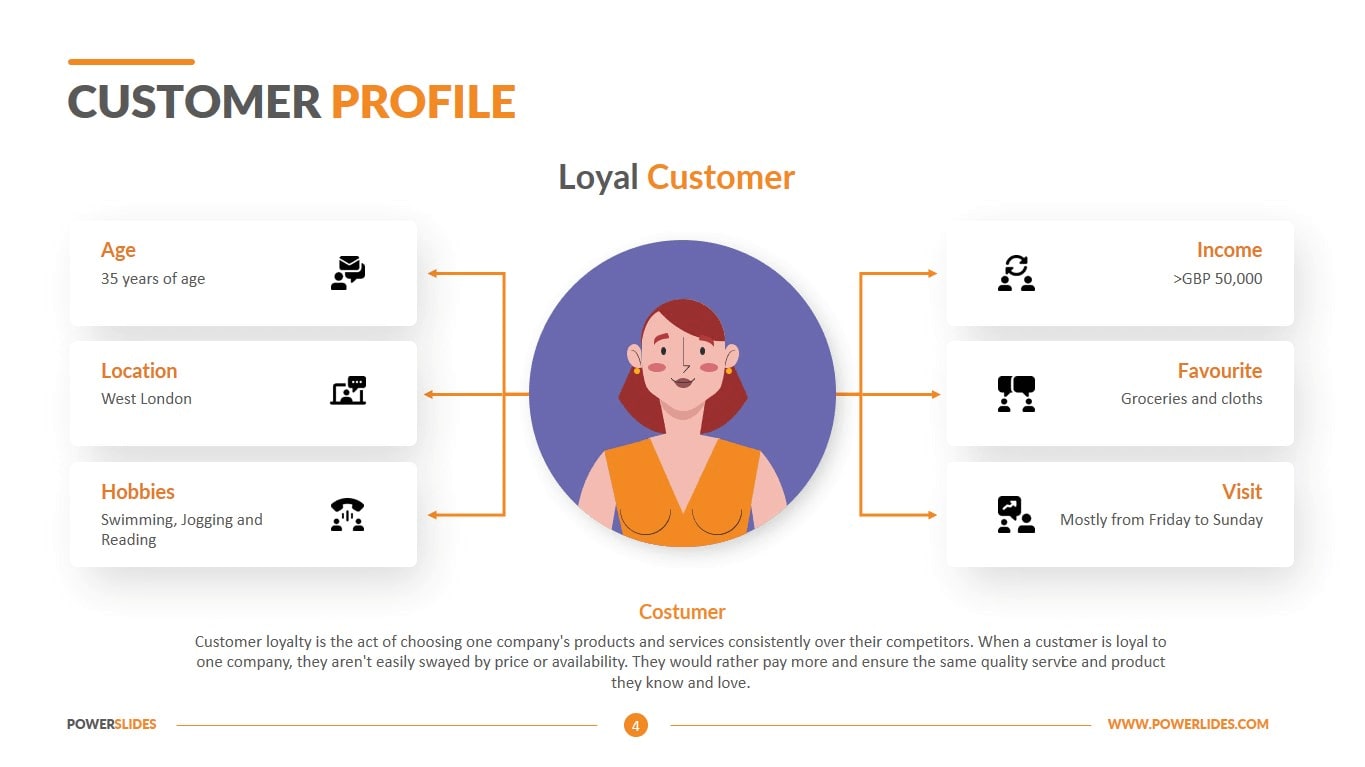

Your Action Item: Outline Your First Customer Profile
Now it's your turn. You don't need to have all the answers, but the goal is to create a first draft. Think about the women you envision shopping at your beauty mini-market.
Use the structure below to create a profile. Be as specific as you can.
My Beauty Mini-Market Customer Profile (Draft 1)
-
Name:
-
Photo/Image: (You can just describe her)
-
Summary Quote:
-
Demographics:
- Age:
- Location: (e.g., Specific neighborhood or type of area)
- Occupation:
- Income Level:
- Education:
-
Psychographics:
- Lifestyle & Interests:
- Values & Beliefs:
- Pain Points (with current beauty shopping):
- Goals (what she wants from her products/store):
-
Behaviors:
- Current Shopping Habits:
- Purchase Influencers:
- Media They Consume:
-
Scenario:
- (Write a short paragraph describing a situation where she decides to visit and shop at your store.)
Take about 15-20 minutes to work on this. This is a foundational document you will refine as you do more research.
Conclusion
In this lesson, we have established the critical importance of defining your target customer and provided a structured approach to creating a detailed customer profile.
Key Takeaways:
- A customer profile (or buyer persona) is a semi-fictional representation of your ideal customer, bringing them to life beyond simple data points.
- Creating a profile is essential for making informed decisions about your store's location, product assortment, pricing, and marketing.
- A strong profile includes three key types of information: Demographics (who they are), Psychographics (why they do what they do), and Behaviors (how they act).
- The process is iterative: you will start with research and assumptions, and then continually refine your profile as you gather more data from real customers.
Preview of the Next Lesson:
Now that you have a working hypothesis of who your customer is, the next logical step is to understand the competitive landscape. In our next lesson, we will learn how to conduct a local competitive analysis of existing beauty retailers in a given area. This will help you see where your ideal customer currently shops and how your store can offer something different and better.