Introduction
Welcome to your next lesson in the "Market Research and Business Planning" module. In our last session, you created a draft profile of your ideal customer for the beauty mini-market. This persona, let's call her "Conscious Chloe" for now, gives you a clear picture of who you want to serve.
Now, we need to answer the question: "Where does 'Chloe' shop right now, and what is that experience like?" This brings us to today's learning outcome: to conduct a local competitive analysis of existing beauty retailers in a given area.
Your background in digital marketing means you're already familiar with the principles of competitive analysis in an online space—analyzing websites, social media, and SEO. We'll leverage those skills, but our main focus will be on adapting them to the unique context of physical, local retail. We'll cover how to identify your rivals, what to look for when you're "secret shopping" their stores, and how to use that information to carve out your own unique space in the market.
Part 1: The Goal of Competitive Analysis
Before diving into the "how," let's quickly review the "why." A competitive analysis isn't about copying what others are doing. It's a strategic process of gathering intelligence to find market gaps, refine your unique value proposition, and make smarter decisions.
To get a concise overview of the process and its benefits, let's start with a short video.
7 Easy Steps on How to Perform a Competitor Analysis
This video from LYFE Marketing, '7 Easy Steps on How to Perform a Competitor Analysis,' provides a great introduction to the purpose of this exercise. It clearly explains what you can learn by looking at your competitors.
Watch the segment from 00:24 to 02:11. Focus on the key reasons for performing a competitor analysis, such as identifying what they do correctly (and incorrectly) and finding gaps in the market.
As the video highlights, for your beauty mini-market, a local competitive analysis will help you:
- Identify market gaps: Do all local stores focus on high-end luxury? Is there an unmet need for affordable, clean beauty?
- Establish your value proposition: You'll see what makes other stores successful and discover how your store can be different and better.
- Benchmark key operations: You'll get a real-world sense of local pricing, product assortment, and customer service standards.
- Inform your business plan: The findings from this analysis will be a critical component of your business plan, especially for your marketing strategy and financial projections.
Part 2: Identifying Your Local Competitors
Your competitors fall into two main categories: direct and indirect. Understanding the difference is crucial for a thorough analysis.
- Direct Competitors: These are businesses offering very similar products to the same target customer. For you, this would be other dedicated beauty stores (e.g., Sephora, Ulta, independent beauty boutiques).
- Indirect Competitors: These businesses offer different products that satisfy the same customer need or sell similar products as just one part of a much larger offering. This could include drugstores (like CVS or Walgreens with their large cosmetics aisles), department stores with beauty counters, or even a local health food store with a natural skincare section.
The following video from HubSpot explains this distinction well.
How To Conduct a Competitive Analysis (FREE Template)
In 'How To Conduct a Competitive Analysis,' the speaker from HubSpot gives clear examples of direct and indirect competitors.
Watch the section from 01:02 to 02:06. Pay attention to the examples used to differentiate between direct and indirect competitors.
Now, how do you find these competitors in a specific geographic area? This is where you'll combine your digital skills with some old-fashioned fieldwork.
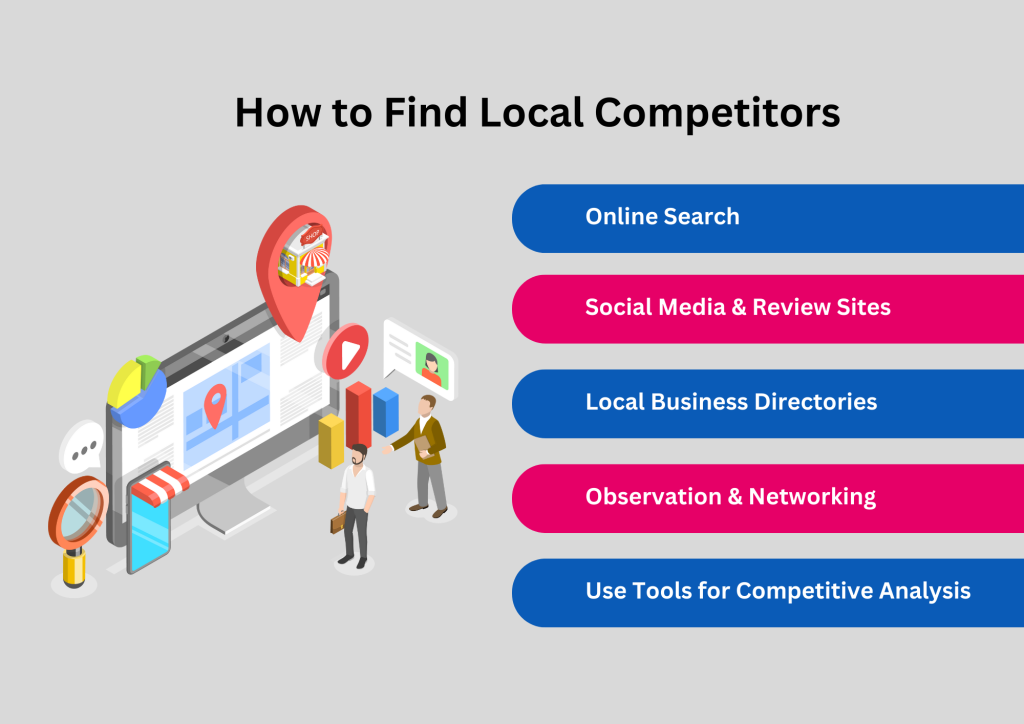
Based on this, here's your search strategy:
- Online Search: Use Google Maps and search terms your customer would use, like "beauty store near [neighborhood]," "clean skincare [city]," or specific brand names. This is your digital starting point.
- Social Media & Review Sites: Search on Instagram or Yelp for local beauty retailers. Pay attention to what customers are saying—this is invaluable data we'll use later.
- Local Directories: Check local business associations or neighborhood guides.
- Observation & Networking: This is the most critical step for offline retail. Pick a few potential neighborhoods for your store. Walk or drive around them. What stores do you see? This hands-on approach is emphasized in resources for aspiring beauty store owners. As the guide from Suplery notes, you should "visit their physical stores... this will help you figure out what other companies on the market do well and what they could do better."
Part 3: Your "Secret Shopper" Mission: What to Analyze
Once you've identified 2-3 key direct and indirect competitors, it's time to go on a "secret shopper" mission. Your goal is to experience these stores exactly as your target customer would.
To structure your observations, you can use a competitive analysis template. This helps ensure you're evaluating each competitor on the same criteria.

Using this template as a guide, here is a checklist for your analysis. It combines what you can find online with what you can only learn by visiting in person.
What to Analyze (A Checklist)
Location & Atmosphere (Offline)
- Visibility & Foot Traffic: Is the store on a busy street or tucked away? Is there a lot of pedestrian traffic?
- Accessibility: Is there parking? Is it near public transport?
- Appearance: What does the storefront and window display look like? Is it inviting?
- Ambiance: Inside, what is the lighting, music, and overall mood? Is it clean and well-organized?
Products & Pricing (Online & Offline)
- Selection/Assortment: What product categories do they focus on (e.g., skincare, makeup, haircare)? What specific brands do they carry? Are they mass-market, niche, luxury, or budget-friendly?
- Quality: Do the products seem high-quality? Are there testers available to try?
- Pricing: As recommended in the "How to start a beauty supply business" article, you should note the prices of 5-10 popular items you also plan to carry. This isn't to undercut them, but to establish a price benchmark for your area.
Service & Customer Experience (Offline)
- Staff: Are they friendly, knowledgeable, and helpful? Or are they pushy or absent?
- In-Store Experience: Is it easy to navigate the store? How are products merchandised and displayed?
- Checkout Process: Was it efficient and pleasant? Did they mention a loyalty program?
- Customer Profile: Who else is shopping in the store? Do they match the customer profile you created?
Marketing & Reputation (Online)
- Digital Presence: Analyze their website and social media. What is their brand voice? How often do they post? What kind of content do they share?
- Customer Reviews: Read reviews on Google and Yelp. What are the common themes in praise and complaints? This is a goldmine for identifying their weaknesses and opportunities for you.
Part 4: Your Action Item: Conduct Your First Analysis
It's time to put this into practice. Your task is to perform a competitive analysis of one direct competitor and one indirect competitor in a neighborhood you are considering for your store.
Use the checklist from Part 3 to guide your research. Create a simple document or use a spreadsheet to record your findings for each competitor. Don't just list facts; add your own analysis. For example, instead of just saying "They carry Brand X," write "They carry Brand X, which is a mass-market brand, suggesting they target a budget-conscious customer."
Here is a simple structure you can follow:
Competitive Analysis Worksheet
Competitor Name:
Type: (Direct/Indirect)
Location:
| Factor | Observations & Analysis | My Opportunity / Takeaway |
|---|---|---|
| Location & Atmosphere | (e.g., High foot traffic but cluttered interior. Feels overwhelming.) | (e.g., My store can offer a more curated, calm shopping environment.) |
| Product Selection | (e.g., Wide range of makeup, but very few 'clean' or vegan skincare options.) | (e.g., Major gap for a store focused on clean/sustainable beauty.) |
| Pricing | (e.g., Item A: $25, Item B: $40. Seems to be mid-range pricing.) | (e.g., My planned pricing is competitive with the local market.) |
| Customer Service | (e.g., Staff seemed busy stocking shelves, didn't offer help.) | (e.g., A key differentiator for me will be proactive, personalized customer service.) |
| Marketing & Reputation | (e.g., Strong Instagram, but Google reviews mention poor return policy.) | (e.g., I can highlight a customer-friendly return policy in my marketing.) |
Complete this worksheet for two competitors. This exercise will likely take the bulk of your study time for this lesson, as it involves both online research and a physical store visit.
Conclusion
In this lesson, you've learned how to translate the concept of competitive analysis into a practical, localized strategy for your future retail store.
Key Takeaways:
- Competitive analysis for a physical store is a blend of digital research and on-the-ground observation.
- Identifying both direct (other beauty stores) and indirect (drugstores, department stores) competitors gives you a full picture of the market.
- Conducting a "secret shopper" mission, guided by a structured checklist, allows you to analyze everything from product pricing and store layout to customer service quality.
- The goal is to synthesize your findings to identify market gaps and define how your store will offer a unique and superior experience for your target customer.
Preview of the Next Lesson:
Your competitive analysis will reveal what products are currently available in your area. The next question is, are those products what customers actually want? In our next lesson, we will focus on how to identify trending beauty product categories and customer demand patterns. This will help you ensure that the products you decide to stock are not only different from your competitors but are also in high demand.