Introduction
Welcome back! In our last lesson, you acted as a "secret shopper" to conduct a competitive analysis of local beauty retailers. That exercise gave you a clear picture of who your competitors are and how they operate. Now, we'll shift our focus from the competition to the customer by addressing a crucial question: "What do customers actually want to buy?"
This brings us to today's learning outcome: to identify trending beauty product categories and customer demand patterns.
Understanding trends is about more than just knowing what's popular on TikTok; it's about making strategic decisions for your inventory. A store filled with products that don't match customer demand is a fast track to failure. Your digital marketing background gives you a great advantage here, as you're already familiar with using online tools to gauge interest. In this lesson, we'll build on that by applying those skills to the specific nuances of the beauty industry and connecting them to a physical retail strategy.
Part 1: The Big Picture – Major Categories and Customer Mindsets
Before we dive into specific trends, let's look at the beauty market from a high level. The industry is typically broken down into four main categories: Skincare, Makeup, Hair care, and Fragrance.

As you can see, skincare is not just the largest category; it's a powerful driver of the entire market. This isn't just a statistical quirk; it reflects a fundamental shift in customer psychology.
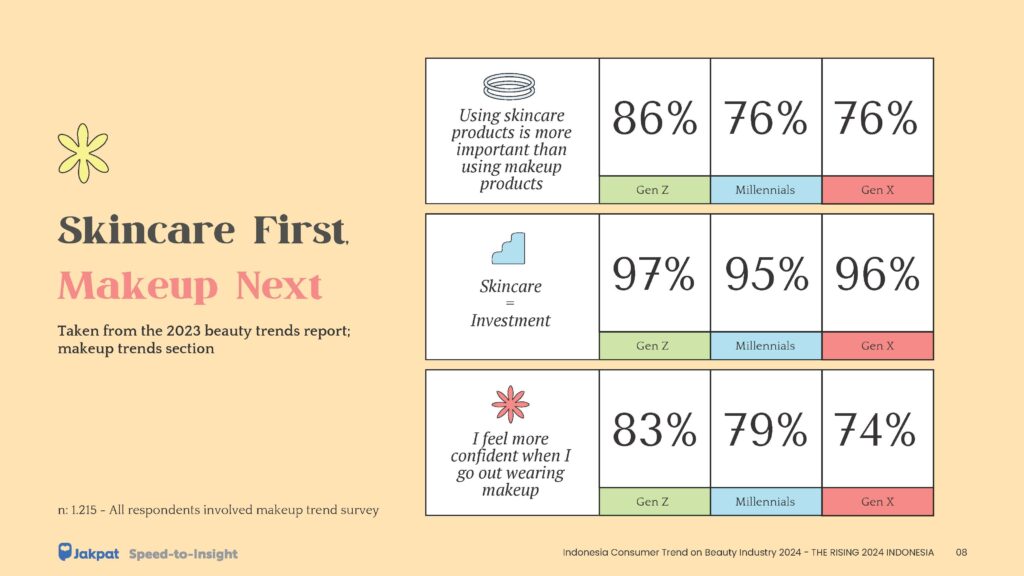
This "skincare as investment" mindset is a critical demand pattern. It means customers are often more willing to spend on products they believe are beneficial for their skin's long-term health. They see makeup as something that enhances the canvas that good skincare provides. For your mini-market, this insight suggests that a strong, well-curated skincare selection could be the cornerstone of your offering.
Part 2: Your Framework for Spotting Trends and Demand
To systematically identify trends, we need a reliable framework. We'll use a step-by-step approach that combines analyzing broad cultural shifts with understanding specific consumer behaviors.
How to Conduct a Market Analysis for Beauty Products
The article 'How to Conduct a Market Analysis for Beauty Products' from NIF Global provides an excellent, structured guide for this process. We'll focus on two key steps from this guide.
First, read the section 'Step 3: Analyze Consumer Behavior and Preferences.' Focus on the different sources you can use to gather insights, such as Google Trends, beauty forums, and product reviews. Next, read 'Step 8: Factor in Macro Trends and Cultural Shifts.' Pay attention to the examples of macro trends like 'Skinimalism' and 'Cleanical beauty.'
Let's break down those two key ideas:
-
Analyze Consumer Behavior: This is where your digital marketing skills shine. The goal is to become an expert listener.
- What are people searching for? Use Google Trends to compare search interest for terms like "retinol serum," "niacinamide," or "vitamin C." This shows you real-time interest levels.
- What are they talking about? Dive into Reddit communities like
r/SkincareAddictionorr/MakeupAddiction. People here discuss their pain points, holy grail products, and what they wish they could find—this is raw, unfiltered consumer demand.
- What do they love or hate? Read reviews on e-commerce sites for popular products. Are customers complaining that a "hydrating" moisturizer is actually drying? That's a demand pattern for a better product.
-
Monitor Macro Trends: These are the big-picture cultural currents that shape which products become popular. The article mentioned several key examples:
- Skinimalism: A "less is more" approach. Customers want multi-tasking products (e.g., a tinted moisturizer with SPF) to simplify their routines.
- Cleanical Beauty: A hybrid of "clean" (non-toxic ingredients) and "clinical" (scientifically proven efficacy). Customers want products that are both safe and effective, with brands being transparent about their formulas.
- Sustainability: Demand for refillable packaging, waterless formulas, and ethically sourced ingredients is growing rapidly.
- Inclusivity: Brands that offer a wide range of shades and cater to diverse skin types, ages, and genders are winning customer loyalty.
Part 3: Current Trends in Action
Now let's look at how these macro trends are playing out in the market right now.
Looking Ahead: The Top Five 2026 Retail Beauty Trends
The article 'Looking Ahead: The Top Five 2026 Retail Beauty Trends' from WWD gives concrete examples of the trends shaping the industry. It's a great resource for seeing what's resonating with consumers today.
Please read the following three sections: 'Trend 3: K-beauty Reigns Supreme,' 'Trend 4: Indie Beauty Revolution,' and 'Trend 5: Cautious Consumers and Rising Prices.' As you read, think about how these specific trends connect to the broader macro trends we just discussed.
Let's connect the dots between these specific industry movements and the macro trends:
- K-Beauty's Dominance (Trend Example): Korean beauty is a perfect example of the "Cleanical" trend in action. K-beauty brands are known for ingredient innovation (like ginseng and fermented extracts), effective formulas, and accessible prices. This combination of quality and value directly meets the demands of the modern, educated consumer.
- The Indie Revolution (Trend Example): The rise of independent brands speaks to the trends of Inclusivity and Sustainability. Indie brands are often created to fill a specific need overlooked by large corporations (e.g., makeup for very dark skin tones, products for menopausal skin). They also tend to have more personal founder stories and can be more agile in adopting sustainable practices, which builds a strong connection with value-driven customers.
- Cautious & Educated Consumers (Trend Example): This reinforces everything we've discussed. Consumers today are "cautious" because they are armed with information. They research ingredients, demand clinical proof of a product's claims ("product efficacy"), and gravitate toward brands that are transparent. This is why "derm-backed lines" and products with clear ingredient callouts are gaining so much traction.
Part 4: Your Action Item - Finding Your Niche
Understanding these trends is the first step. The next is to use them to carve out a unique space for your store. This is where you identify "white space"—an unmet need in your local market.
Let's revisit the NIF Global article one more time.
How to Conduct a Market Analysis for Beauty Products
The concept of finding 'white space' is about turning your research into a strategic advantage.
Please read the short section 'Step 5: Identify Market Gaps and White Space Opportunities.' This will help you frame your final task for this lesson.
Your task is to connect the trends we've discussed with the competitive analysis you performed in the last lesson. You will create a Trend & Opportunity Matrix to identify potential "white spaces" for your beauty mini-market.
Create a simple document or spreadsheet with the following columns:
| Trend | Description & Key Product Examples | How it fits "Conscious Chloe" | Local Competitor Gap |
|---|---|---|---|
| Cleanical Beauty | (e.g., Safe, effective formulas. Products like evidence-based serums, gentle exfoliants with proven actives.) | ||
| K-Beauty Innovation | (e.g., Focus on hydration, unique textures. Products like essence, sleeping masks, innovative sunscreens.) | ||
| Indie Brand Focus | (e.g., Niche, story-driven brands. Products from small-batch, local, or founder-led companies.) | ||
| Sustainable Beauty | (e.g., Eco-conscious practices. Products with refillable packaging, waterless formulas, or plastic-negative certification.) |
Instructions:
- Fill out the matrix for at least three of the trends listed.
- How it fits "Conscious Chloe": Based on the customer profile you created, explain why this trend would appeal to her. What are her values or needs that this trend addresses?
- Local Competitor Gap: This is the most important part. Thinking back to your "secret shopper" mission, where are your competitors failing on this trend? For example: "The local drugstore has a huge beauty aisle, but almost no brands that are certified cruelty-free or use sustainable packaging." or "The high-end boutique carries luxury brands, but they aren't transparent about their ingredients."
This matrix will be a foundational document for you, helping you move from broad ideas to a concrete product strategy that is both in demand and differentiated from your competition.
Conclusion
Great work today. You've moved from analyzing competitors to decoding what truly drives customer demand in the beauty space. This is a critical skill for curating an inventory that will excite your customers and fly off the shelves.
Key Takeaways:
- Customer demand in beauty is shifting towards "skincare as an investment," prioritizing health and efficacy.
- You can identify trends by analyzing both macro cultural shifts (like sustainability and inclusivity) and specific consumer behaviors (through online searches, forums, and reviews).
- Current, actionable trends include the innovation of K-Beauty, the authenticity of Indie Brands, and the demand for "Cleanical" (clean + clinical) products.
- The ultimate goal is to use this trend analysis to find the "white space"—the unmet need in your local market that your store is uniquely positioned to fill.
Preview of the Next Lesson:
Now that you have a better idea of the types of products you'll want to stock, the next logical question is: "How much will it all cost?" In our next lesson, we will tackle that head-on as we learn how to estimate the startup costs for your beauty mini-market, including initial inventory, rent, and other essential expenses.