Introduction
Welcome back! In our last lesson, you created a Trend & Opportunity Matrix, identifying potential "white space" in your local market by connecting beauty trends to your target customer, "Conscious Chloe." This strategic thinking is the foundation for curating a product selection that will set your store apart.
Now, we move from the what to the how much. This brings us to today's learning outcome: to estimate the startup costs for a beauty mini-market.
Coming from a digital marketing and e-commerce background, you're familiar with startup costs like web development, ad spend, and software subscriptions. In physical retail, the landscape is different, dominated by major investments in a physical location, inventory, and operational infrastructure. This lesson will provide a structured way to understand and budget for these new categories of expenses. By the end of our 60 minutes, you'll have a comprehensive checklist and a template to build your own preliminary startup budget.
Part 1: The Three Pillars of Your Startup Budget
Before we get lost in the details, it's helpful to have a high-level framework. Most retail startup budgets can be broken down into three core components.
Starting Your Beauty Supply Store: What You Really Need to Know
To understand this framework, let's watch a segment from 'The Retail Genius'. The speaker clearly explains the three main pillars of a beauty supply store's budget and provides helpful percentage estimates for each.
Please watch the video from 04:47 to 08:25. As you watch, take note of the three main categories he discusses: inventory, build-out, and working capital. Pay attention to the role each one plays in a successful launch.
As the video explains, your budget isn't just one big number. It's a strategic allocation across three critical areas:
- Build-out & One-Time Expenses (~15-20%): This is the cost to prepare your physical space. It includes everything from major renovations and construction to purchasing fixtures, equipment, and signage. These are typically one-time, upfront costs.
- Initial Inventory (~30-40%): This is the single largest investment for many retailers. It's the cost of the products that will fill your shelves on opening day.
- Working Capital (~10-15% or 3-6 months of expenses): This is your operational runway. It's the cash reserve you need to cover all your monthly expenses (rent, utilities, payroll, etc.) while you build your customer base and before your store becomes profitable. Underestimating working capital is a common and critical mistake for new business owners.
Part 2: A Detailed Checklist of Startup Costs
With that framework in mind, let's break down the specific line items you'll need to account for. We'll use a combination of real-world experience and structured guides to build a comprehensive checklist.
Category 1: The Physical Space
This category covers everything needed to get your location ready for customers. It includes:
- Lease Deposits: Typically 2-3 months of rent paid upfront to secure your lease.
- Build-out/Renovations: Costs for flooring, lighting, painting, plumbing, and any structural changes.
- Fixtures & Displays: Shelving, product displays (gondolas), a sales counter, mirrors, and customer seating.
- Signage: The main sign on the exterior of your store. This is often more expensive than people expect.
Category 2: Initial Inventory
As we just learned, this is a huge part of your budget. The key is to balance variety with depth without overspending before you have sales data.
The True cost of opening a beauty supply store/ industry average/ minimum you can have to open
For a real-world perspective on budgeting for inventory, the owner of Beauty Supply Insider shares a candid look at her experience. She discusses minimum order quantities (MOQs) and her strategy for stocking a new store.
Watch the segment from 15:18 to 18:46. Notice her advice on how many vendors to start with and her thought process for building out her product assortment over time.
Category 3: Technology, Operations & Legal
These are the essential systems and administrative costs to operate legally and efficiently.
- Point-of-Sale (POS) System: The hardware (register, scanner, receipt printer) and software for processing sales and managing inventory.
- Security System: Cameras and alarms to protect your inventory.
- Back Office Equipment: A computer, printer, and basic office furniture.
- Business Registration & Licensing: Fees to legally establish your company and get the necessary local, state, and federal permits to operate a retail business and sell cosmetics.
- Business Insurance: Liability insurance is essential for a physical store.
- Professional Fees: Costs for lawyers (to review your lease) or consultants, if you choose to use them.
To see these categories with some sample numbers, the following guide provides an excellent itemized breakdown.
Beauty Supply Store Startup Costs: $121K CAPEX Guide
The 'Beauty Supply Store Startup Costs' guide from Financial Models Lab offers a detailed, checklist-style breakdown of the expenses we've just discussed. While their total estimates are for a larger store, the individual cost categories are a fantastic reference.
Please read through the sections titled 'Startup Cost 1' through 'Startup Cost 6'. Focus on the lists of items and the descriptions under each heading (e.g., Renovation Scope, Fixture Budget Check, etc.). This will help you populate your own budget spreadsheet.
Part 3: Right-Sizing Your Estimate for a "Mini-Market"
The figures in some of these resources—ranging from $75,000 to over $150,000—can feel intimidating. However, it's crucial to remember that these often assume a larger, more traditional beauty supply store model. Your goal is to open a mini-market, which gives you the flexibility to start smaller and more focused.
The cost to open your store is directly tied to your vision. A smaller, curated "accessory-style" boutique will have a vastly different startup cost than a large, "over-the-counter" store that tries to stock everything.
How Much Money Do I Need to Open a Beauty Supply Store?
To put this in perspective, let's look at a report from the Beauty Supply Institute. It breaks down cost estimates based on different store concepts.
Read the sections on 'ACCESSORY STORE' and 'OVER-THE-COUNTER STORE' (pages 5-6). Note the significant difference in the estimated startup costs. This illustrates how a focused product strategy—like the one you started developing in the last lesson—can lead to a more manageable initial investment.
By focusing on a niche (e.g., clean beauty, indie brands, or K-beauty) for your mini-market, you can launch with a smaller footprint and a more targeted inventory, bringing your startup costs closer to the lower end of the spectrum.
Part 4: Your Action Item - Create Your Startup Cost Spreadsheet
Now it's time to put this all together into a practical tool. You will create a preliminary budget spreadsheet. This document will become a cornerstone of your business plan.
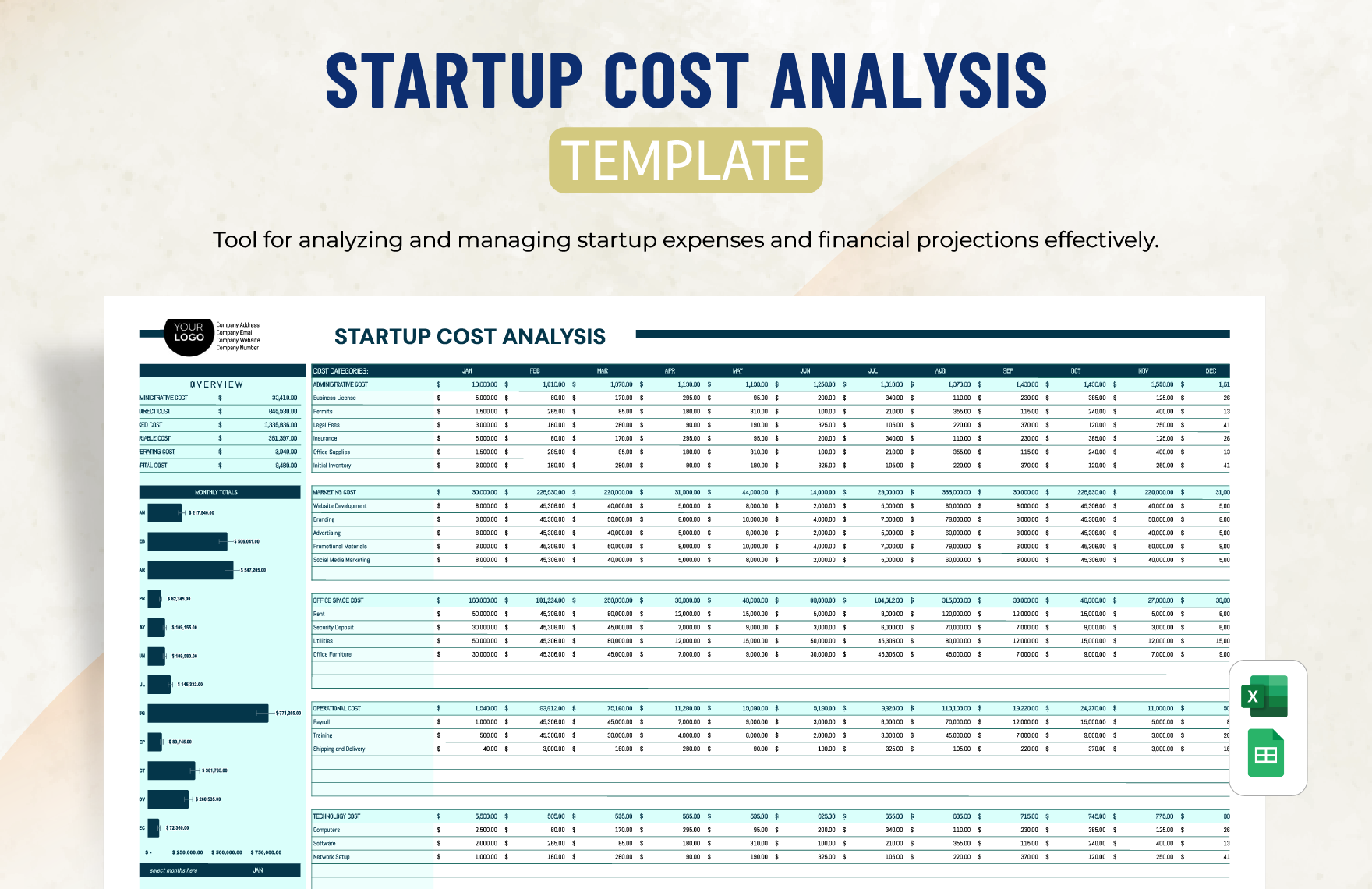
Instructions:
- Open a new spreadsheet (e.g., Google Sheets or Excel).
- Create two main sections:
One-Time Startup CostsandEstimated Monthly Operating Costs. - Using the checklists from Part 2, populate the
One-Time Startup Costssection. Include line items like:- Lease Deposit
- Store Renovations/Build-Out
- Fixtures & Displays
- Initial Inventory
- POS System (Hardware)
- Security System
- Signage
- Legal & Licensing Fees
- Pre-Opening Marketing
- Populate the
Estimated Monthly Operating Costssection with recurring expenses:- Rent
- Utilities (Electricity, Internet, etc.)
- POS Software / Payment Processing Fees
- Insurance
- Payroll (even if it's just a salary for yourself)
- Ongoing Marketing
- Create three columns next to your line items:
Low Estimate,Medium Estimate, andHigh Estimate. You don't have exact quotes yet, so the goal is to create a realistic range for your planning. Use the resources from this lesson to inform your estimates. - Finally, add a line at the bottom for your Working Capital (Operating Reserve). Calculate this by totaling your
Medium Estimatefor monthly costs and multiplying it by 3 (for a 3-month reserve) and 6 (for a 6-month reserve). This shows you the cash buffer you'll need.
This spreadsheet is a living document. You will refine these numbers as you move forward with getting quotes and making decisions, but establishing this structure now is a critical first step.
Conclusion
Excellent work today. You've navigated one of the most important and often overwhelming aspects of opening a physical store. By breaking down the costs into manageable categories, you've transformed a daunting question into a structured, actionable plan.
Key Takeaways:
- Startup costs are primarily divided into one-time expenses (like build-out), initial inventory, and working capital (your cash reserve).
- A detailed budget should account for everything from lease deposits and renovations to POS systems and legal fees.
- The total startup cost is highly dependent on your store's size and concept. A focused mini-market can significantly reduce the initial investment required.
- Creating a startup cost spreadsheet with low, medium, and high estimates is the best way to develop a realistic financial forecast.
Preview of the Next Lesson:
With a preliminary budget taking shape, you now have a crucial piece of your strategic puzzle. In our next lesson, we will bring together your mission, target customer analysis, competitive strategy, and financial estimates to write a business plan outline. This will serve as the master blueprint for your entire venture.