Introduction
Welcome to the final lesson in our "Market Research and Business Planning" module. Over the past few lessons, you've done the foundational work of a true entrepreneur: you've defined your ideal customer, analyzed the local competition, identified promising product trends, and created a preliminary estimate of your startup costs.
Today, we'll bring all that strategic work together. Our learning outcome is to write a business plan outline including mission, target market, and competitive strategy.
Think of this as creating the master blueprint for your beauty mini-market. In your e-commerce work, you're likely familiar with creating a comprehensive marketing plan before launching a campaign. A business plan serves a similar purpose, but for the entire business. It's the strategic document that will guide your decisions, shape your brand, and serve as the foundation for everything that follows.
Part 1: The Anatomy of a Business Plan
A business plan is a formal document that outlines a company's goals and how it plans to achieve them. While they can be very detailed, especially when seeking investment, their primary purpose is to provide clarity and direction. For your current stage, we'll focus on creating a strong outline that solidifies your core strategy.
This infographic provides a great overview of the key sections found in a comprehensive retail business plan.

Today, you'll be creating the skeleton for this document, focusing on the three most critical parts for your current stage: your mission, your target market, and your competitive strategy.
Part 2: Defining Your Mission, Vision, and Values
Before you plan what you'll sell or how you'll sell it, you need to define why your business exists. This is articulated through your mission and vision statements.
- Mission Statement: This defines your company's purpose, what it does, who it serves, and what makes it unique. It's about the present and the practical.
- Vision Statement: This is more aspirational. It describes the future you want to create and the ultimate impact you want your business to have.
This image breaks down the thought process for crafting a powerful mission statement.
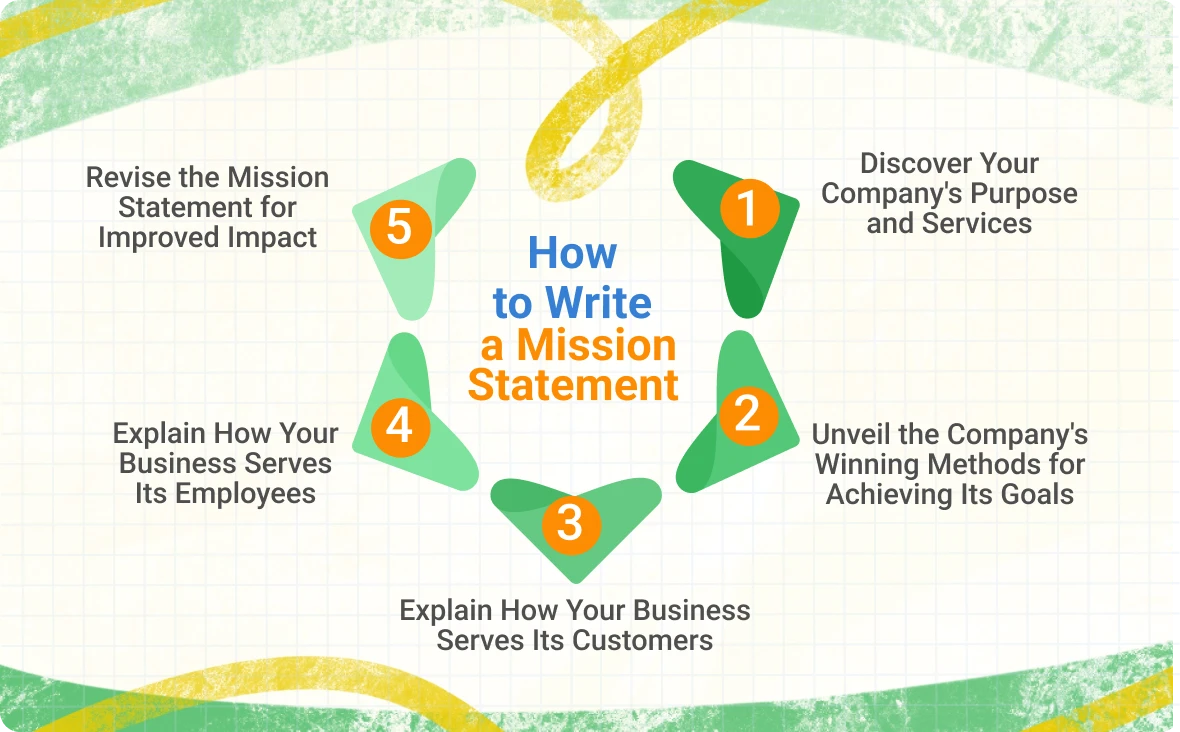
To see how this applies specifically to a beauty store, the following template is an excellent resource.
Free Cosmetic Store Business Plan Template to Edit Online
Let's examine a 'Cosmetic Store Business Plan Template'. This provides concrete examples of mission statements, vision statements, and core values tailored to the beauty industry.
Please read Section 1, which includes the 'Company Overview,' 'Vision Statement,' 'Mission Statement,' and 'Core Values.' Pay close attention to how they articulate a specific identity—in this case, focusing on eco-friendliness and sustainability.
Notice how the examples in the template are specific. A mission like "to offer high-quality, eco-friendly beauty products to the socially conscious consumer" is much stronger than "to sell beauty products."
Your Turn (Drafting Exercise):
Take a few minutes to draft a first version of your mission and vision statements.
- For your mission: How would you describe your beauty mini-market's purpose? Who is it for (think "Conscious Chloe")? What unique value do you provide?
- For your vision: What is your long-term dream for this store? Do you want to be the go-to spot for indie brands in your city? A community hub for beauty lovers?
Part 3: Defining Your Market and Competitive Edge
This section of your business plan outline formalizes the research you've already completed. It clearly states who your customer is and why they will choose your store over others.
A clear focus on your target customer is non-negotiable. Let's watch a short video that reinforces this idea.
How To Write A Business Plan That Works
In this clip from her video 'How To Write A Business Plan That Works,' business coach Noelle Randall explains the importance of niching down and defining exactly who you serve.
Watch the segment from 02:31 to 04:04. Notice her emphasis on creating a business where you love your customers, which starts by clearly defining them from the beginning.
Now, let's combine this with defining your competitive strategy. What problem are you solving for your target customer, and how will you do it better than anyone else?
How to Write a Business Plan - Entrepreneurship 101
The video 'How to Write a Business Plan - Entrepreneurship 101' provides excellent prompts for thinking about your competitive edge.
First, watch from 02:37 to 03:51. The presenter asks key questions like 'What problem does your company solve?' and 'Why should customers choose you over your competition?'. Then, watch from 03:51 to 04:45, where she discusses defining your target market by demographics and psychographics. This connects directly to the 'Conscious Chloe' persona you've developed.
To structure this thinking, you can use a framework like a SWOT analysis (Strengths, Weaknesses, Opportunities, Threats) or simply list your key competitive advantages.
beauty-supply-store-business-plan.pdf
For a practical example, let's look at a sample business plan for a beauty supply store. It provides an excellent list of potential competitive advantages and a full SWOT analysis.
Review the 'Competitive Advantage' section (page 18) and the 'SWOT analysis' (page 20). Think about which of these strengths and opportunities might apply to your mini-market concept. For example, 'Value Added Services' or a unique 'Supply Network' of indie brands could be a significant advantage.
Part 4: Your Action Item - Create Your Business Plan Outline
It's time to assemble these components into a coherent outline. This document will be your north star as you move into the next phases of launching your store.
Create a new document and structure it using the template below. Fill in each section with the insights you've gathered from this module and the drafting exercises in this lesson.
Business Plan Outline: [Your Store Name Here]
1. Executive Summary
- Mission Statement: (Write your drafted mission statement here. What is your purpose?)
- Vision Statement: (Write your drafted vision statement here. What is your long-term aspiration?)
- Business Concept: A brief, one-paragraph description of your store (e.g., "A boutique beauty mini-market in [Your City/Neighborhood] specializing in curated, clean, and cruelty-free skincare and cosmetics for women.")
2. Products & Services
- Core Product Categories: (List the main types of products you'll carry, based on your trend analysis from the previous lesson, e.g., Clean Skincare, Indie Makeup, Sustainable Body Care.)
- Unique Selling Proposition (USP): (In one or two sentences, what is the single biggest reason customers will shop with you? E.g., "We are the only local retailer offering hands-on testing for a wide range of internet-famous indie beauty brands.")
3. Market Analysis
- Target Market: (Write a paragraph describing "Conscious Chloe." Include key demographics, psychographics, values, and shopping behaviors you identified in the 'Define the target customer' lesson.)
- Competitive Landscape: (List 2-3 of your main local competitors. For each, briefly state their primary focus, e.g., "Sephora - mainstream luxury brands," "Local Drugstore - mass-market convenience.")
4. Competitive Strategy
- Key Differentiators: (Create a bulleted list of 3-5 points explaining how you will compete and win. Pull from your SWOT analysis and the 'Competitive Advantage' examples.)
- Example: Curated Product Selection: Focus on hard-to-find indie brands not available elsewhere locally.
- Example: Expert, Personalized Service: Offer one-on-one consultations and product education.
- Example: Community Hub: Host workshops and events focused on clean beauty and self-care.
5. Financial Overview (Preliminary)
- Estimated Startup Costs: (Reference the spreadsheet you created in the last lesson. State the estimated range, e.g., "Initial startup costs are estimated to be between $X and $Y.")
- Funding Source: (Briefly state your initial plan, e.g., "The business will be launched using personal savings.")
Conclusion
Congratulations on completing this critical milestone! You've successfully translated your research and ideas into a structured, strategic business plan outline. This document isn't just an exercise; it's a powerful tool that gives you clarity and a solid foundation for action.
Key Takeaways:
- A business plan outline acts as a strategic blueprint for your store.
- A strong mission statement defines your purpose, while a vision statement outlines your aspirations.
- Your target market definition should be specific and detailed, moving beyond broad demographics.
- Your competitive strategy must clearly articulate why a customer would choose your store over any other option.
Preview of the Next Lesson:
With your strategic blueprint in hand, we can now move on to the practical steps of making your business a legal reality. In our next lesson, we will begin Module 3: Legal, Licensing, and Regulatory Requirements, starting with how to outline the steps to legally register a retail business. This is the first major step in turning your plan into a tangible entity.