Introduction
Welcome to the first lesson of our module on "Legal, Licensing, and Regulatory Requirements." In the previous module, you did the critical strategic work of creating a business plan outline for your beauty mini-market. That plan is your "what" and "why." Today, we shift from strategy to execution and begin the process of turning that plan into a real, legal business entity.
Our learning outcome for this lesson is to outline the steps to legally register a retail business. This process might seem daunting, but it's a logical sequence of steps that establishes the legal foundation of your company. Coming from a digital marketing background, you know the importance of setting up tracking and analytics correctly from day one; think of legal registration in the same way—it's the foundational setup for your entire business operation.
By the end of this lesson, you will have a clear, actionable checklist to guide you through the registration process.
Your Registration Roadmap
At a high level, registering a business involves a few key stages. This infographic gives a great visual overview of the journey from idea to a registered entity.
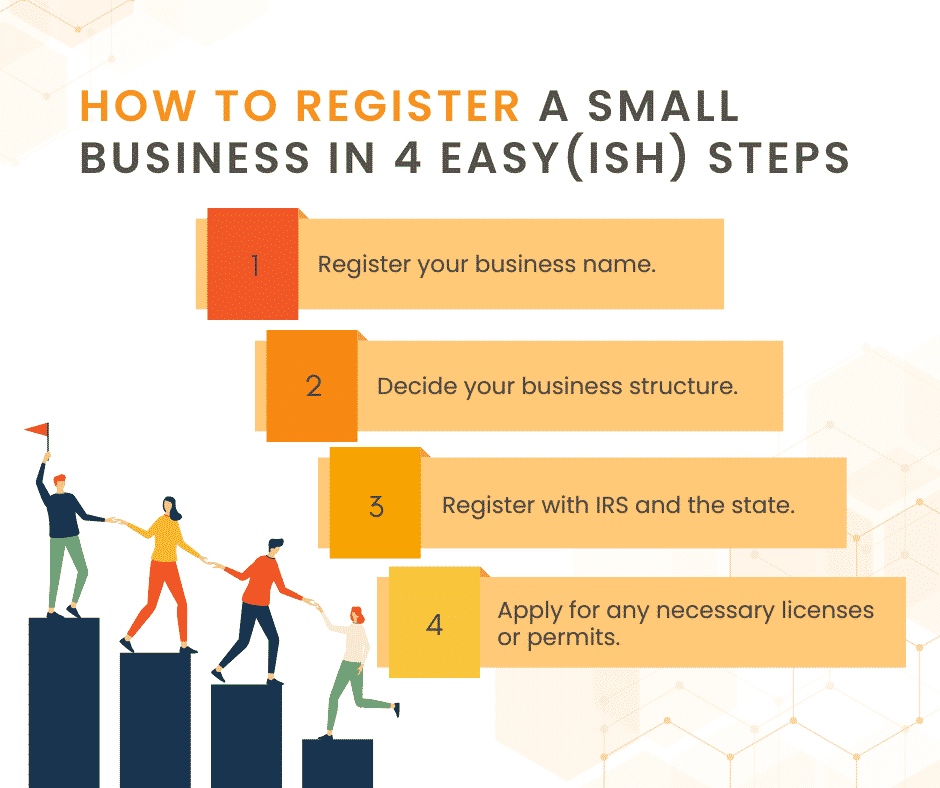
We will explore these stages in a specific, actionable order that makes the most sense for a new retail entrepreneur.
Step 1: Choose Your Business Structure
The first and most important decision is choosing a legal structure. This choice determines your personal liability, how you're taxed, and the administrative requirements for your business. For a physical retail store, this decision is particularly important because of the inherent risks—customers in the store, physical inventory, and employees.
The most common options for a new small business owner like yourself are:
- Sole Proprietorship: You and the business are the same legal entity. It's simple to set up but offers no personal liability protection. This means your personal assets (car, house, savings) could be at risk if the business incurs debt or is sued.
- Limited Liability Company (LLC): This structure creates a separate legal entity, shielding your personal assets from business debts and lawsuits. It combines the liability protection of a corporation with the tax simplicity of a sole proprietorship. This is the most common and recommended structure for new retail businesses.
To understand the differences more clearly, let's watch a detailed breakdown.
How To Start a Business - Step by Step Guide for Beginners
The video 'How To Start a Business' by ClearValue Tax provides an excellent comparison of different business structures. The speaker gives practical advice on when to choose each one.
Watch the segment from 02:01 to 13:08. Pay close attention to the descriptions of a Sole Proprietorship and a Single-Member LLC. The speaker's recommendation for someone starting a 'serious' business is to form an LLC for liability protection, which is highly relevant for a physical store.
Key takeaway: For a physical beauty mini-market, an LLC is the strongly recommended path. The liability protection it offers is critical when you have a physical location, products, and customers interacting in your space.
You can also review these options in a text format for a quick reference.
How to open a beauty supply store in 2025: steps to success
The article 'How to open a beauty supply store in 2025' also provides a concise summary of legal structures relevant to your specific industry.
Read the section titled 'How to choose the right legal structure'. This will reinforce the concepts of Sole Proprietorship and LLC in the context of a beauty store.
Step 2: Choose and Secure Your Business Name
Once you've decided on an LLC structure, the next step is naming your business. Your official business name will be your legal name (e.g., "Mina's Beauty Lab LLC"). You may also choose to operate under a different, more brand-friendly name, known as a "Doing Business As" (DBA) or trade name (e.g., "Mina's Beauty").
The most important rules are that your legal name must be unique in your state and include a designator like "LLC" or "L.L.C.".
Your digital marketing expertise is a huge asset here. You'll want to ensure your chosen name is available not just legally, but also as a web domain and across all relevant social media platforms to maintain brand consistency.
How to Set Up an LLC in 2025 From Start to Finish (Step-by-Step Guide!)
The video 'How to Set Up an LLC in 2025' offers fantastic, practical advice on the naming process, including the digital aspect.
Watch the first step of the process, 'Selecting a name for your LLC' (00:35 to 02:27). The presenter gives a clear checklist: check your state's business name database, check for the web domain, and check social media handles simultaneously.
Step 3: Making It Official - The Registration Process
With a structure and name decided, you can now formally register your business. This involves a few distinct actions.
A. File Formation Documents with the State
This is the action that officially creates your business entity. For an LLC, this document is typically called the Articles of Organization. You file it with your state's Secretary of State office, usually through a simple online portal on their website.
This process will require:
- Your chosen business name.
- The business address.
- The name and address of your Registered Agent. A registered agent is a person or service designated to receive official legal and tax documents on behalf of your business. You can be your own registered agent if you have a physical address in the state and are available during business hours.
How To Start a Business - Step by Step Guide for Beginners
Let's return to the 'How To Start a Business' video for a look at the filing process.
Watch the segment on the 'formation of the business entity' from 13:08 to 14:50. It explains how to file with your Secretary of State and what to expect.
B. Obtain Your Federal Employer Identification Number (EIN)
An EIN is a unique nine-digit number that the IRS uses to identify your business for tax purposes. Think of it as a Social Security Number for your company. You will need an EIN to open a business bank account, file taxes, and hire employees.
Crucially, obtaining an EIN is free and can be done online in minutes directly on the IRS website. Be wary of third-party services that charge for this.
How to Set Up an LLC in 2025 From Start to Finish (Step-by-Step Guide!)
The video 'How to Set Up an LLC in 2025' explains the importance of the EIN and how to get one.
Watch the section 'obtaining an employer identification number or an EIN number' from 06:59 to 08:10. The key takeaway is to get it for free directly from the IRS.
C. Open a Business Bank Account
Once you have your approved Articles of Organization and your EIN, you must open a dedicated business bank account. Commingling business and personal funds is a serious mistake. It can "pierce the corporate veil," meaning you could lose the liability protection that your LLC provides. Keeping finances separate is essential for clean bookkeeping, professional appearance, and legal protection.
To do this, you will typically need to bring your formation documents and EIN confirmation letter to the bank.
Your Actionable Registration Checklist
To bring this all together, here is the step-by-step outline for you to follow. You can use the Wolters Kluwer article as a comprehensive reference for all these steps.
Legal requirements for starting a business: A checklist
For a complete text-based checklist, refer to this article from Wolters Kluwer. It is a comprehensive guide that covers all the legal requirements we've discussed.
Skim through the sections corresponding to our checklist items: 'Choose a business structure', 'Select your company’s legal name', 'Appoint a registered agent', 'File formation documents', 'Obtain your federal tax identification number', and 'Open a business bank account'. Use this as your reference guide.
Here is your condensed, actionable checklist:
Phase 1: Decision Making
- Choose Business Structure: Decide to form a Limited Liability Company (LLC) for liability protection.
- Choose Business Name:
- Brainstorm a unique, brandable name.
- Check for availability on your state's Secretary of State website.
- Check for availability of the corresponding domain name and social media handles.
- Decide if you will also need a DBA registration.
Phase 2: Registration
3. Appoint a Registered Agent: Decide if you will serve as your own or hire a service.
4. File Articles of Organization: Complete and submit the form on your state's Secretary of State website and pay the filing fee.
5. Obtain an EIN: Once your LLC is approved, apply for your free EIN on the IRS.gov website.
6. Draft an Operating Agreement: While not always required by the state for a single-member LLC, this internal document is highly recommended. It outlines how your business will be run and further solidifies your liability protection. You can find many templates for this online.
Phase 3: Financial Setup
7. Open a Business Bank Account: Take your formation documents and EIN to a bank and open a dedicated checking account for your business.
Conclusion
You now have a clear, step-by-step outline to legally register your beauty mini-market. By following this process, you create a formal legal entity, protect your personal assets, and establish the professional foundation necessary for long-term success.
Key Takeaways:
- Forming an LLC is the recommended structure for a physical retail store to protect your personal assets.
- The registration process is a clear sequence: Choose a Structure -> Secure a Name -> File with the State -> Get an EIN -> Open a Bank Account.
- Keeping business and personal finances separate from day one is non-negotiable for both legal protection and financial clarity.
Preview of the Next Lesson:
With your business entity legally formed, the next step is to get the specific permissions needed to operate. In our next lesson, we will focus on how to identify the licenses and permits required to operate a beauty retail store. This includes general business licenses, seller's permits, and any health or zoning permits specific to your location and industry.