Introduction
Welcome back! In our last lesson, you created a complete roadmap for legally registering your business. You now know how to form an LLC, secure a unique business name, obtain your federal Employer Identification Number (EIN), and set up a business bank account. Think of that as building the legal "identity" of your company.
Today, we move on to the next critical step: getting the official permission for your company to operate. Our learning outcome is to identify the licenses and permits required to operate a beauty retail store. These are the specific credentials you'll need to legally open your doors, sell products, and comply with state and local laws.
Just as in digital marketing where you need to comply with data privacy laws like GDPR or CCPA to operate legally, a physical store has its own set of rules. By the end of this lesson, you'll have a clear understanding of the key licenses you'll need and where to get them, bringing you one step closer to your grand opening.
The Landscape of Business Licenses
Before we dive into the specifics for your beauty store, it's helpful to see the big picture. Businesses often need a variety of permits to operate, each serving a different purpose. This can feel overwhelming, but they generally fall into logical categories.
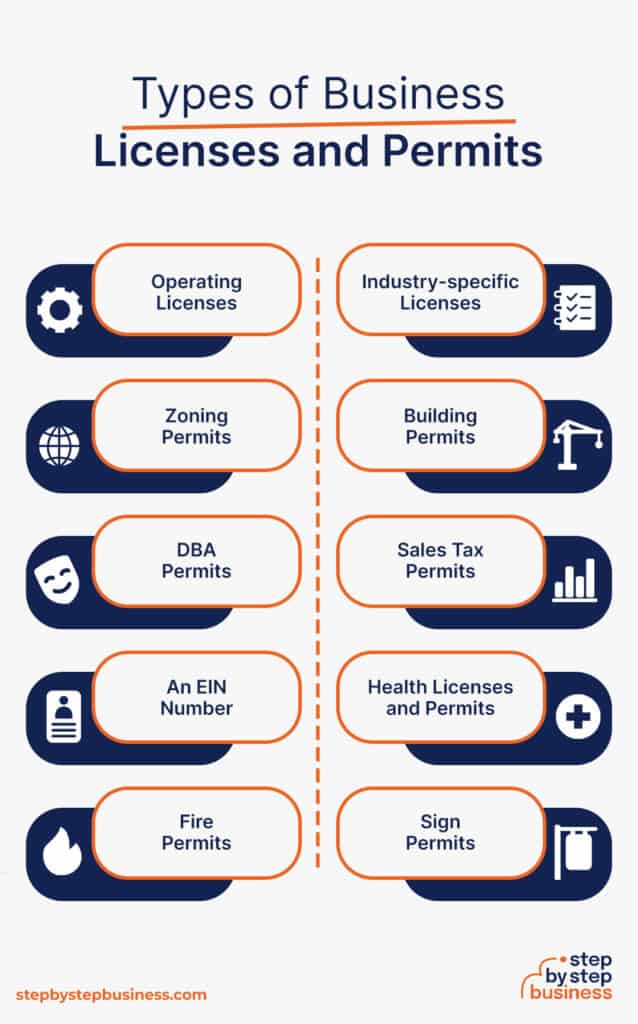
We'll structure our exploration by the level of government that issues the permit: state and local (city/county).
State-Level Requirements
Your state government requires specific permissions, primarily related to taxes and the right to sell goods.
1. Seller's Permit (or Sales Tax License)
This is one of the most important permits for any retail business. It authorizes you to collect sales tax from your customers on behalf of the state. You are then responsible for reporting and remitting that tax to the state's department of revenue, usually on a monthly or quarterly basis.
To understand the process and its importance, let's watch a segment from a fellow beauty supply store owner.
How to Start A Beauty Supply Store (Forming and Registering Your Business)
The video 'How to Start A Beauty Supply Store' by Infinite Beauty provides a practical, step-by-step account of the licensing process. The presenter's experience is directly relevant to your goal.
Watch the section on the sales tax license from 08:28 to 11:43. Pay close attention to her explanation of why you need it (for wholesale purchasing) and her practical tip about setting the start date for revenue collection.
As the video explains, this permit is not only for collecting tax but is also a prerequisite for buying inventory from wholesalers.
2. The Resale Certificate: Your Key to Buying Wholesale
This leads us to a crucial distinction that often confuses new retailers: the difference between a Seller's Permit and a Resale Certificate.
- A Seller's Permit allows you to sell to the final customer and collect sales tax.
- A Resale Certificate (sometimes called a Reseller's Permit or Wholesale License) allows you to buy products from your suppliers (wholesalers) without paying sales tax, because you intend to resell them.
You typically need your Seller's Permit number to be able to issue a Resale Certificate to your vendors. This prevents sales tax from being charged multiple times on the same product.
The following video breaks this down perfectly.
Sellers Permit vs Resale Certificate - What's the Difference?
The video 'Sellers Permit vs Resale Certificate' from StartUp101 clearly explains the function of each document and how they work together.
Watch from the beginning to 05:02. This will clarify what a Seller's Permit is, what a Resale Certificate is for, and how they are related. The clothing boutique example is directly analogous to your beauty store.
Local (City/County) Requirements
Once you have your state permits, you'll need to get permissions from your local city or county government. These are tied to your specific physical location.
1. General Business License (or Operating License)
This is the fundamental permit required by most cities and counties to operate any business within their jurisdiction. The fees are often based on your projected revenue.
A critical point to understand is that you typically cannot get this license until you have a signed lease for a commercial location. This creates a timing challenge you need to plan for.
Let's return to the Infinite Beauty video for a walkthrough of this local process.
How to Start A Beauty Supply Store (Forming and Registering Your Business)
The same video also covers the process of getting a local business license, highlighting the documents you'll need and the importance of having a physical address first.
Watch the segment on the business license from 11:43 to 15:01. Note the documents required (like your Articles of Organization from the last lesson) and the critical link between the license and your physical store lease.
2. Location-Specific Permits
Beyond the general license, operating a physical retail store requires a few other key permits related to the building itself.
How to start a beauty supply business your first steps - JIM
This article from JIM, 'How to start a beauty supply business', provides a concise list of the key licenses you'll need, including one we haven't discussed yet.
Read the section 'Secure licenses and permits' under Step 2. Focus on the mention of the 'Certificate of Occupancy'.
As the article mentions, the key location-based permits are:
- Certificate of Occupancy (CO): This certifies that your retail space is safe for public access and complies with all building and zoning codes. You get this from your local city or county's building or planning department after an inspection. You cannot legally open your store to customers without it.
- Zoning Permit: Before you even sign a lease, you must verify that the location is zoned for retail business. A zoning permit confirms this.
- Sign Permit: If you plan to install an exterior sign for your store, you will likely need a separate permit from your city that governs its size, location, and lighting.
Industry-Specific Regulations for Beauty Products
Finally, because you'll be selling beauty products, you must be aware of industry-specific regulations.
The U.S. Food and Drug Administration (FDA) regulates cosmetics. While they don't typically pre-approve products before they go to market, they have strict rules about:
- Labeling: Ingredients must be listed correctly.
- Safety: Products must be safe for consumers under normal use.
- Adulteration & Misbranding: You cannot sell products with false claims or prohibited ingredients.
As the retailer, the legal responsibility falls on you to ensure that the products on your shelves are compliant. This is a crucial consideration for when you start sourcing products and evaluating suppliers.
How to start a beauty supply business your first steps - JIM
The JIM article also flags these important regulations.
Re-read the final paragraph of the 'Secure licenses and permits' section about the FDA. This is a critical piece of compliance for your specific business.
Conclusion
You now have a clear framework for the essential licenses and permits needed to operate your beauty mini-market. It's a multi-layered process, but a logical one.
Key Takeaways:
- State Level: You need a Seller's Permit to collect sales tax and a Resale Certificate to purchase inventory tax-free from wholesalers.
- Local Level: You need a General Business License to operate in your city/county, a Certificate of Occupancy to confirm your store is safe, and potentially other permits for zoning and signage.
- Industry-Specific: You are responsible for ensuring all cosmetics you sell comply with FDA regulations on safety and labeling.
- Timing is Key: Many local licenses cannot be obtained until you have a signed lease on a commercial property.
Your next practical step would be to visit the website for your specific state's Department of Revenue and your city/county's business licensing office. They often have checklists for new businesses that will provide the exact forms and fees for your area. The Small Business Administration (SBA) website is also an excellent resource for local requirements.
Preview of the Next Lesson:
We've identified that FDA compliance is crucial. In our next lesson, we will dive deeper into this topic. We will describe regulations related to selling cosmetics and beauty products such as labeling, expiration, and safety standards. This will equip you with the knowledge to confidently source and sell products that are safe and legal.