Hello! Welcome to the first lesson in our module on "Prospect and Company Research."
In our previous module, you mastered the art of the SDR interview, from pitching yourself to asking insightful questions. We concluded by highlighting that the foundation of a great interview performance is solid research. Today, we're building that foundation.
The goal of this lesson is to equip you with a practical, repeatable process for researching a company before an interview. By the end of our 60 minutes, you'll know how to conduct in-depth research on a target company's product, customers, and market position. This skill is not just for interviews; it's the very essence of what a successful SDR does every day.
Why Pre-Interview Research is Non-Negotiable
Walking into an interview without having done your homework is one of the fastest ways to get rejected. Proper research allows you to tailor your answers, ask intelligent questions, and demonstrate genuine interest. It sets you apart from candidates who only skim the homepage.
To start, let's get a high-level overview of the key areas to focus on.
CRUSH Your FIRST SDR Interview to Break Into Tech Sales
In his video 'CRUSH Your FIRST SDR Interview to Break Into Tech Sales,' Matt Macnamara outlines the four essential areas to research. This provides a great mental checklist to guide your preparation.
Watch from 01:07 to 02:43. Pay close attention to the four categories he mentions: the person, the product, the company, and the market. Note the specific, actionable advice he gives for each, like watching product demos.
As the video explains, you don't need to become an expert overnight. A focused 45-60 minutes of research is enough to make a strong impression. For an SDR role, the most critical part of this research is understanding who the company sells to and what problem their product solves.
How to Land Your Next SDR Role: Interview Tips
The article 'How to Land Your Next SDR Role' from Nooks.ai gives advice specifically for SDR candidates. It emphasizes going beyond surface-level information to truly understand the company's value.
Read the first section, '1. Do Your Homework: How to Research the Company.' Focus on why they recommend looking at case studies and knowing the 'persona the company sells to.' This connects directly to the concept of an Ideal Customer Profile (ICP), which you're already familiar with.
A Framework for Your Research: The Value Proposition Canvas
To give your research structure, we can use a simple but powerful tool called the Value Proposition Canvas. Think of it as a map that connects what a company offers to what a customer needs. Your goal during research is to fill in this map.
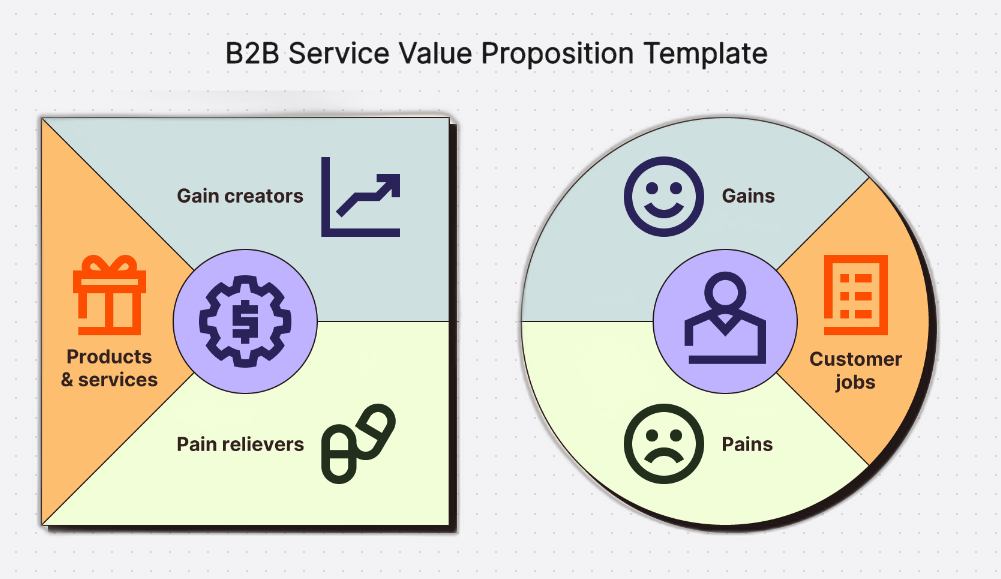
Here's a simple breakdown:
-
Customer Profile (The Circle):
- Customer Jobs: What is the customer trying to get done in their work?
- Pains: What are the frustrations, obstacles, and risks they face?
- Gains: What are the outcomes and benefits they want to achieve?
-
Value Map (The Square):
- Products & Services: What does the company offer?
- Pain Relievers: How do these offerings specifically alleviate customer pains?
- Gain Creators: How do these offerings help the customer achieve their desired gains?
When you can articulate how the square fits into the circle, you understand the company's core value. Let's use this framework to guide your research step-by-step.
Step 1: Researching the Customer Profile (The Circle)
Your first job is to understand the customer. Who are they, and what do they care about?
7 Easy Ways to Research a Company for a Job Interview
Let's watch a quick segment from Don Georgevich's '7 Easy Ways to Research a Company for a Job Interview' to cover the fundamental sources of information.
Watch from 00:39 to 01:39. This clip highlights the most important starting points: the company's website (especially the 'About' page), their LinkedIn page, and, most importantly, their case studies and white papers.
Case studies are your best friend. They are real-world stories of how the company solved a specific customer's pain. They tell you:
- The industry and size of their typical customer.
- The job title of the person who buys their product (e.g., Head of Sales, IT Manager).
- The specific "pain" they had before and the "gain" they achieved after.
To dig deeper into customer pains, you can turn to third-party review sites. This is where your research skills will shine, as you'll find unfiltered customer feedback.
B2B market analysis: Uncover your market structure like a pro
The article 'B2B market analysis' provides a professional-grade list of resources for customer research. We'll borrow their list of review sites, which are goldmines for understanding customer pain points.
In this extensive article, you don't need to read everything. Scroll down to the subsection titled 'Gather and analyze data already available on the Internet.' Within that, find the table under the 'Review sites' heading. Familiarize yourself with the names listed (G2, Capterra, Gartner Peer Insights, etc.). Then, read the tip just below the table: 'Search for negative or critical reviews—they’re a goldmine of insights for identifying unmet needs in the market.'
Your Action Plan for Customer Research:
- Go to the company website and find the "Customers" or "Case Studies" section. Read 2-3 of them.
- Go to G2.com or Capterra.com, search for the company's product, and read the reviews. Filter for 1, 2, and 3-star reviews to quickly identify common complaints and pain points.
- Synthesize your findings: Can you now describe a typical customer and the top 2-3 problems they face?
Step 2: Researching the Value Map (The Square)
Now that you understand the customer, you need to understand how the company's product solves their problems. Your goal is to be able to explain what the product does in simple terms.
The best way to do this is to see it in action. As Matt Macnamara's video mentioned earlier, you should always look for product demos on the company's website or YouTube channel.
Beyond demos, analyze the product and pricing pages on their website. How do they describe their features? Are they positioned as "pain relievers" (e.g., "Reduce manual data entry by 80%") or "gain creators" (e.g., "Increase your team's sales pipeline by 30%")? This language directly reveals their value proposition.
Step 3: Researching the Market Position (The Broader Context)
Finally, you need to zoom out and understand where the company fits within its industry. Are they a dominant leader, an innovative newcomer, or a niche player?
7 Easy Ways to Research a Company for a Job Interview
Let's return to Don Georgevich's video for a quick overview on researching competitors.
Watch from 04:39 to 05:13. He raises key questions you should be asking: Are they a leader? Is their competition better? How do they compete?
To answer those questions, you need to identify the key competitors and compare them.
B2B market analysis: Uncover your market structure like a pro
The 'B2B market analysis' article again provides an excellent list of free, powerful tools for this.
Scroll down to the 'Competitors' section. Under the 'Resources' heading, review the descriptions for 'G2 Market Reports' and 'Capterra Shortlists.' These reports, especially G2's 'Grid Reports,' are fantastic visual tools for quickly understanding the competitive landscape.
Your Action Plan for Market Research:
- Go to G2.com and search for the software category the company belongs to (e.g., "CRM," "Sales Engagement," "Project Management").
- Find the most recent "Grid Report" for that category. Where does your target company sit? Are they in the "Leaders," "Contenders," "Niche," or "High Performers" quadrant? Who are the other players in the "Leaders" quadrant?
- Visit the websites of 1-2 of their main competitors. How is their messaging different? Do they seem to target the same customer pains?
This level of research will enable you to have a much more strategic conversation during your interview.
Test your understanding!
You are preparing for an SDR interview with a company called Asana, which makes project management software. Using the methods from this lesson, what are the first three places you would look to understand their target customer's main "pain points"?
Show answer
Based on the lesson, a strong approach would be:
- Asana's Website - Case Studies/Customer Stories: This is the best place to find official stories of how Asana has solved specific problems for real companies.
- G2.com or Capterra.com: Go to one of these review sites, search for Asana, and filter the reviews to show the 1, 2, or 3-star ratings. This will give you unfiltered feedback on the most common frustrations and pain points users experience.
- A Competitor's Website (e.g., Monday.com or Trello): Look at a main competitor's homepage and product pages. The problems they claim to solve are likely the same pains that Asana's customers face. Competitor messaging is often a great clue to industry-wide challenges.
Conclusion
You now have a structured, repeatable process for researching any company. This isn't just about impressing an interviewer; it's about confirming that the company has a strong product, happy customers, and a solid position in the market—all crucial factors for your future success as an SDR.
Key Takeaways:
- Use a Framework: The Value Proposition Canvas helps you structure your research around connecting customer needs with the company's solution.
- Focus on the Customer: Start by understanding the ICP. Use case studies and third-party review sites to uncover their jobs, pains, and gains.
- Understand the Product: Watch demos and analyze website messaging to articulate what the product does and the value it delivers.
- Analyze the Market: Use tools like G2 Grid Reports to quickly identify key competitors and understand the company's market position.
In our next lesson, we will build directly on this foundation. Now that you know how to research a company and its ideal customer profile, the next step is to find the right people to talk to. We'll dive into using LinkedIn to identify specific prospects who match an Ideal Customer Profile (ICP).