Hello! Welcome to the final lesson of our module, "Practical Application and System Design."
In our last session, you successfully designed a one-day meal plan, translating the principles of clean keto and intermittent fasting into a concrete, daily template. You now have the fundamental building block.
Today, our learning outcome is to design a weekly meal planning system that balances variety, convenience, and adherence to targets. We will scale up from a single day to a sustainable, week-long system. Think of this as designing a personal "operating system" for your nutrition—one that is robust, efficient, and reduces cognitive load, freeing up mental energy for other priorities.
This system will be built on three pillars:
- Convenience: The plan must be efficient to execute, respecting your time.
- Variety: It needs to prevent boredom to ensure long-term adherence.
- Adherence: The system must be flexible enough to withstand the realities of a busy life.
Let's build this system step-by-step.
1. The Core Principle: "Cook Once, Eat Twice"
The most powerful strategy for ensuring convenience within a 16:8 intermittent fasting schedule is to make dinner leftovers the next day's lunch. This simple hack halves your cooking and decision-making load for the week.
- Dinner (Meal 2): Cook a full, nutrient-dense meal in the evening.
- Lunch (Meal 1): The next day, your first meal is a ready-to-reheat portion of last night's dinner.
This approach forms the backbone of our weekly system. It's efficient, cost-effective, and dramatically simplifies planning.
2. The Mechanics of an Efficient System: Planning and Batch Cooking
A successful week starts with a small investment of time in planning and preparation. This isn't about spending your entire Sunday in the kitchen; it's about strategic actions that pay dividends in time and mental energy throughout the week.
To understand these strategies in action, let's turn to a practical video guide.
Keto Cooking: Meal Planning/Batch Cooking
The video 'Keto Cooking: Meal Planning/Batch Cooking' from RuledMe provides an excellent overview of the workflow we're aiming to build. It breaks down the process from planning to preparation.
Please watch the following segments: Planning Your Meals (00:30 - 01:42): Focus on the concepts of setting aside time to plan, looking for recipes with compatible ingredients to enable bulk buying, and the sense of security a plan provides. Batch Cooking in Practice (01:42 - 02:42): Pay attention to the specific examples of batch cooking—preparing large quantities of protein (ground beef), pre-chopping vegetables (spiralizing zucchini, making cauliflower rice), and doubling recipes for leftovers. Note the practical tip on using good quality containers and labeling.
As the video highlights, the key is to shift from daily cooking to a weekly prep mindset. This involves:
- Planning: Deciding on your meals for the week ahead of time.
- Prepping: Performing upfront tasks like washing/chopping vegetables, marinating meats, or preparing sauces.
- Batch Cooking: Cooking one or two large-volume dishes that can be used for multiple meals.
3. A Modular Approach to Weekly Planning
To balance structure with variety, we'll use a "modular" or "template-based" approach rather than planning 7 unique, complex dinners. You only need to choose 3 to 4 dinner concepts for the week, which will then cover your lunches as well.
Here are some versatile meal templates:
| Meal Template | Base Components | Protein Options | Fat Sources |
|---|---|---|---|
| Big Salad | Mixed greens, spinach, arugula | Grilled chicken, salmon, steak, hard-boiled eggs | Avocado, nuts, seeds, olive oil vinaigrette |
| Stir-Fry | Broccoli, bok choy, bell peppers, mushrooms | Shrimp, beef strips, sliced chicken | Avocado oil, sesame oil, coconut aminos |
| Roast | Cauliflower, Brussels sprouts, asparagus | Chicken thighs, pork loin, salmon fillet | Butter, olive oil, rendered animal fat |
| Batch Meal | Zucchini "lasagna," keto chili, shepherd's pie | Ground beef, lamb, turkey | Cheese, sour cream, avocado |
A sample week could look like this:
- Sunday: Cook a large Keto Chili (Batch Meal).
- Monday Dinner: Keto Chili.
- Tuesday Lunch: Leftover Keto Chili.
- Tuesday Dinner: Roast Salmon with Asparagus (Roast).
- Wednesday Lunch: Leftover Salmon and Asparagus.
- Wednesday Dinner: Chicken Stir-Fry.
- Thursday Lunch: Leftover Chicken Stir-Fry.
- Thursday Dinner: Steak Salad (Big Salad).
- Friday Lunch: Leftover Steak Salad.
Notice how just four cooking sessions (one batch cook and three dinners) cover ten meals. Friday dinner could be a chance to eat out or make something simple, leading us to our next point.
4. Building a Resilient System: The 60/40 Rule and Flexibility
No plan survives contact with reality. A truly effective system must be antifragile—it must account for travel, social events, and days when you simply don't have the energy to cook. A rigid, 100% home-cooked plan is brittle and destined to fail.
For this, we can adapt a concept to create a balance between structure and flexibility.
Keto Meal Delivery Costs & Psychology
The article 'Keto Meal Delivery Costs & Psychology' discusses a concept called the '60/40 Rule'. While it's written in the context of meal delivery services, the underlying principle is brilliant for our purposes: creating a sustainable balance between self-preparation and convenience.
Read the section under the heading 'The 60/40 Rule That Changes Everything'. Focus on the table and the idea of gradually building skills and finding an optimal balance. We will adapt this rule to our own system.
Let's reframe the "60/40 Rule" for our system:
- 60-80% Structure: These are the meals you plan, prep, and cook at home using the modular system described above. This is your foundation.
- 20-40% Flexibility: This buffer is for real life. It can include:
- Eating Out: Learning how to navigate a restaurant menu (e.g., ordering steak and steamed vegetables, a burger without the bun, or a large salad).
- "Zero-Prep" Meals: Keeping emergency supplies on hand. A can of sardines, a high-quality whey protein isolate, avocados, and olives can form a nutrient-dense meal in under two minutes.
- Planned Spontaneity: Leaving Friday dinner or one weekend meal open for whatever you feel like, whether that's trying a new recipe or going out.
This hybrid approach prevents the system from feeling like a cage. It builds skills and confidence while acknowledging that perfect adherence is not the goal; sustainable consistency is.
Test your understanding!
Imagine you have a demanding week with an unexpected late night at work on Wednesday. Your original plan was to cook a stir-fry. How could you apply the "Flexibility" principle of the system to handle this situation without derailing your diet?
Show answer
There are several good options:
- Deploy a "Zero-Prep" Meal: Instead of cooking, you could have a can of wild-caught sardines with half an avocado and some olives. This is fast, requires no cooking, and is perfectly ketogenic.
- Use a Pre-Cooked Component: If your Sunday batch prep included pre-grilled chicken breasts, you could simply slice one up and add it to a bag of pre-washed salad greens with an olive oil dressing.
- Strategic Eating Out: On your way home, you could stop at a place that sells rotisserie chicken and a side of green beans or a plain salad, creating a compliant meal with minimal effort.
The key is that you had pre-existing contingency plans, so the unexpected event didn't force a poor food choice.
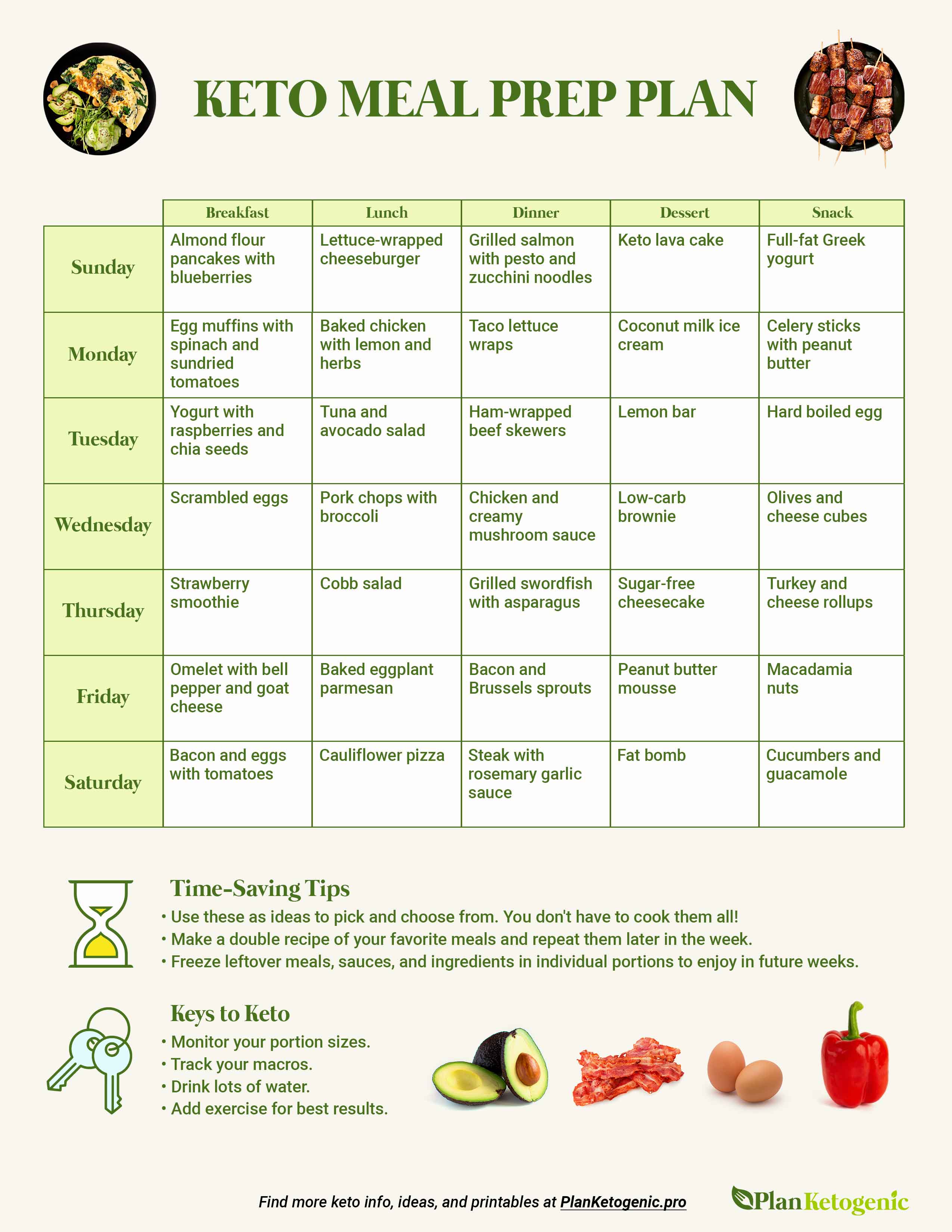
5. Your Weekly System Workflow
Here is the entire system synthesized into a weekly workflow.
1. The Weekly Review & Plan (Sunday Morning, ~30 minutes)
- Review your calendar for the upcoming week. Identify busy nights or social events.
- Choose 3-4 dinner "templates" for the week.
- Generate a digital or physical grocery list from those templates.
2. The Shop (Sunday, ~1 hour)
- Execute the grocery list. Focus on whole, unprocessed foods as we discussed in previous lessons.
3. The Prep & Batch Cook (Sunday, ~1.5 hours)
- Wash and chop vegetables for the first few days (store in airtight containers).
- Prepare one "Batch Meal" (e.g., Keto Chili or Lasagna) to cover meals for Monday/Tuesday.
- Optionally, pre-cook a versatile protein like chicken breasts or ground beef.
4. Daily Execution (Monday-Friday, <20 minutes per meal)
- Lunch: Reheat leftovers.
- Dinner: Assemble your planned meal, using pre-prepped ingredients where possible.
This system front-loads the effort, so that on a busy Tuesday evening, dinner is a 20-minute assembly job, not a 1-hour cooking project from scratch.
Conclusion
You have now designed a complete, systematic approach to weekly meal planning. This is the capstone of our practical application module. By moving beyond a single day's meals to a resilient weekly system, you have created the infrastructure for long-term success.
Key Takeaways:
- System Over Goals: A robust system is what achieves goals. Your weekly workflow is the system that will support your long-term health and cognitive objectives.
- Modular Design: Use meal templates (Salad, Stir-Fry, Roast, Batch) to simplify planning while ensuring variety.
- Front-Load the Work: A 2-3 hour investment on the weekend in planning, shopping, and prepping saves you time and mental energy every single day of the week.
- Embrace Flexibility: The 60/40 rule (or 80/20) is crucial. Build in a buffer for eating out and zero-prep meals to make your plan antifragile and sustainable.
Preview of the next module:
Having designed your nutritional system, the logical next step is to measure, monitor, and optimize its performance. In our next lesson, the first of our final module "Monitoring, Optimization, and Critical Thinking," we will compare methods for measuring ketosis (blood, breath, urine) and their practical applications. This will provide you with the objective data needed to ensure your system is working effectively and to fine-tune it over time.