Hello! Welcome back to your second lesson.
In our first session, we established a foundational framework by outlining the body's three main metabolic states: fed, post-absorptive, and fasted. We saw how the body shifts from storing energy after a meal to mobilizing it during a fast.
Today, we'll build directly on that framework. The goal of this lesson is to explain how your body prioritizes which fuel to use in each of these states. Think of it as uncovering the logic or the "rules of engagement" for your body's energy economy. We'll explore why, after a meal, your body prefers to burn carbohydrates and store fat, and what makes it finally switch to burning fat and producing ketones when you're fasting. This concept of a fuel hierarchy is central to understanding how to intentionally shift your metabolism towards your goals of enhanced cognitive function and longevity.
The Rules of the Game: Oxidative Priority
Your body is not random in its choice of fuel. It follows a strict hierarchy based on a simple, logical principle: the less storage capacity we have for a given fuel, the more urgently we need to burn it off. This concept is known as oxidative priority or the oxidative hierarchy.
To understand this crucial framework, please read the following brief explanation.
Oxidative Priority, Meal Frequency, and the Energy Economy ...
This section from a scientific review by Cronise et al. in the journal Metabolic Syndrome and Related Disorders introduces the concept of 'oxidative priority'. It explains how the body partitions fuel based on storage capacity, which provides a powerful model for understanding why certain nutrients are burned while others are stored.
Please read the section titled 'DIT and Oxidative Priority'. Focus on the core idea of the oxidative hierarchy and its relationship to the body's storage capacity for each macronutrient, as illustrated in Figure 5 within that section.
As the reading explains, the body prioritizes oxidizing (burning) fuels in this order:
- Alcohol: No storage capacity. The body treats it as a toxin and prioritizes its elimination.
- Protein (Amino Acids): No dedicated storage pool for energy. Excess amino acids must be processed immediately.
- Carbohydrates: Limited storage capacity (~100g in the liver, ~400g in muscles as glycogen).
- Fat: Virtually unlimited storage capacity in adipose tissue.
This hierarchy is the master rulebook. Let's see how it plays out in each metabolic state.
Priority in the Fed State: Burn the Sugar, Store the Fat
When you eat a mixed meal, your bloodstream is flooded with glucose, amino acids, and fatty acids. Based on the oxidative priority hierarchy, your body gets to work:
- It immediately begins to burn the available glucose from carbohydrates for energy. This is reflected in a rise in the Respiratory Quotient (RQ), a measure of what fuel you're burning. An RQ of 1.0 indicates pure carbohydrate oxidation, while ~0.7 indicates pure fat oxidation. After a carb-containing meal, your RQ moves towards 1.0.
- The hormone insulin orchestrates the storage of any glucose that isn't needed immediately, refilling your limited glycogen "tanks" in the liver and muscles.
- Because carbohydrates are being oxidized, the oxidation of fat is suppressed. The dietary fat you just ate is easily and efficiently shuttled into adipose tissue for long-term storage.
This explains a critical metabolic reality: in the presence of sufficient carbohydrates, your body is programmed to store fat, not burn it.
The following video provides a detailed look at what happens in the fed state, paying close attention to the fate of glucose.
Fed State vs Fasted State Metabolism MCAT (EVERYTHING YOU NEED TO KNOW BIOCHEMISTRY MCAT)
This clip from the 'Science Simplified' channel visually breaks down the processes of the fed state. It reinforces how insulin directs the use and storage of glucose, and what happens to the excess.
Watch from 01:12 to 07:10. Focus on the two main fates of glucose: immediate use for energy (glycolysis) and storage (glycogen). Also, note what happens when glycogen stores are full—the conversion to fatty acids (de novo lipogenesis).
Test your understanding!
You have a dinner of salmon (protein and fat) with a large side of mashed potatoes (carbohydrates) and a glass of wine (alcohol). Based on oxidative priority, which energy source is your body least likely to burn for immediate fuel, and what is its most probable fate?
Show answer
The fat from the salmon is the least likely to be burned. The body will prioritize metabolizing the alcohol first, followed by the glucose from the potatoes. Because readily available carbohydrates are present, fat oxidation will be suppressed, and the dietary fat will be efficiently stored in your adipose tissue.
Priority in the Fasted States: The Great Fuel Switch
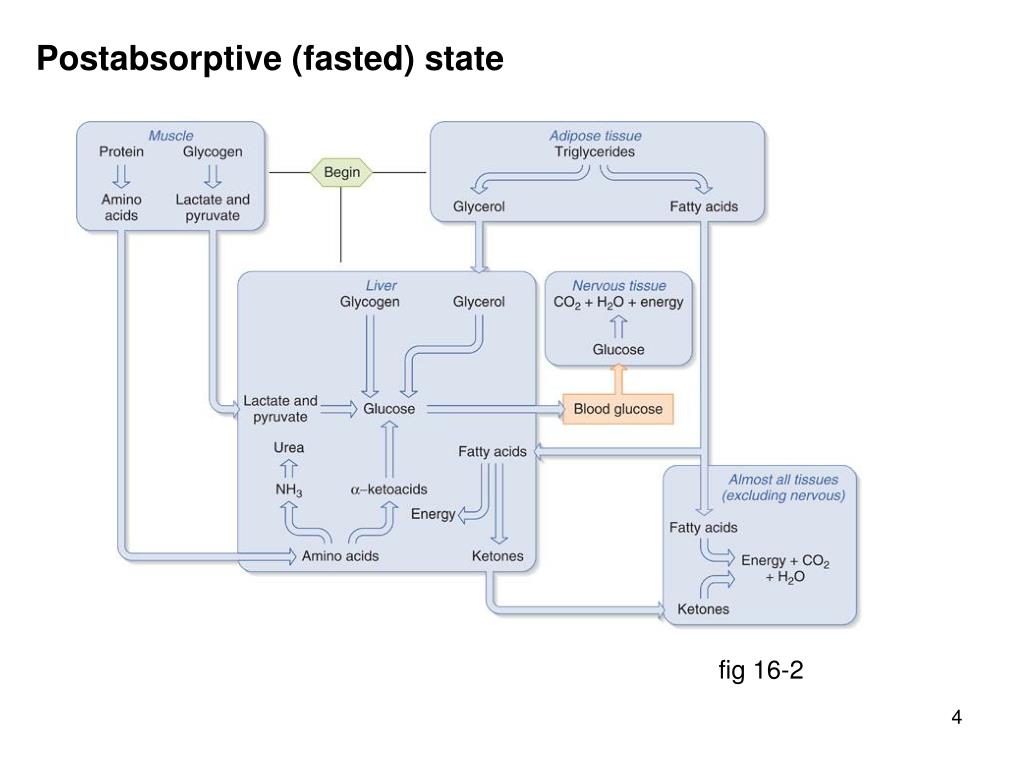
As you move from the fed state into the post-absorptive and then the fully fasted state, the priorities shift dramatically. The new prime directive is to maintain stable blood glucose for the brain and other glucose-dependent tissues.
Phase 1: Post-Absorptive State (Tapping the Glycogen Tank)
As we discussed, once nutrients from your meal are gone, insulin drops and glucagon rises. Glucagon's first command is to draw from the most accessible carbohydrate reserve: liver glycogen. For the first 12-18 hours of a fast, your body prioritizes the breakdown of this stored glycogen to release glucose into the blood.
Phase 2: The Fasted State (Switching to Fat and Ketones)
Once liver glycogen is significantly depleted, the body must enact a more profound strategy. This transition is sometimes called the "Glucose-to-Ketone (G-to-K) Switch."
Your body now prioritizes two main processes to fuel itself:
-
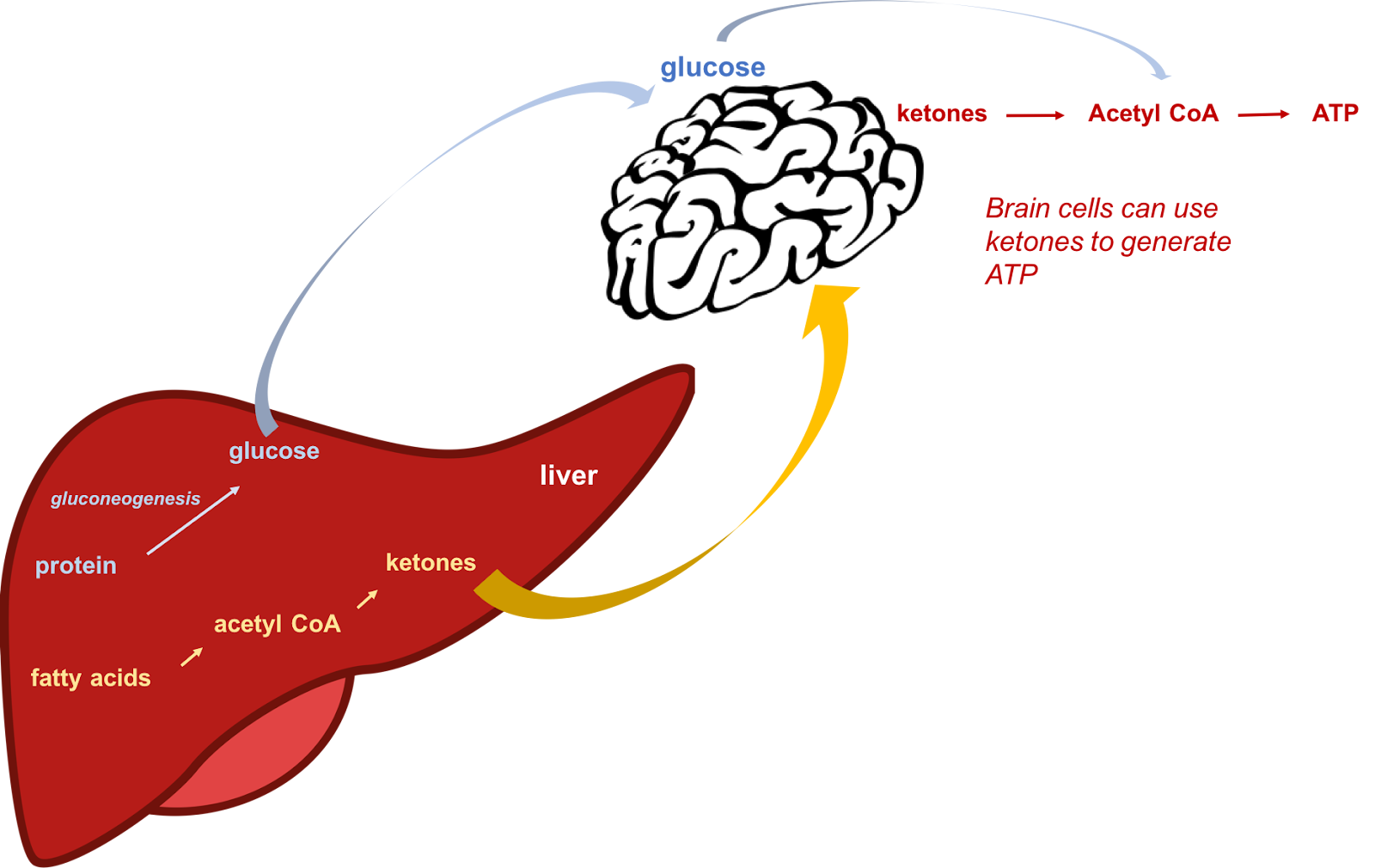
Fueling the Body with Fat: With glucose and glycogen stores low, the hormonal environment (low insulin, high glucagon) signals fat cells to release their stored fatty acids in massive quantities. These fatty acids become the primary fuel for most of your body's tissues, including your heart and muscles. Your RQ drops towards 0.7, indicating a switch to fat as the dominant fuel.
-
Fueling the Brain with Ketones: The brain cannot use fatty acids directly. To solve this, the liver begins a process called ketogenesis. It takes the flood of fatty acids and converts them into ketone bodies. These ketones are a clean, efficient, water-soluble fuel that can easily cross the blood-brain barrier. The brain then happily uses these ketones for energy, reducing its reliance on glucose. This is a crucial, muscle-sparing adaptation.
The following video provides an excellent and detailed explanation of this entire transition, from glycogen depletion to the production and use of ketones.
This segment from Dr Matt & Dr Mike is the core of today's lesson. It lucidly explains the transition from using stored glycogen to the dual strategy of making new glucose (gluconeogenesis) and, critically, making ketones from fat (ketogenesis) when the system is under prolonged fasting stress.
Watch from 14:53 to 19:40 to see how glycogen is used up first. Then, watch from 32:21 to 35:40. This second part is key: it explains why high rates of fat burning lead to ketone production and how the brain uses them as fuel. Pay attention to the logic of why acetyl-CoA starts to form ketones.
Conclusion
Today we've moved from what the metabolic states are to why they operate the way they do. By understanding the body's fuel prioritization system, you can see the logical pathway to inducing ketosis.
Key Takeaways:
- The body follows a fuel hierarchy called oxidative priority: it burns what it can't store. The order is alcohol -> protein -> carbs -> fat.
- In the fed state, the presence of carbohydrates promotes carbohydrate burning and fat storage.
- In the fasted state, once glycogen is depleted, the body prioritizes burning fat for energy.
- A key consequence of high rates of fat burning in the liver is the production of ketones, which serve as a critical alternative fuel for the brain.
You now have a clear mental model of how fuel selection works. The reason a ketogenic diet is effective at inducing ketosis is that it removes carbohydrates—a higher-priority fuel—from the equation, forcing the body to default to the next fuel on the list: fat.
In our next lesson, we will zoom in on the master regulators of this entire system: the hormones insulin and glucagon. We've introduced them, but next, we will describe their specific mechanisms of action in directing the storage and mobilization of all these fuels we've discussed.