Hello! Welcome back to our module on the bandeau bra.
In our previous lesson, we investigated the engineering behind strapless support, focusing on how wide bands, silicone grips, and side boning work together to keep a bandeau securely in place. We answered the question of how a bandeau defies gravity.
Today, we build directly on that knowledge. We will explore how those functional components are selectively used—or intentionally omitted—to create a wide variety of bandeau designs. Our learning outcome is to analyze style variations of the bandeau (e.g., structured, soft-stretch, longline). By the end of this lesson, you'll be able to identify different bandeau styles and understand the design trade-offs between support, comfort, and aesthetics for each.
A Spectrum of Style: From Simple to Structured
The term "bandeau" doesn't refer to a single, uniform design. Instead, it represents a category of garments that exist on a spectrum. At one end, you have the simplest form: a seamless, stretchy tube of fabric designed purely for comfort and minimal coverage. At the other end, you have highly engineered garments with underwires, molded cups, and extensive boning.
As a designer, you can navigate this spectrum by manipulating three key variables:
- Material: Ranging from simple cotton/spandex blends to high-tech microfibers, decorative lace, and even faux leather.
- Support Features: The inclusion or exclusion of the components we discussed previously—boning, silicone grips, underwire, and padding.
- Silhouette (Cut): The classic straight-across tube shape, a sweetheart neckline, or a "longline" version that extends further down the torso.
To understand these variations in practice, we will analyze three principal categories: the Soft-Stretch Bandeau, the Structured Bandeau, and the Longline Bandeau.
Analyzing Real-World Bandeau Variations
Let's move from theory to practice by analyzing a collection of contemporary bandeau designs. The following article from Women's Health reviews several popular styles, and by examining their features, we can clearly see our categories come to life.
11 Best Bandeau Bras Of 2024, Tested By Bra Fitters
This article, '11 Best Bandeau Bras Of 2024, Tested By Bra Fitters', provides detailed descriptions of various bandeau styles. It will serve as our primary source for analyzing real-world examples.
As we discuss each category below, please read the corresponding sections in the article. You don't need to read the whole article at once; refer to the specific products mentioned in each section of our lesson. Focus on identifying the materials used and the support features mentioned (or their absence).
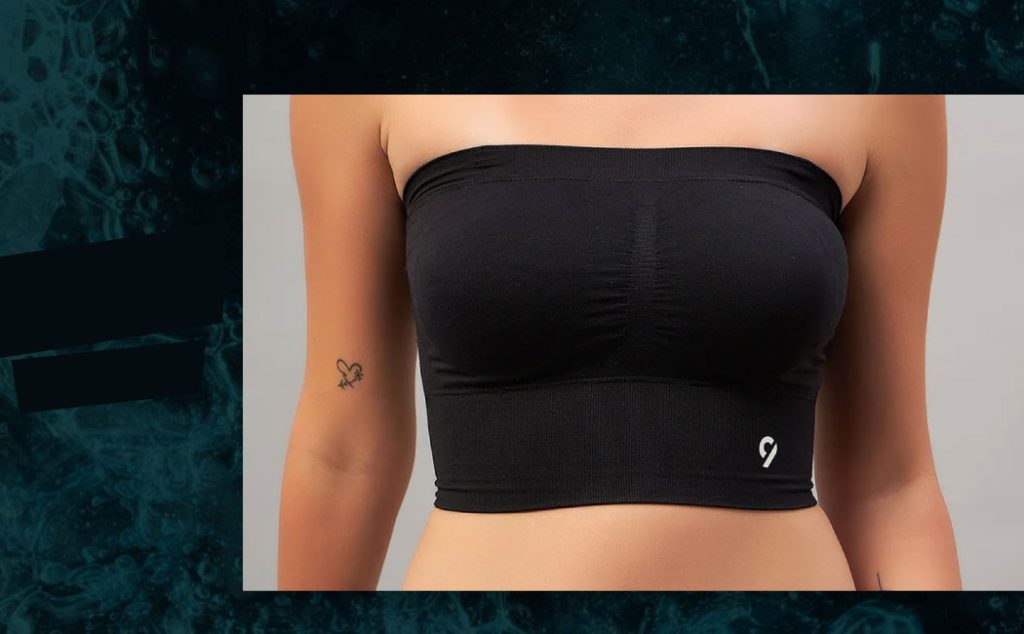
1. The Soft-Stretch Bandeau
This is the most fundamental style, prioritizing comfort and simplicity over significant support. It's often what people first picture when they hear "bandeau."
Key Characteristics:
- Construction: Typically a seamless, pull-on tube of fabric.
- Material: Made from very stretchy, soft fabrics like nylon/spandex blends, cotton, or ribbed knits.
- Support: Relies almost entirely on the compressive nature of the stretch fabric. Usually wire-free, unlined, or with simple, removable foam pads for modesty. Silicone grips may or may not be present.
Reading Analysis:
Please refer to the article you just opened and read about these examples of soft-stretch bandeaus:
- Boao Padded Bandeau Bra (under the "Best Overall Bandeau" heading)
- Hoerev Seamless Stretch Bandeau Bra
- Angool Strapless Bralette
Notice how the descriptions emphasize comfort, seamlessness, and stretch. The Boao and Hoerev styles feature removable pads but lack any rigid structure, relying on an elasticated band and the fabric's compression to stay up. The Angool model adds a slip-resistant silicone edge, a common feature to enhance security in even the simplest styles.
Design Trade-off: Maximum comfort and versatility, but offers minimal lift, shaping, or support. It's best suited for lounging or under casual garments where high support isn't the primary goal.
2. The Structured Bandeau
This category encompasses designs where shaping and support are primary objectives, incorporating more of the engineering elements we've studied.
Key Characteristics:
- Construction: Often features multi-part construction with seams, defined cups, and a back closure (hook-and-eye).
- Material: Can still use stretch fabrics but often incorporates less-stretchy lining, power mesh for reinforcement, or decorative fabrics like lace.
- Support: This is the defining feature. Structured bandeaus almost always include side boning and silicone grips. Many also feature underwire and molded or padded cups to provide significant lift, separation, and shape.
Reading Analysis:
Now, let's look at some structured examples in the same article. Please read about:
- Cosabella Never Say Never Flirtie Bandeau Bra (under "Best Bandeau Bra For Small Chests")
- Ahh by Rhonda Shear Unlined Underwire Bandeau Bra (under "Most Supportive Bandeau")
- Delimira Strapless Bra
The Cosabella style uses side boning and a silicone lining within a delicate lace design, balancing aesthetics with function. The Ahh by Rhonda Shear and Delimira bras are more heavily engineered. Both use underwire to lift and separate, preventing the "uniboob" effect common with simple bandeaus. The Delimira style also advertises high compression and side boning specifically for minimizing bounce, showcasing a design focused almost entirely on maximum support.
Design Trade-off: Provides superior support, lift, and a defined shape, making it suitable for more formal wear or for those who need more support. However, the use of underwire and boning can reduce comfort compared to a soft-stretch style.
3. The Longline Bandeau
The longline is a variation in silhouette that can be either soft or structured, but its defining characteristic is an extended band.
Key Characteristics:
- Construction: The band extends downwards, sometimes to the natural waist. This style can be a pull-on design or have a back closure.
- Material: Varies widely, from simple stretch knits to elaborate lace and boned panels.
- Support: The extra-wide band is a powerful support feature in itself. By distributing pressure over a much larger area of the torso, it creates a very secure anchor. Many structured longline bandeaus incorporate multiple boning channels for a corset-like effect.

Reading Analysis:
Finally, find TheMogan Seamless Bandeau Bra in the article.
This example is described as having a "cropped fit" and a longer band. It's presented as a simple, one-size style, but its extended length allows it to double as a tube top. This demonstrates how the longline cut is not just functional for support but can also be an aesthetic choice, blurring the line between underwear and outerwear. The Torrid Longline Bandeau mentioned in the Yahoo article (LINK) is another great example made of stretch lace, intended for plus-size figures where the wide band provides excellent security.
Design Trade-off: Offers excellent support and smoothing around the torso. The added coverage can also be a style feature. However, the extra fabric can feel more restrictive or warmer to wear than a standard bandeau.
Synthesis: Comparing Bandeau Styles
To solidify your understanding, let's summarize the variations in a table. This method of breaking down options by their attributes is a key part of the analytical process in both statistics and design.
| Feature | Soft-Stretch Bandeau | Structured Bandeau | Longline Bandeau |
|---|---|---|---|
| Primary Purpose | Comfort, light coverage, modesty | Support, lift, shaping | Maximum support, smoothing, outerwear styling |
| Common Materials | Seamless knits (nylon/spandex), cotton | Microfiber, power mesh, lace, molded foam | Stretch knits, lace, power mesh, satin |
| Support Features | Compressive fabric, optional light pads | Underwire, side boning, silicone grips, molded/padded cups | Extra-wide band, often with multiple boning channels, underwire |
| Best Use Case | Lounging, under casual tops, for smaller busts | Under formalwear, fitted tops, for medium-to-large busts | Under wedding dresses, as a crop top, for maximum security |
| Key Trade-off | Sacrifices support for comfort | Sacrifices some comfort for support and shape | Can feel restrictive but offers unparalleled support and styling |
Conclusion
Today we explored the diverse world of the bandeau, moving beyond a single definition to analyze its key variations. We saw how the selective use of materials and structural components creates a spectrum of styles, each with its own purpose and set of design trade-offs.
Key Takeaways:
- Bandeau styles can be categorized into three main types: soft-stretch, structured, and longline.
- Soft-stretch bandeaus prioritize comfort and are built from simple, seamless, stretchy fabrics with minimal internal structure.
- Structured bandeaus prioritize support and shaping, incorporating features like underwire, side boning, silicone grips, and molded cups.
- Longline bandeaus feature an extended band that provides enhanced support, smoothing, and can also serve as a fashion element.
- The choice of a bandeau style depends on the desired balance between comfort, support, shaping, and aesthetic purpose.
Next Up:
Now that you can identify these different styles and understand their functional characteristics, we are perfectly positioned for our next lesson. We will apply this knowledge to propose suitable pairings for a bandeau with both Western and Indian attire, connecting design features to specific fashion contexts.