Hello! Welcome back to our module on the bandeau bra.
In our last lesson, we defined the purpose of a bandeau as providing light, strapless coverage for specific garment styles, like off-the-shoulder tops and tube dresses. We established what it's for, but this raises a crucial engineering question: how does a simple band of fabric defy gravity and stay in place without straps?
Today, we'll answer that question. Our learning outcome is to explain how features like wide bands, silicone grips, and side boning provide support without straps. We will move from the fundamental physics of support to the specific design components that make a bandeau or any strapless bra functional.
1. The Engineering of Strapless Support
Before we look at individual components, it's helpful to understand the core principle that allows a bra to provide support without straps. In a standard bra, straps help counteract the downward force of gravity. In a strapless design, this job must be taken over entirely by the band.
The key forces at play are tension and friction. Given your background in statistics and probability, you're familiar with how systems can be modeled by understanding the forces acting upon them. Here, the bra band acts as a simple but effective physical system.
To understand this system, let's look at a clear explanation of bra support physics.
The Physics of a Supportive Bra Explained
The article 'The Physics of a Supportive Bra Explained' from the blog Hugs for Your Jugs breaks down the forces involved. We'll focus on how the band works to counteract the weight of the bust.
Please read the sections titled 'Overall force balancing in a bra' and 'Does this mean the straps are unimportant?'. Focus on how the band uses tension and friction to create support. The diagrams illustrating the 'normal force' are particularly important.
Let's break down the key takeaways from that reading:
- Tension Creates a Normal Force: When you wear a snug band, its elastic wants to contract. Your ribcage prevents this, creating an outward push against the band. In physics, this is called a normal force—a force exerted perpendicular to a surface.
- Normal Force Creates Friction: The amount of friction a surface can provide is directly proportional to the normal force. The tighter the band, the greater the normal force, and therefore the greater the potential friction between the band and your skin.
- Friction Counteracts Gravity: This friction is what resists the downward pull of gravity on the bra, preventing it from sliding down your torso.
In essence, a strapless bra works much like a belt holding up trousers. It's not the straps pulling up, but the band gripping horizontally. With this principle in mind, let's examine the specific features that designers use to maximize this effect.
2. The Three Pillars of Strapless Support
Designers employ a combination of features to make the friction-based support system reliable and comfortable. We will now examine the three most important ones mentioned in our learning outcome: wide bands, silicone grips, and side boning.
How does a strapless bra work?
The article 'How does a strapless bra work?' from Tutti Rouge provides a concise overview of the key structural elements. It explains the functional role of each component.
Please read the section under the heading 'Key Features of Strapless Bras'. Focus on the descriptions for 'Wide Band', 'Silicone or Rubber Lining', and 'Boning'.
Based on that reading and our understanding of physics, let's analyze each feature in detail.
Feature 1: The Wide Band
The width of the band is a critical design choice. A wider band is more effective for two main reasons:
- Increased Surface Area: A wider band increases the total surface area in contact with the skin. This provides more area over which friction can act, creating a more secure anchor.
- Pressure Distribution: It distributes the pressure required to create the normal force over a larger area of the torso. This prevents the band from digging in and makes the bra more comfortable to wear for extended periods.
Longline strapless bras, which extend further down the ribcage, are an excellent example of this principle taken to its logical conclusion for maximum support.
Feature 2: Silicone Grips
While a snug fit on fabric creates friction, designers can significantly enhance this by adding a material with a higher coefficient of friction. This is where silicone comes in.
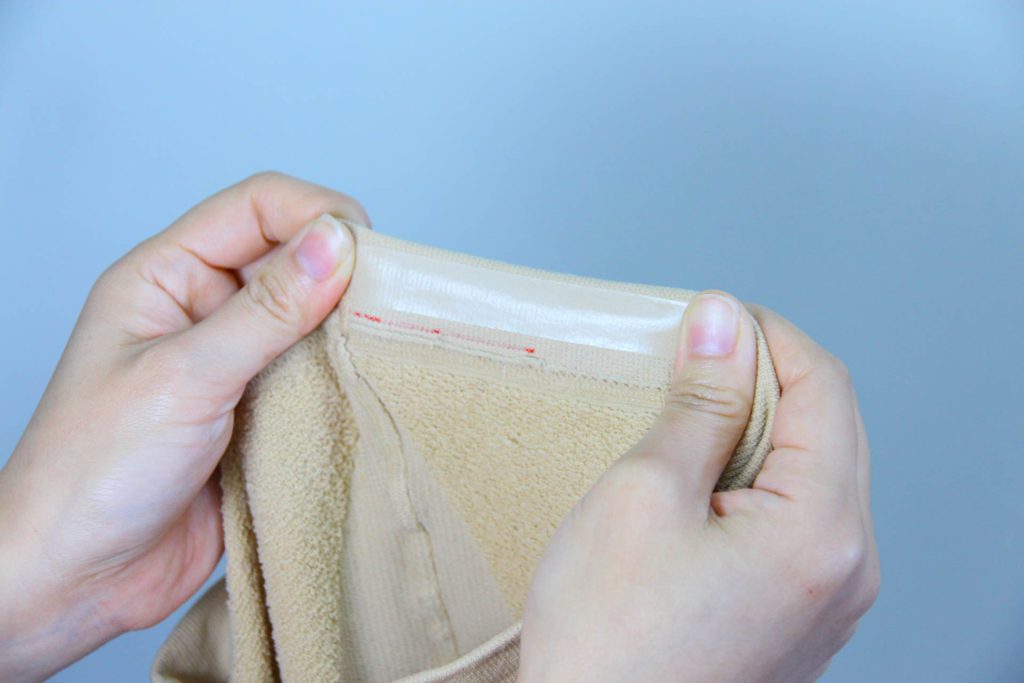
Silicone strips are typically applied along the top and/or bottom edges of the inside of the band. Their slightly "sticky" or "tacky" texture grips the skin much more effectively than fabric alone, dramatically increasing the frictional force that holds the bra in place. This feature is a direct and powerful solution to the problem of the band sliding down.
Feature 3: Side Boning
Even with a wide band and silicone grips, a soft, stretchy band is prone to rolling, bunching, or collapsing on itself, especially at the sides of the body. This would reduce the surface area in contact with the skin and compromise the support system.
Side boning is the solution. These are firm but flexible strips of plastic or metal sewn into vertical channels in the side seams of the band.
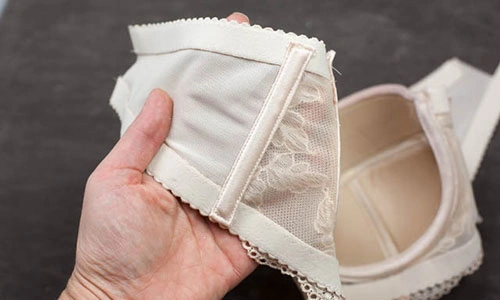
The purpose of side boning is purely structural:
- It provides vertical rigidity to the band, ensuring it lies flat against the body.
- It prevents the fabric from rolling or scrunching, maintaining the full width of the band so it can do its job of providing friction and distributing pressure.
Together, these three features form a robust system. The wide band creates the foundational anchor, the silicone grip enhances the hold, and the side boning ensures the entire structure maintains its shape and integrity.
Conclusion
Today, we deconstructed the engineering behind strapless support. We moved from the abstract physical principle of friction to the concrete design features that make a bandeau or strapless bra work effectively.
Key Takeaways:
- Strapless support relies on friction, which is generated by the normal force created by the tension of a snug band against the ribcage.
- A wide band is crucial because it increases the surface area for friction and distributes pressure for better comfort and support.
- Silicone grips are added to the inside of the band to significantly increase the coefficient of friction, providing a much stronger hold against the skin.
- Side boning provides vertical structure, preventing the band from rolling or bunching and ensuring it remains a stable anchor.
Next Up:
Now that we understand the functional components of a bandeau, we can explore how they are used to create different designs. In our next lesson, we will analyze style variations of the bandeau, from simple, soft-stretch tubes to more structured versions, and see how the features we discussed today are implemented in each.