Hello! Welcome to the final lesson in our module on the bandeau.
In our last session, we analyzed the key variations of the bandeau, categorizing them as soft-stretch, structured, and longline. We examined how different materials and support features (like boning, underwire, and silicone grips) result in distinct styles, each with a specific purpose.
Today, we'll put that knowledge into action. Our learning outcome is to propose suitable pairings for a bandeau with both Western and Indian attire. We'll move from understanding what a bandeau is to mastering how to use it. You'll learn to select the right bandeau style not just to go strapless, but to thoughtfully complement the structure, fabric, and purpose of any given outfit.
The Logic of a Perfect Pairing
Before we jump into specific outfits, let's establish a simple framework for making design choices. As a statistician, you're familiar with using models to make decisions based on multiple variables. We can apply a similar thought process here. When choosing a bandeau, consider these three questions:
- What is the garment's primary functional need? Does it require invisible support under a fitted fabric? Does it need robust lift for a formal silhouette? Or is the undergarment meant to be a visible, decorative layer?
- Which bandeau style meets this need? Based on our last lesson, would a soft-stretch, structured, or longline bandeau be most effective?
- How do the aesthetics align? Does the bandeau's neckline (e.g., straight-across, sweetheart), texture (seamless, lace), and color complement the outer garment?
This framework helps turn styling from a guessing game into a logical design process.
Styling the Bandeau with Western Attire
The bandeau is a staple in Western fashion, valued for its versatility in both casual and formal contexts. It can be a hidden problem-solver or a bold fashion statement.
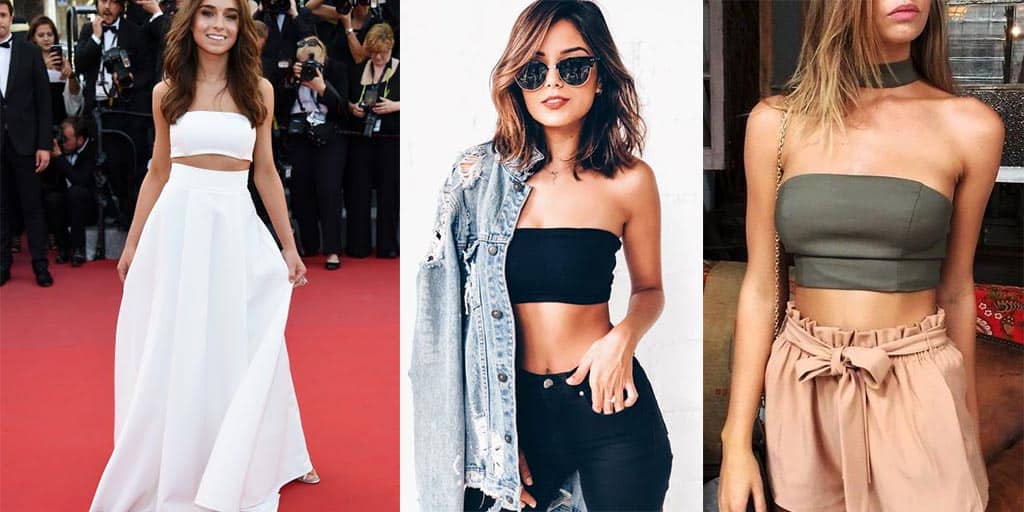
Let's explore some pairings using our framework. For a wealth of creative ideas, the following article provides some unconventional and fashion-forward ways to think about styling a bandeau.
Taking on the Trend: 15 Ways to Wear the Bandeau
This article, 'Taking on the Trend: 15 Ways to Wear the Bandeau', from NBC Connecticut offers a creative and extensive list of styling ideas. It's a great resource for thinking outside the box.
Read through the numbered list of 15 styling ideas. As you read, notice how the suggestions range from using the bandeau for coverage to making it the centerpiece of an outfit.
Now, let's analyze some key use cases:
1. Under Sheer, Loose, or Backless Garments
- Garment Need: Coverage and modesty, often with a deliberate pop of color or texture. Minimal support is required.
- Bandeau Solution: A soft-stretch bandeau. Its simplicity and comfort are ideal. As suggested in the article you just read (points 1, 2, and 13), a neon bandeau under a sheer lace blouse or a bandeau peeking out from an oversized t-shirt with cut-out armholes turns the bra into an intentional part of the design.
- Aesthetic Alignment: The key here is intention. A contrasting color creates a bold look, while a matching color offers a more subtle, tonal effect. A simple, seamless bandeau works best to not compete with the texture of a lace or sheer top.
2. Under Strapless and Off-Shoulder Formalwear
- Garment Need: Strong support, a defined shape, and a smooth silhouette under fitted fabrics like satin or crepe. The undergarment must be completely invisible.
- Bandeau Solution: A structured, underwired bandeau. This style provides the necessary lift and separation to prevent the "uniboob" effect and ensures the garment's neckline stays crisp. The internal structure (boning, molded cups) does the heavy lifting, which is crucial for dresses or heavier tops.
- Aesthetic Alignment: A seamless, molded-cup style, often called a "T-shirt bra bandeau," is the perfect choice. It disappears under fabric, as its function is purely structural. The first outfit in the collage image above (white bandeau with a flowing skirt) is a perfect example of a bandeau worn as a top in a formal context, which would require a structured design to maintain its shape.
3. As Outerwear (The Bandeau Top)
- Garment Need: To function as a top, providing full coverage and staying securely in place.
- Bandeau Solution: A longline bandeau or a decorative structured bandeau. The extended band of the longline style provides superior security and smoothing around the torso, making it feel less like underwear and more like a crop top. This look is often paired with high-waisted bottoms (skirts, pants, or shorts), as seen in the article (point 5) and in the second and third outfits in the collage image.
- Aesthetic Alignment: This is where aesthetics are paramount. Bandeaus made from lace, faux leather, or vibrant prints are designed specifically for this purpose. The choice depends entirely on the desired look—from a casual denim jacket pairing to a more edgy, high-fashion ensemble.
Styling the Bandeau with Indian Attire
The principles of pairing remain the same, but the garments change. The bandeau is exceptionally well-suited to many styles of Indian and Indo-Western clothing.
Let's start with an article that provides a solid foundation for these pairings.
What is Bandeau T-Shirt Bra? Simple guide
The article 'What is Bandeau T-Shirt Bra?' from Wacoal India directly addresses styling with ethnic wear. It will give us a starting point for our analysis.
Please read the section titled 'How to Style a Bandeau T-Shirt Bra?'. Pay close attention to the bullet point mentioning 'Strapless ethnic wear'.
The article confirms that the bandeau works beautifully with blouses, lehengas, and Indo-Western outfits. Let's break that down.
1. The Modern Saree Blouse
- Garment Need: A strapless blouse to pair with a saree, offering a modern, chic aesthetic. The blouse must provide full support, especially when made from heavy silks or brocades.
- Bandeau Solution: The "tube blouse" is essentially a structured longline bandeau designed as outerwear. It needs boning and often padded cups to maintain its shape and support the bust without straps. A standard structured bandeau can also be worn under a sheer saree where the pallu provides additional coverage.
- Aesthetic Alignment: The tube blouse becomes the centerpiece. It can be made from contrasting or matching fabric to the saree. The image below of actress Prajakta Mali is a perfect demonstration.

2. Under Lehenga and Sharara Cholis
- Garment Need: A secure, supportive, and often decorative strapless top to wear with a lehenga (skirt) or sharara (wide-legged pants). These outfits are heavy and worn for long events, so support is non-negotiable.
- Bandeau Solution: Similar to the saree blouse, this calls for a highly structured, often longline, bandeau-style choli. The extended band helps anchor the top and supports the weight of any heavy embroidery or fabric. For off-shoulder choli designs, an internal structured bandeau is built right into the garment.
3. With Sheer Kurtis and Indo-Western Jackets
- Garment Need: Modest coverage under a sheer or low-cut top, or to act as a crop top layer in an Indo-Western ensemble (e.g., under an open jacket with dhoti pants).
- Bandeau Solution: For sheer kurtis, a seamless soft-stretch or T-shirt bandeau in a nude or matching color provides invisible coverage. For layering, a decorative bandeau (lace, printed, etc.) can be used as a fashion element, just as in Western styling. The choice depends on whether the goal is invisibility or visibility.
- Aesthetic Alignment: A simple, seamless bandeau ensures the intricate work on a kurti remains the focus. When used as a visible layer, the bandeau's color and texture should be chosen to coordinate with the overall outfit, creating a cohesive Indo-Western look.
Conclusion
Today we connected the functional design of bandeaus to their practical application in styling. By analyzing the needs of an outfit, you can logically select the perfect bandeau for any occasion, whether you're styling a Western dress or a traditional Indian saree.
Key Takeaways:
- Choosing a bandeau is a strategic process guided by the garment's need for support, shape, and visibility.
- Soft-stretch bandeaus are ideal for casual, layered looks where comfort is key and high support is not required.
- Structured bandeaus are essential for providing shape and lift under fitted, formal, or strapless garments in both Western and Indian fashion (e.g., formal dresses, tube blouses).
- Longline bandeaus offer maximum support and can double as outerwear crop tops, pairing well with high-waisted bottoms.
- The same design logic applies across cultures; a structured bandeau provides the same functional benefit whether it's under a wedding dress or a lehenga choli.
Next Up:
This concludes our module on the bandeau. In our next lesson, we will begin a new module focusing on The Triangle Bikini Top. We'll start by defining its purpose and exploring how its design priorities shift from the street and formalwear we've been discussing to the unique demands of resort aesthetics and swimwear materials.