Introduction
In our last lesson, you successfully set up your financial 'homebase', laying the groundwork for tracking your business income and expenses. This is a crucial step for measuring profitability and preparing for taxes. However, running a digital business involves more than just managing money; it also requires managing legal risk, especially concerning the creative assets you use.
Today's lesson addresses a critical legal topic that trips up many new creators: identifying copyright and licensing requirements for using fonts, images, and other assets commercially. Your goal is to sell digital products, and to do that, you must ensure that every component you use—from a background image to the font in your logo—is legally cleared for commercial use. Getting this wrong can lead to serious legal and financial consequences.
We'll break this down into three parts:
- Copyright Fundamentals: What it is, what it protects, and why it matters.
- The Gray Area of Fair Use: A concept that is often misunderstood and risky to rely on.
- The Professional's Path - Licensing: How to safely and legally use other people's creative work, with a special focus on images and fonts.
By the end of this lesson, you'll have a systematic framework for evaluating assets, which is essential for building your business on a solid legal foundation.
1. Copyright Fundamentals: The Bedrock of Creative Ownership
Before you can understand licensing, you need to grasp what copyright is. In short, copyright is a legal right that automatically grants the creator of an original creative work exclusive rights to its use and distribution.
Many people have misconceptions about this. Let's start by watching a segment from a video by The Futur, where attorney Nancy Wolff dispels common myths and explains the core principles of copyright.
Fair Use & Copyright Laws For Artists
In this first clip from 'Fair Use & Copyright Laws For Artists', you'll learn why many common assumptions about copyright are wrong, what copyright is intended to protect, and what types of works are (and are not) covered.
Watch from 2:21 to 4:22 and from 5:55 to 10:56. Pay close attention to: The list of common pitfalls (e.g., 'I found it online,' 'I'll change it by 10%'). The core purpose of copyright from the US Constitution. The requirement for a work to be 'fixed in a tangible medium.' The list of things copyright does not protect, such as ideas, facts, and short phrases.
As you just saw, copyright protection is broad and automatic for creative works. The moment a photographer takes a picture or a designer creates an illustration, they own the copyright. This gives them a "bundle of rights," which includes the exclusive right to:
- Make copies of the work.
- Distribute the work.
- Create "derivative works" (adaptations or modifications).
- Publicly display or perform the work.
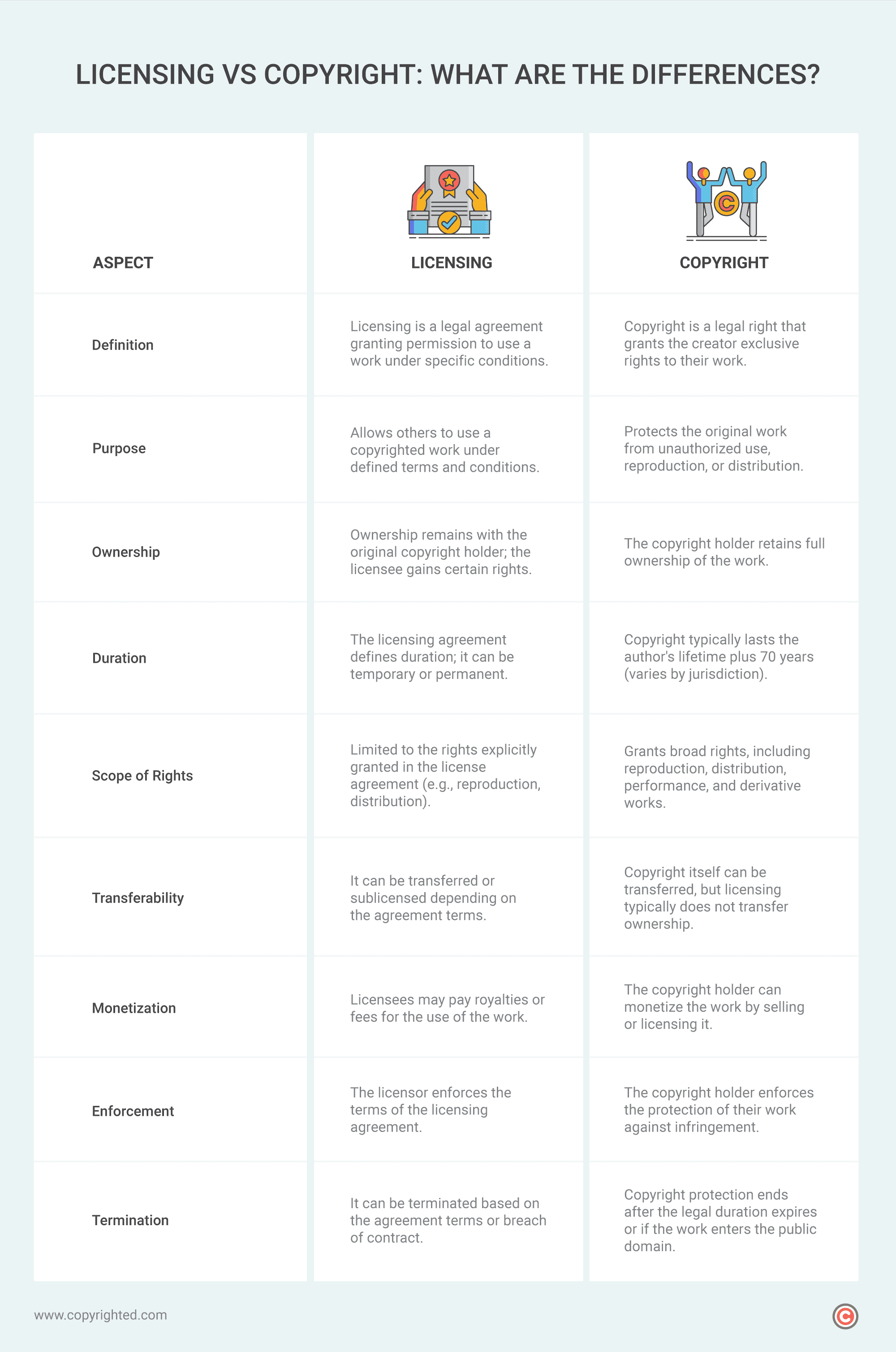
When you use someone else's work without permission, you are potentially infringing on one or more of these exclusive rights. This is where licensing comes in. A license is the formal permission from the copyright owner to use their work in specific ways.
This distinction is fundamental.
2. The Gray Area: Understanding Fair Use
You've probably heard the term "fair use." It's a legal doctrine that allows for the limited use of copyrighted material without permission from the rights holder for purposes such as criticism, comment, news reporting, teaching, scholarship, or research.
However, fair use is not a clear-cut rule; it's a four-factor legal defense that is decided on a case-by-case basis. Relying on it for commercial products is extremely risky.
Let's return to Nancy Wolff's explanation to understand why.
Fair Use & Copyright Laws For Artists
This segment provides a deep dive into the four factors of fair use and why it's so complicated. The examples discussed highlight how unpredictable the outcomes can be.
Watch from 26:47 to 42:07 and from 49:08 to 50:35. Focus on: The Four Factors: Especially the concept of 'transformative' use. The Market Effect: The fourth factor is critical for commercial use. If your use could harm the original creator's ability to make money, it's less likely to be fair use. The Examples: Notice how even courts can't easily decide what is and isn't fair use (the Richard Prince case). The Consequences: Understand the potential legal penalties for infringement, which reinforces why taking a risk isn't worth it.
The key takeaway: Fair use is a complex and subjective defense you might use after being sued. It is not a permission slip you can grant yourself beforehand. For building a business, you need certainty. That certainty comes from licensing.
3. The Solution: A Guide to Licensing Assets
Licensing is the professional and safe way to use creative assets. A license is a contract that defines exactly how you can use a work. To avoid legal trouble, your primary task is to find assets with licenses that permit your intended use—specifically, commercial use in digital products.
General Licensing: Creative Commons
A great place to start is with Creative Commons (CC) licenses. This is a standardized system that allows creators to grant permissions for free use under specific conditions. Understanding the codes is essential.

When searching for images, icons, or music on platforms like Flickr, Unsplash, or Pexels, always check for the license type. If it has an "NC" tag, you cannot use it in your products for sale.
Specifics: Font Licensing
Font licensing is notoriously complex and a common pitfall. The rules are not standardized; each font foundry sets its own terms in a contract called an End-User License Agreement (EULA).
The video 'Font Licensing Explained' by designer Harbor Bickmore provides a fantastic, practical overview of the challenges and common license types you'll encounter.
Watch from 0:00 to 1:12 and from 1:54 to 7:55. Pay attention to: The key message: There are no universal standards, so you must read the EULA. The different types of licenses (Desktop, Web, Logo, etc.) and what they permit. The warning against sketchy 'free font' websites. The distinction between Commercial, Personal, and Trial licenses.
To add another layer of precision, it's important to understand a key legal distinction that will resonate with your computer science background.
FONTS AND TYPEFACES-WHEN DO YOU NEED TO LICENSE?
The article 'FONTS AND TYPEFACES-WHEN DO YOU NEED TO LICENSE?' from CDAS Law explains a critical legal point that clarifies what you're actually licensing.
Read the sections 'Typeface vs. Font Distinction' and 'License to Use a Font for Logo Design'. Focus on understanding the difference between a typeface (the design) and a font (the software). Also, note the information about open-source fonts like those on Google Fonts.
Here's the analogy:
- Typeface: The design of the letters (e.g., the visual appearance of Helvetica). This is like a design concept. In the US, a typeface design itself is not protected by copyright.
- Font: The software file (
.otf,.ttf) that you install on your computer to render the typeface. This is a computer program. The font software is protected by copyright.
When you "buy a font," you are not buying the design; you are licensing the software. This is why the EULA is so important—it's a software license agreement.
A Safe Harbor: Google Fonts
As mentioned in the article, most fonts on Google Fonts are licensed under the SIL Open Font License (OFL). This license explicitly permits you to use the fonts in commercial products, modify them, and bundle them, as long as you don't sell the font files themselves. For someone on a budget, Google Fonts is an invaluable and legally safe resource for commercial projects.
Reading a License: What to Look For
Whether for an image, a font, or a piece of music, you need to be a detective.
Content Licensing for Creators: A Practical Guide
Finally, the 'Content Licensing for Creators' guide from Jacobs Counsel Law provides a high-level checklist of what to look for in any license agreement.
Briefly review this article, focusing on the 'License Types Comparison' table and the sections 'Key License Terms You Must Understand' and 'Red Flags in Licensing Agreements'. This will give you a mental model for quickly assessing a license.
When you find an asset you want to use, ask these questions:
- Is commercial use allowed? This is the first and most important filter.
- What type of license is it? (e.g., Desktop, Web, App). Does it cover my intended product? A wallpaper requires a different license than a website.
- Are there restrictions on the number of products/sales/views? Some licenses have limits.
- Is attribution required? Do I need to give credit to the creator?
- Are modifications allowed? Can I change the color, crop the image, or outline the font?
Always save a copy of the license for every asset you use in a commercial project. This is your proof of permission.
Conclusion
Today, we've navigated the essential legal landscape of using creative assets. Building a sustainable business means respecting the intellectual property of others, not just to be a good citizen, but to protect yourself from significant risk.
Key Takeaways:
- Copyright is automatic and gives creators exclusive rights over their work.
- Fair Use is a risky, subjective legal defense, not a reliable permission slip for commercial products.
- Licensing is the professional path. It is the explicit permission to use an asset under specific conditions defined in a contract (EULA).
- Always check for commercial use rights. Look for the "NC" (Non-Commercial) restriction in Creative Commons licenses and avoid those assets for products you intend to sell.
- For fonts, you are licensing the font (software), not the typeface (design). Resources like Google Fonts (with the OFL) are excellent, commercially-safe starting points.
- Become a license detective. When in doubt, assume you don't have permission. Always read the license.
Preview of the Next Lesson
Now that you understand the rules for using other creators' assets, the next step is to define the rules for your own. In our next lesson, we will begin to formalize your business policies by learning how to draft a refund policy and a Terms of Use agreement for your digital products. This will further solidify the professional foundation of your new venture.