Hello! Welcome back to your second lesson.
In our first session, we established the fundamental "why" by deconstructing the immense challenges of building an e-commerce platform from the ground up—covering development, hosting, security, and payments. You now have a solid grasp of the problem.
Today, we'll build directly on that foundation by examining the two primary categories of solutions: self-hosted platforms and Software-as-a-Service (SaaS) platforms. Our goal is to move beyond surface-level feature lists and compare them on a much more critical metric for any business or developer: the Total Cost of Ownership (TCO). This will give you the analytical framework to understand why a business might choose one model over the other, setting the stage for our deep dive into Shopify.
The Fundamental Divide: Renting vs. Owning
The most crucial difference between a platform like Shopify (SaaS) and a solution like WooCommerce (a self-hosted, open-source plugin for WordPress) can be understood through a powerful analogy: renting a furnished apartment versus owning a house.
To explore this concept, please read the following brief sections from an article on Qualimero.
Shopify vs WooCommerce: The Complete Comparison ...
This article, 'Shopify vs WooCommerce: The Complete Comparison', provides an excellent analogy to frame the core difference between the two models. Understanding this is key to everything that follows.
Please read the 'Key Insights' section at the beginning and the section titled 'The Fundamental Difference: Renting vs Building'. Focus on how the analogy of a furnished apartment (Shopify) versus owning a house (WooCommerce) explains the trade-offs between convenience and control.
This "rent vs. own" distinction directly maps to a technical concept you'll be familiar with from your IT background: the Shared Responsibility Model.
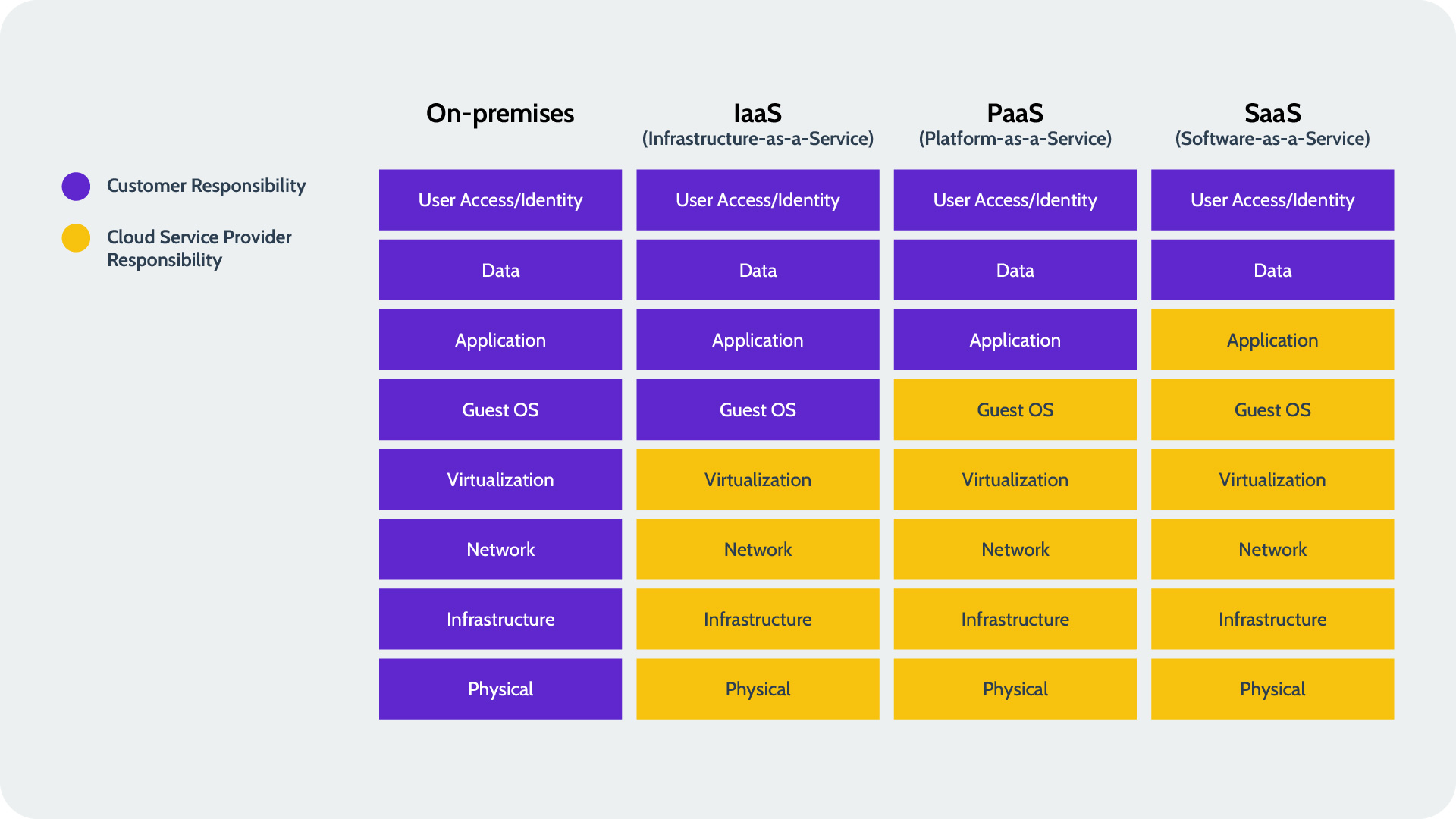
- WooCommerce (Self-Hosted): You "own" the house. You are responsible for the entire stack: the application, data, runtime, middleware, OS, servers, storage, and networking. While you might offload the physical server management to a hosting provider (making it more like IaaS), the responsibility for software updates, security patching, performance, and compatibility remains firmly on your shoulders.
- Shopify (SaaS): You "rent" the apartment. The provider manages everything up to the application level. Your responsibility is narrowed to managing your data (products, customers, orders) and configuring the parts of the platform they expose to you. The core infrastructure, security, and maintenance are handled for you.
This distribution of responsibility is the single biggest factor influencing the true cost of running a store.
Uncovering the Real Cost: The TCO Iceberg
Many comparisons mistakenly equate WooCommerce's "free" software with a lower cost. This ignores the vast, hidden costs of ownership. The Total Cost of Ownership (TCO) provides a more accurate picture.

For an e-commerce platform, the TCO includes:
- Visible Costs: Subscription fees, one-time theme purchases.
- Hidden Costs: Hosting fees, developer time for setup and maintenance, plugin/app licenses, transaction fees, security management, and the opportunity cost of time spent on infrastructure instead of growing the business.
Let's break down these hidden costs for each model.
The TCO of a Self-Hosted Solution (WooCommerce)
WooCommerce itself is a free plugin, but making it a functional, secure, and professional online store is far from free. The following video does an excellent job of debunking this myth.
The Ugly Truth About WooCommerce – Is It Really Free?
The video 'The Ugly Truth About WooCommerce – Is It Really Free?' directly confronts the misconception about WooCommerce's cost. It's a great primer on the 'hidden' costs we need to account for.
Please watch from 01:06 to 02:41 and from 09:57 to 11:38. The first segment covers the initial costs beyond the 'free' software. The second segment is crucial—it details the ongoing maintenance burden, which represents a significant hidden cost in TCO.
As the video highlights, the TCO for WooCommerce is a collection of various expenses and commitments:
- Infrastructure Costs:
- Hosting: This is not optional. A cheap shared host will lead to poor performance and security risks. A high-performance, managed WordPress/WooCommerce host can cost anywhere from $30 to $500+ per month.
- Domain Name: An annual fee.
- Software & Feature Costs:
- Theme: While free themes exist, professional stores almost always purchase a premium theme ($60 - $200+).
- Essential Plugins: The base WooCommerce is barebones. You will need to purchase and license plugins for things like advanced shipping, payment gateways, subscriptions, marketing automation, and legal compliance. This can easily add up to hundreds of dollars annually.
- The "Maintenance Tax":
- This is the most significant hidden cost. Since you are responsible for the system, you (or a developer you hire) must constantly perform updates for WordPress core, the WooCommerce plugin, and all other plugins.
- Each update carries a risk of creating conflicts and breaking your site, requiring troubleshooting and developer time. This "emergency spend" is unpredictable.
- Security & Compliance Costs:
- You are responsible for securing the server, implementing firewalls, scanning for malware, and ensuring PCI compliance. This requires either specialized plugins, a security service (like Sucuri), or a highly-skilled developer.
The TCO of a SaaS Solution (Shopify)
Shopify's model is designed for cost predictability. You pay a premium for the service, which in turn eliminates most of the hidden costs associated with the self-hosted model.
- Visible Costs:
- Monthly Subscription: A fixed fee based on your plan (e.g., Basic, Shopify, Advanced). This fee bundles hosting, security, maintenance, and a free SSL certificate.
- Theme: Similar to WooCommerce, you might purchase a premium theme ($200 - $350).
- Variable Costs:
- Transaction Fees: If you use Shopify Payments, you pay a standard credit card processing fee. If you use an external payment gateway, Shopify charges an additional fee on top of what that gateway charges. This is a key part of their business model.
- App Subscriptions: While many functions are built-in, you'll likely subscribe to apps from the Shopify App Store for specialized functionality. This is analogous to WooCommerce's plugin costs.
The key difference is what's included: enterprise-grade hosting that scales automatically, PCI compliance out-of-the-box, security monitoring, and all core software updates are handled for you. The "Maintenance Tax" and "Emergency Spend" are virtually eliminated.
Putting it All Together: A TCO Calculation
Let's make this concrete. The following resource provides a brilliant side-by-side cost analysis.
Shopify vs WooCommerce: The Complete Comparison ...
We'll now return to the 'Shopify vs WooCommerce' article from Qualimero, this time focusing on its excellent Total Cost of Ownership analysis. This section quantifies the concepts we've just discussed.
Please read the section 'Cost Analysis: The Real Dollar Reality in 2025'. Pay close attention to the scenario presented (a store with $10,000/month revenue) and the breakdown of costs for both Shopify and WooCommerce. Notice how 'Maintenance' is a major line item for WooCommerce.
As the analysis shows, for a store with $120,000 in annual revenue:
- Shopify (Basic Plan): ~$1,000 (fixed) + ~$4,000 (transaction fees) = ~$5,000 - $6,000
- WooCommerce (Professional setup): ~$800 (hosting/plugins) + ~$2,800 (maintenance) + ~$3,000 (payment fees) = ~$6,600
The numbers are surprisingly close, but the nature of the costs is very different. Shopify's costs are largely predictable and scale with revenue. WooCommerce's costs include a significant fixed component for maintenance, which represents developer time that could be spent on revenue-generating features.
Test your understanding!
Imagine you are advising a startup founder who is a talented product designer but has no technical background. They plan to launch a new product and expect to have high-traffic "flash sales" promoted by influencers.
Based on the TCO and shared responsibility principles, which platform would you recommend and why? Justify your answer by referencing at least two specific cost types (e.g., maintenance, hosting, transaction fees).
Show answer
For this founder, Shopify would be the strong recommendation.
Here's the justification based on TCO principles:
- Elimination of Maintenance & Emergency Costs: The founder is non-technical. The significant maintenance cost associated with WooCommerce (estimated at $2,800/year in our example) would require hiring a developer not just for setup, but for ongoing, risky tasks like updates and security. With Shopify, this cost is bundled into the predictable subscription fee.
- Scalable Hosting for Flash Sales: The expectation of high-traffic "flash sales" is a critical factor. With WooCommerce, this would require expensive, high-performance hosting and careful performance optimization to avoid the site crashing. A crash during a sale is a massive opportunity cost. Shopify's infrastructure is built to handle these traffic spikes automatically ("elastic scaling"), which is included in the subscription fee. The risk of downtime due to traffic is shifted to Shopify.
While Shopify's transaction fees might be slightly higher, the predictability and the offloading of technical risk and maintenance responsibilities far outweigh that for a non-technical founder whose business model depends on high-traffic events.
Conclusion
Today we moved past the simple "free vs. paid" debate to a more sophisticated understanding of platform costs. By applying the Total Cost of Ownership (TCO) model, we've seen how the "free" software of a self-hosted solution like WooCommerce comes with significant, often unpredictable, costs in hosting, maintenance, and developer time. In contrast, a SaaS platform like Shopify bundles these operational burdens into a predictable subscription model, trading some flexibility for convenience and stability.
Key Takeaways:
- Rent vs. Own: Shopify (SaaS) is like renting a managed apartment, while WooCommerce (self-hosted) is like owning a house you must maintain.
- TCO is King: The true cost of a platform includes hidden costs like maintenance, hosting, security, and developer time, which often exceed the visible "sticker price."
- Cost Predictability: Shopify's model offers high cost predictability, ideal for businesses that want to focus on sales and marketing.
- The "Maintenance Tax": Self-hosted solutions carry a significant, ongoing "tax" in the form of time and money spent on updates, security, and compatibility—a major factor in TCO.
In our next lesson, we will focus exclusively on Shopify. Now that you understand the context in which it operates, we will identify the specific problems it solves for merchants and explore its business model, including how its subscription tiers, transaction fees, and the app marketplace all fit together.