Hello! Welcome to the third lesson in our Shopify journey.
In our last session, we dove into the Total Cost of Ownership (TCO) and contrasted the "renting" model of a SaaS platform like Shopify with the "owning" model of a self-hosted solution like WooCommerce. You learned that the "free" price tag of open-source software often hides significant costs in maintenance, security, and developer time—what we called the "maintenance tax."
Today, we build directly on that understanding. Having established why a merchant would choose a SaaS model from a financial and operational standpoint, we will now identify the specific, concrete problems that Shopify solves for them. This lesson moves from the abstract world of TCO to the practical realities of running an online business. Our goal is to catalog the major headaches merchants face and map them to the features and architectural decisions that make up the Shopify platform.
From Technical Burdens to Business Focus
The single most important problem Shopify solves is abstracting away technical complexity. Merchants want to focus on their products, marketing, and customers, not on server administration, security patching, and database management. You have a deep background in IT services, so you know the immense effort required to maintain a secure, high-performance, and reliable infrastructure. Shopify's core value proposition is taking on that entire burden.
To see this in action, let's start with a quick video that succinctly contrasts the experience of growing a business on a self-hosted platform versus Shopify.
Shopify vs WooCommerce — Surprising Pros & Cons You Need to Know (Honest Review)
The video 'Shopify vs WooCommerce' provides a great summary of how Shopify removes technical headaches, allowing merchants to focus on growth.
Please watch from 01:05 to 02:10. Pay attention to how it describes Shopify as 'polished and streamlined' and how it handles hosting, security, and updates, allowing a business to simply 'scale' without worrying about the underlying tech breaking.
This concept of a managed, scalable, and secure foundation is the bedrock upon which all other solutions are built. Let's dig deeper into the specific problems this foundation solves.
Shopify vs. Custom Platform: Commerce just works on ...
Shopify's own comparison page against custom platforms, 'Commerce just works on Shopify', is effectively a catalog of the problems it aims to solve for large businesses, but the principles apply to merchants of all sizes. We'll use it to frame our discussion.
Please read the section titled 'Less maintenance, more value' and its subsection 'Managing your security posture is all risk, no reward'. Focus on the specific burdens Shopify takes on: PCI compliance, SOC compliance, SSL encryption, and fraud prevention.
As the article highlights, Shopify solves several critical technical problems out of the box:
- Hosting and Scalability: A merchant doesn't need to choose a hosting plan or worry if their site will crash during a Black Friday sale. Shopify's infrastructure handles traffic spikes automatically.
- Security: Shopify manages server security, provides free SSL certificates for all stores, and ensures the platform is secure. This is a huge responsibility lifted from the merchant.
- Compliance: Achieving PCI compliance (a requirement for handling credit card data) is a complex and expensive process. Shopify is PCI compliant by default, meaning any merchant using it is also covered.
- Maintenance and Updates: Shopify's engineering teams are constantly updating the platform, adding features, and patching vulnerabilities behind the scenes, with no action required from the merchant. This completely eliminates the "maintenance tax" we discussed in the last lesson.
Now, let's look at the specific commercial problems that merchants face in their day-to-day operations.
The Anatomy of a Commerce Problem
We can group the challenges of e-commerce into four key areas. Shopify provides a dedicated solution for each.
1. The Payment Problem: "How do I get paid?"
This is the most fundamental question in commerce. Setting up payment processing can be a complex technical and administrative task. Merchants need a way to accept credit cards and other payment methods securely and easily.
Shopify's primary solution is Shopify Payments.
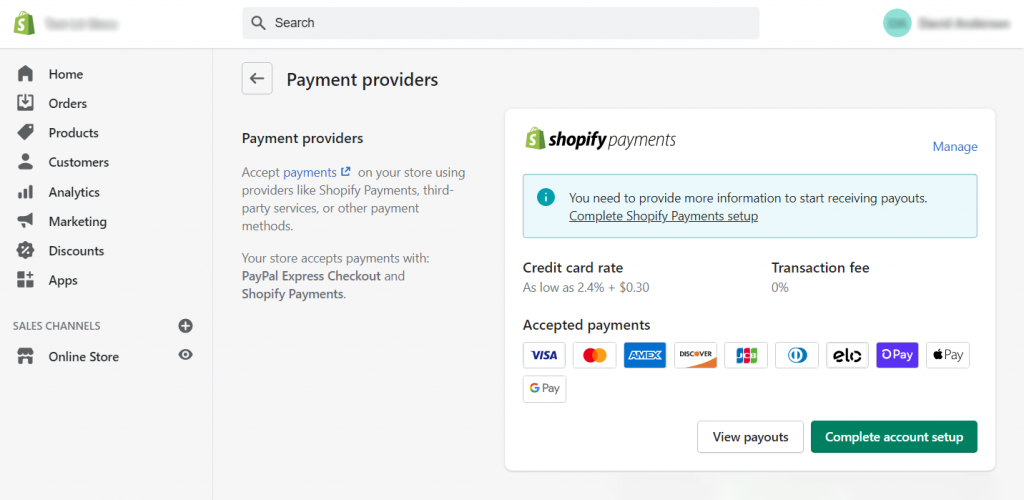
Shopify Payments is an integrated system that allows merchants to start accepting all major payment methods almost instantly. It solves:
- Complexity: No need to apply for a separate merchant account from a bank.
- Security: As mentioned, the entire checkout process is secure and PCI compliant.
- Integration: It works seamlessly with the rest of the Shopify platform for tracking orders and issuing refunds.
To understand the financial aspect and alternatives, let's watch a segment from an unbiased review of Shopify.
The UGLY Truth About Shopify - My Unbiased Review
This clip from 'The UGLY Truth About Shopify' explains how Shopify Payments works, its role in the ecosystem, and the transaction fees involved when using third-party gateways.
Watch from 04:20 to 05:24. This section details the transaction fee structure and the critical role of Shopify Payments. It shows how Shopify heavily incentivizes its own solution to simplify things for the merchant.
Beyond payments, Shopify also heavily optimizes the entire checkout experience to solve the problem of cart abandonment, which is a major source of lost revenue. They invest millions in A/B testing and optimizing their checkout flow, a benefit that every single merchant on the platform inherits.
2. The Operations Problem: "How do I manage my business?"
Once sales start coming in, a merchant is suddenly running a logistics operation. They need to manage products, track inventory, fulfill orders, and handle customer service.
Shopify provides a unified "commerce operating system" to solve this.
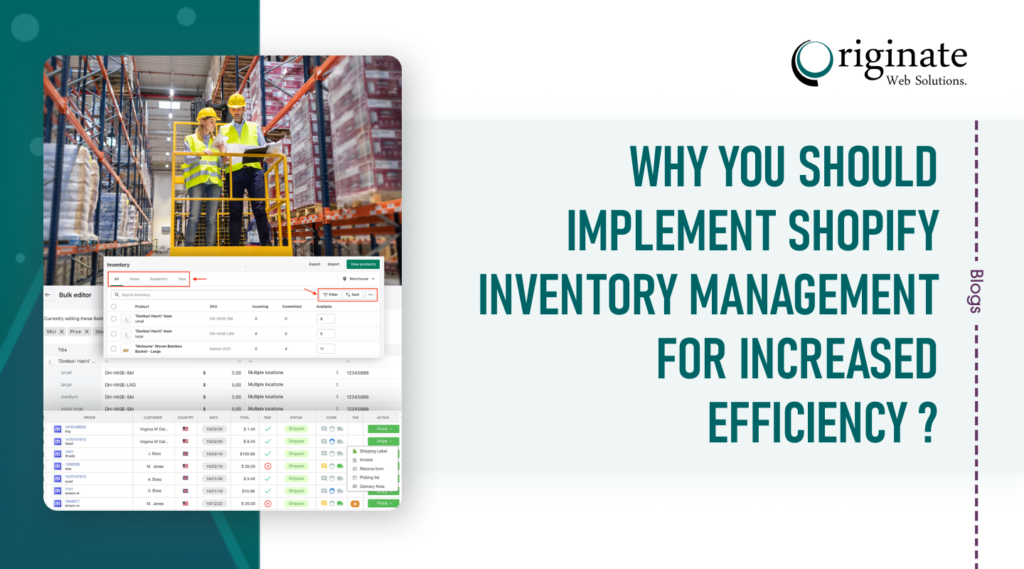
The core Shopify admin solves several operational problems:
- Product Management: Provides a user-friendly interface to add products, write descriptions, upload images, and define variants (e.g., size, color).
- Inventory Tracking: Automatically deducts stock as items are sold and can be used to manage inventory across multiple physical locations (e.g., warehouses, retail stores).
- Order Fulfillment: A clear workflow to track which orders have been paid for, need to be shipped, and have been delivered. It integrates directly with shipping carriers to print labels and get discounted rates.
- Customer Management: Creates a customer profile for every person who buys, allowing the merchant to see order history and manage relationships.
3. The Growth Problem: "How do I expand and add new features?"
A business's needs are never static. A merchant might want to start a loyalty program, sell subscriptions, improve their email marketing, or sell in-person at a market. On a custom-built site, each of these would be a major development project.
Shopify solves this with extensibility and multi-channel capabilities. The two primary tools for this are:
-
The Shopify App Store: With over 8,000 apps, this is arguably Shopify's biggest strength. It allows merchants to add complex functionality with a few clicks. Need a feature? "There's an app for that." This is the primary avenue where your future freelance work will come into play—building public apps for this store or private apps for individual clients.
-
Sales Channels: This feature lets merchants sell their products wherever their customers are, all managed from the same Shopify backend. They can sync their product catalog to sell directly on Facebook, Instagram, TikTok, and marketplaces like Amazon or eBay. With Shopify POS, they can sell in a physical retail store or at a pop-up market, with all inventory and sales data syncing back to their central dashboard.
4. The Marketing & Presentation Problem: "How do I build a brand and attract customers?"
A merchant needs more than just a functional backend; they need an attractive, professional storefront that reflects their brand and converts visitors into customers.
Shopify solves this with its theme architecture and marketing tools:
- Themes: A theme controls the look and feel of the online store. Shopify provides a Theme Store with both free and paid themes that are mobile-responsive and customizable without code. As a future theme developer, this is the layer you will work on most directly.
- Built-in Blogging: Content marketing is crucial for SEO and customer engagement. Shopify includes a blog with every store.
- Discount & Gift Card Engine: Easily create discount codes or promotions to drive sales.
- Analytics: Provides reports to help merchants understand their traffic sources and customer behavior.
To tie all these solutions together, please read through the following overview from Shopify's blog.
What Is Shopify and How Does It Work? (2026)
The article 'What Is Shopify and How Does It Work?' provides an excellent summary of the platform's features, framed as solutions to merchant needs.
Read the main section 'How Shopify works'. Scan through each of the sub-headings (Build an online store, Find products, Turn browsers into buyers, etc.). This will give you a comprehensive map of the problems we've discussed and Shopify's corresponding solutions.
Test your understanding!
A merchant sells handmade leather bags. Business is growing, and they face two new challenges:
- They want to start offering custom monogramming on the bags, which requires collecting text input from the customer on the product page.
- They want to sell their bags at local craft fairs on weekends, but need to ensure their inventory stays in sync with their online store to avoid overselling.
Which two aspects of the Shopify platform would directly solve these new problems, and how?
Show answer
-
For custom monogramming: The merchant would leverage Shopify's extensibility, likely through the Shopify App Store or by hiring a developer. They could find an app that allows adding custom fields to product pages. As a developer, you would solve this by modifying the theme to capture this information as a "line item property" when the product is added to the cart. This data is then attached to the order for the merchant to see.
-
For selling at craft fairs: The merchant would use Shopify POS (Point of Sale). This is a sales channel that includes a mobile app and optional hardware (like a card reader). When they sell a bag at the fair using Shopify POS, the transaction is processed through their Shopify account, and critically, the inventory for that bag is automatically updated across their entire system, including the online store. This prevents them from accidentally selling the same bag to an online customer.
Conclusion
Today, we've broken down the core challenges of e-commerce and mapped them to the specific solutions Shopify offers. You can now see that Shopify is much more than just a website builder; it's a comprehensive commerce platform designed to handle the technical, operational, and commercial burdens of selling online and in person.
Key Takeaways:
- Technical Abstraction: Shopify's primary role is to handle complex technical challenges like hosting, security, scalability, and compliance, allowing merchants to focus on their business.
- Integrated Payments: Shopify Payments drastically simplifies the process of accepting money securely.
- Unified Operations Hub: The Shopify admin acts as a central nervous system for managing products, inventory, orders, and customers.
- Growth Through Extensibility: The App Store and multi-channel sales capabilities (like Shopify POS) are the key tools that allow a business to grow and evolve without needing to switch platforms.
In our next lesson, we will explore Shopify's business model. Having seen the immense value Shopify provides to merchants, we will now examine how Shopify captures that value through its subscription plans, transaction fees, and the economics of its App and Theme Marketplaces. This will give you a complete picture of the ecosystem you are preparing to work in.