Hello! Welcome to the first lesson in our new module, "Driving Traffic with Social Media."
In the previous module, we focused entirely on Search Engine Optimization (SEO). You learned how to create and optimize content to attract visitors "passively" from search engines like Google. Now, we're shifting gears to a more active approach: using social media to connect with your audience and drive them to your affiliate website.
Today's lesson is a crucial first step in that journey. Our goal is to identify the most relevant social media platform for your niche based on audience research. Many beginners make the mistake of either trying to be on every platform at once or simply choosing the one they personally use the most. A strategic approach is far more effective and will save you a lot of wasted time and effort.
Let's learn how to make an informed, data-driven decision that aligns with your business goals.
1. The Golden Rule: Go Where Your Audience Is
Before we dive into the specifics of each platform, we need to establish the single most important principle of social media marketing: your personal preferences don't matter. The only thing that matters is where your potential customers spend their time.
This might sound obvious, but it's a fundamental mindset shift. You are now using social media as a business tool, not for personal entertainment.
To understand this concept more deeply, let's watch a short clip.
How to Choose the Right Social Media Platform for Your Business
In this video, 'How to Choose the Right Social Media Platform for Your Business,' Courtney Sanders explains why a business-first mindset is critical. Her personal story about recommending a platform she dislikes is a perfect illustration of this principle.
Please watch from 01:19 to 04:22. Pay close attention to her distinction between personal profiles and business profiles, and the core question you should be asking.
The key takeaway is simple: don't ask, "What platform do I like?" Ask, "Where are my ideal clients, and what platforms are they using to find information related to my niche?"
2. Who Are You Trying to Reach? A Quick Review
To find out where your audience is, you first need to be crystal clear on who they are. In Module 3, you started building a customer avatar. Now, let's refine that with a simple market research framework.
The video below introduces a helpful "Who, What, When, Where, Why" model. We're going to focus on the "Who" and "Where" aspects.
How To Do Market Research (Market Research 101)
The video 'How To Do Market Research (Market Research 101)' by Adam Erhart provides a simple but effective framework for understanding your target market. We'll use this to structure our thinking.
Watch from 03:19 to 05:42. As you watch, think about the niche you've chosen. Focus on the questions he asks for 'Who' (demographics, psychographics) and 'Where' (where are they active online?).
Quick Exercise (5 minutes)
Take a moment to answer the "Who" questions for your niche:
- Demographics: What is their likely age range, gender, income level, occupation?
- Psychographics: What are their values, interests, and lifestyle? What problems are they trying to solve?
Jotting these down will make the next step much easier. This profile is your guide for navigating the social media landscape.
3. Matching Your Audience to the Platforms
Now for the main event. We'll connect your audience profile to the specific characteristics of the major social media platforms. The best choice is where your audience's demographics and your niche's content style overlap.
The following article is a comprehensive guide to this process. We'll use it as our primary reference.
How Affiliate Marketers Use Social Media to Generate Sales
The Post-Planner article 'How Affiliate Marketers Use Social Media to Generate Sales' provides an excellent breakdown of the factors you need to consider when choosing a platform. It's packed with practical advice and data.
Please read the section titled 'How do you choose the best social media platforms for affiliates?'. Focus on the 8 factors it lists, especially 'Demographics' and 'Content style'.
Let's break down the most important factors from that article.
Factor 1: Demographics
This is your starting point. As the article states, "If your audience doesn’t hang out on the platform, nothing else matters."
This infographic gives you a great at-a-glance view of which platforms are popular with different age groups and genders.
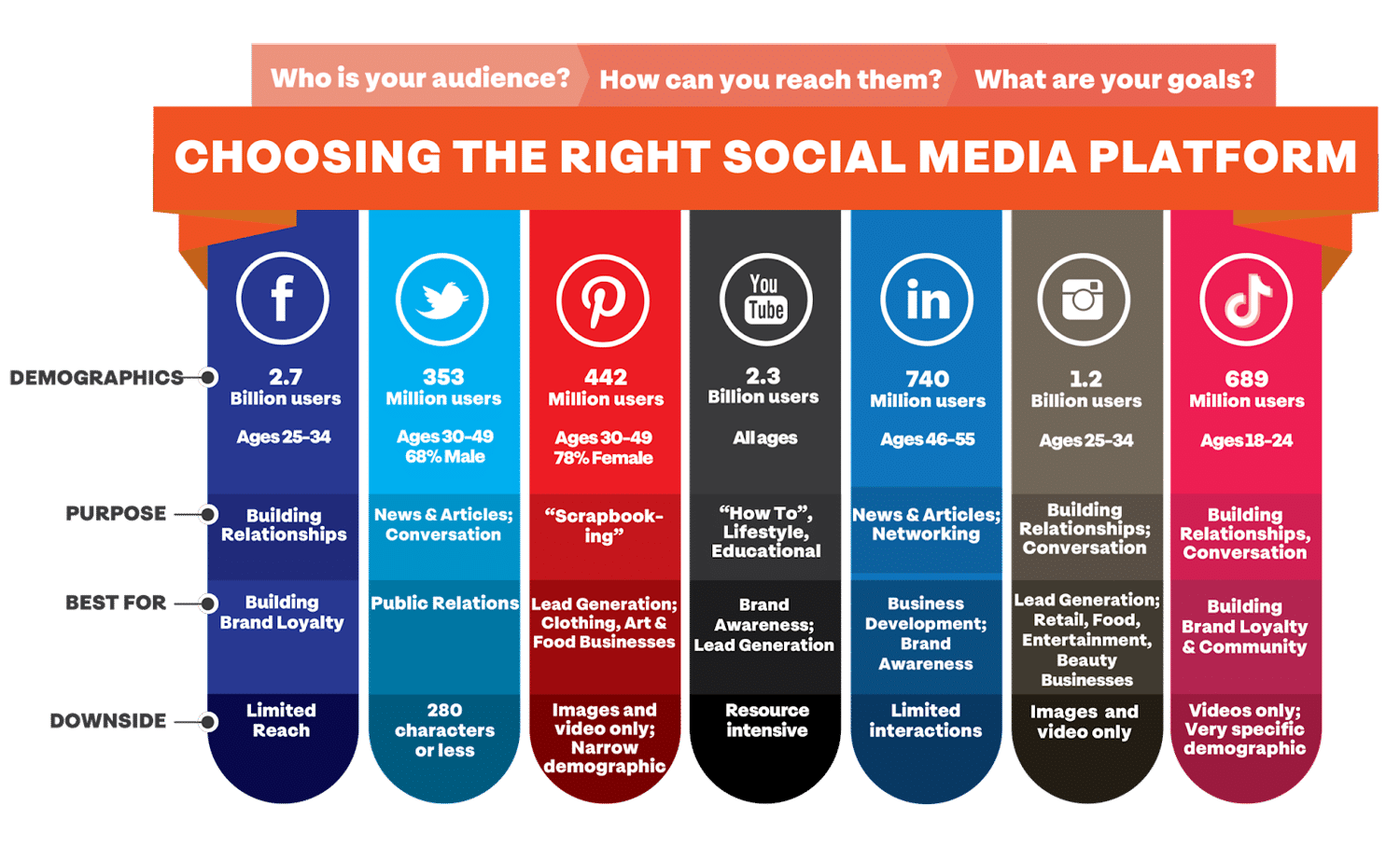
How to use this data:
- Selling to Gen Z (under 25)? TikTok and Instagram are non-negotiable.
- Targeting Millennials (25-40)? Facebook and Instagram are strong, but they are also active on YouTube and TikTok.
- Audience is 40+? Facebook and YouTube are your most reliable bets.
- Promoting professional or B2B products? LinkedIn is the primary choice.
Factor 2: Niche and Content Style
Every platform has a "vibe" and favors certain types of content. Your choice should align with the products you promote.
Another excellent resource, "The Best Social Media Platforms for Affiliate Marketing" from Affiverse, gives us a clear breakdown.
The Best Social Media Platforms for Affiliate Marketing
This article gives a data-rich overview of each platform's strengths for affiliate marketing.
Read the section 'Strategic Platform Selection: Matching Your Approach'. Pay attention to how it connects niches (like tech or beauty) to specific platforms.
Here's a summary of the best platform-niche pairings:
- YouTube: Best for niches requiring research and trust. Think software reviews, complex hobbies (like woodworking), financial advice, or tech tutorials. Its content has a very long "shelf-life," meaning a video can get views for years.
- TikTok: The king of discovery and trends. Ideal for products with a strong visual appeal, quick transformations, or that can be demonstrated easily. Niches like gadgets, beauty products, and side hustles do very well here.
- Instagram: A visual-first platform, perfect for lifestyle and aspirational niches. Fashion, travel, fitness, and home decor are classics. It's about building a brand and telling a story through images and short videos (Reels).
- Facebook: The community-builder. Its strength lies in Facebook Groups, where you can engage in discussions and build authority. It works well for niches that solve ongoing problems and attract an older demographic, like personal finance, health programs, or local services.
- Pinterest: A visual search engine for inspiration. Users are actively looking for ideas and solutions. It's a powerhouse for DIY, home decor, recipes, fashion, and wedding planning. Like YouTube, its content has a long shelf-life.
Factor 3: Your Business Goal (Growth vs. Nurture)
Finally, consider what you want to achieve right now. Are you trying to get discovered by new people, or build a deeper relationship with an existing audience?
- Growth Platforms (Finding new people): TikTok, YouTube, and participating in other people's Facebook Groups are excellent for reaching audiences who have never heard of you.
- Nurture Platforms (Building relationships): Instagram and your own Facebook Page/Group are better for deepening the connection with people who are already aware of you.
As a beginner, you will likely be focused on growth.
4. Making Your Decision
You've analyzed your audience, and you understand the strengths of each platform. It's time to choose.
Remember the advice from the resources: Pick ONE platform to start. Trying to master several at once is a recipe for burnout. You can always expand later.
Use this simple decision framework:
- Audience: Which platform is the best match for your audience's demographics?
- Content: Which platform's content style best fits your niche and your personal strengths (e.g., do you prefer writing, making quick videos, or producing in-depth tutorials)?
- Goal: Does the platform align with your initial goal of getting discovered?
Based on this, make a choice. There's no single "perfect" answer, but there is a "best fit" for you and your niche.
Conclusion
You now have a strategic framework for selecting a social media platform, moving you from guesswork to an educated decision. This single choice will shape your entire traffic generation strategy outside of SEO.
Key Takeaways:
- Audience First: Always choose the platform where your target customers are most active.
- Match the Medium: Align your platform choice with your niche and the type of content you can create consistently.
- Know the Strengths: Each platform serves a different purpose—YouTube for authority, TikTok for discovery, Facebook for community, Instagram for lifestyle, and Pinterest for inspiration.
- Focus on One: As a beginner, dedicate your energy to mastering a single platform before trying to expand.
Preview of the next lesson:
Now that you've identified the most promising platform for your affiliate business, what's next? In our next lesson, we will get practical and walk through how to set up a professional-looking social media profile and add a link to your website in the bio, turning your chosen platform into a real asset for your business.