Introduction
Welcome to the final lesson in our module on paid traffic! In the previous lesson, we established the foundational metrics for measuring ad performance: Reach, Clicks, Click-Through Rate (CTR), and Cost Per Click (CPC). You learned how to measure the activity your ads generate and how efficiently you're buying traffic.
However, traffic and clicks are only the means to an end. An affiliate business doesn't profit from clicks; it profits from sales. This brings us to the most crucial concept in performance marketing: the conversion.
In this lesson, you will learn to explain the concept of a conversion and why tracking it is essential for profitability. We will move beyond measuring activity and focus on measuring results. Understanding this principle is the difference between simply spending money on ads and strategically investing it for a return.
1. What is a Conversion?
At its core, a conversion is simply the specific, valuable action you want a user to take after they click your ad. It's the moment a visitor "converts" from a passive browser into an active customer or lead.
To get a formal definition and understand the different types of conversions, let's start with a foundational article.
What is conversion? A complete guide for beginners
This article, 'What is conversion? A complete guide for beginners', clearly defines the concept and introduces the important distinction between primary and secondary goals.
Read the sections 'Conversion - what is it?' and 'Understanding the different types of conversion'. Focus on the definitions of conversion, macro-conversions, and micro-conversions.
As you just read, conversions can be split into two main categories:
- Macro-conversions: This is your primary business goal. For an affiliate marketer promoting a ClickBank product, the ultimate macro-conversion is a sale. This is the action that generates your commission.
- Micro-conversions: These are smaller, intermediate actions that a user takes on the path to the main goal. They indicate interest and engagement. For your affiliate business, micro-conversions could include:
- Subscribing to your email list.
- Clicking the affiliate link on your review page (a "HopLink" in ClickBank terms).
- Reaching the product's checkout page (an "Order Form Impression" in ClickBank).
While your main focus is on the sale (macro-conversion), tracking micro-conversions helps you understand your user's journey and diagnose where you might be losing potential customers.
2. Why Tracking Conversions is Essential for Profitability
In the last lesson, we calculated CPC to measure cost efficiency. But a low CPC is meaningless if none of those cheap clicks result in a sale. Conversion tracking is what connects your ad spend directly to business outcomes. It's the only way to know if your campaigns are actually making money.
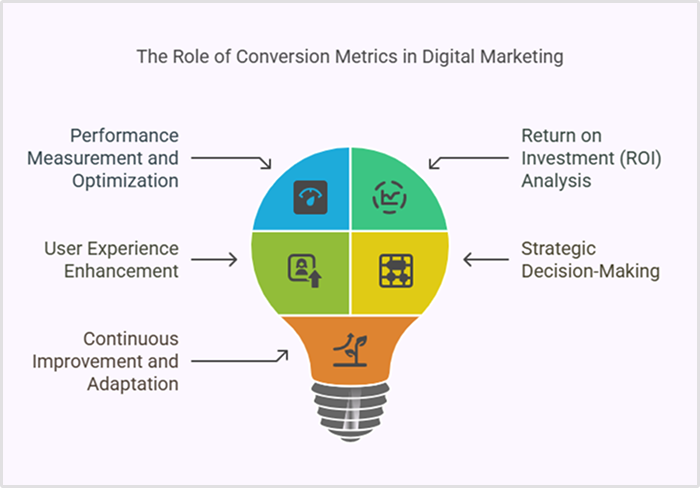
Let's explore the key reasons why tracking is non-negotiable.
PPC Conversion Tracking Guide for Maximum ROI
This guide on PPC conversion tracking provides a concise and powerful explanation of why this process is so critical for any paid advertising effort.
Read the section 'Why PPC Conversion Tracking Matters'. Pay attention to the bullet points that list the concrete benefits of having proper tracking in place.
As the article highlights, without conversion tracking, you are essentially guessing. With it, you can make data-driven decisions. This is possible because conversion tracking allows us to calculate the metrics that truly determine profitability.
3. The Metrics That Define Profitability
Once you start tracking conversions, you unlock a new, more powerful set of metrics. Let's watch a video that explains two of the most important ones: Cost Per Acquisition (CPA) and Return on Investment (ROI).
Marketing Analytics 101 (A Beginner’s Guide To Marketing Metrics)
In this video, marketing expert Adam Erhart breaks down how to calculate the cost and profitability of a marketing campaign. He provides a clear, step-by-step example.
Watch the segment from 04:30 to 06:57. Focus on how he calculates 'Cost Per Acquisition' (CPA) and then uses that, along with revenue and expenses, to determine the overall profit and 'Return on Investment' (ROI).
Let's formalize those key metrics:
-
Conversion Rate (CR): The percentage of people who complete the desired action after clicking your ad.
- Formula:
(Number of Conversions / Number of Link Clicks) * 100 - What it tells you: How effective your website/presell page and the product offer are at convincing visitors to buy.
- Formula:
-
Cost Per Acquisition (CPA): The average amount of money you spend to generate one conversion (one sale). This is arguably the single most important metric for an affiliate.
- Formula:
Total Ad Spend / Number of Conversions - What it tells you: Exactly what it costs you to make a sale. To be profitable, your CPA must be lower than the commission you earn per sale.
- Formula:
-
Return on Ad Spend (ROAS): Measures the total revenue generated for every dollar spent on advertising.
- Formula:
Total Revenue from Ads / Total Ad Spend - What it tells you: Your campaign's overall profitability. A ROAS of 300% (or 3x) means you made $3 in revenue for every $1 you spent. A ROAS below 100% means you're losing money.
- Formula:
4. Practical Application: Finding Your Break-Even Point
Knowing these formulas is one thing; applying them is another. The concept of CPA is directly tied to your "break-even point"—the maximum you can afford to pay for a sale before you start losing money.
Let's watch a segment that demonstrates this with a real-world formula.
The NEW Way To Run Facebook Ads in 2026
This video, while focused on Facebook Ads, contains a brilliant and simple explanation of how to calculate your break-even cost per purchase. This is the practical application of the CPA concept we've been discussing.
Watch the section from 10:02 to 11:07. Pay close attention to the formula for calculating the 'break-even point' and how it tells you immediately if you are making or losing money on a sale.
As the video explained, the formula is simple:
Break-Even CPA = Product Price - Cost of Goods
For an affiliate, it's even simpler: your "revenue" is the commission you receive. So:
Break-Even CPA = Your Affiliate Commission
If a ClickBank product pays you a $45 commission, your break-even CPA is $45.
- If your advertising platform (e.g., Facebook Ads Manager) shows your CPA is $30, you are making $15 profit per sale. Your campaign is working!
- If your CPA is $50, you are losing $5 on every sale. You must either improve your ads/website to lower your CPA or stop the campaign.
This is why conversion tracking is essential. Without it, you can't calculate your CPA and you have no idea if your business is profitable.
5. How Conversions Are Tracked
So, how do platforms like Facebook or Google know when a sale has happened on a different website like ClickBank? The process generally relies on a small piece of code called a tracking pixel or tag.
- You place a tracking pixel (e.g., the Facebook Pixel) on your website.
- When a user clicks your Facebook ad, Facebook "tags" that user with a cookie.
- The user visits your presell page and clicks your affiliate HopLink.
- Advanced affiliate platforms like ClickBank allow you to integrate your tracking pixel. When the user completes a purchase, they land on a "Thank You" or order confirmation page.
- Your pixel, placed on that confirmation page, fires. It sends a message back to Facebook saying, "Hey, the user you tagged just made a purchase!"
- Facebook records this as a conversion and attributes it to the ad the user originally clicked.
This allows the ad platform to calculate your CPA and ROAS, giving you the data you need to make profitable decisions.
Conclusion
Congratulations on completing this module! You've moved from the basics of ad creation to understanding the foundational metrics of both traffic and, most importantly, profitability.
Key Takeaways:
- A conversion is the ultimate goal of your ad campaign—for an affiliate, this is typically a sale.
- Tracking conversions is essential for profitability because it allows you to measure if your ad spend is generating a positive return.
- The key profitability metrics are Conversion Rate (CR), Cost Per Acquisition (CPA), and Return on Ad Spend (ROAS).
- Your goal is to ensure your CPA is lower than your affiliate commission. This is the fundamental rule for profitable affiliate advertising. Without conversion tracking, you cannot know this number.
Preview of the next module:
You now have the complete theoretical framework for running and measuring paid ad campaigns. In the next module, "Scaling Your Affiliate Business," we will put this knowledge into action. The first lesson will focus on analyzing your ClickBank and analytics data to identify your most profitable products and traffic channels, setting the stage for you to grow your side income into a full-time business.