Hello! Welcome back to your course on affiliate marketing with ClickBank.
In our last lesson, we focused on the art of writing a compelling headline. You learned that a great headline is a promise you make to your reader—a promise of a solution, an insight, or an interesting story. If the headline's job is to get the first click, then your content's job is to deliver on that promise and guide the reader toward a decision.
Today, we'll build the rest of the structure. This lesson directly addresses the learning outcome: Structure and write a product review article that builds trust and integrates an affiliate link naturally.
This is one of the most fundamental skills in your affiliate toolkit. A well-written review is not a sales pitch; it's a service. You are saving your audience time and helping them make a better decision. When you do this effectively, they will trust you, and the affiliate commissions will follow.
1. The Blueprint of a High-Converting Product Review
Before you write a single word, you need a plan. A scattered, disorganized review confuses readers and kills conversions. A structured review, on the other hand, logically guides your reader from their initial problem to your recommended solution.
To give you a practical, step-by-step workflow, we'll watch a video that breaks down the process into three phases: research, structuring, and writing.
How to write a high converting product review [SEO Optimized] - TUTORIAL
The video 'How to write a high converting product review' provides an excellent, beginner-friendly system for creating review articles. We will focus on the first two 'formats' which cover research and structure.
Watch the video from the beginning until 09:00. Pay close attention to: Format 1 (01:28 - 06:46): The key information you should gather from the product's sales page before you start writing. Format 2 (06:46 - 09:00): How to turn your research into the core sections of your review article. This will form the 'skeleton' of your article.
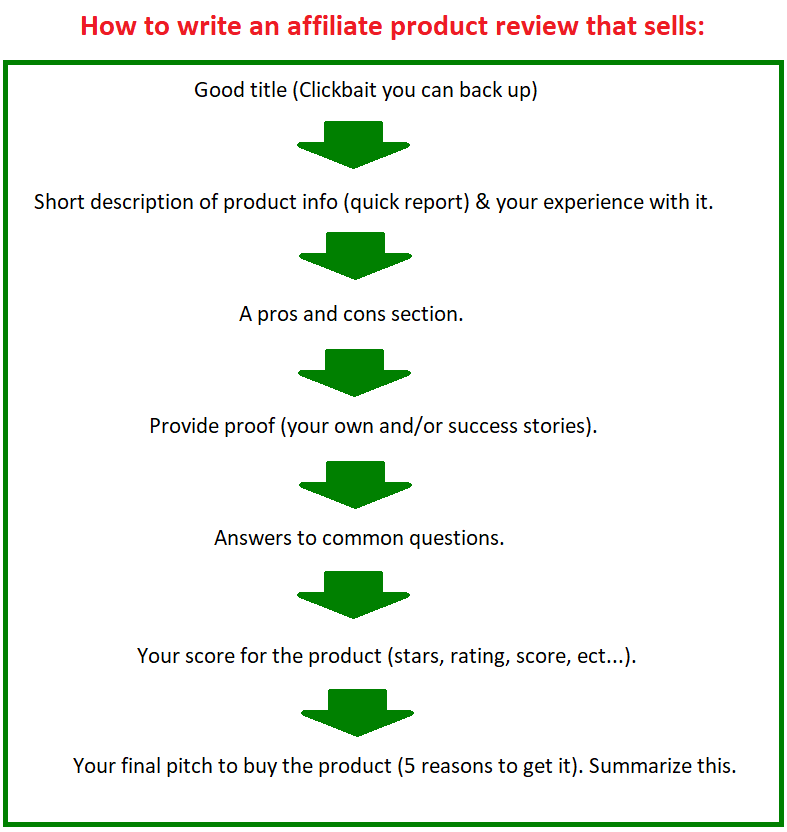
The video gives you a fantastic workflow. To summarize and build upon it, nearly all successful product reviews contain these core elements:
- Introduction: Hooks the reader, shows empathy for their problem, and establishes why they should trust you.
- Quick Summary / Verdict: A "TL;DR" (Too Long; Didn't Read) section near the top. This includes your overall rating, a quick pros-and-cons list, and who the product is best for. This serves the readers who are in a hurry.
- The Main Body: A deep dive into the product. This is where you explain what it is, how it works, and share your experience. This is built around its key features and, more importantly, its benefits.
- Pros and Cons: An honest, balanced look at the product's strengths and weaknesses. This is a huge trust-builder.
- Alternatives: Briefly mention 1-2 other options. This shows you've done your research and helps readers who might not be a perfect fit for the main product.
- Conclusion & Final Call to Action (CTA): A final summary of your recommendation and a clear instruction to the reader on what to do next (i.e., click your link).
These two images provide excellent visual summaries of this structure. Think of them as checklists to consult as you write.

2. Writing to Build Trust: The Art of Honest Persuasion
With the structure in place, it's time to focus on how you write. Your goal is to be a helpful guide, not a pushy salesperson. This is how you build long-term trust with your audience.
We'll explore a few key principles from an interview with an expert affiliate copywriter.
A. Your Introduction Is for Trust, Not Fluff
Readers are skeptical and impatient. Your first 100 words are critical. You must convince them that you understand their problem and that your review is worth their time.
How to Write Affiliate Reviews That Convert with Kevin Meng (Ep. 246)
In this segment from the Authority Hacker Podcast, expert Kevin Meng explains the biggest mistake affiliates make in their introductions and how to fix it by building immediate trust.
Watch the segment from 10:11 to 18:23. Focus on: Why you shouldn't start a review by explaining the obvious (e.g., explaining what 'hiking' is in a hiking boot review). The specific techniques you can use to build trust in your intro (e.g., mentioning hours of research, personal experience, etc.).
The key takeaway is to meet the reader where they are. They already know their problem; they're looking for a trustworthy solution. Your intro should signal that you are that trustworthy source.
B. Features Tell, but Benefits Sell
This is one of the most important concepts in all of marketing.
- A feature is what a product is or has (e.g., "This guide includes 50 keto recipes.").
- A benefit is what the product does for the user (e.g., "You'll never run out of delicious meal ideas, so you can stick to your diet without getting bored.").
Great reviews focus on benefits. To really master this, you need to think in layers.
How to Write Affiliate Reviews That Convert with Kevin Meng (Ep. 246)
Let's listen to Kevin Meng again as he explains the powerful concept of 'layers of benefits.' This is the key to connecting a product's features to your reader's deepest desires.
Watch from 22:58 to 27:52. Notice how he takes a simple feature (a piano with 60 keys) and drills down multiple layers to find the real emotional benefit for the customer.
Always ask "So what?" after stating a feature.
- "This product has feature X."
- "So what?"
- "Well, that means you get benefit Y."
- "So what?"
- "Which means you can finally achieve outcome Z."
That final outcome is what truly motivates the purchase.
C. Be Honest and Balanced
Nothing builds trust faster than transparency. No product is perfect. By openly discussing a product's drawbacks, you prove to the reader that you're giving them the full story, not just a sales pitch.
For a detailed look at how to structure this, let's turn to an excellent template from the ClickBank blog.
How to Write a Product Review for Affiliate Marketing
The ClickBank blog post 'How to Write a Product Review for Affiliate Marketing' provides a fantastic template and explanation for creating balanced reviews.
Read the sections titled 'What Makes a Perfect Product Review Post?' and 'Here’s a Basic Product Review Template.' Pay special attention to point #3, 'Mention Pros and Cons,' and point #4, 'Don’t Sell – Share Your Experience.'
The key is to frame the "cons" honestly. Sometimes a con for one person is irrelevant to another. For example:
- Con: "This software doesn't have a mobile app."
- Analysis: This is a deal-breaker for someone who works on the go, but irrelevant for someone who only works on their desktop. By stating it, you help the right people self-select.
3. Integrating Affiliate Links Naturally
Now, let's talk about the links themselves. "Integrating naturally" means placing your links where they are most helpful and logical for the reader to click. Avoid littering your post with links; instead, be strategic.
Based on the resources, a proven strategy is to place links in three key areas:
- At the Top: In your summary box or right after your introduction. This is for the people who came to your page ready to buy and just needed a quick confirmation. Give them a clear CTA like "Check Price on [Vendor Website]" or "My Verdict: Get It Here".
- In the Middle: Contextually within the body of your review. After you've described a powerful benefit, it's natural to place a link there. For example: "...and this unique cooking method is what allows you to get that crispy crust every time. You can see the full technique on the official website here."
- At the Bottom: In your conclusion. After you've summarized your entire argument, give a final, strong call to action. This is your last chance to persuade the reader.
Always use clear, action-oriented text for your links. Instead of a vague "click here," try "Learn More and Get the Best Price" or "Start Your Journey with [Product Name] Today."
4. Your Turn: Outline and Write
It's time to put theory into practice.
Scenario: We'll continue with the "Keto for Beginners" product from our last lesson.
- Product: A ClickBank guide to starting the keto diet.
- Audience: People who have tried other diets and failed because they found them too restrictive and joyless.
- Your Angle: This keto guide is different because it's packed with delicious, easy recipes that make weight loss enjoyable and sustainable.
Your Task:
- Outline Your Review: Using the structure from Part 1, list the main sections for your article (e.g., Intro, Product Summary, How It Works, Pros & Cons, etc.).
- Write the Introduction: Write a short introduction (around 100 words). Remember to hook the reader, show you understand their frustration with past diets, and establish why they should trust your take on this one.
- Find the Benefits: Imagine the guide has these three features. For each one, write the multi-layered benefit for your target audience.
- Feature 1: A "Pantry Purge" checklist. (Benefit: ...so that...)
- Feature 2: A 15-minute recipe section for busy weeknights. (Benefit: ...so that...)
- Feature 3: A guide to keto-friendly desserts. (Benefit: ...so that...)
Take your time with this exercise. This is the core thinking process you'll use for every review you write.
Conclusion
Today, you've learned how to build the most valuable piece of content in your affiliate marketing business: the product review. It's much more than a simple article; it's a machine for building trust and generating revenue.
Key Takeaways:
- Structure is key: A logical flow (Intro, Summary, Body, Conclusion) guides your reader and makes your argument more persuasive.
- Trust is your currency: Be honest, transparent, and balanced. Highlighting a product's flaws makes your praise more believable.
- Focus on benefits, not just features: Connect what the product has to how it will concretely improve your reader's life.
- Place links strategically: Put your affiliate links where they are most helpful and logical for the reader to click—top, middle, and bottom.
Preview of the next lesson:
Now that you know how to review a single product, what happens when your reader is stuck between two options? In our next lesson, we will learn how to structure and write a comparison article that evaluates two or more products for a specific audience need. This is another powerful content format that can lead to high conversions.