Hello! Welcome to your next lesson on creating high-value affiliate content.
In our last session, we explored the AIDA framework (Attention, Interest, Desire, Action) and how it provides a powerful structure for persuasive writing. We saw that the entire process begins with one crucial step: capturing Attention. If you can't get your reader to stop and notice your content, the rest of your message is lost.
Today, we're going to master that first step. This lesson is dedicated to the learning outcome: Write a compelling headline that grabs attention and addresses a specific audience problem.
Famed advertising executive David Ogilvy once said, "On the average, five times as many people read the headlines as read the body copy." This is why your headline is arguably the most important part of any article, ad, or email you create. It's your one shot to make a first impression and earn your reader's time.
1. The Three Pillars of a "Money-Making" Headline
Before we dive into specific formulas and tactics, let's establish the fundamental principles. A great headline doesn't just sound clever; it performs three specific jobs to draw in the right person and encourage them to read on.
To understand these core pillars, we'll watch a video directly from ClickBank's team. They break down what they look for in a headline that successfully drives sales.
How To Write A Money Making Headline: Copywriting for Beginners | Copywriting Tutorial 2021
This video, 'How To Write A Money Making Headline,' explains the three essential components that make a headline effective for affiliate marketing.
Watch the entire video (about 8 minutes). As you watch, take note of the three key elements the presenter discusses and the 'good vs. bad' examples he uses for each.
To recap, the video identifies three crucial elements for a powerful headline:
- Qualify Your Audience: The headline must immediately signal who the content is for. By including demographics (
59-year-old grandma), interests (for patriots), or problems (near deadly battle with cancer), you make your target reader think, "This is for me." - Create Interest & Curiosity: Your headline should present an idea that is peculiar, surprising, or combines two contrasting concepts. The example of an "unhealthy" person easily losing weight creates a "curiosity gap" that makes people want to know how.
- Provide Enough Information: While you want to be curious, you can't be vague. The reader must have a general idea of what the content is about (e.g., a "weird 8-pound solar device"). This builds trust and avoids the "scammy" feeling of a headline that promises everything but says nothing.
The ultimate goal of your headline isn't to make the sale; it's to sell the reader on reading the next sentence.
2. A Toolbox of Headline Tactics
Now that we understand the core strategy, let's fill your toolbox with specific, actionable tactics you can use to write great headlines. The ClickBank blog provides an excellent deep dive into this.
We're going to read through several of their top tips. You don't need to memorize them all at once, but aim to understand the principle behind each one.
12 Tips for Writing Affiliate Marketing Headlines
The article '12 Tips for Writing Affiliate Marketing Headlines' is a practical guide filled with proven techniques. We'll focus on the most impactful tips for getting started.
First, read the introduction. Then, read the following sections carefully: 1) Avoid Sensationalist or Clickbait Headlines 2) Keep Your Headlines Short 3) Use Numbers in Your Headline 5) Match Where Your Audience is At 6) Mind Your Language 7) Ask Questions That Demand Answers 10) Niche Down and Mention Your Target Audience Focus on the examples provided for each tip.
Let's distill those tips into a few key takeaways:
- Be Honest and Clear: Avoid clickbait at all costs. It destroys trust. Your headline must be an honest promise that your content will deliver on.
- Be Specific: Numbers, data, and calling out your specific audience (e.g., "For Stay-at-Home Moms," "For Beginner Bloggers") make your headline feel concrete and personalized.
- Be Engaging: Questions are naturally engaging because they open a loop in the reader's mind that they want to see closed.
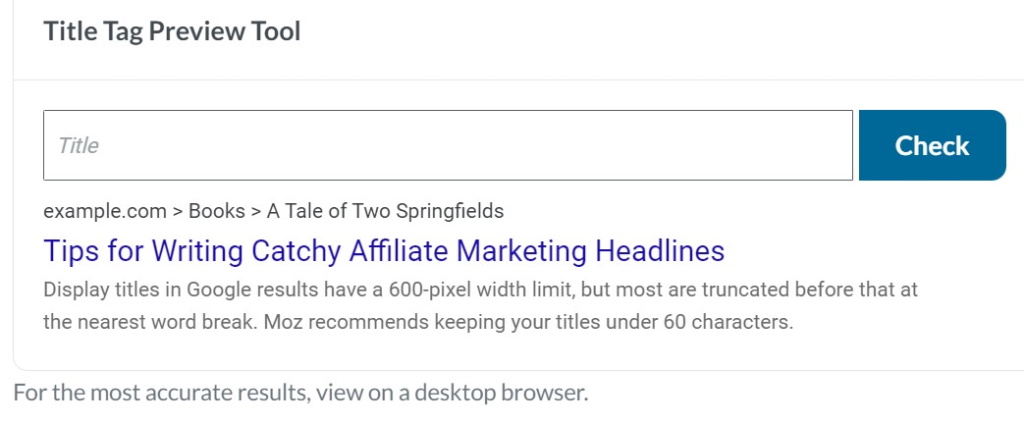
- Be Concise: Shorter is often better. As the article mentioned, platforms like Google will cut off long headlines. Tools can help you visualize this.
3. The 4-U Checklist for Evaluating Your Headlines
With so many tips and ideas, it can be helpful to have a simple checklist to run your headlines through. A popular and effective framework in copywriting is the "4 U's". Before you finalize a headline, ask yourself if it is:
- Useful: Does it promise a clear benefit or solution to the reader's problem?
- Ultra-specific: Does it use numbers, data, or narrow down the topic to give the reader a precise idea of what they'll get?
- Unique: Does it stand out from the competition? Is it phrased in a fresh or memorable way?
- Urgent: Does it encourage the reader to click now? (This is the most optional of the four, but can be powerful when used correctly, e.g., "What You Need to Know Before 2024").
A headline doesn't need to be perfect on all four points, but the stronger it is in each category, the more compelling it will be.
4. Your Turn: The Headline Writing Challenge
The single best way to get better at writing headlines is to write a lot of them. Professional copywriters often write 20-25 variations for a single piece of content before choosing the best one.
Let's try a mini version of this.
Scenario:
- Product: The "Keto for Beginners" ClickBank product.
- Audience: People who have tried other diets and failed.
- Pain Point: They believe all diets are restrictive, boring, and impossible to stick to.
- Solution: This Keto guide provides delicious, easy-to-make recipes that don't feel like "diet food," making it a sustainable lifestyle.
Your Task:
Write 5-7 different headlines for an article promoting this product to this audience. Try to use a different tactic for each one (e.g., use a number, ask a question, call out the audience).
Here are a few examples to get you started:
- 5 Reasons Your Last Diet Failed (And Why Keto Is Different)
- For Food Lovers Who Want to Lose Weight: The Keto Plan You'll Actually Enjoy
- Can You Really Eat Dessert Every Day and Still Burn Fat?
Write your headline variations in a notebook or document. Then, review them using the "4 U's" checklist. Which one do you think is the most compelling?
Conclusion
Today you've moved from understanding the theory of "Attention" to learning the practical craft of writing headlines that command it. This is a skill that will serve you at every stage of your affiliate marketing journey, from blog post titles to ad copy and email subject lines.
Key Takeaways:
- A great headline grabs attention by qualifying the right audience, creating curiosity, and clarifying the benefit.
- Effective tactics include using numbers, asking questions, keeping it concise, and directly addressing your audience.
- Always be honest in your headlines. Your content must deliver on the promise you make.
- The key to mastery is practice. Writing many variations is how professionals find the winning headline.
Preview of the next lesson:
A great headline makes a promise. In our next lesson, we'll learn how to fulfill that promise. We will cover how to structure and write a product review article that builds trust and integrates an affiliate link naturally. You'll learn how to take the reader from the initial click all the way to the call to action.