Hello! Welcome back.
In our last lesson, we built the foundation of your affiliate content strategy by learning how to write a detailed, trustworthy product review. You learned how to structure your article, build credibility, focus on benefits over features, and naturally integrate your affiliate links.
Today, we take the next logical step. What happens when your audience isn't just asking "Is this product good?" but "Which of these two products is better for me?" This lesson addresses exactly that, focusing on the learning outcome: Structure and write a comparison article that evaluates two or more products for a specific audience need.
Comparison posts, often called "vs." posts, are incredibly powerful. They target readers who are very close to making a purchase but are stuck in the final stages of decision-making. By helping them resolve this conflict, you provide immense value and can earn significant commissions.
1. The Strategic Role of a Comparison Post
Before we dive into the "how," let's understand the "why." Comparison posts don't exist in a vacuum. They are a key part of a broader content strategy that establishes your website as an authority in its niche.
A well-rounded affiliate site often has three main types of "money-making" content:
- General Roundups: "Best [Product Category] for [Audience]" (e.g., Best Keto Cookbooks for Beginners).
- Single Product Reviews: "[Product Name] Review" (which we covered last lesson).
- Branded Comparisons: "[Product A] vs. [Product B]" (our focus today).
These content types link together to form what's known as a "product cluster," creating a web of helpful information that both your readers and search engines like Google will value. To see how this fits together, let's watch a short video.
Content Strategy for Affiliate Marketing Sites [3.3]
This video from Ahrefs explains the concept of 'product clusters' and how different types of affiliate content, including branded comparisons, work together to build topical authority and make your content creation more efficient.
Watch the segment from 03:24 to 07:27. Focus on: How a general comparison post (like 'best car seats') connects to individual product reviews. How branded comparisons (like 'Graco vs. Britax') fit perfectly and easily into this structure.
As you can see, once you've written individual reviews, writing a comparison post becomes much easier because you've already done most of the research. This strategic approach makes your work more efficient and effective.
2. The Anatomy of a High-Converting Comparison Article
The key to a great comparison post is to understand the reader's mindset. They have likely narrowed their choices down and are now looking for a direct, side-by-side evaluation to help them make the final call. Your job is to facilitate that comparison clearly and honestly.
Let's look at a video that gives a clear, concise template for these "vs. posts."
Blog Post Templates to Write Money-Making Affiliate Content [4.2]
In this clip, also from Ahrefs, you'll get a flexible template specifically for writing branded comparison posts. It covers the essential elements from the introduction to the conclusion.
Watch from 07:55 to 09:51. Pay close attention to: The structure of the introduction and how it acknowledges the reader's dilemma. The main difference in the body content: comparing the differences between products, not just listing features.
Building on that template, a successful comparison article typically includes the following sections. We'll use a detailed guide to walk through the specifics.
How to Write a Product Comparison Blog Post
The article 'How to Write a Product Comparison Blog Post' from Blogging Guide offers an excellent step-by-step breakdown of the entire process. We will use it to structure our thinking.
Please read the introduction of the article and the main section titled 'How to Write a Comparison Blog Post.' This covers everything from research to making a final recommendation. We will refer back to its key points.
Let's break down the key steps from that article into a clear structure.
Step 1: Introduction - Acknowledge and Promise
As the Ahrefs video mentioned, your intro should immediately show the reader they're in the right place.
- Acknowledge they are choosing between two great options.
- State what the products are and who they are for.
- Promise to compare the key features to help them decide.
Step 2: The Quick Verdict & Comparison Table
Many readers are in a hurry. A summary table near the top of your post is essential for a good user experience. It allows readers to see the most important differences at a glance.
Your table should compare the products on the key criteria your audience cares about. This could include:
- Price
- Key Features
- Main Benefit
- Overall Rating
- A "Best For" summary (e.g., "Best for beginners," "Best for budget-conscious users")
Here are two examples of what these tables can look like, from simple to very detailed.

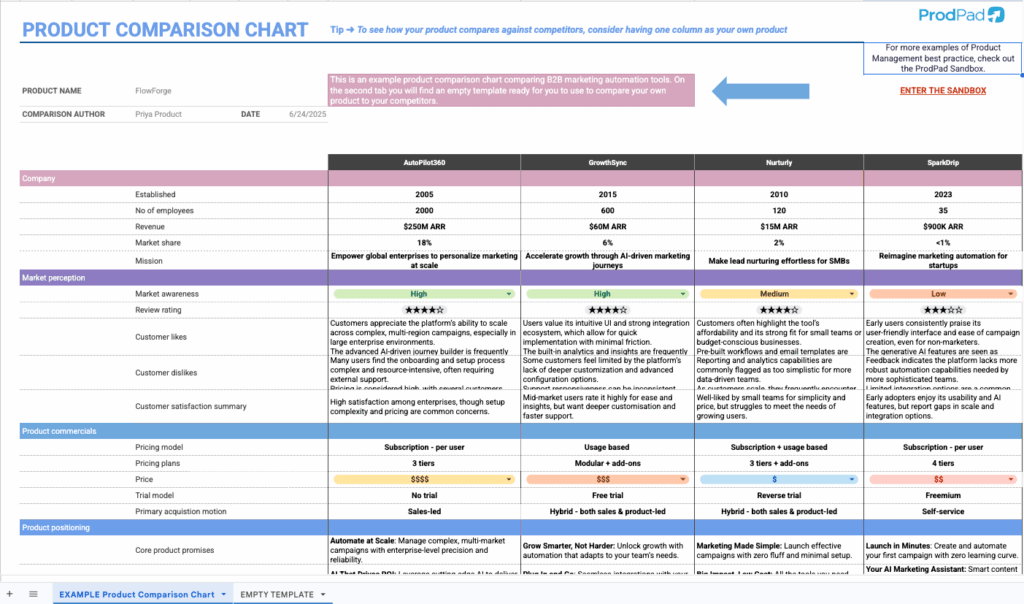
Step 3: The Head-to-Head Breakdown (The Body)
This is the core of your article. The most effective way to structure this section is by feature/criterion, not by product. Instead of reviewing Product A and then Product B, you compare them on the same point simultaneously.
For example, if you were comparing two keto diet guides, your headings might be:
- Recipe Variety & Quality: Product A vs. Product B
- Ease of Use & Structure: Product A vs. Product B
- Community & Support: Product A vs. Product B
- Price & Value for Money: Product A vs. Product B
Under each heading, you discuss how each product performs on that specific criterion. This direct comparison is exactly what your reader is looking for. As the Blogging Guide article suggests, this is where you "give a clear picture and examples" and explore the "unique features" of each.
Step 4: The Conclusion - Make a Clear Recommendation
This is where you bring it all together. After presenting the evidence, you must guide your reader to a final decision. As the ThirstyAffiliates article, "Affiliate Guide: How to Write a Post to Compare Two Products," suggests, you need a great closing statement.
The most trustworthy recommendations are often nuanced. Instead of declaring one product the absolute winner, you can guide different types of readers to the best choice for them. For example:
- "If you are a complete beginner who needs structure and accountability, Product A's daily plan is the clear winner."
- "However, if you are a self-starter on a tight budget, Product B offers incredible value and all the essential recipes you need to get started."
This approach demonstrates your expertise and proves that you have the reader's best interests at heart.
3. Your Turn: Outline a Comparison Post
Let's apply these concepts. We'll use a new scenario based on the ClickBank marketplace.
Scenario: You're in the "woodworking plans" niche. You've found two popular products on ClickBank that you want to compare.
- Product A: "Ted's Woodworking" - A massive collection of 16,000 plans. It's famous for its sheer volume but can be overwhelming. It's a one-time purchase.
- Product B: "Woodworker's Guild Monthly" - A subscription service that delivers 5-10 curated, high-quality plans each month, complete with video tutorials. It focuses on quality over quantity.
Your Task:
- Identify Comparison Criteria: List 3-4 key criteria that a potential woodworking customer would care about when choosing between these two products. (Hint: Think about quantity vs. quality, cost structure, learning support, etc.)
- Outline a Comparison Table: Sketch out a simple table. Use your criteria from step 1 as the rows and the two products as the columns. You don't need to fill in all the details, just create the structure.
- Write a Nuanced Recommendation: Write a short concluding paragraph (2-4 sentences) that recommends each product to a specific type of woodworker. Use the "If you are..., then..." format.
This exercise will help solidify your understanding of how to structure the core components of a comparison article.
Conclusion
You've now learned how to create one of the highest-converting content types in an affiliate marketer's toolkit. By directly addressing a buyer's final decision point, you provide immense value while positioning yourself for a sale.
Key Takeaways:
- Target the Decision-Maker: Comparison posts serve readers who are at the bottom of the marketing funnel, ready to buy.
- Structure by Criterion: The most effective comparison posts are structured head-to-head based on features (Price, Ease of Use, etc.), not as two separate reviews.
- Use Visuals: Comparison tables are essential for making your article skimmable and easy to understand.
- Recommend with Nuance: The most trustworthy conclusion often isn't about picking one winner, but about guiding different types of users to the best product for them.
Preview of the next lesson:
You now have the skills to write both single reviews and comparison posts. But how do you ensure the reader takes the final step and clicks your link? In our next lesson, we will focus on the art of persuasion by learning to write effective call-to-action (CTA) copy that encourages readers to click your affiliate link.