Hello! Welcome back to the course.
In our last lesson, you learned how to navigate Google Analytics to discover who your audience is and where they come from. That was a crucial step in understanding your traffic. Now, we're going to build directly on that by exploring why that audience might be interested in a solution you can offer.
This lesson focuses on a foundational concept in all of marketing and sales. We will be covering the learning outcome: Map audience pain points to the solutions offered by your chosen ClickBank product.
Essentially, you will learn how to move from knowing your audience's demographics to understanding their specific problems, frustrations, and desires—their "pain points." Then, you'll learn how to position a ClickBank product not as a collection of features, but as the perfect solution to those pains. This skill is the key to creating content that truly connects with people and persuades them to act.
Part 1: What Are Pain Points and Why Do They Matter?
A "pain point" is a specific problem that a prospective customer is experiencing. People don't buy products; they buy solutions. They buy a "transformation" from a state of pain to a state of relief or happiness. As an affiliate marketer, your job is to identify that pain and build a bridge to the solution your product offers.
To start, let's watch a short introduction that explains why understanding pain points is so fundamental to marketing.
How To Identify Customer Pain Points (Detailed Breakdown)
This video from Chrystabelle provides an excellent overview of why identifying customer pain points is the first step in positioning your product as a solution.
Watch the first 46 seconds of this video to understand the core concept and its importance.
Pain points can be categorized in many ways. For example, they could be related to:
- Productivity: "I'm wasting too much time on my current process."
- Financial: "I'm spending too much money on this problem," or "I'm not making enough money."
- Process: "This is too complicated and confusing."
- Support: "I can't get the help I need when I get stuck."
This image gives you a great visual breakdown of common pain points and their corresponding solutions in a business context.

Your goal is to find the specific pains that people in your niche have and show them how your chosen ClickBank product can make that pain go away.
Part 2: How to Find Your Audience's Pain Points
Since you are just starting and likely don't have a large audience or customer list to survey, your best strategy is to become a detective. You need to go where your target audience hangs out online and listen to their conversations.
Method 1: Eavesdrop in Online Communities
The easiest way to find out what people are struggling with is to observe them in their "natural habitat." This means joining forums, Facebook Groups, and Reddit communities (subreddits) related to your niche.
This strategy is so effective that it's the second step ClickBank themselves recommend for finding a good product to promote.
Find a ClickBank Product to Promote in 6 Easy Steps
Let's look at an article from the official ClickBank blog. It emphasizes the importance of understanding your customers by observing their online conversations.
Read 'Step 2: Understand your customers.' Notice how they specifically mention browsing online forums and Facebook Groups to find buyers' needs, wants, and pain points.
As you browse these communities, you aren't there to sell. You're there to listen. Pay attention to:
- The questions people ask over and over again.
- The frustrations they express.
- The wishes they have ("I wish there was a way to...").
- The exact words and phrases they use to describe their problems.
This video provides a more detailed breakdown of how to conduct this kind of research.
How To Identify Customer Pain Points (Detailed Breakdown)
This video explains exactly what to do once you're inside these online communities. It provides a great framework for your 'detective work.'
Watch the section from 03:15 to 04:59. The speaker explains how to use Facebook Groups, Reddit, and forums to observe conversations and identify common threads and pain points.
Method 2: Analyze Reviews and Comments
Another goldmine for pain points is the review and comment sections of existing products and content.
- Amazon Reviews: Look up popular books or products in your niche on Amazon. Read the 3-star reviews. These are often the most insightful, as customers detail what they liked but also what was missing or frustrating—these are your pain points!
- YouTube Comments: Find popular videos related to your topic. Read through the comments to see what questions people are asking and what they're still confused about.
This technique helps you understand what existing solutions are failing to provide, which creates an opening for the product you want to promote.
Part 3: Mapping Pain to Solution
Once you have a list of pain points, the next step is to connect each one to a specific feature or benefit of your ClickBank product. This is the "mapping" process.
A crucial part of this is to frame the solution not just as a feature, but as a transformation. You're not selling a workout plan; you're selling the feeling of confidence on the beach. You're not selling a woodworking guide; you're selling the pride of building a family heirloom.
How to Find Your Target Audience in 2025 6 Step Framework + Free Templates
This HubSpot video has a fantastic segment on identifying the 'real transformation' your offer provides. This mindset shift is key to effective marketing.
Watch from 01:06 to 02:32. Pay close attention to how the speaker differentiates between a 'service' and a 'solution to someone's actual problem.'
The Pain-Agitate-Solve (PAS) Framework
A simple and powerful way to structure this mapping is the Pain-Agitate-Solve (PAS) formula. It's a classic copywriting technique that works perfectly for affiliate content.
- Pain: State the customer's problem clearly, using the language you discovered in your research. This shows you understand them.
- Agitate: Pour a little salt on the wound. Describe the frustrations and negative emotions that come with the problem. This makes the pain more real and urgent.
- Solve: Introduce your product as the solution that makes the pain go away and delivers the desired transformation.
[PDF] Copywriting Master Class Lesson 14
This excerpt from a copywriting guide explains the PAS formula in detail with clear examples. It's a practical tool you can use immediately.
Read the section titled 'Pain–Agitate–Solve (PAS)' (page 6 in the PDF). Study the two examples for the mattress company and the holiday website to see the formula in action.
Let's Create a Map
Here's how you can organize your findings. Let's use a hypothetical ClickBank product: a "Keto Diet for Beginners" guide.
| Pain Point (The "Pain") | Agitation (The feeling) | Product Feature | Solution/Transformation (The "Solve") |
|---|---|---|---|
| "I want to try keto, but I don't know what I'm allowed to eat." | It feels overwhelming, and I'm afraid I'll do it wrong, waste money on the wrong groceries, and quit. | A 7-day meal plan with a complete shopping list. | Feel confident and prepared from day one. Walk into the grocery store knowing exactly what to buy, and start losing weight without the guesswork. |
| "I've tried diets before, but I always get bored and give up." | I feel like a failure, and I'm tired of eating bland, repetitive 'health food.' | A recipe book with over 100 delicious keto-friendly meals. | Discover that losing weight can be enjoyable. Enjoy delicious meals like keto pizza and chocolate mousse, making it easy to stick to the plan. |
Your Turn: Create Your Own Pain Point Map
Now it's time for you to become the detective. This exercise will be the foundation for the content you create later.
- Choose a Niche/Product: Pick a niche you're interested in and find a potential ClickBank product you might want to promote. (e.g., Dog Training, Woodworking Plans, Weight Loss).
- Go Research: Spend about 20-30 minutes exploring Reddit, Facebook groups, or forums related to that niche. Look for questions and complaints.
- Identify 3 Pain Points: Write down at least three distinct pain points you discover. Use the actual language people use.
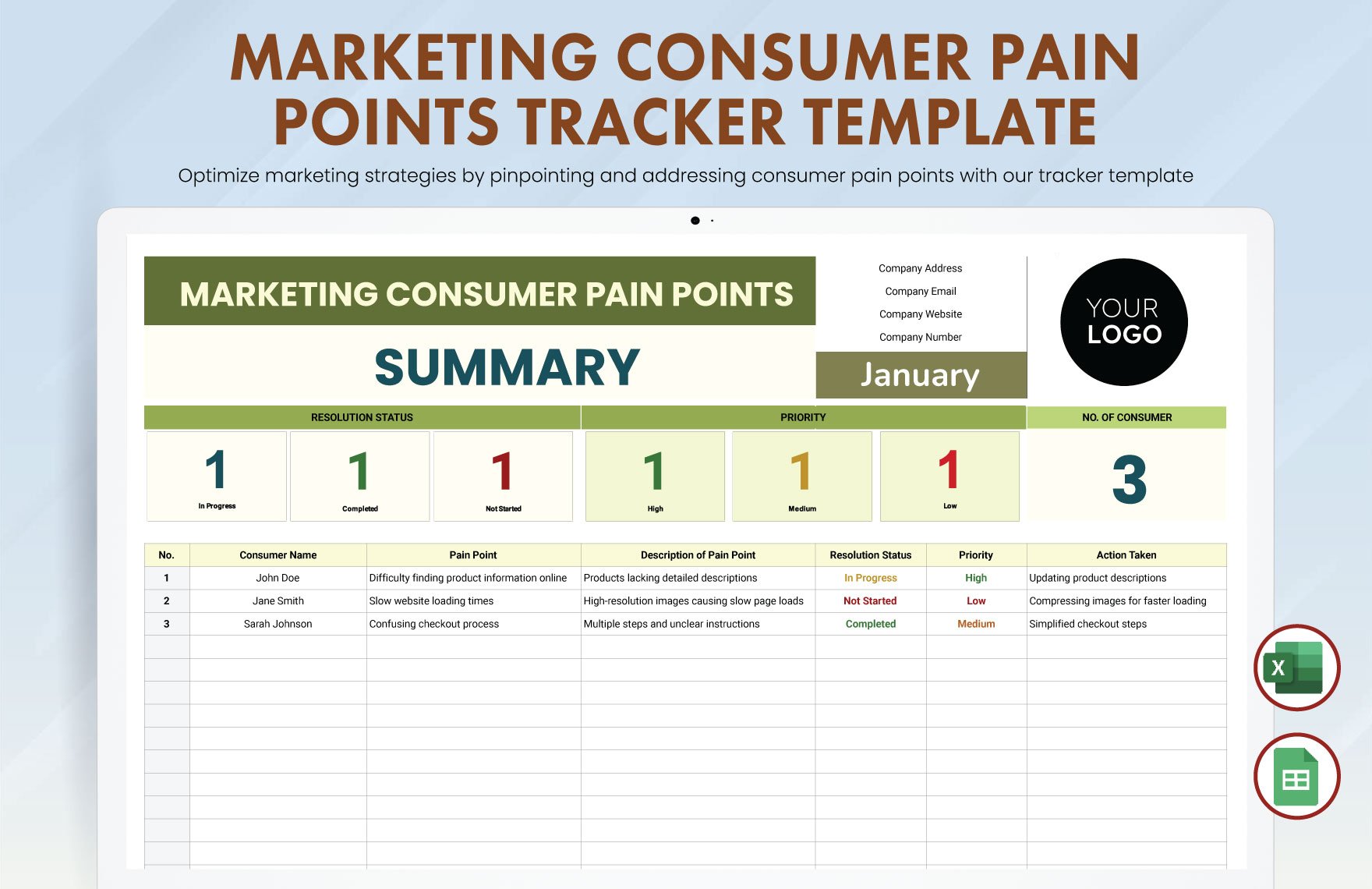
- Build Your Map: Create a table like the one above. For each pain point, fill out the "Agitation," identify a relevant "Product Feature" (you may need to look at the product's sales page), and describe the "Solution/Transformation."
To stay organized, you can create a simple spreadsheet to track your findings, similar to the template shown in this image.
Conclusion
Mastering this process is a huge step toward becoming a successful affiliate marketer. You've moved beyond just picking a product and are now thinking like a problem-solver.
Key takeaways from this lesson:
- Pain points are specific problems your audience faces; they are the motivation behind any purchase.
- The best way for a beginner to find pain points is to listen to conversations in online communities like Reddit and Facebook Groups.
- Your job is to map those pain points to the specific features of your ClickBank product.
- Frame the solution as a transformation—the positive change in your customer's life after using the product.
- The Pain-Agitate-Solve (PAS) formula is a simple yet powerful framework for structuring your persuasive message.
Preview of the next lesson:
Now that you understand the core message you need to convey—the journey from pain to solution—our next lesson will focus on structuring that message for maximum impact. We will explore the classic AIDA (Attention, Interest, Desire, Action) framework to learn how to guide a reader from being a casual visitor to a motivated buyer.