Introduction
Welcome back! In our previous lesson, you learned what A/B testing is and why it's a game-changer for affiliate marketing. We established that by systematically testing one change at a time, you can move from guesswork to data-driven decisions, significantly increasing your conversions and revenue without needing more traffic.
Today, we move from the "what" and "why" to the "how." A successful A/B test isn't a random shot in the dark; it's a well-planned experiment. The goal of this lesson is to learn how to develop a testing plan to optimize a key element, such as an email subject line or a blog post headline.
By the end of this lesson, you will have a clear, step-by-step framework to design, document, and prepare your own optimization tests, turning theory into a practical tool for growth.
1. The Framework of a Testing Plan
Before you start changing headlines or email subjects, you need a plan. A testing plan acts as your blueprint, ensuring your experiment is structured, measurable, and likely to give you a clear, reliable answer.
The core steps of planning an A/B test are consistent whether you're a large corporation or a solo affiliate marketer. Let's start with a video that outlines this professional process in an accessible way.
How to Do A/B Testing: 15 Steps for the Perfect Split Test
The video 'How to Do A/B Testing' from HubSpot Marketing provides an excellent overview of the entire testing process, from setting goals to analyzing results. We will refer back to different parts of this video throughout the lesson.
Watch the section from 01:16 to 02:54. Pay attention to how they first identify a goal, choose what to test, and consider factors like sample size and testing one element at a time.
As the video shows, a solid plan is built on a few key pillars: a clear goal, a single variable, and a way to measure success. Let's break this down into a step-by-step process you can use every time.
2. Developing Your Testing Plan: A Step-by-Step Guide
We'll build your testing plan step-by-step. For this exercise, let's imagine you want to improve the performance of a product review blog post you've written.
Step 1: Identify Your Goal and Primary Metric
First, ask yourself: What am I trying to achieve? Your goal must be specific and measurable.
- If you're testing an email subject line, your goal is likely to
Increase Email Opens, and your primary metric is the Open Rate. - If you're testing a blog post headline, your goal might be to
Increase Clicks from Google Search, and your metric would be the Click-Through Rate (CTR). - If you're testing a Call-to-Action (CTA) button on your review page, your goal is to
Increase Clicks to the Affiliate Offer, and your metric is the CTA Click-Through Rate.
For our example, let's say our goal is to get more people to read a review post. The headline is the first thing they see, so we'll test that.
- Goal: Increase the number of visitors who click to read my blog post.
- Primary Metric: Click-Through Rate (CTR).
Step 2: Formulate a Hypothesis
A hypothesis is a clear, testable statement that predicts the outcome of your test and explains why you expect that outcome. It's your "educated guess."
The structure is simple:
"By changing [THE VARIABLE] from [CONTROL A] to [VARIATION B], I predict [THE METRIC] will increase because [THE REASON]."
Let's create a hypothesis for our headline test:
- Hypothesis: "By changing the headline from a simple review title to a headline that includes a number and a specific benefit, I predict the Click-Through Rate (CTR) will increase because it creates a stronger sense of curiosity and promises clear, tangible value to the reader."
This statement is powerful because it defines what you're changing, what you expect to happen, and your reasoning.
Step 3: Brainstorm and Create Variations
This is where your creativity comes in. Based on your hypothesis, you need to create your "Control" (Version A) and your "Variation" (or "Challenger," Version B).
- Control (A): This is what you're currently using. It's your baseline.
- Example: "My Honest Review of the Pro Keto Diet Plan"
- Variation (B): This is the new version you'll test against the control. It must reflect your hypothesis.
- Example: "7 Reasons the Pro Keto Plan Is My Top Choice for Beginners"
Coming up with good variations is a skill. For headlines and subject lines, certain formulas tend to work well. Let's explore some proven ideas.
Create engaging headlines with A/B testing
The article 'Create engaging headlines with A/B testing' from Contentful provides excellent, actionable tips for brainstorming effective headline variations.
Read the section '1. Brainstorming headlines.' Pay close attention to the four tips: including numbers, talking about pain points/benefits, arousing curiosity, and being simple/clear. These are your tools for creating strong variations.
Using those tips, you can see how our Variation B ("7 Reasons...") uses a number and implies a benefit (it's good for beginners), making it a strong challenger to the more generic control.
The same principles apply to email subject lines. A subject line is just a headline for your email.
- Control (A): "New Blog Post"
- Variation (B): "Is [Product Name] worth the money? My review is inside." (Arouses curiosity)
Step 4: Define Test Parameters (Duration and Tools)
Finally, you need to decide on the logistics of the test.
- Duration: How long will you run the test? You need to run it long enough to get a reliable amount of data (achieve "statistical significance"). A/B testing isn't about the first 10 visitors; it's about patterns over hundreds or thousands. A good starting point is to run a test for at least 1-2 full weeks to account for daily fluctuations in traffic.
- Tools: How will you actually run the test?
- For Email Subject Lines: Almost all email marketing services (like MailerLite, ConvertKit, etc.) have built-in A/B testing features that make this incredibly easy. You just provide two subject lines, and the tool handles the rest.
- For Headlines: This can be done with WordPress plugins or other testing software. Some SEO plugins even offer headline testing features.
For now, the key is to know that you need a tool to automatically split your audience and measure the results. We will cover the specific implementation of these tools in a later module.
3. Documenting Your Plan
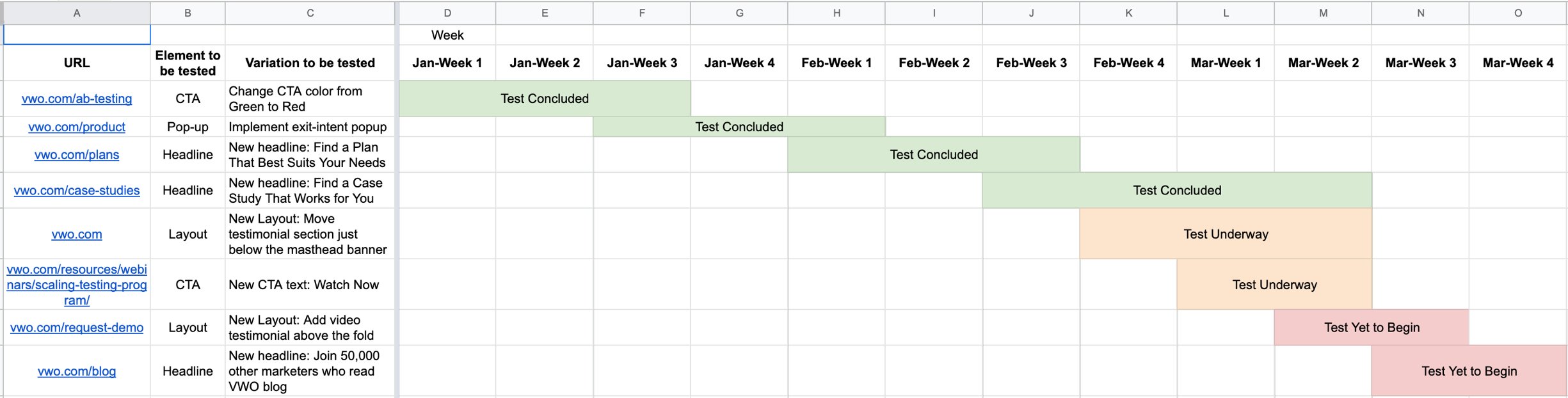
A formal plan helps you stay organized and track your results over time. You don't need complex software; a simple document or spreadsheet is perfect.
Here is a template you can use for every test:
| Field | Description |
|---|---|
| Test Name | A clear name, e.g., "Keto Review Headline Test #1" |
| Element to Test | The single variable you're changing, e.g., Blog Post Headline. |
| Goal | What you're trying to achieve, e.g., Increase CTR from social media. |
| Primary Metric | The specific number you will use to declare a winner, e.g., Click-Through Rate. |
| Hypothesis | Your "If-then-because" statement. |
| Control (A) | Your original version. |
| Variation (B) | Your new version. |
| Est. Duration | How long you plan to run the test, e.g., 2 weeks. |
| Result | Fill this in after the test: Which version won and by how much? |
| Learnings | Fill this in after the test: What did you learn about your audience? |
Over time, you can build a schedule of tests to continuously improve your site.
4. Avoiding Common Pitfalls
Before you launch your first test, it's critical to be aware of common mistakes that can ruin your results. Getting this right from the start will save you a lot of frustration.
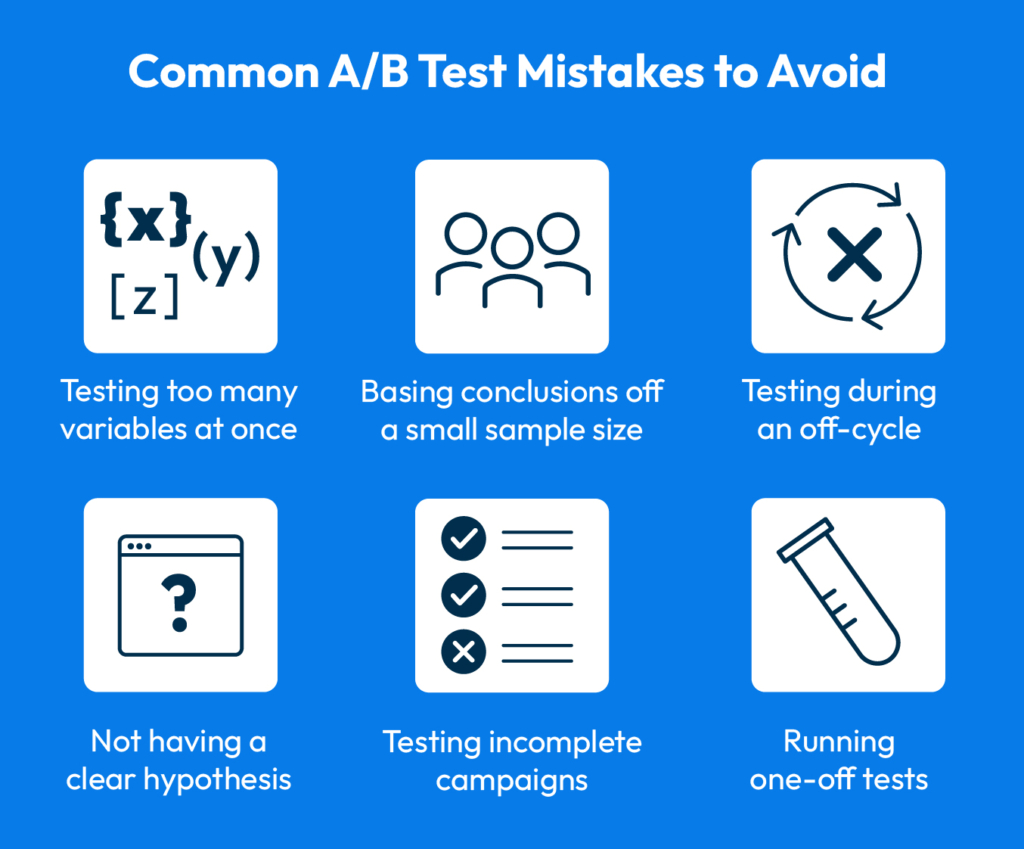
To hear these mistakes explained with examples, let's return to the HubSpot video.
How to Do A/B Testing: 15 Steps for the Perfect Split Test
Understanding common mistakes is just as important as knowing the right steps. This section of the HubSpot video clearly explains the major pitfalls to avoid.
Watch from 07:01 to 09:23. Focus on the explanations for testing more than one variable, having too small a sample size, and making changes before the test is over.
The key takeaway is this: be patient and be disciplined. Trust your plan and let the test run its course to get data you can rely on.
Conclusion
You now have a complete framework for turning A/B testing theory into a structured, repeatable process. A well-designed testing plan is the difference between randomly changing things and systematically improving your business.
Key Takeaways:
- A testing plan provides the structure for a reliable experiment.
- The plan starts with a specific goal and a primary metric (e.g., increase open rate).
- Your hypothesis is a testable prediction that guides your creation of a new variation (B) to compete against your control (A).
- Brainstorming effective variations is a key skill, using principles like curiosity, numbers, and benefits.
- Documenting your plan helps you stay organized and build on your learnings over time.
Preview of the next lesson:
You've learned how to build your website, create content, and now, how to optimize it. You're building a solid foundation in your chosen niche. But what's next? A single niche can be powerful, but long-term growth often involves strategic expansion. In the next lesson, you'll learn how to evaluate a complementary niche to potentially expand your business into, setting the stage for the next phase of your affiliate marketing journey.