Introduction
Welcome to your next lesson on scaling your affiliate business. In our last session, we moved from writing individual articles to designing a strategic content architecture using the topic cluster model. You learned how to outline a plan to build topical authority, positioning your site as a go-to resource in your niche.
But creating great content is only half the battle. How do you know if your headlines are grabbing attention effectively? Or if your call-to-action buttons are convincing people to click? Relying on guesswork can leave a lot of money on the table.
This is where today's lesson comes in. Our learning outcome is to explain what A/B testing is and why it matters for improving conversions. A/B testing is the single most powerful method for turning your existing traffic into more clicks and sales. It's the process that transforms a good affiliate site into a highly profitable one by replacing assumptions with data.
1. What is A/B Testing?
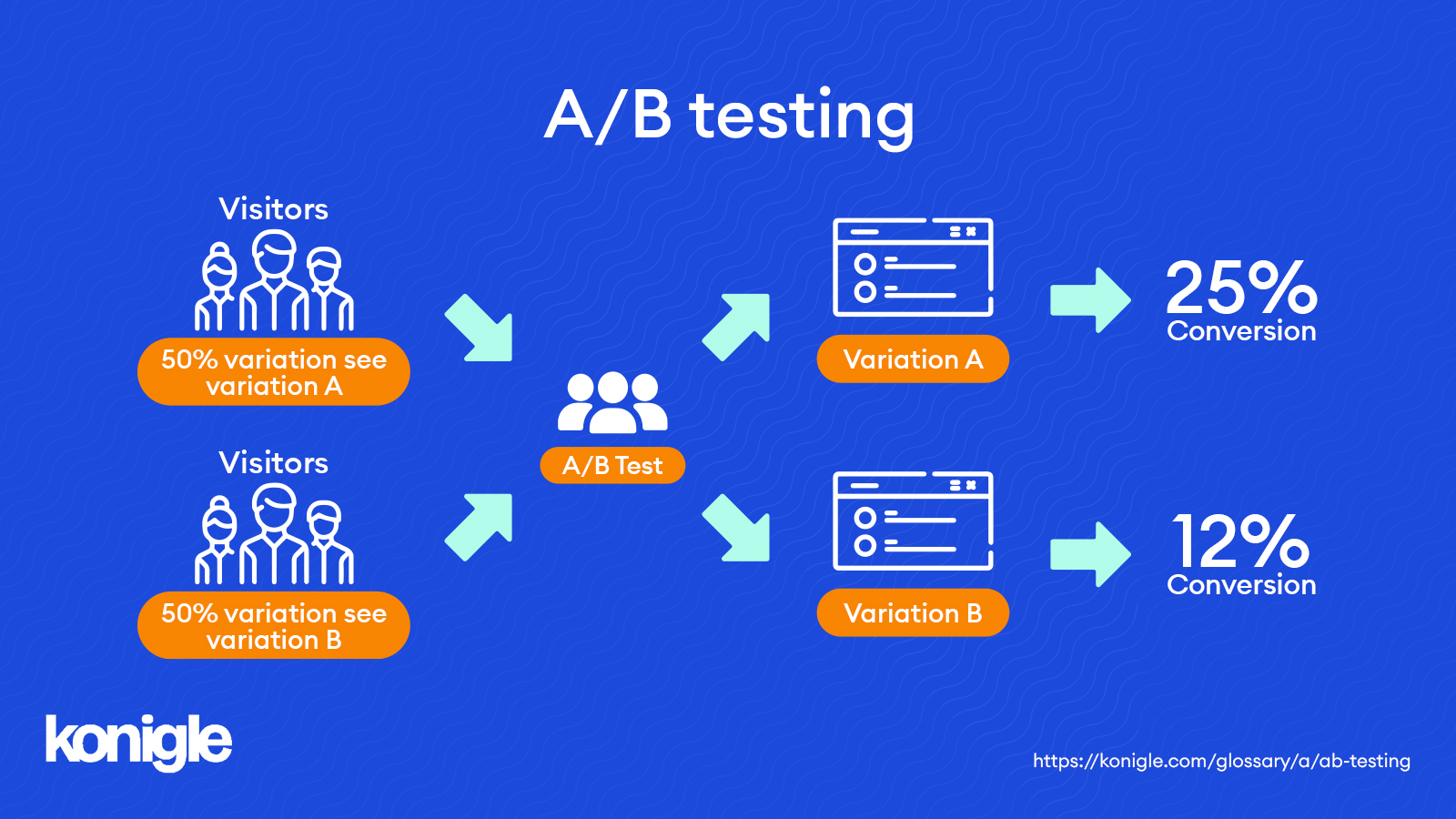
At its core, A/B testing (also known as split testing) is a simple but powerful experiment. You create two versions of a single asset—like a webpage, an email, or an ad—to see which one performs better.
- Version A, the "Control," is the original version you're currently using.
- Version B, the "Variation" or "Challenger," is the new version where you have changed one single element.
You then show these two versions to your audience randomly. By measuring which version achieves your goal more often (e.g., gets more clicks or sign-ups), you can definitively know which one is more effective.
To get a formal definition and understand the mechanics, let's turn to a foundational guide.
What is A/B Testing? A Beginner's Guide
The article 'What is A/B Testing? A Beginner's Guide' by Neil Patel provides a clear, concise definition and explains how the process works.
Read the first two main sections, 'What Is A/B Testing and Why Does it Matter?' and 'How Does A/B Testing Work?'. Focus on the definitions of 'control' and 'variation', and the importance of changing only a single element.
The Golden Rule: Test One Variable at a Time
As you just read, the most critical principle of A/B testing is to only change one thing at a time. If you change both the headline and the button color in your variation, and it performs better, you won't know whether it was the new headline or the new color that made the difference. This makes the test results unusable for future decisions.
To see this principle in action with some clear examples, watch the following video.
What is A/B Testing? Marketing and Advertising A/B Tests Explained
The video 'What is A/B Testing?' from Surfside PPC provides excellent, simple examples of correct A/B testing.
Watch from the beginning to 01:56. Pay close attention to the Facebook ad example, where only the image is changed while everything else (ad copy, call to action, etc.) remains identical.
By isolating a single variable—like the ad image, the button text, or the headline—you get clean, actionable data that you can use to systematically improve your marketing.
2. Why A/B Testing is Crucial for Improving Conversions
Now that you understand what A/B testing is, let's focus on the most important question: why should you do it? The answer is simple: it is the most direct path to increasing your income without needing more traffic.
A small improvement in your conversion rate can have a massive impact on your bottom line. Let's watch a clip that demonstrates this with a real-world financial example.
Split Testing Tutorial: AB Testing That Works (& Makes You More Money)
In 'Split Testing Tutorial,' affiliate marketing expert Matt Diggity breaks down the financial impact of a successful A/B test. This will make the value immediately clear.
Watch from the beginning to 02:29. Focus on the 'real world example' where a 2% increase in click-through rate leads to a $600 monthly revenue increase and an $18,000 increase in the website's sale value.
As the video powerfully illustrates, optimizing your conversion rate makes every visitor to your site more valuable. Here are the core benefits of A/B testing for an affiliate marketer, which allow you to achieve this kind of growth.
Maximize Your Affiliate Marketing with A/B Testing and Smartlinks
The article 'Maximize Your Affiliate Marketing with A/B Testing' provides a great summary of the key benefits.
Read the section titled 'Benefits of A/B testing for affiliate marketers.'
To summarize the key benefits you just read about:
- Data-Driven Decisions: You stop guessing what works and start knowing what works. Every decision is backed by real data from your audience.
- Increased Conversions: This is the primary goal. By systematically finding better-performing headlines, images, and calls-to-action, you will generate more clicks and sales.
- Improved Efficiency & ROI: You get more revenue from the traffic you already have. This means a higher return on investment (ROI) for any effort or money you spend on getting traffic to your site.
- Enhanced User Experience: A/B testing helps you discover what your audience prefers. A better experience leads to more trust, longer time on your site, and a higher likelihood of them acting on your recommendations.
3. What Should You A/B Test on Your Affiliate Site?
Theory is great, but let's make this practical. You can apply A/B testing to almost every part of the affiliate business you've built so far. Here are some of the most common and impactful things to test:
- Blog Post Headlines:
- A: "My Honest Pro Keto Plan Review"
- B: "Pro Keto Plan Review: Does It Really Work for Weight Loss?"
- Call-to-Action (CTA) Button Text:
- A: "Click Here to Learn More"
- B: "See Today's Price on ClickBank"
- CTA Button Color: A blue button vs. a green button to see which one draws more attention and clicks.
- Images: A product image vs. a lifestyle image showing someone using the product.
- Email Subject Lines:
- A: "My new blog post is live"
- B: "Your guide to avoiding the keto flu"
- Lead Magnet Opt-in Forms: Test the headline on your form to get more people to subscribe to your email list.
By testing these elements, you can methodically optimize each step of your visitor's journey, from opening your email to clicking your affiliate link and making a purchase.
Conclusion
In this lesson, you've learned about one of the most fundamental practices for scaling a business. You are no longer just a content creator; you are now thinking like a data-driven marketer.
Key Takeaways:
- A/B testing is a scientific method for comparing two versions of a marketing asset (A vs. B) to see which performs better.
- The golden rule is to test only one variable at a time to get clear, actionable results.
- The "why" is clear: A/B testing leads to data-driven decisions, higher conversion rates, and more revenue from your existing traffic. It's about working smarter, not just harder.
- You can test many elements on your affiliate site, including headlines, CTAs, images, and email subject lines, to optimize performance.
Preview of the next lesson:
Knowing what A/B testing is is the first step. The next is learning how to do it properly. In our next lesson, you will learn how to develop a testing plan to optimize a key element, such as an email subject line or a blog post headline. You'll move from theory to a practical framework for planning and running your very first optimization experiment.