Hello! Welcome to the fourth lesson in our "Foundations of Affiliate Marketing" module.
In our previous lessons, we've established the key relationships in affiliate marketing. We started with the core players—the affiliate, merchant, and customer. We then drilled down into how you get paid via ClickBank's revenue share model and, most recently, we explored the crucial role of an affiliate network like ClickBank, which acts as the central marketplace and trusted intermediary.
So far, we've been looking at the existing ecosystem. Now, we're going to shift our focus to the business you will build within that ecosystem. This lesson introduces the fundamental building blocks of every successful affiliate marketing business.
Our learning outcome today is to list and describe the four essential components of an affiliate marketing business: traffic, offer, presell page, and tracking. Think of these as the four pillars that support your entire operation. Understanding how they fit together will give you a mental blueprint for everything we'll build in the upcoming modules.
The Four Pillars of Your Affiliate Business
At its heart, an affiliate marketing business is a system designed to guide a potential customer from discovery to purchase. This system is built on four core components that work in a specific sequence:
- Traffic: The people (visitors) you attract.
- Presell Page: The website or webpage you control, which prepares visitors for the offer.
- Offer: The product you are promoting.
- Tracking: The technology that connects your marketing efforts to a sale and ensures you get paid.
Let's visualize how these parts connect.
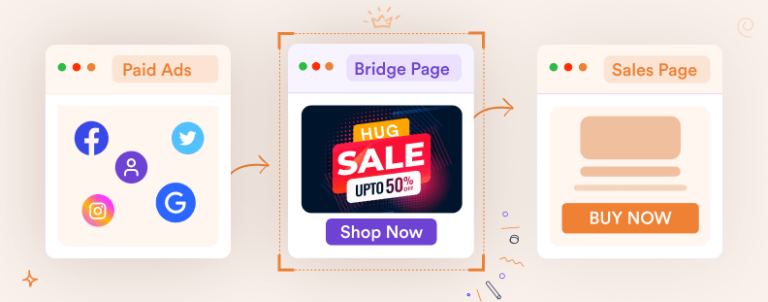
Think of it like running a specialized retail kiosk in a mall.
- Traffic is the flow of people walking past your kiosk.
- The Offer is the product from a brand you've agreed to sell.
- Your Presell Page is your kiosk itself—the bright signs, the product display, and you, the friendly salesperson who engages passersby, explains the product's benefits, and gets them excited to buy.
- Tracking is your unique employee ID that you give the customer to use at the central cash register, ensuring you get the commission for the sale.
Now, let's break down each of these four components in more detail.
1. The Offer
The Offer is the specific product or service you're promoting to earn a commission. This is the solution to your audience's problem. On ClickBank, the offer consists of the product itself, plus the seller's marketing materials—especially their sales page or video sales letter (VSL).
Your job is not to create the offer, but to choose a good one. A great offer presented to the right audience can sell itself. A bad offer won't sell, no matter how brilliant your marketing is.
The following reading explains the concepts of CPA marketing, but the principles it discusses for choosing and evaluating offers are universal in affiliate marketing.
CPA Affiliate Marketing: A Beginner's Guide
This article, 'CPA Affiliate Marketing: A Beginner's Guide,' has an excellent section on selecting offers. The principles apply directly to choosing ClickBank products.
Please read the section titled 'Choosing the Right CPA Offers.' Focus on the subsections 'Understanding Offer Types and Niches' and 'How to Evaluate a CPA Offer.' Pay close attention to the checklist of factors to check before promoting a product.
As you read, the key takeaway is that a strong offer is more than just a high commission. It must be a high-quality product with a proven ability to convert visitors into buyers, and it must be a perfect match for the audience you plan to target. We will dedicate an entire lesson to this in Module 2.
2. Traffic
Traffic refers to the people—the website visitors or social media users—you direct toward your presell page. Without traffic, your business is invisible. It's the "lifeblood" of any online business.
Traffic can be broadly categorized in a few ways:
- Paid vs. Free: You can either pay to get in front of people (e.g., Facebook Ads, Google Ads) or you can create valuable content that attracts people for free over time (e.g., SEO, social media posting).
- Temperature: Traffic can be "cold" (unaware of you or the solution), "warm" (aware of the solution but not the specific product), or "hot" (ready to buy).
Your goal is not just to get any traffic, but to get targeted traffic—people who are genuinely interested in the problem your offer solves.
Let's return to the same guide for a clear breakdown of traffic sources.
CPA Affiliate Marketing: A Beginner's Guide
This next section of the guide clearly explains the difference between paid and free traffic sources, which is a fundamental concept in online marketing.
Please read the section titled 'Traffic Sources for CPA Affiliate Marketing.' Focus on understanding the pros and cons of 'Paid Traffic' and 'Free Traffic Sources.'
As a beginner, you'll likely start with free traffic methods while you learn the ropes. In Modules 8 and 9, we will do a deep dive into driving traffic with SEO and social media.
3. The Presell Page
The Presell Page (often called a "landing page" or "bridge page") is a webpage that you create and control. Its job is to "pre-sell" the visitor by building trust, providing value, and warming them up before you send them to the merchant's offer page via your affiliate link.
Why not just send traffic directly to the offer?
- Control: It's your piece of online real estate. You control the message and the user experience.
- Trust: It allows you to build a relationship with the visitor by offering helpful content, a review, or a unique perspective.
- Compliance: Many paid ad platforms like Facebook and Google Ads do not allow you to run ads that link directly to an affiliate offer. They require you to send traffic to a page you own.
- Asset Building: It's where you can place an email sign-up form to build an email list, which is one of the most valuable long-term assets you can have.
To see these principles in action, let's watch this excellent explanation from the official ClickBank channel.
Landing Pages for Affiliate Marketing - Full Explanation with Examples
This video provides a full explanation of what a presell page is, why it's critical, and what components make it effective. It uses a clear, high-converting example to illustrate each point.
Please watch from the beginning until 09:48. Pay close attention to the five key elements of a landing page he breaks down: headline, copy, call to action, affiliate link, and imagery. Notice how the page's goal isn't to sell the product, but to build curiosity.
As the video highlighted, an effective presell page doesn't try to do the seller's job. It acts as a helpful and persuasive bridge, guiding an interested person one step closer to the solution. We will spend Modules 4, 5, and 6 learning how to build these pages and create compelling content for them.
4. Tracking
Tracking is the technical process that connects your promotional efforts to a sale. It's how ClickBank knows that a specific customer came from your link, ensuring you receive your commission.
The primary tool for tracking is your unique affiliate link, which ClickBank calls a HopLink. When a user clicks this link, a small file called a "cookie" is placed on their browser. This cookie contains your affiliate ID and tells ClickBank to credit you with the sale, even if the purchase happens days or weeks later (within a certain timeframe, typically 60 days).
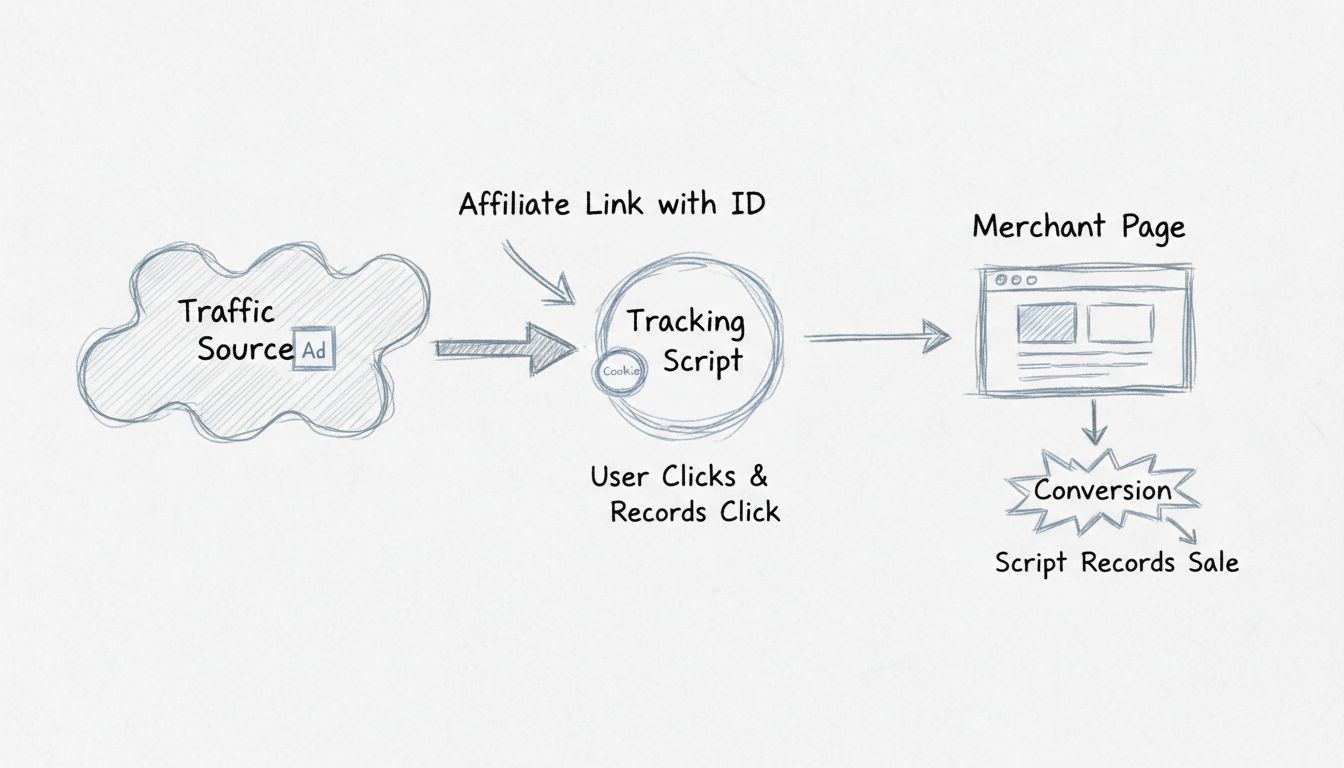
It is absolutely critical that your tracking works correctly. If you use the wrong link or if it's broken, you get zero commission for your work.
Let's watch a short, practical segment on how this works within the ClickBank platform.
ClickBank Affiliate Program - Real Way To Make Money Online?
This video segment shows you exactly where to get your affiliate link in ClickBank and stresses the importance of testing it to ensure your tracking is working properly.
Watch from 06:00 to 08:01. The key things to note are a) how a HopLink is generated, b) the importance of copying the correct link, and c) the presenter's strong emphasis on testing the link to make sure it passes through the ClickBank tracking system.
Later in the course (Module 10), we will cover more advanced tracking techniques, such as using Tracking IDs (TIDs) to see which of your presell pages or traffic sources are generating the most clicks and sales.
Conclusion
You have now learned about the four pillars of every affiliate marketing business. They form a system where each part is essential for success.
Here are your key takeaways:
- An affiliate business is a system composed of four essential components: Traffic, Offer, Presell Page, and Tracking.
- The Offer is the product you promote. Your first job is to choose a high-quality offer that matches a real audience need.
- Traffic is the stream of potential customers you direct to your presell page. It can be free or paid, but must be targeted.
- The Presell Page is your own webpage designed to build trust, add value, and persuade visitors to check out the offer. It's the bridge between your traffic and the seller's sales page.
- Tracking is the technology, powered by your unique affiliate link (HopLink) and cookies, that attributes sales to you so you can earn commissions.
In this module, we've laid the complete foundation. We've defined the business model, the key players, the payment structure, the role of the network, and now, the core components of the business you will build.
Before we start building, however, there's one final, crucial piece of the foundation we must put in place: understanding the rules of the road. In our next and final lesson of this module, we will cover the key legal and ethical requirements for affiliate marketers, such as FTC disclosures and anti-spam laws. This will ensure the business you build is not only profitable but also sustainable and compliant.