Welcome to the third lesson in our course. In our last session, we dissected classic thought experiments like the Trolley Problem and the Experience Machine, learning how to extract the underlying ethical, metaphysical, and epistemological questions. This was about developing an analytical lens.
Today, we shift from analysis to creation. Your goal is to generate compelling philosophical content for social media, and the best content often springs from the familiar ground of everyday life. This lesson is dedicated to brainstorming modern, relatable dilemmas and framing the philosophical questions they contain. We will move from the philosopher's abstract scenarios to the tangible conflicts of our daily world. By the end of our session, you'll have three distinct, content-ready ideas.
The Philosophy in Plain Sight
What separates a classic thought experiment from an "everyday dilemma"? Often, it's just a matter of context. A runaway trolley is dramatic, but the moral logic it tests can appear in much more common situations. The key is to recognize the philosophical stakes in ordinary events.
Michael Schur, the creator of the show The Good Place, is a master of this. In a fantastic TED talk, he tells a personal story about a minor car accident that quickly spiraled into a complex moral crisis.
How Ethics Can Help You Make Better Decisions | Michael Schur | TED
This talk is a perfect example of finding deep philosophical questions in a mundane personal event. It models the exact creative process we're aiming for today.
First, watch the story of the dilemma itself, from the fender bender to the moment of crisis. Notice how a small conflict escalates through his choices. Then, pay close attention to how he applies three major ethical theories—from Kant, Aristotle, and the Utilitarians—to his very personal, non-hypothetical problem. This is the blueprint for turning a story into a philosophical exploration.
Schur’s story proves that you don't need a far-fetched scenario to explore deep philosophy. You just need a conflict between competing values: fairness vs. charity, personal desire vs. universal rules, honesty vs. kindness. Your background in literature has given you a sharp eye for conflict; now we're just applying it to the unwritten stories of daily life.
Let's start brainstorming. We'll explore three areas, each rooted in a different branch of philosophy, to generate our dilemmas.
Dilemma 1: The Ethics of Small Choices
Our daily lives are filled with small ethical choices that often go unexamined. They don't involve life and death, but they reveal our moral intuitions. A great example is the simple act of a "white lie."
Ethical dilemma: Would you lie? - Sarah Stroud
This short TED-Ed video, "Ethical dilemma: Would you lie?", presents a perfect, low-stakes scenario that is instantly relatable and debatable.
Watch the setup of the dilemma involving the chronically late friend from the beginning to the core question. This is a masterclass in creating a simple, effective hook for a social media video. You can pause there, or continue watching to see how they unpack the ethics, which is also a useful model.
This is an excellent template: a common situation, a clear choice, and a conflict between two values (in this case, helping a friend vs. being dishonest). Let's use this model to build our first dilemma.
Brainstorming Idea: The Obligation to Help
- The Scenario: You're scrolling through your social media feed. You see a GoFundMe for a family in another state whose house burned down; they've lost everything. A donation of $50 would mean skipping a few morning coffees. Later that day, on your way home, you walk past a homeless person asking for money. You have cash in your pocket. In which situation, if any, do you have a moral duty to help?
- The Underlying Philosophical Question (Ethics): What is the nature and extent of our moral obligation to help strangers? Does proximity matter? This scenario is a modern, everyday version of philosopher Peter Singer's famous "Drowning Child" thought experiment, which you can find in the resource below. In it, he argues that if you would save a drowning child in a pond in front of you, even if it meant ruining your expensive suit, you have just as much of an obligation to save a child far away through a charitable donation. Is he right?
Thought Experiments and Philosophical Problems - Philosophy
This resource from Glendale Community College presents several thought experiments. We'll use it to find inspiration for our everyday dilemmas.
Scroll down to find the section titled The Drowning Child by Peter Singer. Read the two short paragraphs that set up the scenario. This is the classic formulation of the problem we've just adapted.
Dilemma 2: The Metaphysics of Modern Life
Metaphysics grapples with the nature of reality and identity. In the 21st century, many of these questions are no longer just abstract—they are practical problems we navigate every day through our technology. Who are you online?
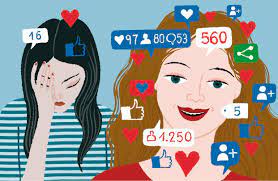
Your online presence is often fragmented. You might have a polished, professional identity on LinkedIn, a candid and humorous one with close friends on a private messaging app, and a carefully curated "highlight reel" on Instagram. This raises a question that philosophers have asked for centuries, famously illustrated by the Ship of Theseus paradox: if you change all the parts of a thing, is it still the same thing?
Brainstorming Idea: The Curated Self
- The Scenario: A young person is starting their first serious job hunt. A career advisor tells them to "scrub" their social media—to delete old, unprofessional posts and photos—and present a more sanitized, corporate-friendly version of themselves online. The person feels this is dishonest and inauthentic, like they are lying about who they are. But they also know that recruiters do look at social media, and not curating their profile could cost them opportunities.
- The Underlying Philosophical Question (Metaphysics/Ethics): What constitutes your "true self"? Is identity a stable, core essence, or is it a fluid performance that legitimately changes for different audiences? This scenario brings the classic metaphysical problem of personal identity into the age of social media. It also touches on ethics: Is it deceptive to present an idealized version of yourself? The article below on Digital Identity provides excellent background on the psychological and philosophical tensions at play.
Digital Identity: How Social Media Shapes Who We Think ...
This article explores the very dilemma we're discussing, providing a rich vocabulary and theoretical background for it.
Read the introduction to understand the premise of the blurry line between online and offline selves. Then, review the section on psychological theories, which mentions Goffman's idea of life as a performance. Finally, look at the case studies, which give concrete examples of this exact conflict.
Dilemma 3: The Epistemology of Everything
Epistemology is the study of knowledge: what it is, how we get it, and how we justify our beliefs. In an age of information overload and "fake news," these are no longer just academic questions.
Brainstorming Idea: The Well-Meaning Share
- The Scenario: Your beloved uncle, who is not very tech-savvy, proudly shares an article on social media with a shocking headline about a miracle cure for a common disease. He clearly shared it out of a genuine desire to help his friends and family. You recognize the source as a known purveyor of misinformation. Do you publicly correct him in the comments, risking his embarrassment? Do you send him a private message, which he might ignore? Or do you do nothing, knowing that his well-intentioned share could lead others to believe something false and potentially harmful?
- The Underlying Philosophical Question (Epistemology/Ethics): What is our intellectual and ethical duty in a networked society? Do we have a responsibility to correct falsehoods, even at the cost of social harmony? This dilemma sits at the intersection of epistemology (how do we know what's true and how do we handle false belief?) and ethics (what is the right way to act towards others?). It's an incredibly common and difficult situation with no easy answer.
Conclusion
Today, we've transformed abstract philosophical analysis into a creative engine for content. We've taken the skills from our last lesson and applied them to the world around us, generating three powerful, relatable dilemmas ready for storytelling:
- The Obligation to Help: An ethical dilemma about charity, distance, and moral duty.
- The Curated Self: A metaphysical and ethical dilemma about identity in the digital age.
- The Well-Meaning Share: An epistemological and ethical dilemma about truth and responsibility online.
These are not just theoretical puzzles; they are the substance of modern life and the kinds of stories that capture an audience's attention because they see themselves in the conflict.
In our final lesson, we will complete your journey from student to creator. You will select one of these three dilemmas, and we will work together to outline a short-form video script for it, focusing on narrative structure, visual ideas, and posing that irresistible philosophical question to your future audience.