In our last session, we mapped out the foundational branches of philosophy: ethics, epistemology, and metaphysics. You now have a set of lenses for viewing the world through its fundamental questions. In this lesson, we will put those lenses into practice. We'll explore the art of the "thought experiment"—short, powerful stories that philosophers use to test ideas and probe our intuitions. Your goal is to create engaging content, and thought experiments are the perfect source material for philosophical storytelling.
By the end of this lesson, you will be able to take a classic philosophical scenario, break it down, and identify the core ethical, epistemological, and metaphysical questions hidden within it. This skill is the bridge between understanding philosophy and using it to create compelling narratives.

What is a Thought Experiment?
Before we dive into an example, let's clarify what a thought experiment is. At its core, it's a hypothetical scenario that you run in your mind to investigate the nature of things. They are tools for thinking, allowing us to isolate philosophical problems in a way that's often impossible in the real world. Given your background in English literature, you can think of them as highly condensed, purposeful short stories.
The following reading provides a great introduction to this concept.
8 Philosophical Thought Experiments That I Illustrated To ...
This article from 'Bored Panda', written by philosopher Helen De Cruz, offers a clear and concise introduction to what thought experiments are and why they are so valuable in philosophy.
Please read the introduction, focusing on the first two paragraphs. It begins with "I am a philosopher" and ends with "...the existence of God and many other topics." This will help you see them as short stories designed to bring out our intuitions.
Now that we have a definition, let's apply it to one of the most famous (and viral) thought experiments of all.
Case Study: The Trolley Problem
The Trolley Problem is a cornerstone of ethical discussions and a fantastic example of how a simple scenario can spark intense debate. It’s a perfect model for the kind of engaging dilemma you want to present in your content.
This short animated video from TED-Ed provides a clear and engaging overview of the problem and its most common variation.
Would you sacrifice one person to save five? - Eleanor Nelsen
This animation introduces the classic Trolley Problem and the 'fat man on the bridge' variation, highlighting the core ethical conflict.
Watch the video from the beginning up to the explanation of the two main scenarios. As you watch, consider your own gut reaction to each choice. Does your answer change between the two scenarios?
As the video illustrates, most people are willing to pull the lever but are unwilling to push the man. The outcome is identical—one person dies to save five—so why the difference? This is where our philosophical lenses come in.
Deconstructing the Trolley Problem
Let's analyze the scenario using the three branches we learned.
-
The Ethical Question (The Obvious Layer)
This is the most prominent question and the one most people focus on. The Trolley Problem creates a direct conflict between two major ethical frameworks:- Utilitarianism: This view, as the video mentions, suggests the most moral action is the one that produces the greatest good for the greatest number. A utilitarian would almost certainly pull the lever and push the man, as saving five lives outweighs losing one.
- Deontology: This framework argues that certain actions are inherently right or wrong, regardless of their consequences. A deontologist might argue that there's a moral rule against actively killing an innocent person. Pulling the lever might feel like redirecting a threat, but pushing the man feels like a direct act of murder.
For your content, the hook is simple: "Would you pull the lever?" The storytelling comes from exploring why people feel conflicted, explaining these competing ethical intuitions.
-
The Epistemological Question (The Hidden Layer)
The scenario assumes perfect knowledge, but real life is never so simple. This is where epistemology—the theory of knowledge—comes into play.- How do you know the five people on the main track will die if you do nothing?
- How can you be certain that pulling the lever will kill the one person but save the other five? What if the switch is faulty?
- What if you had more information? What if the single person on the side track was a brilliant doctor on the verge of curing cancer, and the five were escaped convicts?
These questions focus on the role of knowledge, certainty, and justification in our moral decisions. A powerful video could be made by starting with the simple Trolley Problem and then gradually adding uncertainty, asking the audience how much they need to know before they can act.
-
The Metaphysical Question (The Subtle Layer)
This is the deepest layer, touching on the nature of action and responsibility.- What is the real difference between "letting die" (inaction) and "killing" (action)?
- By pulling the lever, do you become the cause of death for the one person, or are you simply mitigating a disaster that was already in motion?
- Does your mere presence at the scene, with the ability to act, make you morally responsible for the outcome, no matter what you choose?
These are metaphysical questions about causality and moral agency. They force us to consider what it means to be a moral agent in the world.
Case Study 2: The Experience Machine
Not all thought experiments are about life-and-death ethics. Some, like Robert Nozick's "Experience Machine," challenge our understanding of reality itself, making them perfect for stories about what truly matters in life.
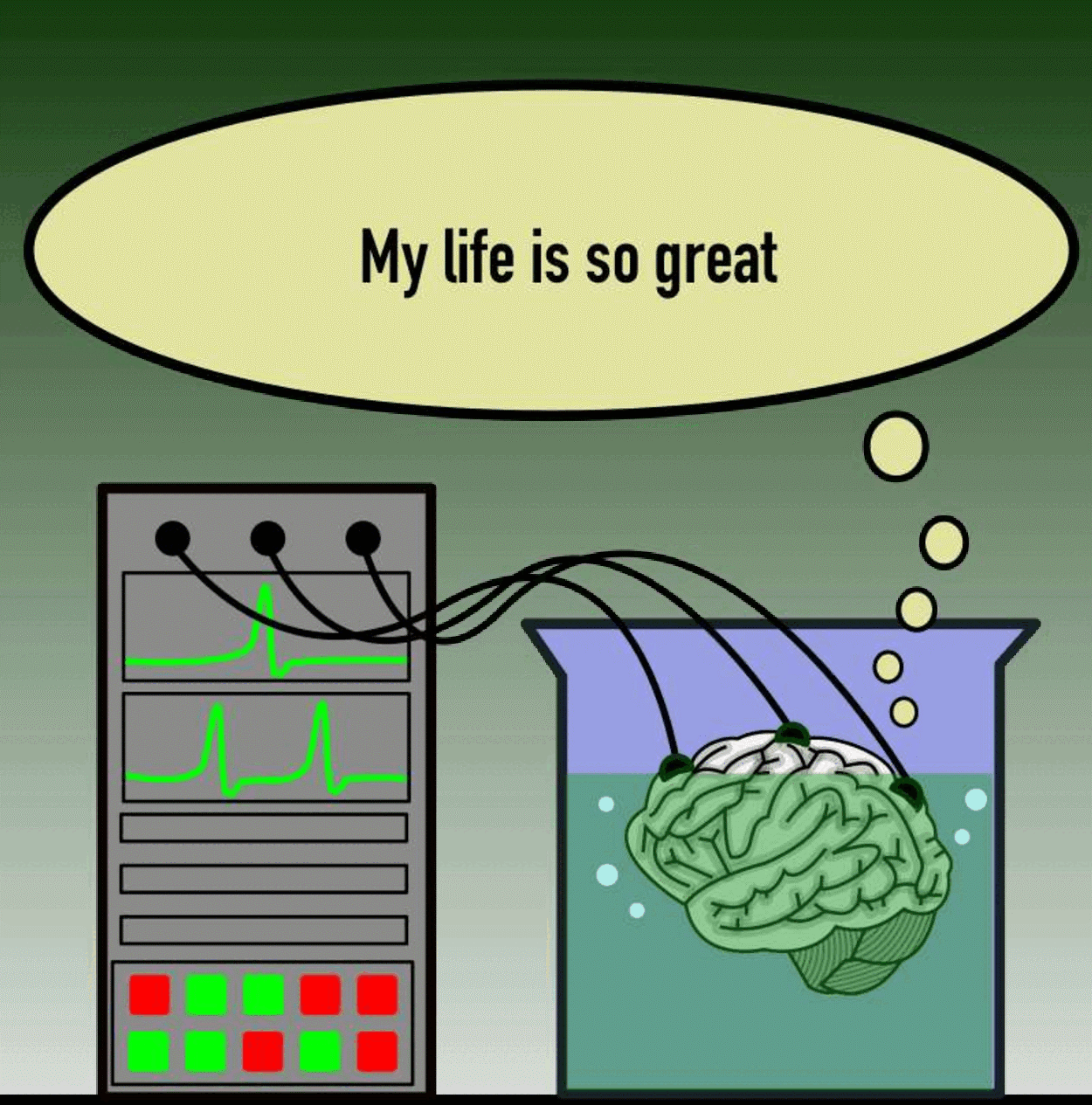
Let's read a short description of this thought experiment.
8 Philosophical Thought Experiments That I Illustrated To ...
Let's return to the 'Bored Panda' article to explore this experiment, which directly questions our ideas about happiness and reality.
Read the short section describing The Experience Machine. Focus on why Nozick believes most people would hesitate to plug in: we seem to value more than just pleasurable feelings.
Deconstructing the Experience Machine
-
The Ethical Question: What is a good life? Is a life of guaranteed pleasure and happiness the best possible life, even if it's not real? This challenges hedonism, the ethical theory that pleasure is the highest good. By asking "Would you plug in?", you're asking your audience to define what they value most: happiness or reality.
-
The Metaphysical Question: What is reality? If an experience is subjectively indistinguishable from reality, is it any less real? This also probes the nature of personal identity. What makes you you? Is it your physical body and actions in the world, or the sum of your conscious experiences? If you plug in, are you still the same person?
-
The Epistemological Question: How would you know you were in the machine? This scenario is a version of the "Brain in a Vat" problem (also in the comic image above). If all your sensory input is controlled, what evidence could you possibly have to suggest your reality isn't "real"? It forces us to confront the limits of our knowledge and the reliability of our senses.
Conclusion
In this lesson, we've moved from defining philosophical branches to actively using them as analytical tools. You've seen how a single, simple story—a runaway trolley or a happiness machine—can be a gateway to profound questions across ethics, epistemology, and metaphysics.
Here are the key takeaways:
- Thought experiments are philosophical stories designed to test our intuitions about complex ideas.
- Any scenario can be deconstructed using the three lenses of philosophy to reveal multiple layers of meaning.
- The most compelling questions are often hidden beneath the surface of the initial dilemma.
This process of analysis is the core skill for turning philosophical concepts into engaging content. You don't just present the dilemma; you unpack the questions it raises.
In our next lesson, we'll take the final step. You'll move from analyzing classic experiments to brainstorming your own "everyday dilemmas," crafting scenarios from daily life that carry the same philosophical weight and are perfectly suited for social media.