Hello! Welcome to a new module in your IELTS preparation journey.
In our last module, we focused on the IELTS Listening test, finishing with strategies for completing forms and notes. You learned to listen for specific details like names, dates, and facts. Now, we are shifting our focus to a new skill set: the IELTS Reading test.
This lesson introduces a foundational reading skill: skimming. Your goal for this lesson is to learn how to skim texts to identify their main ideas and overall structure. This is one of the most important skills for the IELTS Reading section because it allows you to understand a text's general meaning quickly without reading every single word, which is essential for managing your time effectively.
By the end of this lesson, you'll have a clear set of techniques to quickly get the 'gist' of any academic text you encounter.
1. What is Skimming?
Before we learn the techniques, let's be clear on what skimming is and why it's so important for the IELTS test. In the Reading section, you have only 60 minutes to answer 40 questions based on three long academic texts. Reading every word is not a realistic strategy. Skimming allows you to build a quick mental map of the text, which helps you locate answers more efficiently later.
To start, let's define skimming and distinguish it from another fast-reading skill called 'scanning', which we will cover in the next lesson.
Strategies for skimming and scanning in the IELTS Reading test
This article from IDP, an official IELTS co-owner, provides a clear overview of these two essential skills. Pay close attention to the table comparing them.
First, read the introduction. Then, study the comparison table under the heading 'Skimming and scanning in the IELTS Reading test – Differences outlined'. Focus on the 'Purpose', 'Focus', and 'Usefulness' columns for skimming.
As you saw in the table, the purpose of skimming is to get a general overview or main idea. You are looking for the big picture. Scanning, on the other hand, is for finding specific details, like a name or a date.
For the rest of this lesson, we will focus only on skimming.
2. How to Skim a Text: The Core Techniques
Skimming is not random, fast reading. It's a strategic process of focusing on the parts of a text that contain the most important information. Since you are a dental student, you are likely familiar with the structure of academic articles and research papers. This is a great advantage, as the texts in the IELTS Academic Reading test follow a similar structure.
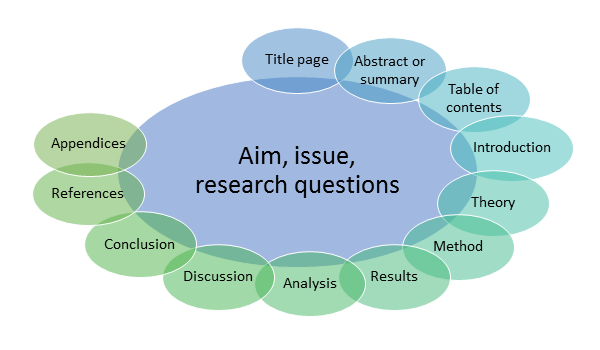
The following video provides an excellent demonstration of how to skim an academic text.
Let's watch a step-by-step guide from The University of Melbourne. It uses an academic paper as an example, which is very similar to what you'll see in the IELTS test.
Watch the video from the beginning until 05:39. As you watch, notice the different parts of the text the presenter focuses on. These are your targets when skimming: Title, author, and date (from 01:02) Abstract (if available) (from 02:40) Introduction (especially the end) (from 03:30) Conclusion (from 04:08) Headings and subheadings (from 04:44) First and last sentences of paragraphs (from 05:13)
To summarize the video, here is your skimming checklist:
- Read the title and any subheadings. They provide the main topic.
- Read the introduction or the first paragraph. This is where the author often presents the main idea and outlines the text's structure.
- Read the first sentence of each following paragraph. This is the topic sentence, and it usually states the main point of that paragraph.
- Look for headings, bullet points, and any text in bold or italics. These are used to highlight key information.
- Read the conclusion or the last paragraph. This section summarizes the author's main points and final thoughts.

3. Understanding Text Structure with Structural Markers
To skim effectively, it helps to recognize how ideas are connected. Academic texts use specific words and phrases called structural markers (or signposting language) to guide the reader. Recognizing these helps you understand the function of different parts of the text very quickly.
For example, a phrase like "In conclusion..." tells you that you are about to read a summary of the main points. A word like "However..." signals a contrasting idea.
IELTS Reading: Identifying Structural Markers in Long Academic Texts
Let's learn about these useful signposts. This article explains what structural markers are and why they are important for understanding a text's organization.
Please read these four short sections: 'What Are Structural Markers in Academic Reading' 'Structural Markers That Signal Introduction of Ideas' 'Conclusion and Summary Markers' 'Using Structural Markers to Improve Skimming' Your goal is to understand that these phrases are clues that tell you the purpose of a sentence or paragraph.
Here is a small table with some common structural markers. When skimming, your brain should learn to spot these signals automatically.
| Function | Example Markers |
|---|---|
| Introduction | This paper examines..., The aim is to..., One key issue is... |
| Adding an Idea | Furthermore..., In addition..., Moreover... |
| Contrast | However..., In contrast..., On the other hand... |
| Giving an Example | For example..., For instance..., To illustrate... |
| Conclusion | In summary..., To conclude..., Overall..., It can be concluded that... |
When you see a phrase like "For example," you know that the following information is supporting detail, not the main idea, so you can read it very quickly or even skip it when skimming.
4. Let's Practice
Now, let's use what you've learned in a quick practice exercise. One of the most common IELTS Reading tasks that relies on skimming is "Matching Headings," where you have to choose the best heading for each paragraph.
IELTS Reading - Skimming and Scanning
This video clip presents a paragraph and asks you to choose the best heading for it. This is a perfect test of your skimming skills.
Watch from 02:31 to 03:57. First, read the four heading options. Then, quickly skim the paragraph shown in the video. Focus on the first and last sentences, and look for keywords to decide on the best heading.
The correct answer was C: a growing up and unhappy generation.
Why? The first sentence introduces the topic: "children and teenagers in the UK are some of the unhappiest in the industrialised world." The last sentence reinforces this idea by talking about the "negative effect" on young people. The main idea of the paragraph is clearly about unhappiness in the younger generation.
Conclusion
Excellent work today! You have just learned a crucial skill for the IELTS Reading test. By mastering skimming, you can approach any text with confidence, knowing you can quickly understand its main message and structure without getting lost in the details.
Key Takeaways:
- Skimming is strategic, fast reading to find the main ideas and overall structure of a text.
- It is essential for time management in the IELTS Reading test.
- To skim effectively, focus on key parts of the text: titles, introductions, conclusions, headings, and the first sentence of each paragraph.
- Structural markers (like "However," or "In summary,") are signposts that help you navigate the text's logic quickly.
In our next lesson, we will build on this skill by learning about scanning, the technique you'll use to find specific information quickly once you have a general understanding of the text.