Hello! Welcome to the final lesson in our "Essential Grammar for Academic English" module.
In our last lesson, we mastered the second and third conditionals, which allow us to talk about hypothetical situations in the present and past. Today, we will cover another crucial structure for formal writing: the passive voice.
Our goal for this lesson is to learn how to use the passive voice appropriately in academic contexts. This skill is extremely valuable for the IELTS exam, particularly for describing processes in Writing Task 1 and for presenting information objectively in Writing Task 2. Mastering the passive voice will help you write with the formal, impersonal tone that is expected in academic English.
1. What is the Passive Voice?
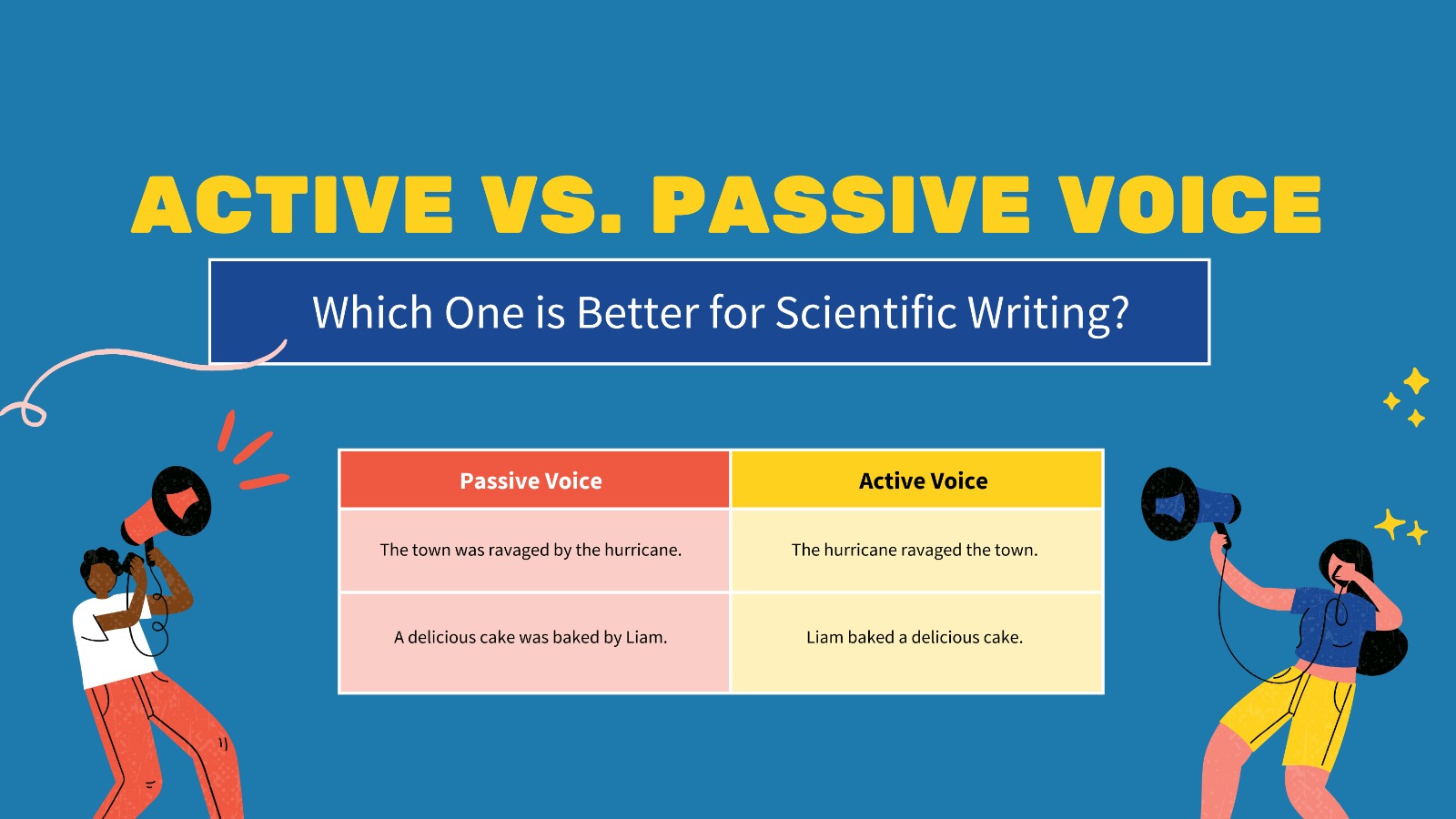
In most sentences, we use the active voice. The subject performs the action.
- Active: The dentist (
subject) extracted (verb) the tooth (object).
In the passive voice, the subject receives the action. The focus shifts from the person/thing doing the action to the person/thing receiving it.
- Passive: The tooth (
subject) was extracted (verb).
Notice how the original object (the tooth) becomes the new subject. The original subject (the dentist) is either removed because it's unimportant, or it's mentioned at the end with the word by (e.g., "...by the dentist").
To learn how to form the passive voice correctly across different tenses, please study the following article from IDP, an official co-owner of IELTS.
Grammar 101: When to Use the Passive Voice
This article, 'Grammar 101: When to Use the Passive Voice,' clearly explains the fundamental difference between active and passive voice and shows you how to construct passive sentences in various tenses.
Please read the sections titled 'What is a voice in grammar?', 'How to write a sentence in the passive voice', and 'How to change verb tense in the passive voice'. Pay close attention to the formula: form of 'to be' + past participle, and study the table showing its use in different tenses.
As the article shows, the core structure is always a form of the verb to be (is, are, was, were, been, being) followed by the past participle (e.g., written, made, tested).
Test your understanding!
Change the following active sentences into the passive voice.
- The university will announce the results next week.
- Researchers are conducting a new study on public health.
- Someone has stolen my notes from the library.
Show answer
- The results will be announced next week (by the university).
- A new study on public health is being conducted (by researchers).
- My notes have been stolen from the library.
2. When to Use the Passive Voice in Academic Contexts
Knowing how to form the passive voice is only half the battle. Knowing when to use it is what will improve your IELTS score. In academic writing, the passive voice is not just a grammatical option; it's a tool for shaping your message.
Let's watch a video that summarizes the three main reasons to use the passive voice.
How to use Active & Passive Voice in Academic Writing
This clip from the video 'How to use Active & Passive Voice in Academic Writing' clearly explains the specific situations where the passive voice is the best choice.
Watch the video from 09:41 to 11:30. Focus on the three key reasons for using the passive voice: 1) the subject is unknown/unimportant, 2) the object/action is more important, and 3) the receiver of the action is the topic of the sentence.
To summarize, we use the passive voice when:
-
The agent (the "doer") is unknown, obvious, or unimportant.
- My phone was stolen yesterday. (We don't know who stole it.)
- The suspect was arrested. (It's obvious the police arrested him.)
-
The focus should be on the action or the receiver of the action. This is very common in scientific and academic writing.
- For example, in a dental research paper, you would more likely read, "The composite material was tested for durability," rather than "The researchers tested the composite material for durability." The focus is on the material and the test, not on who did it.
One of the most important uses for the passive voice in the IELTS Academic test is for describing man-made processes in Writing Task 1.
Passive Voice for IELTS Processes
The article 'Passive Voice for IELTS Processes' demonstrates exactly how the passive voice is used to describe a process diagram. This is a very common Task 1 question type.
Read the section 'The passive voice for IELTS' and carefully study the model answer describing how chocolate is produced. Notice how nearly every step uses the passive voice (e.g., 'pods are harvested', 'beans are removed', 'they are then roasted').
3. When to AVOID the Passive Voice
While the passive voice is useful, you should not overuse it. The active voice is usually clearer, more direct, and stronger. Using the passive voice unnecessarily can make your writing sound weak and confusing.
This next video explains some common mistakes IELTS candidates make with the passive voice.
English Grammar: The Passive Voice (IELTS TOEFL Writing)
This clip from 'English Grammar: The Passive Voice (IELTS TOEFL Writing)' provides excellent advice on when not to use the passive voice and warns against common, wordy phrases.
Watch the video from 21:23 to 24:35. Pay close attention to the examples of unnecessary passive structures, such as 'It is believed by some people that...' and 'It can be seen in the graph that...'.
The key is to always have a good reason for using the passive voice. If the active voice is clearer and more direct, use it.
-
Weak passive: The essay was written by me.
-
Strong active: I wrote the essay.
-
Wordy passive: It is believed by many that exercise is important.
-
Stronger active: Many people believe that exercise is important.
Test your understanding!
Read the sentences below. Which one is better? Why?
A) Mistakes were made during the experiment.
B) We made mistakes during the experiment.
Show answer
It depends on the context.
Sentence B (We made mistakes...) is a strong, clear, active sentence. It takes responsibility and is good for direct communication.
Sentence A (Mistakes were made...) is passive. It is often used to avoid taking direct responsibility. While grammatically correct, it can sound evasive. However, if the goal is to focus on the mistakes themselves in a formal report, rather than who made them, it could be appropriate. For your IELTS essays, being direct (like in sentence B) is often better unless you have a specific academic reason to use the passive.
Conclusion
Congratulations on completing the first module of your course! Today, we've unlocked the passive voice, a key tool for elevating your academic writing.
Key Takeaways:
- Structure: The passive voice is formed with
form of to be + past participle. - Purpose: Use it to shift focus from the doer to the action or the receiver of the action.
- When to Use: It is best used when the doer is unknown, obvious, or unimportant, and is essential for describing processes and maintaining an objective tone in academic writing.
- When to Avoid: Don't overuse it. Avoid weak or wordy passive phrases when a strong, clear active sentence would be better.
To test your knowledge, try the "Quiz: Passive or Active Voice" at the end of the IDP article you read earlier ("Grammar 101: When to Use the Passive Voice").
In our next lesson, we will begin a new module: Academic Vocabulary Foundations. We'll start by exploring the Academic Word List (AWL), a vital resource for any student aiming for a high IELTS score. Well done on building a strong grammar foundation