Hello! Welcome to the first lesson in our new module, Future-Proofing for Generative AI Search.
In our last module, we focused on using AI as a tool to analyze our own performance data, turning vast datasets from GSC and GA4 into actionable insights. Now, we're going to flip the script. Instead of using AI to analyze our work, we'll be analyzing how Google's AI itself works.
The search landscape is fundamentally changing with the integration of AI Overviews (formerly known as the Search Generative Experience or SGE). Simply ranking in the top 10 is no longer the end goal. The new goal is to be cited as a trusted source within the AI-generated answer.
Today, your learning outcome is to analyze how AI-generated results (e.g., Google SGE) source information to identify key E-E-A-T signals. We will deconstruct the "black box" of AI Overviews to understand the mechanics of source selection, with a laser focus on the trust and authority signals that determine who gets featured.
1. From Ranking to Citation: The New SEO Paradigm
For years, SEO has been about climbing the ranks to secure a top position. While that's still important, it's now just the entry ticket. AI Overviews add a new, complex layer of evaluation before your content is shown to the user.
To start, let's establish a foundational rule for how AI Overviews select their sources.
How to RANK in Google’s AI Overviews (Complete 2026 SEO Guide)
The video 'How to RANK in Google’s AI Overviews' from Surfer Academy provides a data-backed starting point for understanding where AI Overviews get their information. It introduces a critical concept: the link between traditional rankings and AI citations.
Watch the segment from 01:23 to 02:35. Pay close attention to the statistic about where sources come from and the distinction between 'core' and 'non-core' sources.
As the video highlights, 70% of sources for AI Overviews come directly from the top 10 organic results. This confirms that strong traditional SEO is still the bedrock. However, being in the top 10 doesn't guarantee you'll be cited. The AI performs further filtering.
This leads us to a more sophisticated model of how content is processed. It's not a simple search-and-display. It's a multi-stage pipeline.
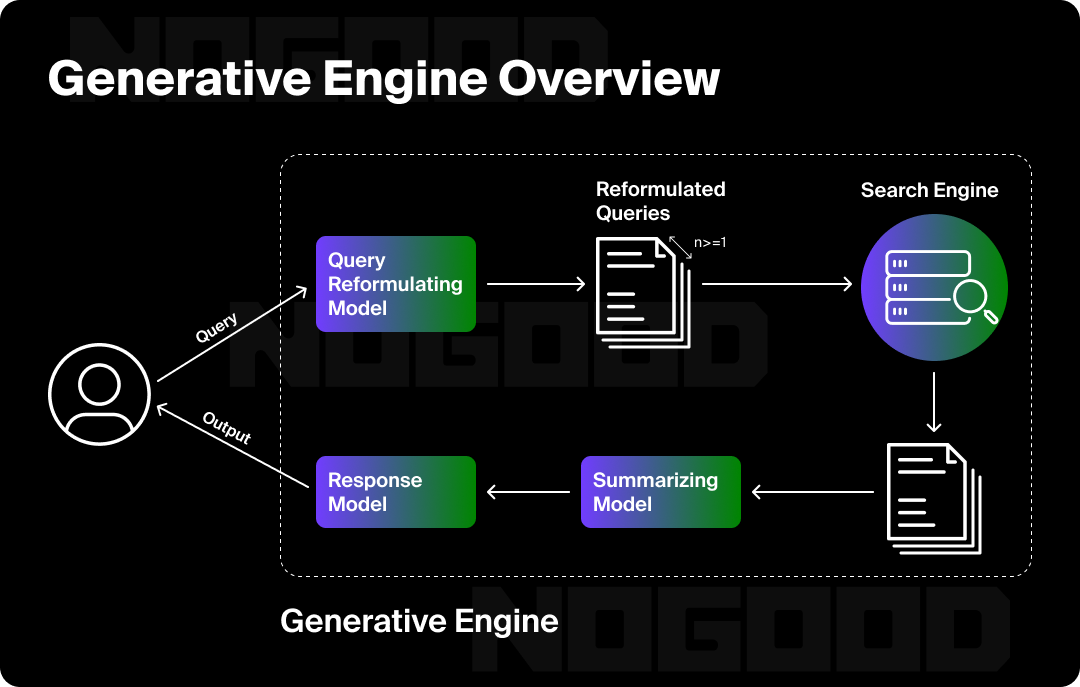
This multi-stage process is sometimes called a "Source Prioritization Pipeline." The article "Inside Google AI Overviews" provides a detailed look at this.
Inside Google AI Overviews: How Source Prioritization Works
To understand the filtering process, let's look at a structured model. This article from Agenxus introduces a five-stage pipeline that Google likely uses to select, rank, and synthesize sources. It explains why a page can rank #1 organically but never get cited.
Read the 'TL;DR — Key Takeaways' section and review the table under 'The Five-Stage Source Prioritization Pipeline.' Your goal is to understand the names and purpose of each stage, especially the 'E-E-A-T Filtering' stage. You don't need to read the entire article, just these introductory parts.
The key takeaway is that your content must pass through a series of gates:
- Retrieval: Being found in the index (traditional SEO).
- Semantic Ranking: Being deemed topically relevant.
- E-E-A-T Filtering: Being evaluated for trustworthiness and authority.
- LLM Re-ranking: Being assessed for providing a complete, sufficient answer.
- Data Fusion: Being synthesized with other sources into a coherent answer.
Failing at any stage, especially the E-E-A-T filter, can get your content disqualified, even if it ranks well.
2. E-E-A-T as the Gatekeeper for AI Citations
The E-E-A-T filter is arguably the most important new battleground for SEOs. Generative AI models are designed to be risk-averse; citing an untrustworthy source damages the credibility of the entire AI platform. Therefore, Google applies a strict credibility check before it even considers using your content.
This is especially true for "Your Money or Your Life" (YMYL) topics.
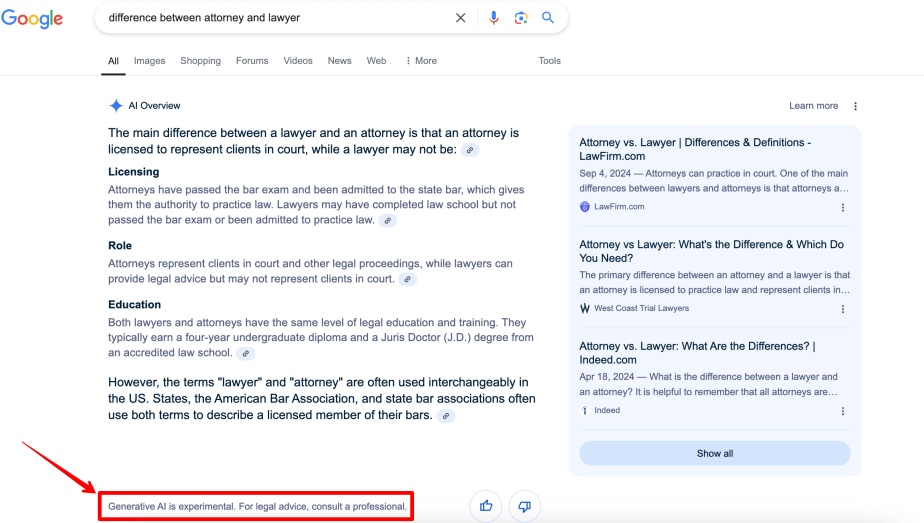
So, what specific signals is the AI looking for? Let's break down each component of E-E-A-T for the AI era. We'll draw from two excellent resources that cover this in-depth: a tactical video from Matt Diggity and a comprehensive guide from Agenxus.
I did AI-SEO for ChatGPT and Google AI. Here’s what happened…
First, let's watch a segment from Matt Diggity's video 'I did AI-SEO for ChatGPT and Google AI.' It provides a fantastic, practical overview of the brand and reputation signals that AI systems look for.
Watch from 05:03 to 07:28. This section is packed with actionable E-E-A-T tactics. As you watch, categorize the tips you hear into Experience, Expertise, Authoritativeness, and Trustworthiness.
Now, let's formalize that knowledge and dive deeper into each pillar, using the "E-E-A-T for GEO" guide as our reference.
E-E-A-T for GEO: How to Build Trust Signals That Win AI ...
The article 'E-E-A-T for GEO' provides a definitive framework for demonstrating trust signals to AI systems. We will use it to structure our understanding of each E-E-A-T pillar.
For this reading, I want you to focus on how each E-E-A-T signal is detected by AI. Skim the following sections: 'Why E-E-A-T Matters More in Generative Search': Understand the core concept of the 'citation confidence threshold'. 'Experience (E)': Focus on the 'How AI Systems Detect Experience Signals' and the checklist. 'Expertise (E)': Read about 'Content-Level' and 'Author-Level' signals. 'Authoritativeness (A)': Focus on 'External Validation Signals' and 'Entity Consistency'. 'Trustworthiness (T)': Read about 'Transparency' and 'Trust Pages'. This will provide you with a comprehensive list of the signals AI looks for.
Let's synthesize what you've just learned into a clear framework.
Experience: Demonstrating First-Hand Knowledge
This is about proving you've done something, not just researched it. AI can summarize, but it can't have real experiences.
- Key Signals for AI:
- Original Media: Unique photos, screenshots, or videos (not stock images).
- Specific Metrics: Citing your own data ("we saw a 15% increase in conversions").
- Case Studies & Real-World Examples: As mentioned in the Matt Diggity video.
- Proprietary Methodologies: Sharing your unique frameworks or processes.
Expertise: Signaling Subject Matter Mastery
This is about proving you know your topic deeply and have the qualifications to back it up.
- Key Signals for AI:
- Author Credentials: Clear author bios with qualifications, certifications, and education.
- Comprehensive Content: Thorough articles that demonstrate deep knowledge, not surface-level summaries.
- Publishing Expert-Driven Content: Featuring quotes from other recognized experts.
- Structured Data: Using
Personschema to explicitly list credentials (we'll cover this in the next lesson).
Authoritativeness: Building External Recognition
This is about proving that others see you as a go-to source in your field. It's about reputation.
- Key Signals for AI:
- High-Quality Backlinks: Links from other reputable and relevant domains.
- Brand Narrative Control: Ensuring consistent information about your brand across platforms like LinkedIn, review sites, and your Google Business Profile.
- Entity Consistency: Using the same brand name, author names, and addresses across the web so the AI can connect the dots and build a confident picture of who you are.
- Awards & Certifications: Showcasing industry recognition.
Trustworthiness: Proving Accuracy and Transparency
This is the ultimate goal that all other signals support. The AI must trust you to be accurate and honest.
- Key Signals for AI:
- Citing Credible Sources: Linking out to primary sources, studies, and official documentation to support your claims.
- Transparency: Clearly visible contact information, an in-depth "About Us" page, and editorial policies.
- Site Security: Using HTTPS.
- Reviews and Ratings: Maintaining a strong reputation on third-party review platforms.
Test your understanding!
Imagine a page on your client's website ranks #2 for "best project management software for small teams." The page is well-written and comprehensive. However, a competitor at #5 is consistently cited in the AI Overview, while your client's page is not.
Based on the E-E-A-T framework we just discussed, list three distinct and plausible reasons why the AI might be filtering out your client's page.
Show answer
Here are three plausible reasons based on the E-E-A-T framework:
- Lack of Demonstrable Experience: The client's page might just summarize software features. The competitor's page, however, could include original screenshots of their team using the software, a case study with specific performance metrics (e.g., "we reduced project completion time by 20%"), or a video walkthrough, signaling first-hand experience.
- Weak Author Expertise: The client's article might be published under a generic byline like "Admin" or "Company Blog." The competitor's article could be attributed to a named author with a detailed bio page showcasing 10+ years as a project manager and relevant certifications (e.g., PMP), signaling stronger expertise.
- Lower Authoritativeness/Trust: The competitor might have high-quality backlinks from respected tech review sites or be frequently mentioned in industry publications, reinforcing their authority. Your client's page may lack these strong external validation signals. The competitor might also be more transparent, citing the date of their last review and linking to their editorial policy on how they test software.
Conclusion
Today we've moved from the familiar world of organic rankings into the new frontier of AI-driven citations. You've learned that getting cited in an AI Overview is not random but the result of a rigorous, multi-stage filtering process where E-E-A-T acts as a critical quality gate.
Key Takeaways:
- AI Overviews primarily source information from top-ranking organic results, but this is only the first step in a "source prioritization pipeline."
- To be cited, your content must pass through multiple filters, with E-E-A-T (Experience, Expertise, Authoritativeness, and Trustworthiness) being a crucial gatekeeper.
- AI systems identify E-E-A-T through concrete signals: original media and data (Experience), author credentials (Expertise), external validation and backlinks (Authoritativeness), and transparent sourcing (Trustworthiness).
- Optimizing for Generative AI means proving your credibility to a machine, which requires making these signals explicit and easy to parse.
In our next lesson, we will move from analysis to action. Now that you can identify the E-E-A-T signals that AI systems are looking for, we'll cover how to implement on-page and technical elements (e.g., author schema, structured citations) to enhance E-E-A-T for AI systems. You'll learn the practical skills needed to make your content not just rank, but get cited.