Hello! Welcome back to our module on Future-Proofing for Generative AI Search.
In our last lesson, we deconstructed AI Overviews to understand why E-E-A-T is the critical gatekeeper for getting your content cited. We learned that AI systems are actively looking for signals of Experience, Expertise, Authoritativeness, and Trust before they will consider using a source.
Today, we shift from analysis to implementation. Your learning outcome is to implement on-page and technical elements (e.g., author schema, structured citations) to enhance E-E-A-T for AI systems. We will cover the practical "how-to" of making your E-E-A-T signals explicit, structured, and machine-readable, turning your website into a trusted entity in the eyes of AI.
1. Schema Markup: Speaking the Language of AI
You're already familiar with schema for its role in generating rich snippets. In the era of AI search, its importance has magnified. Think of schema markup as a direct communication channel to AI models. It translates the unstructured, human-readable content on your pages into a structured, machine-readable format that an AI can understand without ambiguity.
Essentially, schema allows you to explicitly label the entities on your site—your organization, your authors, your products—and define the relationships between them. This structured data is what AI systems use to build confidence in your content.
The Expert's Guide to AI Search Rankings: Schema ...
To understand schema's foundational role, let's start with the article 'The Expert's Guide to AI Search Rankings'. It clearly explains how structured data acts as a bridge between human content and machine processing.
Read the section titled 'What Schema Markup Really Does'. Focus on how schema makes content machine-readable, helps AI understand entities, and boosts trust for citation potential.
As the article highlights, schema helps AI systems verify your credibility. A site with well-implemented schema is far more likely to be understood, trusted, and ultimately cited in an AI-generated response.
2. A Layered Strategy for E-E-A-T Schema
To implement schema effectively, it's best to think in layers. A robust schema strategy builds from a broad foundation to specific, detailed information. The article from Mike Khorev you just reviewed introduces a great "Three-Layer Schema Architecture." We will adopt this practical model.
- Sitewide Identity Layer: Establishes who you are at a domain level.
- Page-Level Context Layer: Describes what an individual page is about.
- Content-Type Specific Layer: Provides fine-grained detail about the content itself (e.g., this is an
Article, this is aProduct).
Our focus will be on the specific schema types within this architecture that most directly signal E-E-A-T.
3. Core Schema Types for Signaling E-E-A-T
Let's dive into the most critical schema types for demonstrating your Experience, Expertise, Authoritativeness, and Trust to AI systems.
The Exact Schema Setup For Your Website
The video 'The Exact Schema Setup For Your Website' by Jared Bauman provides an excellent, practical walkthrough of the essential schema types. It demonstrates how to connect the dots for Google, which is precisely what we need to do for AI systems.
Watch the video from the beginning up to 07:52. This covers: What schema is and its role in E-E-A-T. Essential domain schema (Organization, AboutPage, ContactPage). Essential person schema (ProfilePage, Person) for authors. Pay close attention to how these different schema types work together to build a picture of credibility.
Let's break down the key takeaways and add more detail.
Organization Schema: Signaling Authority and Trust
This is the foundation of your sitewide identity layer. It unambiguously tells AI systems: "This website belongs to this specific real-world organization."
- Purpose: Establishes your brand as a clear entity.
- Key Properties:
@type:Organization(or a more specific type likeCorporation).name: Your official brand name.legalName: Your official registered business name.url: The URL of your homepage.logo: A URL to your official logo file.address: Your physical business address.contactPoint: Phone number, email.sameAs: This is crucial. It's an array of URLs that point to your organization's official profiles on other authoritative platforms (e.g., your LinkedIn page, Twitter profile, Wikipedia entry, Google Business Profile).
Author (Person) and ProfilePage Schema: Signaling Expertise and Experience
This is where you connect your content to credible human beings. AI systems place significant weight on who wrote the content, especially for YMYL topics. Simply having an author name on the page is not enough; you need to structure that information.
- Create Robust Author Pages: Every author should have a dedicated bio page on your site. This page isn't just a list of their articles; it's their professional profile. It should detail their credentials, experience, education, and areas of expertise.
- Use
ProfilePageSchema: Mark up these author bio pages withProfilePageschema. - Use
PersonSchema: On each article, useArticleschema and nestPersonschema within theauthorproperty. ThisPersonschema should contain the author's name and, importantly, link to their author page on your site.

The Power of sameAs
The sameAs property deserves special attention. It is one of the most powerful tools for building your entity graph. It's how you tell an AI, "The 'John Doe' who wrote this article is the same John Doe with this LinkedIn profile, this author page on Forbes, and this professional certification." This connects the dots and allows the AI to aggregate authority signals from across the web and attribute them to your author and your brand.
The Exact Schema Setup For Your Website
Let's revisit Jared Bauman's video to see a masterclass in using sameAs. He demonstrates how major publications use this property to build a web of trust around their brand and authors.
Watch the segment from 08:18 to 15:52. Focus on how sameAs is used for both the organization and the individual authors to connect various online presences into a single, verifiable entity.
reviewedBy Schema: The Ultimate Trust Signal for YMYL
For high-stakes YMYL content (finance, health, legal), proving factual accuracy is paramount. The reviewedBy property in Article schema allows you to signal that a qualified expert has fact-checked the content, even if they didn't write it.
This is a powerful signal of Trustworthiness. You can specify another Person or Organization as the reviewer, complete with their own credentials and sameAs links.
Author SEO: Optimize Your Site for Google E-E-A-T
The 'Author SEO' video from Rank Math provides a fantastic, step-by-step tutorial on how to implement author and reviewer schema, which is directly applicable even if you don't use that specific plugin.
Watch from 17:40 to 20:30. This section shows how to add a second individual as a 'reviewer' and how the reviewedBy schema is generated. This is a practical demonstration of a key E-E-A-T signal.
Test your understanding!
You are auditing a blog post titled "5 Strategies for Retirement Savings" on a financial planning website. The article is written by "Jane Smith, CFP" and fact-checked by the site's editorial lead, "Tom Jones."
List the key schema types and properties you would use in the article's JSON-LD to maximize E-E-A-T signals for an AI system. Be specific about nesting and key properties like sameAs.
Show answer
You would implement Article schema as the main type. Within it, you would nest:
-
authorproperty:@type:Personname: Jane Smithurl: A link to Jane Smith's detailed author bio page on your site.jobTitle: Certified Financial PlannersameAs: An array of URLs to her LinkedIn profile, her profile on the CFP Board website, and other relevant professional sites.
-
reviewedByproperty:@type:Personname: Tom Jonesurl: A link to Tom Jones's author bio page.jobTitle: Editorial LeadsameAs: A link to his professional LinkedIn profile.
-
publisherproperty:@type:Organizationname: The name of the financial planning company.logo: A URL to the company's logo.
This structure clearly signals who wrote the content (Expertise), who verified it (Trust), and what organization published it (Authority).
4. Implementation and Validation
Knowing what schema to add is the first half of the battle. The second half is implementation and validation.
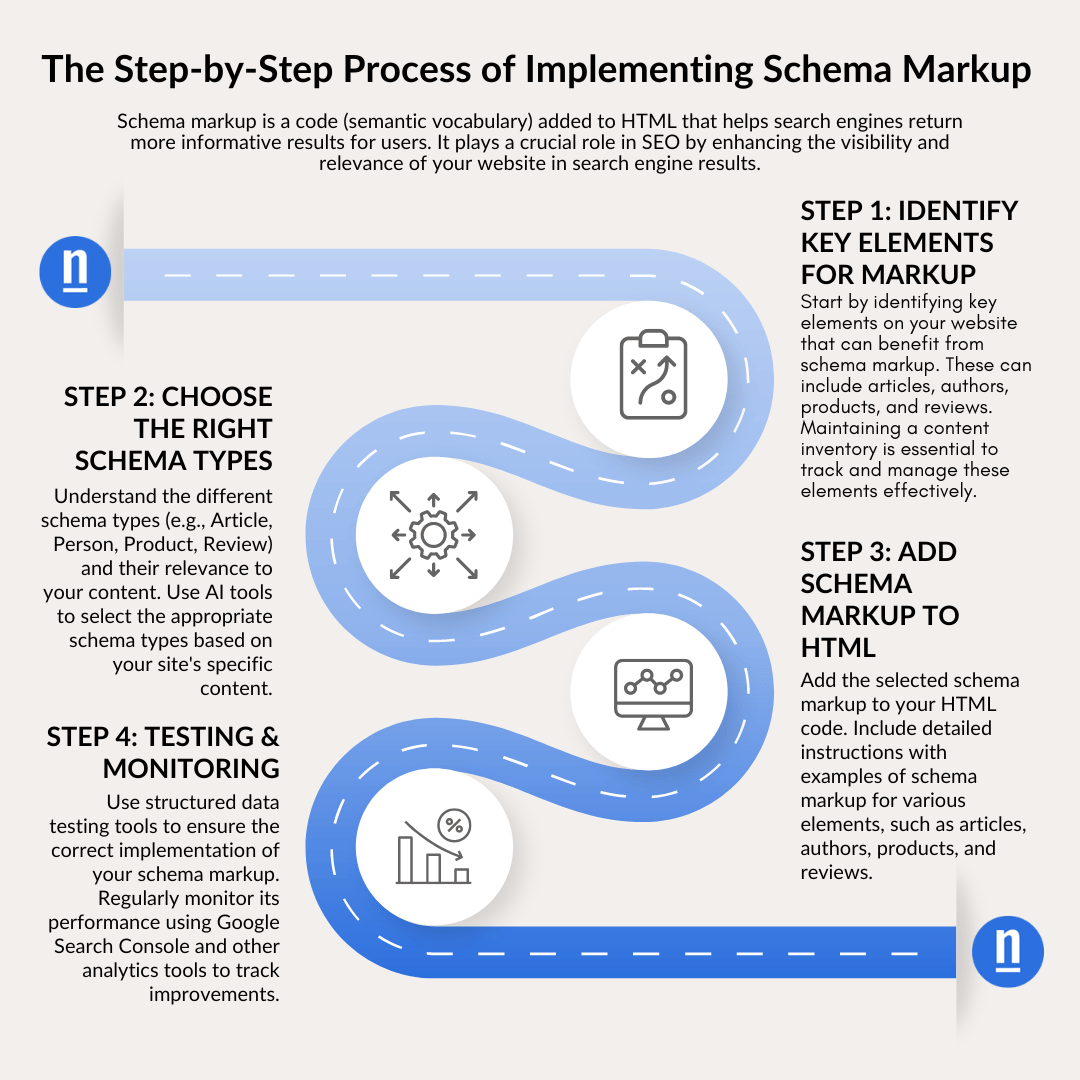
- Generation & Implementation: You can add schema in several ways.
- SEO Plugins: Tools like Yoast and Rank Math (which you are familiar with) can handle much of the basic
Organization,Article, andPersonschema automatically. The Rank Math video showed how powerful these can be. - Manual JSON-LD: For more complex or custom implementations, you'll write the JSON-LD yourself (or with an AI assistant) and place it in the
<head>of your HTML, either directly or via Google Tag Manager.
- SEO Plugins: Tools like Yoast and Rank Math (which you are familiar with) can handle much of the basic
- Validation: Never assume your schema is correct. Always validate.
- Google's Rich Results Test: This is your primary tool. It will not only validate your syntax but also show you which rich results your markup is eligible for.
- Schema.org's Validator: This is useful for checking syntax for schema types that Google doesn't necessarily support for rich results, but that are still valuable for entity understanding.
Conclusion
Today you've learned the practical methods for translating your website's E-E-A-T into the structured language of AI. By implementing a layered schema strategy, you make your credibility explicit and verifiable, dramatically increasing the chance that AI systems will trust and cite your content.
Key Takeaways:
- Schema markup is a direct communication channel to AI, making your E-E-A-T signals machine-readable.
- A layered approach using
Organization,Person(author), andreviewedByschema builds a comprehensive picture of trust and authority. - The
sameAsproperty is a powerful tool for connecting your on-site entities (your brand, your authors) to their authoritative profiles across the web. - Implementing schema for reviewers (
reviewedBy) is a critical trust signal for YMYL content. - Always validate your schema using tools like the Rich Results Test to ensure it's free of errors and correctly interpreted by Google.
In our next lesson, we will build on this foundation. Now that you know how to signal your own authority, we will learn how to analyze citation patterns in AI chatbot responses to position content as an authoritative source. This will involve reverse-engineering what's working for others to further refine your own strategy.