Hello again! It's great to see you back.
In our last lesson, we focused on analysis. We learned how to use AI to reverse-engineer top-ranking content, extracting the crucial semantic themes and structural patterns that Google rewards. You now know how to gather the strategic intelligence from the SERP.
Today, we move from analysis to synthesis. Our goal is to generate SEO-optimized content outlines with ChatGPT that match search intent and target SERP features. We will take the data we gathered and use it to construct a detailed blueprint for our content. This step ensures that our articles are not just comprehensive, but are also strategically designed to perform on the modern, feature-rich SERP.
1. The Foundation: Aligning with Search Intent
As you know from your experience, search intent is the bedrock of any successful SEO strategy. Before we can build an outline, we must be absolutely certain about the why behind a user's query. Is it informational, commercial, transactional, or navigational?
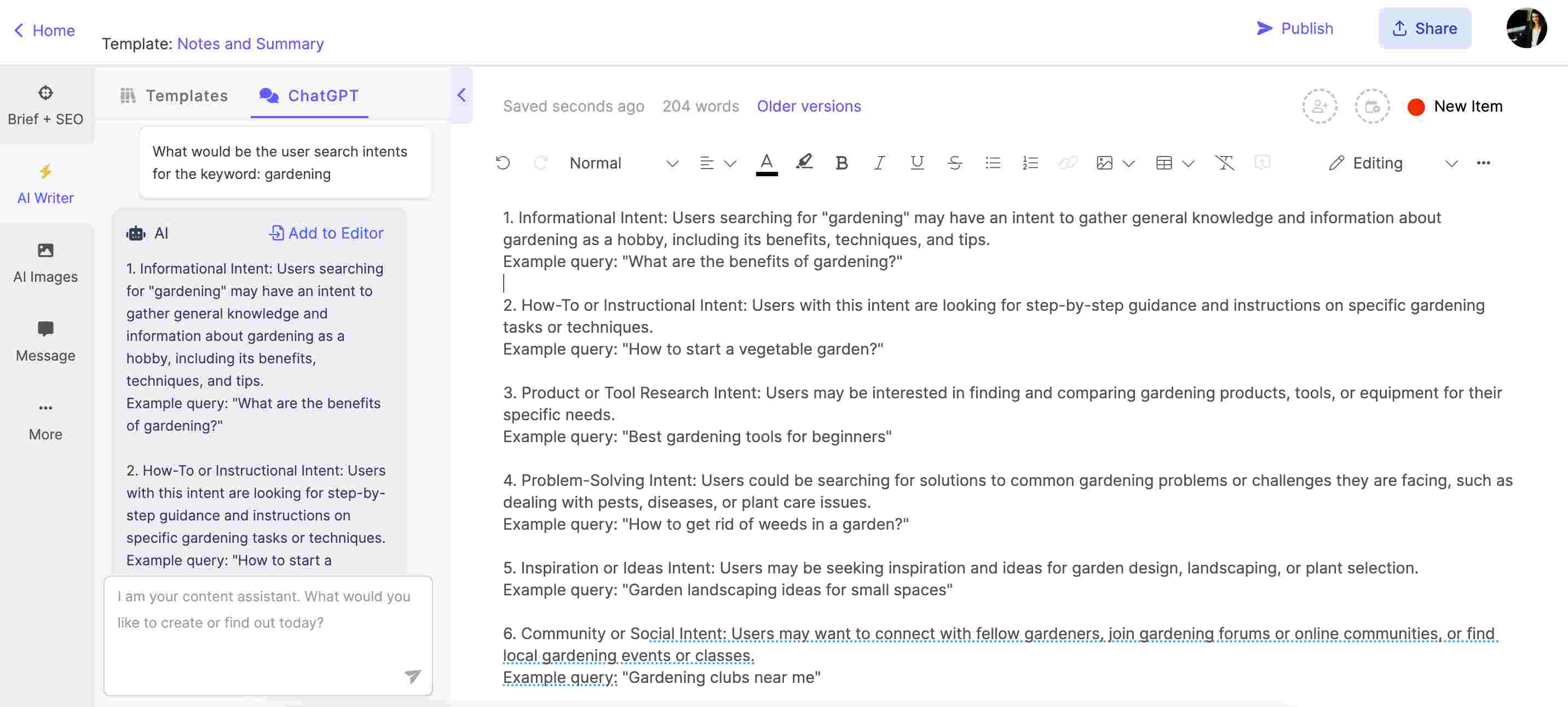
AI tools can accelerate this analysis. Instead of just guessing based on the keyword, we can ask an AI model to analyze the SERP and classify the dominant intent.
Let's watch a short clip that explains how to analyze SERPs to determine the correct intent strategy, especially in the context of today's AI-driven search results.
How to Create SEO Content That Ranks (2026 Update)
In this segment from 'How to Create SEO Content That Ranks' by Nathan Gotch, he explains why intent is more important than search volume and how to use the SERP itself to determine the correct content strategy. Pay attention to how he connects traditional organic results to the new AI Overviews.
Watch the clip from the beginning until 02:44. Focus on how the types of pages ranking (e.g., informational blog posts vs. commercial product pages) give you a clear signal of what Google considers to be the correct intent.
As the video highlights, the key is to observe the SERP. If the top results for a query are all "how-to" guides, creating a commercial landing page will likely fail. Your outline must reflect the dominant intent that Google is already rewarding. You can use a simple prompt in ChatGPT to get a quick analysis:
"Analyze the likely search intent (Informational, Commercial, Navigational, Transactional) for the keyword
[your keyword]. Briefly explain your reasoning based on the query's phrasing."
2. Targeting the Modern SERP: Structuring for Features
A great outline goes beyond a simple list of H2s. It must be architected to capture valuable SERP real estate. This means strategically designing sections of your content to win features like AI Overviews, Featured Snippets, and People Also Ask (PAA) boxes.
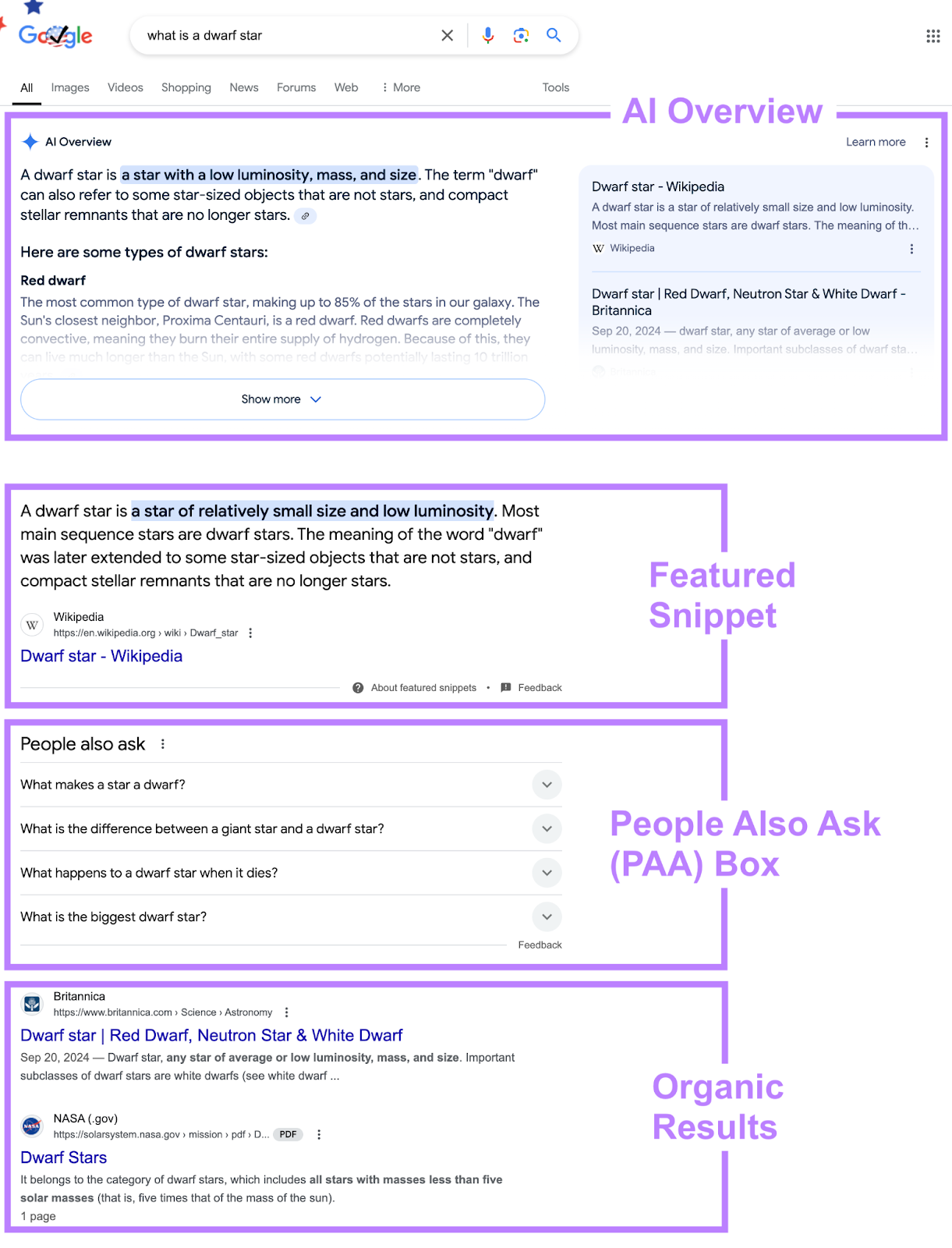
Here’s how to structure your outline to target these features:
- Featured Snippets: To capture a snippet, you need a concise, direct answer to the query. In your outline, plan for a "snippet bait" section. This is typically a 40-60 word paragraph placed directly under the most relevant heading, often answering a "what is" or "how to" question.
- People Also Ask (PAA): These are direct questions from users. Your outline should include an FAQ section where each PAA question becomes an H2 or H3, followed by a direct answer.
- AI Overviews: While still evolving, AI Overviews tend to synthesize information from multiple authoritative sources. To appear here, your content needs to be well-structured, factually accurate, and demonstrate strong E-E-A-T signals. Targeting snippets and PAA questions is a good starting point, as the underlying principles are similar.
The following resource provides specific prompts you can adapt to structure your content for these features.
44 Best ChatGPT Prompts for SEO
The article '44 Best ChatGPT Prompts for SEO' from Search Engine Land is a fantastic reference for practical prompts. We'll focus on the sections for creating outlines and targeting SERP features.
Please review the following sections: 'Blog post outlines from a keyword': Notice how the prompt includes not just the keyword, but also the target audience, goal, and competitors. 'Featured snippet optimization': This section provides a great prompt for rewriting content to win a snippet. 'FAQ content creation for schema': Focus on the prompt for generating questions and answers suitable for an FAQ section, which is perfect for targeting PAA boxes.
3. The Master Prompt: Building Your Outline with ChatGPT
Now, let's combine everything we've learned: SERP analysis from the last lesson, intent analysis, and SERP feature targeting. We will construct a comprehensive "master prompt" to instruct ChatGPT to generate a high-quality, SEO-optimized content outline.
A powerful prompt acts like a detailed brief for a human writer. The more specific your instructions, the better the output.
Here are the essential components of a master prompt for a content outline:
- Persona: Assign a role to ChatGPT (e.g., "Act as an expert SEO content strategist...").
- Core Task: State the main goal (e.g., "Create a detailed content outline for a blog post...").
- Context & Analysis: Provide the key information you've gathered:
- Target Keyword
- Search Intent
- Target Audience
- Semantic themes and entities from your competitor analysis.
- Structural & SERP Feature Instructions:
- Specify the desired structure (e.g., "step-by-step guide," "listicle").
- Include commands to target SERP features (e.g., "Include a section to target the featured snippet," "Generate an FAQ section based on these PAA questions...").
- Formatting & Constraints:
- Specify the output format (e.g., "Use H2s and H3s," "Provide a brief description for each section").
Example Master Prompt in Action
Let's use the example from our last lesson's exercise: "how to do a technical SEO audit."
Prompt:
Act as an expert SEO content strategist creating a content plan for a high-authority marketing blog.
Your task is to create a comprehensive, SEO-optimized content outline for a blog post targeting the keyword "how to do a technical SEO audit".
CONTEXT:
- Search Intent: Informational. The user is looking for a step-by-step guide.
- Target Audience: In-house marketers and junior SEOs with some basic knowledge but who need a structured process.
- Semantic Themes to Include: You must cover concepts like: crawl budget, Core Web Vitals, HTTPS, hreflang, canonicalization, robots.txt, sitemap.xml, site speed, mobile-friendliness, and duplicate content. Also mention key tools: Google Search Console, Screaming Frog, Ahrefs, and Semrush.
STRUCTURE & SERP FEATURES:
- The overall structure should be a step-by-step guide.
- Immediately after the introduction, include a concise, 50-word paragraph that directly answers "What is a technical SEO audit?" to target the featured snippet.
- The main body should be a series of H2s, with each H2 being a step in the audit process (e.g., "Step 1: Crawl Your Website").
- At the end of the article, create an H2 titled "Frequently Asked Questions" and provide answers for the following questions: "How often should you do a technical SEO audit?", "What is the most important part of a technical SEO audit?", and "Can I do a technical SEO audit for free?".
FORMAT:
Please format the output using H2s and H3s. For each heading, provide a short bulleted list describing the key points and entities to cover in that section.
This detailed prompt leaves very little to chance and provides ChatGPT with all the necessary strategic direction to produce an outline that is not just a list of topics, but a true roadmap for creating a piece of content that can rank.
For a more dynamic and visual approach, you can use the ChatGPT Canvas feature, which allows you to generate and organize different parts of your outline in a mind-map-style interface.
🚨 ChatGPT Search + Canvas = INSANE SEO Workflow!
This short clip from 'ChatGPT Search + Canvas = INSANE SEO Workflow!' demonstrates how to quickly generate an SEO-optimized outline directly within ChatGPT using the web-browsing feature. This is a great workflow for rapid outlining.
Watch from 01:18 to 01:44. Notice how the user prompts the AI to search the web first to ensure the outline is based on current, high-ranking content.
Test your understanding!
You need to create a content outline for the keyword "best AI tools for SEO". The goal is to create a listicle that ranks well and helps your company sell its own AI SEO tool.
Construct a "master prompt" for ChatGPT to generate the outline. Make sure to specify the persona, task, context (intent, audience, themes), and instructions for structure and SERP features.
Show answer
Here is an example of a strong master prompt for this task:
Act as a senior content marketer and SEO expert at a SaaS company that sells AI-powered SEO software.
Your task is to create a detailed, SEO-optimized content outline for a blog post targeting the keyword "best AI tools for SEO".
CONTEXT:
- Search Intent: Commercial Investigation. The user is comparing different tools before making a purchase decision.
- Target Audience: SEO managers, digital marketing directors, and agency owners looking to improve efficiency.
- Semantic Themes to Include: The outline must cover different categories of AI tools, including keyword research, content creation, technical SEO automation, and link building. Mention specific tool names like Ahrefs, Semrush, SurferSEO, Jasper, and also include our own tool, "[Your Tool Name]", positioning it favorably.
STRUCTURE & SERP FEATURES:
- The structure should be a "listicle" or "round-up" post.
- Start with a section that answers "What are AI SEO tools and why are they important?" to target informational queries.
- The main body should compare 5-7 tools. For each tool, use an H3 heading and include sub-sections for: "Best for...", "Key Features", "Pricing", and "Pros & Cons". Position our tool, "[Your Tool Name]", early in the list.
- Include a comparison table that summarizes the key features and pricing of all mentioned tools. This is to target rich results and provide scannable value.
- End with an H2 titled "How to Choose the Right AI SEO Tool for You" that helps users make a decision, subtly guiding them toward the strengths of our product.
FORMAT:
Please format the output using H2s and H3s. For each section, provide a brief description of what to cover.
Conclusion
You have now moved from analyzing the SERP to creating a strategic blueprint for your content. An AI-generated outline, guided by a well-crafted prompt, is far more than a simple list of headings—it's a plan of attack.
Key Takeaways:
- An effective outline begins with a clear understanding of search intent, which you can verify using AI and SERP analysis.
- Modern outlines must be structured to target valuable SERP features like Featured Snippets and PAA boxes, not just organic rankings.
- A "master prompt" is the key to synthesizing your analysis and strategic goals into actionable instructions for ChatGPT. It should include persona, task, context, structure, and formatting requirements.
You've built the blueprint. In our next lesson, we will begin construction. We'll explore how to "Use advanced prompt engineering to generate first-draft content that adheres to a specific brand voice," turning your optimized outline into a compelling article.