Introduction
Welcome to the final lesson of our module on macroeconomic analysis. In our previous session, we explored how global economic events, particularly the monetary policy of major economies like the U.S., and the resulting flow of foreign investment can significantly influence the Colombo Stock Exchange (CSE).
Having covered what macroeconomic factors to watch, this lesson will address the equally important question of where to find this information. Today's learning outcome is to identify reliable sources for Sri Lankan macroeconomic data and analysis.
For any data-driven professional, the quality of the source is paramount. In investing, this is non-negotiable. Relying on rumors, outdated figures, or biased analysis can lead to poor decisions. Your background in information technology and data analysis gives you a distinct advantage in appreciating the need for credible, primary data sources. Think of this as establishing the observability for your investment "system."
Part 1: The Central Bank of Sri Lanka (CBSL) — The Heart of Financial Data
The single most important source for monetary and financial data in Sri Lanka is the Central Bank of Sri Lanka (CBSL). The CBSL is responsible for maintaining price stability and financial system stability. As such, it is the primary publisher of data on inflation, interest rates, exchange rates, money supply, and external sector performance.
Their website is a treasure trove of information. Let's explore the main data portal.
Economic Indicators | Central Bank of Sri Lanka
The 'Economic Indicators' page on the CBSL website is the main gateway to a wide range of crucial economic data. We will use it to understand the key categories of information available directly from the source.
Please visit this page and take note of the different types of data available. Specifically, locate the following sections: Headline Indicators: Find the direct links for Inflation, Policy Interest Rate, and Exchange Rates. These are the most frequently cited figures. Data Frequency: Look for the links to Daily, Weekly, and Monthly Indicators. This shows the granularity of data available. Publications: Identify the Monthly Bulletin and the Macroeconomic Chart Pack. These are excellent resources that summarize data from across the economy. Interest Rates: Scroll down to the 'Market Interest Rates' section and see the links for Money Market, Government Securities, and Commercial Banks Lending and Deposit Rates.
The CBSL website should be your first stop for:
- Inflation data: Including the Colombo Consumer Price Index (CCPI) and National Consumer Price Index (NCPI).
- Policy Interest Rates: The Standing Deposit Facility Rate (SDFR) and Standing Lending Facility Rate (SLFR) that we discussed in a previous lesson.
- Official Exchange Rates: Daily data for the LKR against major world currencies.
- External Sector Data: Information on foreign reserves, the balance of payments, and foreign remittances.
- Government Debt and Securities: Yields on Treasury bills and bonds.
The CBSL provides raw data tables, press releases explaining their policy decisions, and comprehensive reports, giving you multiple levels of detail to work with.
Part 2: The Department of Census and Statistics (DCS) — Measuring the Real Economy
While the CBSL covers the monetary and financial side, the Department of Census and Statistics (DCS) is the official source for data on the "real" economy. This includes the country's total output, employment, population, and more.
The DCS publishes a wealth of data, often consolidated into comprehensive reports. We will explore one of their key publications.
Economic Statistics of Sri Lanka
The 'Economic Statistics of Sri Lanka' publication by the DCS is a detailed compendium of national statistics. It's a large document, so we will focus on locating a few specific, high-value data tables that are essential for any investor.
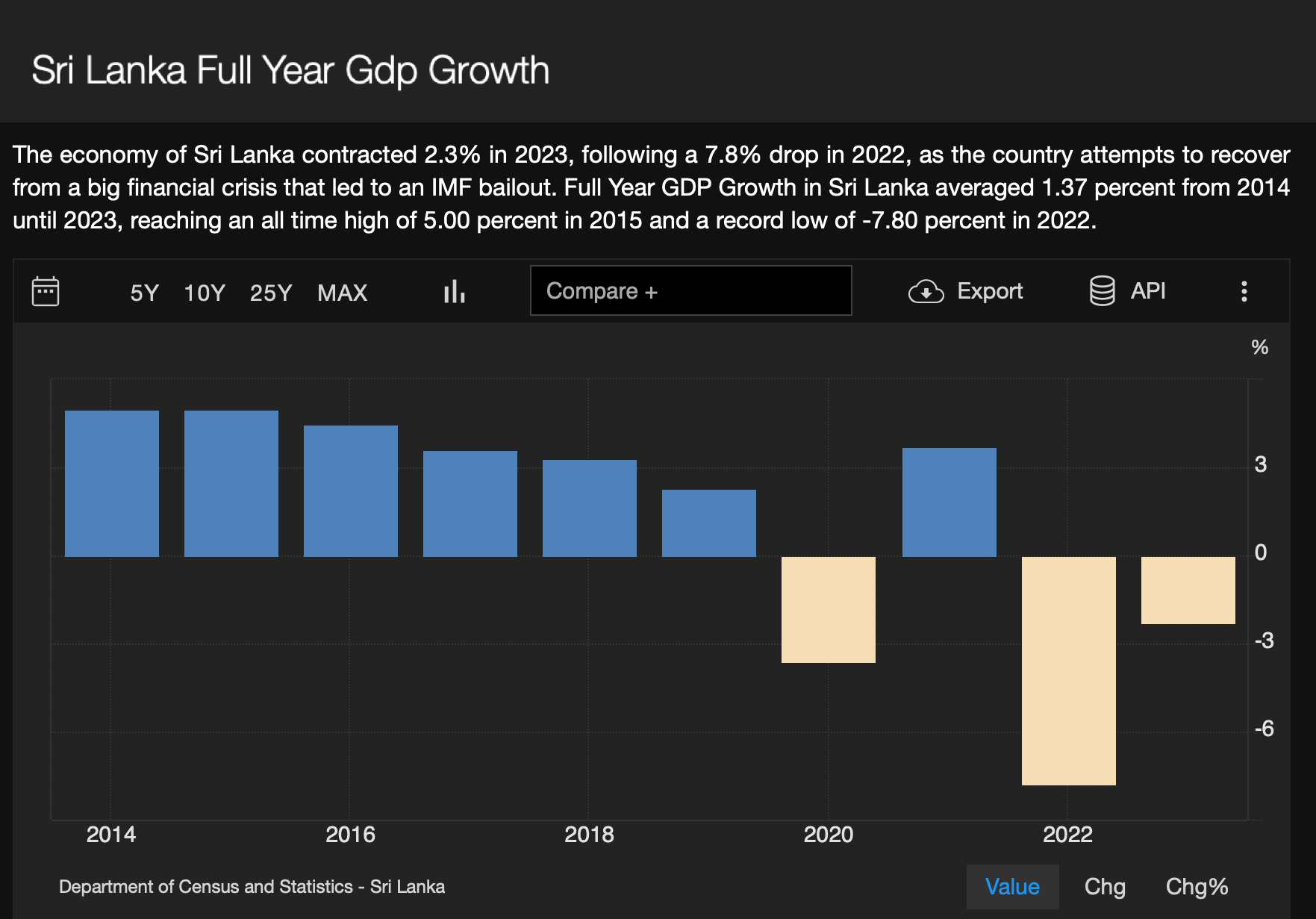
Open the PDF document and use the page numbers or scroll to find the following key tables. Focus on understanding what data is presented in each table. Gross Domestic Product (GDP): Look for the tables showing GDP at current and constant prices (around page 7 of the document). Find the 'GDP growth rate (%)' row. This is the headline economic growth figure. Labour Force: Find the main 'Labour force' table (around page 4). Locate the columns for the 'Unemployment rate' and the 'Employment rate'. This data gives you insight into the health of the job market. External Trade: Find the table titled 'Exports, Imports and Balance of trade' (around page 15). This table clearly shows whether the country is exporting more than it imports, a key metric for the external sector.
As you can see, the DCS is your go-to source for:
- National Accounts: Gross Domestic Product (GDP), Gross National Income (GNI), and the breakdown of GDP by sector (Agriculture, Industry, Services).
- Employment and Unemployment Data: Crucial indicators of social and economic well-being.
- Trade Statistics: Detailed data on imports and exports by country and commodity.
- Demographic Data: Population statistics that provide long-term context.
The following chart is an excellent example of how the raw GDP data from the DCS can be turned into a clear, analytical visual.
Part 3: Other Reliable Sources and Market Data
While the CBSL and DCS are the primary government sources, a few other places provide reliable data and analysis:
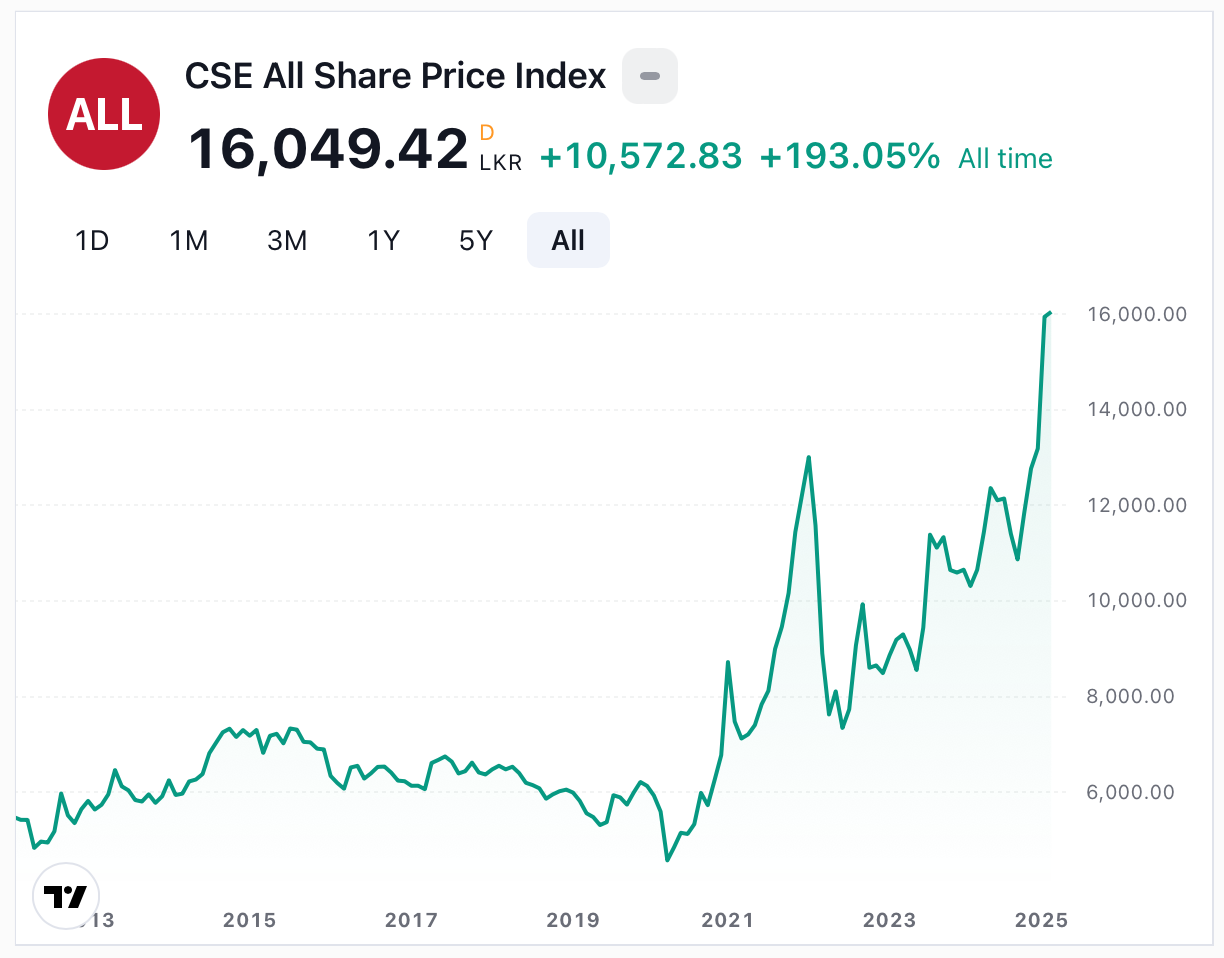
- The Colombo Stock Exchange (CSE) Website: The CSE provides daily, weekly, and monthly market reports. This is the primary source for data on stock market performance, including index movements (ASPI, S&P SL20), trading volumes, and net foreign investment flows.
- The Securities and Exchange Commission of Sri Lanka (SEC): The SEC is the market regulator. Its website contains regulatory announcements, research papers, and data on market intermediaries.
- Reputable Financial News Outlets: Reputable domestic news sources like Daily FT, EconomyNext, and Ada Derana Biz, as well as international ones like Reuters and Bloomberg, are essential for analysis and context. They report on the data released by the CBSL and DCS and provide expert commentary.
- Brokerage Research Reports: As a client of a stock brokerage firm, you will get access to their research reports, which analyze macroeconomic trends and their impact on specific stocks and sectors.
The ultimate market indicator that synthesizes all economic data, company performance, and investor sentiment is the stock index itself.
Conclusion
In this lesson, we have mapped out the landscape of reliable data sources for analyzing the Sri Lankan economy. By knowing where to look, you can access the same information that professional analysts and fund managers use.
Key Takeaways:
- Primary sources are best. Always try to get data from the original source to avoid misinterpretation.
- The Central Bank of Sri Lanka (CBSL) is the primary source for all monetary and financial data, including inflation, interest rates, and exchange rates.
- The Department of Census and Statistics (DCS) is the primary source for real economy data, such as GDP, employment, and detailed trade statistics.
- The Colombo Stock Exchange (CSE) website is the definitive source for market trading data, including index performance and foreign flows.
- Reputable financial news and broker reports provide valuable context and analysis but should be used to interpret primary data, not replace it.
Preview of the Next Lesson:
This lesson marks the end of our module on macroeconomic analysis. You now have a solid foundation for understanding the broad economic forces that influence the stock market.
We are now ready to begin the final and most important module of the course: Capstone: Building Your CSE Investment Plan. In our next lesson, we will pivot from analyzing the external world to looking inward. We will address the first, crucial step in creating any investment plan: "Define personal financial goals and an appropriate investment time horizon."