Introduction
Welcome to the final and most practical module of our course: Capstone: Building Your CSE Investment Plan. Over the past eleven modules, we've journeyed from the fundamentals of economics and financial instruments to the complexities of financial statement analysis and macroeconomic indicators. You now have a robust analytical toolkit.
In our last lesson, we identified the key official sources for Sri Lankan economic data, such as the Central Bank and the Department of Census and Statistics. This concluded our exploration of the external factors influencing the market. Now, we pivot from the external to the internal—your personal "why."
Today's lesson addresses the single most important step before you invest a single rupee: defining your personal financial goals and an appropriate investment time horizon. Just as you wouldn't start developing a software application without clear user requirements and a project timeline, you shouldn't start investing without knowing what you're trying to achieve and by when. This lesson provides the framework for building that personal roadmap.
Part 1: Why Financial Goals Are Your Compass
An investment strategy without a goal is like a ship without a rudder. You might be moving, but you have no direction. Financial goals transform vague desires like "wanting to be rich" into concrete targets that can guide your decisions. They provide the purpose behind every investment you make.
To start, let's watch a short video that distinguishes between a mere wish and a concrete goal.
How to Set Financial Goals | Step-by-Step Guide | Money Instructor
This video from Money Instructor clearly explains why setting defined goals is the foundational step toward achieving financial freedom.
Watch the first 55 seconds of the video, focusing on the distinction between a 'wish' and a 'plan with a deadline', and the importance of identifying your personal priorities.
As the video highlights, the first step is to think about what is important to you. The Colombo Stock Exchange (CSE) itself provides a good overview of common investment objectives.
Stock Selection and Decision Making
This document from the CSE outlines several common objectives investors have. Reading this will help you categorize your own financial aspirations.
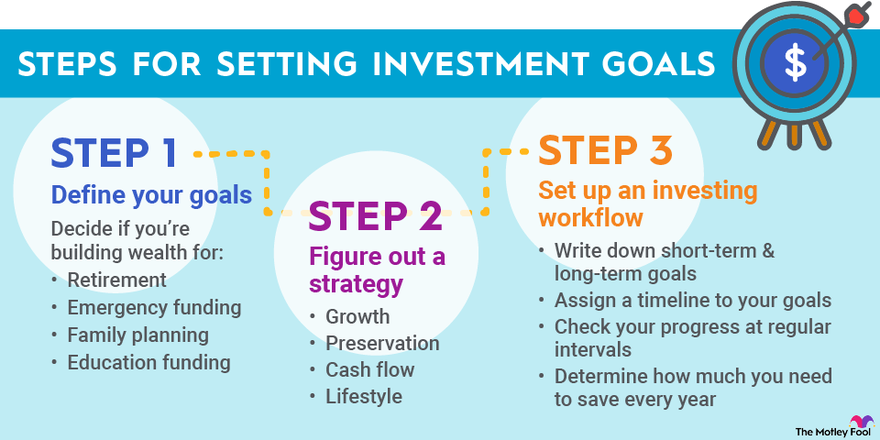
Read the section titled '3.0 INVESTMENT OBJECTIVES' (on page 5). Pay attention to the four distinct goals: Income, Safeguarding of Capital, Capital Growth, and Tax Incentives. Think about which of these resonate most with you.
Are you investing to generate a regular income stream (like dividends)? Or is your primary aim to grow your initial capital over the long term? Your answer to this question will fundamentally shape your investment choices.
Part 2: Making Your Goals SMART
Once you have a general idea of your priorities, the next step is to make them specific and actionable. A widely used and effective method for this is the SMART framework. A SMART goal is:
- Specific: Clearly state what you want to accomplish.
- Measurable: Include a number or metric to track progress.
- Achievable: Be realistic about what you can accomplish given your resources.
- Relevant: Ensure the goal aligns with your broader life objectives.
- Time-bound: Set a clear deadline.
Let's see how this works in practice.
How to Set Financial Goals | Step-by-Step Guide | Money Instructor
The same Money Instructor video provides a concise explanation of the SMART framework and shows how to turn a vague statement into a powerful goal.
Please watch from 00:55 to 01:36. This section will introduce the SMART acronym and demonstrate how to break a large goal into smaller, manageable monthly or weekly targets.
Here's an example relevant to a Sri Lankan investor:
- Vague goal: "I want to invest in the stock market."
- SMART goal: "I want to invest LKR 500,000 in a portfolio of CSE-listed stocks over the next 5 years to build a down payment for a property."
This goal is specific (LKR 500k for a down payment), measurable (500k), achievable (spread over 5 years), relevant (property ownership), and time-bound (5 years).
Part 3: Quantifying Your Goals and Your Capacity
Defining a goal is one thing; knowing if you can reach it is another. This requires a frank look at your personal finances. It involves two key steps:
- Understanding how much money you have available to invest.
- Calculating how much you need to save or invest regularly to meet your goal.
The following video provides a brilliant, step-by-step guide on how to approach this.
Your Ultimate Financial Plan in 10 minutes
In this video, financial educator Nischa walks through a practical example of how to calculate your 'margin' (disposable income) and use it to plan for major life goals.
Watch the segment from 00:25 to 08:04. Focus on these three concepts: Personal Cash Flow (00:25 - 01:59): Understand how to calculate your investment 'margin' by subtracting essential costs from your income. Purpose-Based Spending (01:59 - 03:57): See how to attach a specific monetary value and timeline to your goals. Feasibility Check (03:57 - 08:04): Learn how to calculate the required monthly savings and determine if your goals are realistic and how you might need to prioritize them.
As the video explains, you may find that you can't pursue all your goals simultaneously. This forces you to make trade-offs and prioritize what is most important to you right now. For example, aggressively saving for a house in the short term might mean delaying the start of your long-term retirement investing.
Part 4: Defining Your Investment Time Horizon
The "T" in SMART goals—Time-bound—is so crucial in investing that it has its own name: the investment time horizon. This is the length of time you expect to hold an investment before you need the money back. Your time horizon is arguably the most important factor in determining your investment strategy and how much risk you can afford to take.
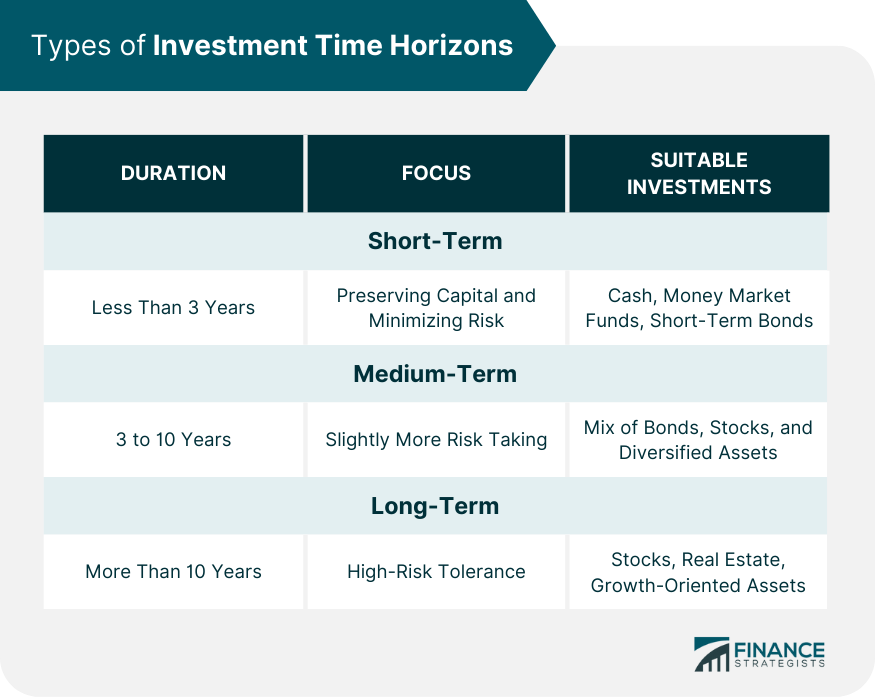
Generally, time horizons are categorized as follows:
Why does time matter so much?
- Long-Term (10+ years): For goals like retirement, you have a long time to ride out the market's natural ups and downs. This allows you to take on more risk (e.g., invest more in stocks) in pursuit of higher growth, as you have time to recover from any potential short-term losses.
- Short-Term (less than 3 years): For goals like saving for a vacation or an emergency fund, you cannot afford to lose your principal. The focus here is on capital preservation, using safer, lower-return options like savings accounts or fixed deposits. Investing this money in the stock market would be highly risky.
The following reading from the CFA Society Sri Lanka provides more context on this distinction.
[PDF] Financial Literacy - CFA Society Sri Lanka
This guide from the CFA Society Sri Lanka clearly differentiates between saving (for short-term needs) and investing (for long-term growth).
Please read the chapter titled 'Make your savings work for you', focusing on the subsections 'The differences between saving and investing' and 'Investing' (pages 24-25). Pay close attention to how investing is defined as a 'current commitment of money for a longer period'.
A document from the CSE reinforces this link between time and risk. An investor with a longer time horizon has a higher risk tolerance precisely because they have more time to recover from setbacks.
Action Item: Draft Your Personal Investment Goals
Now it's time to apply these concepts. Take some time to reflect on what you want to achieve financially. Create a personal document and, using the SMART framework, draft at least two goals:
- A Medium-Term Goal (3-10 years): This could be saving for a new car, a down payment on a house, or funding further education.
- A Long-Term Goal (10+ years): The most common example is retirement.
For each goal, write down:
- Specifics: What is the goal?
- Measurement: How much money will you need? (Estimate if necessary)
- Achievability: Based on your current "margin," what is a realistic monthly contribution?
- Relevance: Why is this goal important to you?
- Timeframe: What is your target year or date?
This document is the first draft of your Investment Policy Statement—a formal plan that will guide all your future investment decisions.
Conclusion
Congratulations on taking the first and most critical step in building your investment plan. Without clear goals, investing is just speculation. With them, it becomes a powerful tool for building the future you envision.
Key Takeaways:
- Financial goals provide the purpose and direction for your investment strategy.
- The SMART framework (Specific, Measurable, Achievable, Relevant, Time-bound) is an effective tool for creating clear and actionable goals.
- Your investment time horizon—the time you have to reach a goal—is the primary determinant of your risk tolerance and investment choices. Short-term goals require low-risk strategies (saving), while long-term goals allow for higher-risk, higher-growth strategies (investing).
Preview of the Next Lesson:
Now that you have begun to define what you are investing for and when, our next step is to determine how to find companies that align with your goals. In the next lesson, we will learn how to create a personal stock screening checklist based on key fundamental and qualitative criteria. This will be the bridge between your personal goals and the companies listed on the CSE.