Introduction
Welcome to your next lesson in our capstone module. In our previous session, you took the crucial first step of defining your personal financial goals and investment time horizon. This established the "what" and "when" of your investment journey. Just as a project manager needs clear requirements before writing a line of code, an investor needs clear goals before buying a single stock.
Today, we build the bridge between your goals and the market. The Colombo Stock Exchange lists hundreds of companies. How do you find the ones that are right for you without getting lost in the noise? The answer is to create a filter.
In this lesson, you will learn how to create a personal stock screening checklist based on key fundamental and qualitative criteria. This checklist will become your primary tool for narrowing the vast universe of stocks down to a manageable list of promising candidates that deserve a deeper look.
We will structure this process by looking at two sides of a company's story: the quantitative (the numbers) and the qualitative (the business itself).
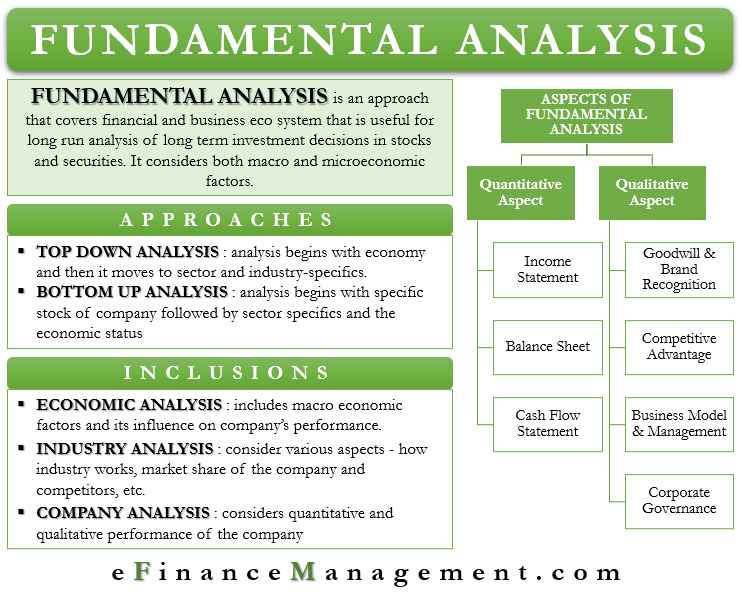
Part 1: The Purpose of a Stock Screening Checklist
Before we build the checklist, let's understand its purpose. A stock screening checklist is a set of predefined criteria used to filter stocks. Given your background in IT, you can think of this as running a query against a large database of companies to return only the results that match your specific parameters. It's a systematic way to enforce discipline and save an immense amount of time.
Let's hear from an experienced investor on how he starts his research process.
How I Research Stocks - Step-by-Step Fundamental Analysis
In this video, 'How I Research Stocks', the presenter from The Plain Bagel explains how he uses a 'screener' as the very first step to narrow down his list of potential investments.
Watch the section from 02:00 to 03:07. Pay close attention to how he uses a screener to filter for specific criteria like revenue growth, profitability, and debt levels to create an initial list.
As you saw, the goal isn't to make a final decision but to efficiently discard companies that clearly don't meet your minimum standards. This allows you to focus your valuable research time on better-than-average opportunities.
Part 2: The Quantitative Checklist: Assessing Financial Health
The quantitative part of your checklist uses the financial ratios and metrics we've covered in previous modules. It answers objective questions about a company's financial performance and stability.
Here are the key categories to include:
1. Valuation: Is the price reasonable?
As investor Howard Marks says, "There's no such thing as a good or bad idea regardless of price." The best company can be a terrible investment if you overpay for it.
How I Find My Stocks: Step-By-Step Method
The video 'How I Find My Stocks' by The Swedish Investor uses a powerful analogy to explain why price is the most critical starting point for screening.
Watch from 02:35 to 05:38. Focus on the Ferrari analogy and the reasoning for using a valuation metric like EV/EBIT to filter out expensive companies first.
- Key Metrics:
- Price-to-Earnings (P/E) Ratio: Should be reasonable compared to the industry average.
- Price-to-Book (P/B) Ratio: Useful for asset-heavy industries.
2. Profitability: Is it an efficient business?
A profitable company is one that effectively turns revenue into actual profit.
- Key Metrics:
- Return on Equity (ROE): Measures how much profit the company generates with shareholders' money. A consistent ROE above 15% is often considered a sign of a quality business.
- Net Profit Margin: Indicates what percentage of revenue is left after all expenses are paid.
3. Financial Strength: Is the company solvent?
High debt can be a significant risk, especially during economic downturns. A strong balance sheet provides a safety cushion.
- Key Metrics:
- Debt-to-Equity (D/E) Ratio: Compares total debt to shareholder equity. A ratio below 1.0 is generally preferred, though this can vary by industry.
- Current Ratio: Measures the company's ability to pay its short-term bills. A ratio above 1.5 is a healthy sign.
- Operating Cash Flow: Should be consistently positive. Profit on paper is good, but cash is what keeps a business running.
4. Growth: Is the company expanding?
You want to invest in businesses with a future.
- Key Metrics:
- Revenue Growth: Look for consistent growth over the past 5 years.
- Earnings Per Share (EPS) Growth: Shows that profitability is growing on a per-share basis.
This article provides a superb, concise pre-investment checklist with specific quantitative targets.
Common fundamental analysis mistakes and how to avoid them
The article 'Common fundamental analysis mistakes' from Winvesta includes a practical, ready-to-use checklist with both quantitative and qualitative criteria.
Read the section titled 'Pre-investment checklist'. Focus on the specific numbers suggested under 'Quantitative requirements' (e.g., ROE above 15%, debt-to-equity below 1).
Part 3: The Qualitative Checklist: Understanding the Business
Numbers only tell part of the story. The qualitative checklist helps you assess the factors that don't appear on a balance sheet but are critical for long-term success.

Here are the key questions your qualitative checklist should answer:
1. Business Model & Competitive Advantage (Moat)
- Can you explain what the company does and how it makes money in simple terms? (If not, it might be outside your "circle of competence.")
- What gives it a durable competitive advantage, or "moat"? This could be a strong brand, unique technology, network effects, or cost leadership.
2. Management Quality & Corporate Governance
- Is the management team experienced and shareholder-friendly? Read the Chairman's message and Management Discussion in the annual report.
- Are there any governance red flags?
This article details several critical red flags to watch for.
Common fundamental analysis mistakes and how to avoid them
Returning to the Winvesta article, this section provides real-world examples of how ignoring qualitative red flags can lead to disaster and lists key things to monitor.
Read the section 'The qualitative factors that quantitative analysis misses', particularly the list under 'Essential qualitative red flags to monitor'. These are excellent additions to your qualitative checklist.
3. Industry and Future Prospects
- Is the company in a growing or declining industry?
- What are the long-term trends affecting the business? (e.g., technological changes, new regulations, shifting consumer habits).
For a broad overview of what to look for in both quantitative and qualitative analysis, the following resource is helpful.
How To Analyse Stocks – 10 Ways To Pick Fundamentally Strong ...
This article from Tickertape, 'How To Analyse Stocks', provides a step-by-step guide that covers many of the qualitative points we've discussed, such as researching the industry, understanding the business, and evaluating management.
Skim through the section 'How to Analyse a Stock Before Investing?'. Focus on the headings: 'Research the industry', 'Understand the underlying company', and 'Study the management'. This will reinforce the key areas of your qualitative checklist.
Action Item: Create Your Personal Stock Screening Checklist
Now it's your turn to synthesize this information. Your task is to create your own personal stock screening checklist. This is not a static document; it will evolve as you gain more experience. As the presenter in our first video noted, building and refining a checklist is an ongoing process.
How I Research Stocks - Step-by-Step Fundamental Analysis
Let's revisit 'How I Research Stocks'. The presenter explicitly recommends creating your own checklist as you learn.
Watch the short clip from 11:32 to 12:01. This is a direct piece of advice on the value of building out a personal checklist over time.
Open a document or spreadsheet and create your checklist. I suggest you structure it in two sections:
Section 1: Quantitative Criteria (The Hard Filters)
List the key financial metrics you will use as your first-pass filter. For each metric, define a specific threshold. Use the Winvesta article's checklist as a starting point.
- Example:
- Debt-to-Equity Ratio: Must be less than 1.0
- Return on Equity (ROE): Must be greater than 15% for the last 3 years
- Revenue Growth (5-Year Average): Must be positive
Section 2: Qualitative Criteria (The Key Questions)
List the critical questions you will ask about any company that passes your quantitative screen.
- Example:
- Business Model: Can I explain how this company makes money in one sentence? (Yes/No)
- Competitive Moat: What protects it from competition? (e.g., Brand, Scale, Patents)
- Management Red Flags: Have there been recent auditor changes or resignations? (Yes/No)
- Promoter Pledging: Is promoter share pledging below 5%? (Yes/No)
Remember to tailor this checklist to your own goals and risk tolerance. If your goal is long-term growth, you might be stricter on growth metrics. If your goal is income, you might add criteria about a company's dividend history.
Conclusion
Congratulations on building a foundational tool for your investment process. A well-defined checklist brings structure, discipline, and efficiency to your search for great companies. It helps you move from emotional decision-making to a systematic, rules-based approach—a trait common among successful long-term investors.
Key Takeaways:
- A stock screening checklist is a personal filter to narrow down investment candidates.
- It should be divided into quantitative criteria (financial metrics like ROE, D/E) and qualitative criteria (business model, management quality, competitive moat).
- Quantitative criteria act as a first-pass filter to ensure financial health, while qualitative criteria help you understand the story and long-term viability behind the numbers.
- Your checklist is a living document that you should refine and improve over time.
Preview of the Next Lesson:
Now that you have your map, it's time to explore the territory. In our next lesson, we will apply the screening checklist you just created to filter stocks on the CSE and create a candidate list. We will look at practical tools available to Sri Lankan investors to run these screens and generate your first list of companies for deeper analysis.