Hello! Welcome to the fifth lesson of your course on investing.
In our previous lesson, we explored the crucial role of central banks and saw how they use interest rates as a primary tool to manage the economy. A key reason for raising interest rates, as we discussed, is to combat inflation. This naturally leads to our topic for today.
This lesson addresses the learning outcome: Explain what inflation is and how it impacts purchasing power and investments. We will demystify this frequently mentioned economic term, understand its tangible effect on the value of your money, and, most importantly, see how it influences different types of investments. For any long-term investor, understanding inflation isn't just academic—it's essential for survival and success.
1. What is Inflation? The Slow Erosion of Value
At its core, inflation is a simple concept: it's the rate at which the general level of prices for goods and services is rising, and subsequently, the purchasing power of currency is falling. In other words, your money buys less than it used to.
To get a clear and simple definition, let's start with a short video.
Why Prices Won't Stop Rising? Inflation Explained
This video from Explains 101 provides a straightforward definition of inflation and introduces the concept of purchasing power with easy-to-understand examples.
Please watch the segment from 00:53 to 01:44. It clearly explains what inflation is and how the value of money decreases over time.
As the video illustrates, if a cup of coffee cost 100 LKR last year and costs 110 LKR this year, that 10% price increase is inflation. Your 100 LKR note can no longer buy that coffee. This loss of ability to purchase is the decline in purchasing power.
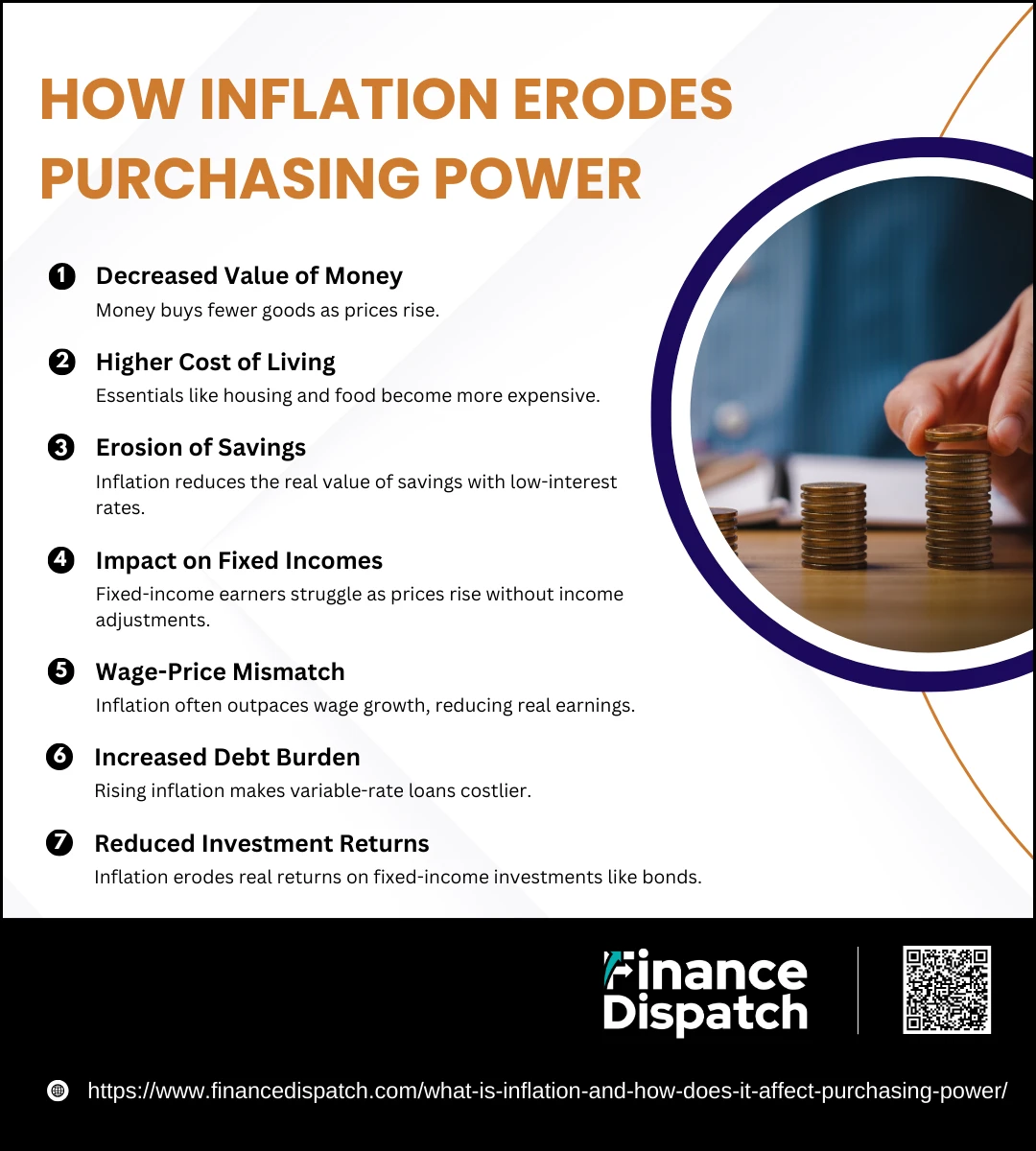
The effect of inflation is like a slow leak in a tire. It might not be dramatic day-to-day, but over months and years, its impact is significant.
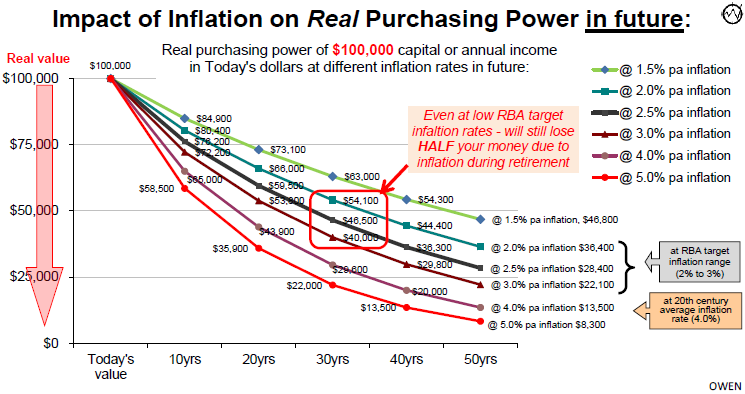
2. Protecting Your Capital: Real vs. Nominal Returns
For an investor, the most critical consequence of inflation is its effect on investment returns. To understand this, we need to distinguish between two types of returns:
- Nominal Return: The stated return on an investment. If you invest 10,000 LKR and a year later you have 11,000 LKR, your nominal return is 1,000 LKR, or 10%.
- Real Return: The return on an investment after accounting for the loss of purchasing power due to inflation.
The approximate relationship is:
Let's use our example. You earned a 10% nominal return. But if inflation during that same year was 7%, your real return—the actual increase in your purchasing power—was only about 3% (10% - 7%). If your nominal return was 5% and inflation was 7%, your investment would have a negative real return of -2%. You have more money, but you can buy less with it.
This principle is at the heart of why people invest. Simply saving cash is a losing game against inflation. An official guide from the Colombo Stock Exchange (CSE) states this clearly under the objective of "Safeguarding of Capital":
"To do this the investment should generate a return at least equivalent to the inflation rate."
— From the CSE guide "Stock Selection and Decision Making" (LINK)
Let's watch another segment from the same video, which provides an excellent comparison of how different approaches fare against inflation.
Why Prices Won't Stop Rising? Inflation Explained
This segment illustrates the concept of real returns by comparing three people who save, invest in gold, or invest in stocks over a decade.
Watch the segment from 18:02 to 21:13. Pay close attention to the character 'Tony', who puts his money in a savings account. This is a perfect example of how inflation creates a 'saver's penalty'.
3. How Inflation Impacts Your Investments
As the video showed, inflation doesn't affect all assets equally. Understanding this is key to building a resilient investment portfolio. Let's dig deeper into the main asset classes.
For a comprehensive overview, please read the following article from Investopedia. It reinforces the definitions we've covered and discusses how different assets are affected.
What Is Inflation and How Does Inflation Affect Investments?
This article, 'What Is Inflation and How Does Inflation Affect Investments?', provides a solid textual foundation for everything we are discussing in this lesson.
Read the entire article, from the introduction to 'The Bottom Line'. Focus on how it defines real return and explains the impact of inflation on different asset classes.
Now, let's watch one final video that neatly summarizes how inflation specifically impacts cash, bonds, and stocks.
The Impact of Inflation on Stocks, Bonds, and Cash
This video from Greenbush Financial Group gives a concise, investor-focused breakdown of inflation's effect on the three primary asset classes.
Please watch the segment from 05:09 to 08:28. This is the most important part of the lesson, as it directly explains how inflation impacts the assets you will be considering as an investor.
Let's summarize the key points from the resources:
-
Cash and Savings Accounts: These are most vulnerable to inflation. As we've seen, the interest earned on savings accounts is often lower than the rate of inflation, resulting in a negative real return. This is the "saver's penalty." Your money is safe, but it is consistently losing purchasing power.
-
Bonds (Fixed Income): Bonds are also hurt by inflation. A bond typically pays a fixed interest amount. If you own a bond that pays 500 LKR in interest per year, that 500 LKR will buy you less and less each year as inflation rises. Furthermore, when inflation is high, central banks raise interest rates. New bonds will be issued with these higher interest rates, making your older, lower-rate bond less attractive and thus worth less if you try to sell it.
-
Stocks (Equities): The effect on stocks is more complex.
- Negative Impacts: High inflation can mean higher costs for raw materials, energy, and labor. If a company cannot pass these costs on to its customers, its profit margins get squeezed. Also, if consumers have less purchasing power, they may buy fewer products, hurting a company's revenue.
- Potential for Protection: Unlike bonds, a company's earnings and dividends are not fixed. Strong companies with a good brand and competitive position (what we'll later call an "economic moat") can often raise their prices to keep pace with or even exceed inflation, protecting their profitability. Companies that own tangible assets like factories, real estate, or infrastructure also benefit, as the value of these assets tends to rise with inflation.
Conclusion
Understanding inflation is not just about economics; it's about personal finance strategy. You now know that inflation is a persistent force that erodes the value of money and that your investment returns must be measured in real, not just nominal, terms.
Key Takeaways:
- Inflation is the sustained rise in the general price level, which reduces the purchasing power of your money.
- Your goal as an investor is to achieve a real return that is positive, meaning your investment's nominal return must be greater than the inflation rate.
- Inflation impacts asset classes differently:
- It is detrimental to cash and bonds.
- Its effect on stocks is mixed, but successful companies can often protect their profits and provide a hedge against inflation over the long term.
You have now seen why it's so critical to move money from simple savings into productive investments. In our next and final lesson for this module, we will explore the system that makes this possible, as we explain how financial systems facilitate economic activity by channeling savings into investments.