Introduction
Welcome to the penultimate lesson of your investment journey. In the last session, you performed a comprehensive 360-degree analysis of a single CSE-listed company, digging into its business model, financial health, and valuation. You now have a rich set of notes and data. However, raw data and disconnected observations don't lead to confident decisions.
This lesson is about the crucial final step of analysis: synthesis. You will learn how to weave together your findings from the business, financial, and valuation analyses into a single, coherent argument. This argument is called an investment thesis.
By the end of this lesson, you will be able to synthesize all your findings into a clear investment thesis, culminating in a decisive recommendation: Buy, Hold, or Avoid. This is the skill that transforms you from a data collector into a true analyst.
What is an Investment Thesis?
An investment thesis is more than just a summary of facts; it's a reasoned argument that explains why an investment is, or is not, a good idea. It's your personal, evidence-based story about a company's future and why you believe the market's current price is wrong.
Let's start with a video that clearly defines the concept and its importance for creating a disciplined investment process.
How To Create An Investment Thesis? | ET Money
This video from ET Money introduces the concept of an investment thesis, explaining what it is and why it is a critical tool for successful investors.
Watch the video from the beginning until 03:57. Focus on: The definition of an investment thesis. The four guiding principles for creating one: catalysts, positioning, risks, and expected returns.
As the video explains, a thesis forces you to be intellectually honest and focused. It's not enough to say "this is a good company." A professional thesis, as outlined in the Winvesta guide, must go a step further.
Stock research report template: Professional equity analysis guide
Let's look at a professional definition of an investment thesis. This guide explains what distinguishes a compelling thesis from a simple observation.
Please read two short sections from this article: Start at the heading 'An executive summary captures your entire thesis in seconds' and read down to the end of that section. Pay close attention to the sentence: 'Your thesis must identify something the market is missing...' Then, jump to the end of the article and read the final two paragraphs under the heading 'Common mistakes undermine research quality'. Notice the emphasis on synthesis and the three fundamental questions a professional report must answer.
The key takeaway is that your thesis should articulate your unique insight. Why do you believe the stock will perform differently than the market expects? This "edge" comes from the deep analysis you've already done.
The Anatomy of a Strong Investment Thesis
A robust investment thesis brings together all your work into a structured argument. It should be concise enough to be easily remembered but detailed enough to be defensible. Let's break it down into five core components.
1. The Recommendation: Your Final Call
This is the conclusion of your argument. It should be an unambiguous statement:
- Buy: You believe the company is undervalued and poised for growth.
- Hold: You might already own it and believe it's fairly valued, or you think it's a good company but the price isn't compelling enough to buy right now (it goes on your "watchlist").
- Avoid/Sell: You believe the company is overvalued, faces significant unappreciated risks, or has a deteriorating business model.
2. The Core Argument: The "Why"
This is the heart of your thesis. In 2-4 bullet points, you should connect your key findings from the previous lesson. A good structure is to include one point from each area of your analysis:
- Business/Qualitative: What is the company's sustainable competitive advantage or "moat"?
- Financials/Quantitative: What does the financial data show? (e.g., consistent ROE, improving margins, strengthening balance sheet).
- Valuation: Is the stock cheap or expensive relative to its peers and its own history, and why is this justified (or not)?
3. Key Catalysts: What Will Prove You Right?
A thesis needs a trigger. What future event(s) will cause the market to recognize the value you see?
- Examples: Upcoming earnings releases, a new product launch, a major project completion, benefits from a recent government policy, or an industry-wide shift that benefits the company.
4. Major Risks & Counterarguments: The "Bear Case"
No analysis is complete without acknowledging what could go wrong. This step protects you from confirmation bias.
- Ask yourself: "What would make me sell this stock?"
- List the top 2-3 risks that could invalidate your thesis. These could be competitive threats, regulatory changes, or economic headwinds.
- This is the "Devil's Advocate" step. The final video clip from the "How I Research Stocks" video explains this review process well.
How I Research Stocks - Step-by-Step Fundamental Analysis
In the previous lesson, you watched a video on the research process. Let's revisit the final, crucial step: reviewing your findings and challenging your own assumptions.
Watch the short segment from 15:46 to 17:01. The speaker discusses reviewing notes, playing 'Devil's Advocate,' and formalizing the thesis. This is exactly what we are doing now.
5. Investment Horizon
State the timeframe over which you expect your thesis to play out. Are you investing for the next year, or for the next 5-10 years? This helps set expectations and influences how you react to short-term news.
Examples in Practice
Let's look at how these components come together.

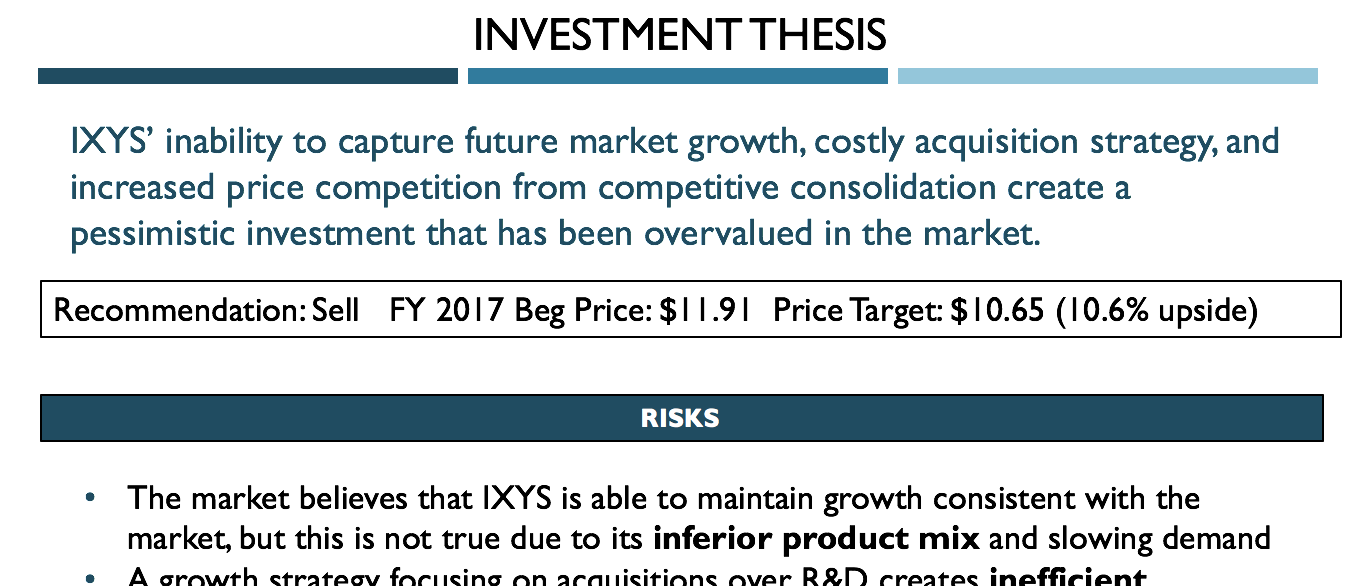
A Sri Lankan Example
Let's bring this home to the CSE. The following research report from First Capital Research, a Sri Lankan firm, presents a market-level investment thesis for equities. While it covers the whole market, the structure is identical to what you would use for a single stock.
EQUITY STRATEGY First Capital Research
This equity strategy report from First Capital Research provides a real-world example of an investment thesis applied to the Sri Lankan market.
Review two key sections of this report: 'WHY BUY NOW?' (Page 3): This is the core thesis. See how they list their main arguments (earnings recovery, debt restructuring, cheap valuation). 'Key risks for consideration' (Page 32-35): Notice how they balance their bullish thesis by clearly outlining the primary risks (elections, debt repayments).
Your Turn: Write Your Investment Thesis
Now it's time to synthesize your own research. Take the company you analyzed in the last lesson and use the following template to build your investment thesis. Be concise and use bullet points.
My Investment Thesis
- Company Name & Ticker:
[e.g., John Keells Holdings PLC (JKH.N0000)] - Recommendation:
[Buy / Hold / Avoid] - Investment Horizon:
[e.g., Long-term (3+ years), Medium-term (1-3 years)]
Thesis Summary (2-3 sentences):[In a short paragraph, summarize your core argument. For example: "I recommend a BUY on [Company] because its dominant market position is underappreciated by the market. The stock is trading at a discount to its peers, and upcoming projects are expected to accelerate earnings growth, leading to a re-rating of the stock."]
Supporting Points (Bull Case):
- Business Strength:
[e.g., Strong brand recognition and a wide economic moat due to cost advantages.] - Financial Strength:
[e.g., Return on Equity (ROE) has consistently been above 15% for the past 5 years, and debt is steadily declining.] - Valuation Argument:
[e.g., The P/E ratio is 8x, compared to the industry average of 12x, suggesting it is undervalued.] - Catalyst(s):
[e.g., The upcoming launch of the Cinnamon Life project is expected to significantly boost revenue in the leisure sector.]
Key Risks (Bear Case):
- Risk 1:
[e.g., Increased competition from a new market entrant could pressure profit margins.] - Risk 2:
[e.g., A sharp rise in interest rates could increase financing costs and dampen profitability.] - Invalidation Point:
[e.g., I would reconsider my thesis if the company's Debt-to-Equity ratio rises above 1.5 or if they lose market share for two consecutive quarters.]
Conclusion
Congratulations! You have just completed the most intellectually demanding part of the investment process. By translating a mountain of data into a sharp, clear-sighted argument, you have created a powerful decision-making tool.
Key Takeaways:
- An investment thesis is a structured argument that answers the question: "Why should I (or shouldn't I) invest in this stock?"
- It synthesizes your business, financial, and valuation analysis into a coherent story.
- A strong thesis always includes the "bear case"—the key risks and reasons you might be wrong.
- Writing down your thesis creates discipline and helps you filter out market "noise."
Preview of the Next Lesson:
With your first individual stock thesis complete, the final step is to think about how this single investment fits into a broader strategy. In our final lesson, you will learn how to construct a simple, diversified model portfolio and develop a personal plan for monitoring your investments.