Introduction
Welcome to the second-to-last lesson of your course! In the previous lesson, you mastered the art of synthesizing your research into a clear, actionable investment thesis for a single company. This is a critical skill for any serious investor.
However, successful investing is rarely about a single stock. It's about building a collection of investments—a portfolio—that works together to achieve your financial goals.
This lesson bridges the gap between single-stock analysis and holistic portfolio management. Today, you will learn how to construct a simple, diversified model portfolio based on your personal risk profile and the investment theses you've developed. This is the capstone skill that brings everything you've learned together, transforming you from a stock analyst into a portfolio manager.
We will cover three key steps:
- Defining your foundation: Assessing your personal risk tolerance and setting your high-level asset allocation.
- Structuring your stocks: Understanding diversification and deciding how many stocks to own.
- Building your model: Creating a sample CSE portfolio with specific allocations.
1. Your Foundation: Risk Profile and Asset Allocation
Before you buy a single share, you must understand your own appetite for risk. The entire structure of your portfolio will be built on this foundation. The core principle here is the risk-return tradeoff: to achieve higher potential returns, you must be willing to accept higher potential risk.

Your personal comfort level with the fluctuations shown in this spectrum defines your risk profile. Let's start by exploring the factors that shape it.
Risk Tolerance & Asset Allocation | Determine Your Fit
This video from Financial Tortoise provides an excellent framework for thinking about risk tolerance and how it connects to your investment decisions.
Please watch from 00:35 to 08:14. As you watch, focus on: The 'sleep test' as a simple gut-check for your risk level. The five key factors that determine your risk tolerance: income, time frame, personal obligations, financial goals, and your general personality. \nTake a moment after watching to reflect on these five factors for your own situation. There's no right or wrong answer; the goal is self-awareness.
Once you have a sense of your risk tolerance, you can decide on your asset allocation. This is the high-level decision about how you split your investment capital between major asset classes, primarily stocks (equities) and bonds (fixed income).
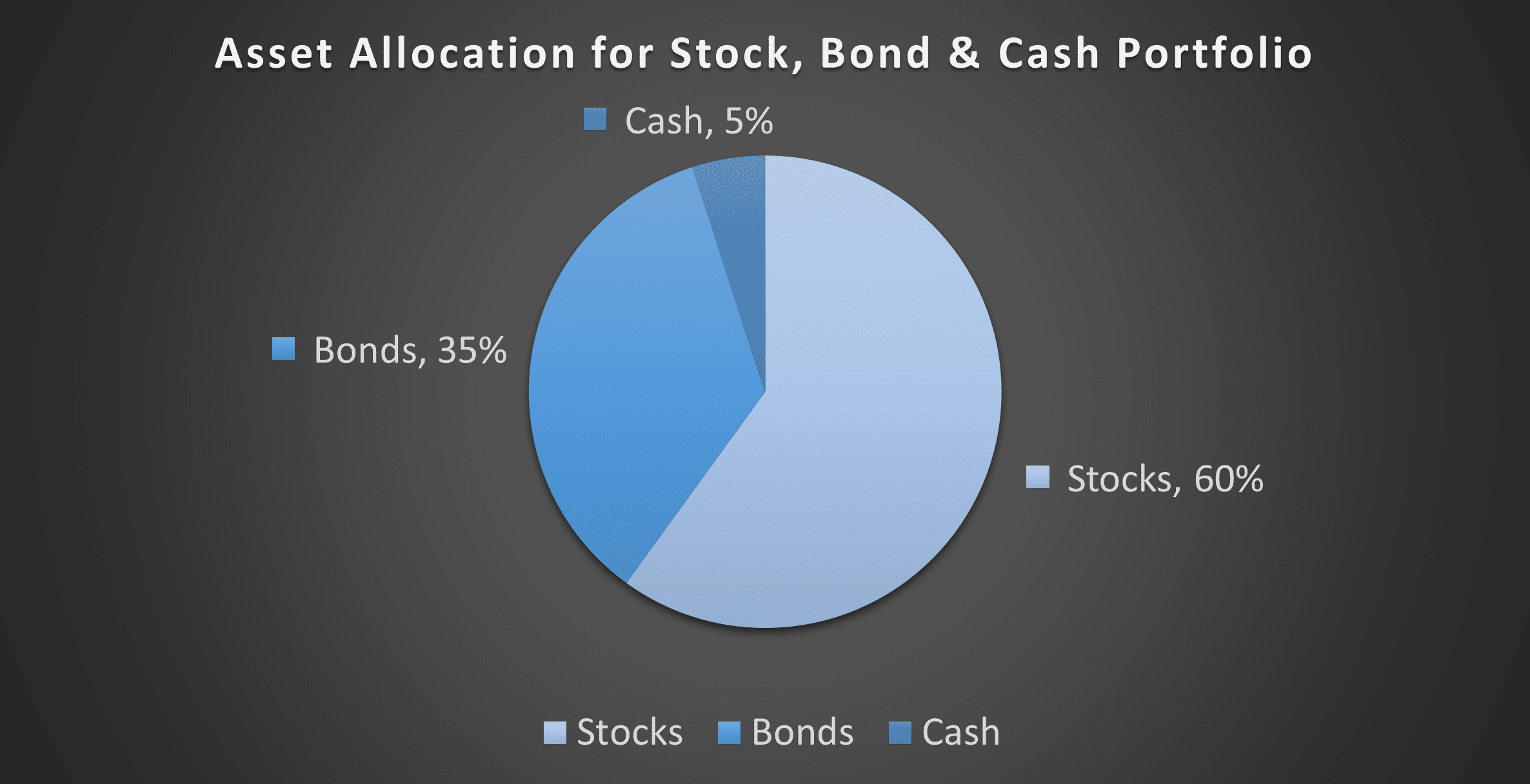
How do you choose the right mix? Your risk profile provides the answer. The video you just watched continues to explain how these concepts connect.
Risk Tolerance & Asset Allocation | Determine Your Fit
Now, let's connect your risk tolerance to a concrete asset allocation strategy.
Continue watching the same video from 08:14 to the end (11:35). The speaker breaks down risk profiles into three general categories (conservative, moderate, aggressive) and suggests corresponding stock-to-bond allocation ratios.
As the video suggests, a younger investor with a long time horizon (like yourself) can generally afford to take on more risk and would likely fall into the moderate or aggressive category, with a higher allocation to stocks (e.g., 70-90%).
For a more detailed breakdown of these risk profiles, you can refer to the guide from the Colombo Stock Exchange.
CSE - Basic Guide in Investing in Shares
This guide from the CSE provides detailed, text-based descriptions of various investor risk profiles. It's a useful reference to solidify your understanding.
Read the section titled 'Wise Investors understand their level of risk tolerance' and review the descriptions of the different profiles, from 'Conservative' to 'Growth or Aggressive'. See which one resonates most with the self-assessment you just did.
2. Structuring Your Stock Portfolio: Intelligent Diversification
Let's assume you've decided on an 80% stock, 20% bond allocation. Now we need to construct that 80% stock portion. The key principle here is diversification.
The old saying, "don't put all your eggs in one basket," means spreading your investments across different companies and sectors. This reduces your exposure to company-specific risk—the risk that one company performs poorly and sinks your entire portfolio.
However, diversification is not just about owning dozens of stocks. In fact, owning too many stocks can lead to mediocre returns, a problem often called "di-worsification." The goal is to own a manageable number of businesses that you genuinely understand.
How Many Stocks Should You Own in your Portfolio?
This video, featuring insights from legendary investors Warren Buffett and Peter Lynch, offers a powerful perspective on diversification. It directly connects to our last lesson on building a deep investment thesis.
Watch the following three segments: Buffett's View (01:30 - 03:23): Listen to why he believes intense diversification is a 'protection against ignorance'. Lynch's View (06:33 - 07:30): Pay attention to his famous rule: if you can't explain why you own a stock to a 10-year-old, you shouldn't own it. The Core Question (07:30 - 10:19): This section answers, 'How many stocks should you own?' The answer is personal: it's the number of companies you can reasonably understand and keep up with. \nThis challenges the idea of simply buying as many stocks as possible and reinforces the importance of the deep research you learned to do in the last lesson.
So, how do we build a portfolio that is both diversified and focused? We diversify intelligently across:
- Companies: Owning a handful of different companies (e.g., 5-15) instead of just one or two.
- Sectors: Owning companies in different industries (e.g., banking, consumer goods, technology). This protects you if one entire sector faces headwinds.
- Stock Types: Owning a mix of stocks with different characteristics.
The CSE guide you reviewed earlier provides a great summary of different stock types you can find on the exchange.
CSE - Basic Guide in Investing in Shares
Let's explore the different types of stocks you can use to build a balanced portfolio.
Read the section 'Deciding what shares to buy'. Focus on the definitions of: Income shares: For steady dividends. Value shares: Bargains that are temporarily cheap. Growth shares: Companies with strong growth potential. Defensive shares: Stable regardless of the economy. Cyclical shares: Follow economic trends. \nA good portfolio might include a mix of these types, for example, balancing a stable 'defensive' stock with a high-potential 'growth' stock.
3. Your Turn: Constructing a Model CSE Portfolio
Now, let's put theory into practice. We will create a simple model portfolio. A common and effective structure is the Core-Satellite model.
- Core: The largest part of your portfolio, typically invested in a stable, well-diversified, large-cap company (or an index fund).
- Satellites: Smaller positions in other companies for which you have a specific investment thesis, aiming for growth, value, or income.
Let's build a hypothetical model for a Moderate/Growth-oriented investor with a long-term horizon.
Scenario:
- Total Investment Capital: 1,000,000 LKR
- Asset Allocation: 80% Stocks (800,000 LKR), 20% Bonds/Fixed Deposits (200,000 LKR)
- Stock Portfolio Size: We will focus on the 800,000 LKR stock portion and build a portfolio of 4-5 companies.
Model Portfolio Strategy:
We will allocate the 800,000 LKR across a few key CSE sectors. The percentages below refer to the stock portion of the portfolio.
-
Core - Diversified Conglomerate (40%):
- Stock: John Keells Holdings (JKH.N0000)
- Thesis: As Sri Lanka's largest conglomerate, it offers built-in diversification across leisure, real estate, and consumer goods. A stable anchor for the portfolio.
- Allocation: 40% of 800,000 LKR = 320,000 LKR
-
Satellite 1 - Banking (25%):
- Stock: Commercial Bank of Ceylon (COMB.N0000)
- Thesis: A leading private bank with a strong track record. A play on the overall economic recovery and credit growth.
- Allocation: 25% of 800,000 LKR = 200,000 LKR
-
Satellite 2 - Defensive/Income (20%):
- Stock: Ceylon Tobacco Company (CTC.N0000)
- Thesis: A classic defensive stock with inelastic demand and a history of high, consistent dividend payments. Provides income and stability.
- Allocation: 20% of 800,000 LKR = 160,000 LKR
-
Satellite 3 - Growth (15%):
- Stock: Dialog Axiata (DIAL.N0000)
- Thesis: Dominant telecommunications provider poised to benefit from increasing data consumption and the shift to a digital economy.
- Allocation: 15% of 800,000 LKR = 120,000 LKR
From Strategy to Action
Now you have the allocation in LKR. How do you translate this into an action plan? This is where a practical tool comes in handy. The following resource is a web-based calculator designed specifically for the CSE. Given your IT background, you'll appreciate its utility.
Sri Lanka Stock Investment Split Calculator
This calculator from WealthyIslander helps you translate your desired portfolio percentages into exact LKR investment amounts and the number of shares to buy, using live CSE prices.
First, explore the webpage to understand how the tool works. I suggest you read these three sections: 'What is the Sri Lanka Stock Investment Split Calculator?': To understand its purpose. 'How the Sri Lanka Stock Investment Split Calculator Works': To see the step-by-step process. 'Real-World CSE Investment Examples': To see practical applications. \nAfter reading, I encourage you to use the calculator yourself. Input our hypothetical 800,000 LKR and the four stocks (JKH, COMB, CTC, DIAL) with their respective percentages (40%, 25%, 20%, 15%). The tool will show you approximately how many shares of each company you could buy.
This exercise demonstrates the final step in constructing a model portfolio: turning your strategic allocation into a concrete plan that is ready for execution through your broker.
Conclusion
Congratulations on completing this crucial lesson! You have now learned to bridge the gap between analyzing a single tree and managing the entire forest.
Key Takeaways:
- Portfolio construction begins with understanding your personal risk profile.
- Asset allocation (your mix of stocks and bonds) is your primary tool for managing overall portfolio risk.
- Intelligent diversification within your stock portfolio means owning a manageable number of companies you understand, spread across different sectors and stock types.
- A model portfolio (like the Core-Satellite example) provides a clear structure and translates your strategy into specific LKR allocations for each stock.
Preview of the Final Lesson:
You have now designed your investment plan and built a model portfolio. But the work doesn't stop here. Investing is a dynamic process. In our final lesson, you will learn how to develop a personal plan for monitoring your holdings and pre-defining rules for selling an investment, ensuring you manage your portfolio with discipline over the long term.