Hello! Welcome to the final lesson in our module on Qualitative Analysis.
Introduction
In our previous lesson, we learned to analyze the external environment by examining industry trends using frameworks like the Industry Life Cycle and PESTEL analysis. This "top-down" approach gave us a crucial perspective on the forces shaping a company's future from the outside.
Today, we shift our focus inward. We will learn how to analyze the management discussion in an annual report to assess management quality and strategic decisions. Think of the annual report as a direct conversation with the people steering the ship. By learning to read between the lines, you can gain powerful insights into their strategy, competence, and integrity—factors that are often more critical to long-term success than any single financial metric.
This lesson bridges the gap between the external trends you've analyzed and the company's internal response, completing your qualitative analysis toolkit.
What is an Annual Report?
An annual report is a comprehensive document that a publicly-traded company is required to publish for its shareholders each year. It provides a detailed account of the company's operations, financial performance, and strategic direction.
Legendary investor Warren Buffett described the ideal annual report as the kind of candid summary one business partner would give another after a year apart. It should tell you what happened, why it happened, and what the leadership plans to do next.
To get a better sense of this, let's start with a short introductory video.
How to Read Annual Report of any Company [+Worksheet] | Learn & Understand Annual Report Analysis
This video from Shankar Nath begins by defining an annual report and features Warren Buffett's perspective on its purpose, which perfectly sets the stage for our lesson.
Watch the first 56 seconds of the video (00:00 - 00:56). Focus on understanding what an annual report is and the role it plays in communicating with shareholders.
As the video highlights, the annual report is a primary, official source of information. Given your experience with observability and ensuring data integrity in IT systems, you can appreciate the value of going directly to the source of truth rather than relying on second-hand interpretations.
For Sri Lankan companies, you can typically find these reports in the "Investor Relations" section of their corporate websites or on the Colombo Stock Exchange (CSE) website under company announcements.
Navigating the Report: Finding Management's Voice
Annual reports can be long and dense, often exceeding 100 pages. The key is knowing where to look. While we've already covered the financial statements (Income Statement, Balance Sheet, Cash Flow Statement) at a high level, today we focus on the narrative sections where management communicates directly.
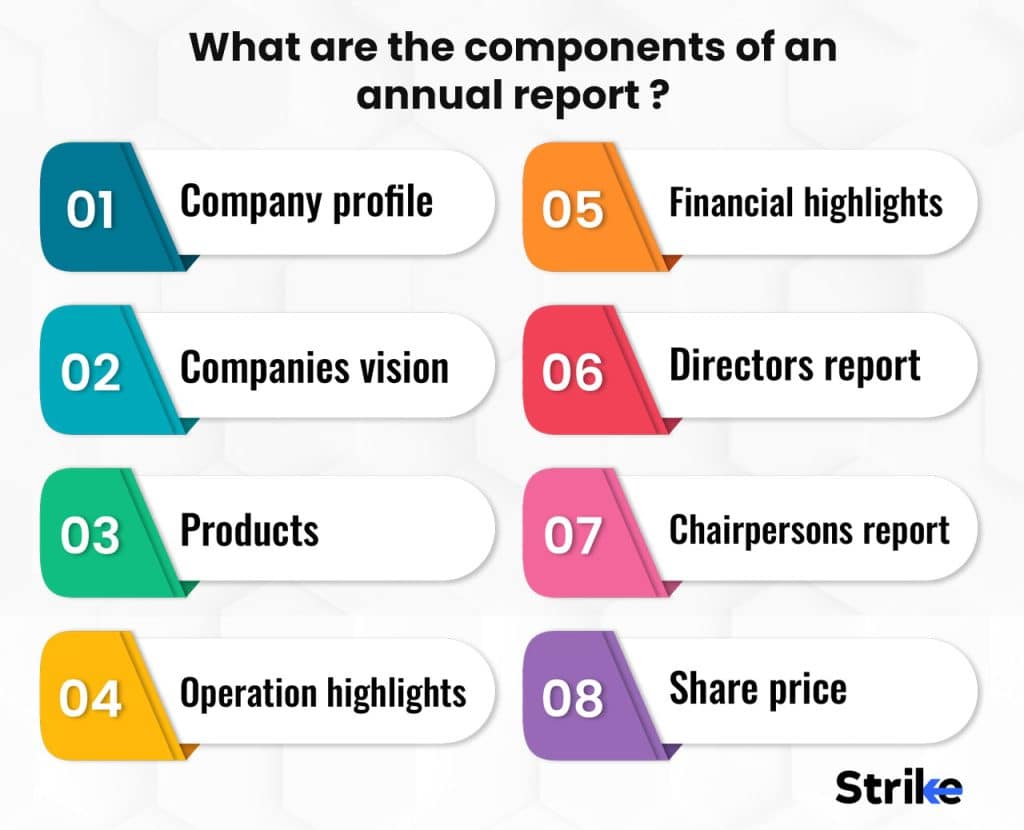
The most important sections for assessing management are:
- Chairman's / CEO's Message: A high-level overview of the year's performance, challenges, and future outlook. This is where you get a sense of the leader's tone and vision.
- Management Discussion & Analysis (MD&A): This is arguably the most critical section for an investor. Here, management provides a detailed commentary on the financial results, explaining the "why" behind the numbers. They discuss business segments, risks, opportunities, and strategy.
- Directors' Report & Corporate Governance Report: These sections provide details on the board of directors, committees (like Audit and Remuneration), executive compensation, and insider shareholdings.
The following video provides an excellent walkthrough of these key communication sections.
How to Read Annual Report of any Company [+Worksheet] | Learn & Understand Annual Report Analysis
Let's return to the video by Shankar Nath. He clearly breaks down the 'Management Communication' and 'MD&A' sections, which are central to our analysis.
Watch from 03:53 to 07:24. Pay close attention to: The contents of the Chairman's letter. What to look for in the Board of Directors' composition. The crucial role and contents of the Management Discussion & Analysis (MD&A).
As both the video and many experts emphasize, the MD&A is where you connect the dots. It's management's chance to explain how they are navigating the very industry trends (PESTEL factors) we discussed in the last lesson.

To reinforce the importance of these sections, please read the following excerpt.
3. How to Read the Annual Report of a Company
This article from Zerodha Varsity, a well-regarded Indian financial education platform, offers a clear and practical guide to reading an annual report. This section focuses on the parts where management's voice is clearest.
Read the sections titled 'Management Statement' and 'Management Discussion & Analysis'. Note the advice on judging management's realism and how the MD&A links macro-economic trends to the company's specific business.
A Framework for Evaluating Management
Now that you know where to look, the next question is how to interpret what you read. Simply reading management's commentary isn't enough; you must analyze it critically. A helpful framework is to evaluate management across three key pillars: Ethics, Competence, and Motivation.
Let's explore this framework by reading an excellent article from TIKR.com.
How to Evaluate a Company's Management in Investing
This article provides a superb framework for evaluating management. We'll start with the 'why' and then dive into the first pillar: Ethics and Integrity.
Read from the beginning of the article through the end of the 'Evaluating Ethics and Integrity' section. Focus on understanding why evaluating management is important and the specific signs of ethical (or unethical) leadership, such as transparency about mistakes.
As the article points out, transparency about mistakes is a key sign of integrity. In your field of TechOps, you know that a healthy team culture involves blameless post-mortems to learn from failures. The same principle applies here. Honest management teams discuss challenges openly.
Next, let's examine the pillars of competence and motivation.
How to Evaluate a Company's Management in Investing
Now, let's continue with the same article to understand how to assess a management team's skill and what drives them.
Read the sections 'Evaluating Management Competence' and 'Understanding Management Motivation'. Pay attention to how capital allocation and historical decisions reveal competence, and how a customer-centric focus can signal strong intrinsic motivation.
A competent manager's primary job is effective capital allocation—deciding whether to reinvest profits into the business, acquire other companies, or return cash to shareholders. This is analogous to a lead engineer deciding how to allocate a team's time and budget to different projects to maximize technical and business impact.
Finally, we need to understand the financial incentives that drive management's decisions.
How to Evaluate a Company's Management in Investing
The final part of our reading looks at the economic incentives and practical resources you can use for your analysis.
Read the remaining sections: 'Understanding Management’s Economic Incentives', 'Practical Tools and Resources for Evaluating Management', and the 'FAQ Section'. Focus on the importance of insider ownership, compensation structure, and the list of red flags.
Your Analytical Toolkit: Key Questions to Ask
By combining these frameworks, you can create a powerful checklist of questions to ask yourself as you read a company's annual report:
- Strategy & Vision: Does management have a clear, credible, and consistent strategy? Does it align with the industry trends you've identified?
- Transparency & Honesty (Ethics): Are they candid about both successes and failures? Or is the report filled with jargon and overly promotional language? Do they take responsibility for poor results?
- Capital Allocation (Competence): How do they plan to use the company's cash? Is their plan focused on creating long-term value?
- Execution (Competence): Do they have a track record of delivering on their promises? Read past annual reports to see if they did what they said they would do.
- Risk Awareness: Do they identify the key risks to the business realistically? Do they have credible plans to mitigate them?
- Alignment & Incentives (Motivation): How is the management team compensated? Is it tied to long-term performance (e.g., return on equity) or short-term metrics (e.g., quarterly revenue)? Do they own a significant amount of company stock?
This analytical process turns you from a passive reader into an active investigator.
Conclusion
Congratulations on completing the module on qualitative analysis! Today's lesson equipped you to look beyond the numbers and evaluate the people running the company.
Key Takeaways:
- The annual report, especially the Chairman's Message and Management Discussion & Analysis (MD&A), is your most direct source for understanding management's strategy and perspective.
- A robust framework for evaluating management rests on three pillars: Ethics (Are they honest?), Competence (Are they skilled?), and Motivation (Are their interests aligned with shareholders?).
- Key indicators of quality management include transparency about failures, a clear and logical capital allocation strategy, and compensation structures that reward long-term value creation.
- Reading an annual report is an active, critical process. You must constantly question the narrative and compare management's words to the company's actual performance and the broader industry context.
Preview of the Next Lesson:
Having built a strong foundation in qualitative analysis, we will now pivot back to the quantitative side, but with a more sophisticated lens. In our next module, "Principles of Stock Valuation," we will begin by tackling a foundational concept that underpins all investing: explaining the concept of intrinsic value versus market price. This will set the stage for learning how to calculate what a company is truly worth.