Hello! Welcome to the fifth lesson in our module on qualitative analysis.
Introduction
In our last lesson, we explored the concept of an "economic moat"—a company's durable competitive advantage. We learned how to identify the five sources of moats and, crucially, why we must constantly assess whether a moat is widening or narrowing. The key takeaway was that no moat is invincible; external forces can erode even the strongest defenses.
Today, we will focus on those external forces. Our goal is to analyze industry trends and their potential impact on a company's future performance. A rising tide lifts all boats, and even the most well-managed company will struggle in a declining industry. Conversely, a strong industry tailwind can propel an average company to new heights. Understanding these trends is essential for contextualizing a company's performance and gauging the true durability of its economic moat.
To structure our analysis, we will adopt a "top-down" approach, which is a powerful way for investors to survey the entire landscape before zooming in on a specific company.
The Top-Down Approach: From Macro to Micro
Investing analysis can generally be broken down into two main strategies: top-down and bottom-up.
- Bottom-up analysis focuses almost exclusively on a single company—its financials, management, and products—with less emphasis on the broader industry or economic conditions.
- Top-down analysis, which we will focus on today, works like a funnel. You start by analyzing the overall economy, then narrow your focus to the most promising industries or sectors, and finally select the best individual companies within those sectors.
This approach ensures you are fishing in the right ponds, aligning your investments with powerful, long-term trends.

To get a clearer understanding of this methodology, please watch the following video.
What is Top down and Bottom up approach while investing? (Animated) | Fundamental Analysis
This animated video from Trade Brains clearly explains the top-down and bottom-up approaches. We will focus on the top-down method.
Watch the video from the beginning to 02:09. Pay close attention to the sequence of analysis in the top-down approach: Economy -> Sector -> Stock. Notice the example used to illustrate the process.
As the video explains, the top-down approach helps you identify industries that are benefiting from tailwinds (positive trends) and avoid those facing headwinds (negative trends). Our focus for the rest of this lesson is on that crucial middle layer: Sector and Industry Analysis.
Cyclical vs. Defensive: How Industries Respond to the Economy
One of the most fundamental industry trends is its relationship with the economic cycle. Different sectors of the economy react in different ways to periods of expansion and recession. Broadly, we can group them into two main categories:
- Cyclical Sectors: These industries are highly sensitive to the business cycle. They thrive when the economy is strong and consumers and businesses are spending freely. During recessions, they tend to perform poorly. Examples include automakers, airlines, luxury goods, and financials.
- Defensive (or Non-Cyclical) Sectors: These industries provide goods and services that people need regardless of the economic climate. They tend to be more stable during recessions but may not grow as spectacularly during booms. Examples include utilities, consumer staples (food, beverages, household products), and healthcare.
Understanding where an industry falls on this spectrum helps you manage risk and set realistic expectations for a company's performance.
The following video provides an excellent overview of the 11 major stock market sectors and classifies them based on their economic sensitivity.
The 11 Market Sectors Explained
This video from Next Level Life explains the Global Industry Classification Standard (GICS) and categorizes the 11 sectors into cyclical, defensive, and sensitive groups.
Please watch the first 2 minutes and 3 seconds of the video (00:00 - 02:03). Focus on understanding the definitions of cyclical, defensive, and sensitive sectors and which industries typically fall into each category.
For your goal of investing in the Colombo Stock Exchange (CSE), think about major Sri Lankan industries. Tourism is a classic cyclical industry, highly dependent on global economic health and disposable income. In contrast, the food and beverage sector is largely defensive, as demand for basic necessities remains relatively stable.
Frameworks for Analyzing Industry Trends
Beyond economic sensitivity, we need structured ways to identify and analyze the specific trends shaping an industry's future. Two of the most effective frameworks are the Industry Life Cycle and PESTEL Analysis.
1. The Industry Life Cycle
Industries, much like living organisms, tend to follow a predictable life cycle. Identifying which stage an industry is in provides crucial context for its growth prospects, level of competition, and profitability.
How to Analyze Industries for Investment: A Comprehensive Guide
This article from Investing.com provides a great breakdown of the industry life cycle. Understanding these stages helps you align your investment strategy with an industry's maturity.
Read the section titled 'The Industry Life Cycle: Understanding Evolution and Opportunity.' Focus on the characteristics of each of the four stages: Pioneering/Birth, Expansion/Growth, Shake-out/Maturity, and Decline.
For example, the global electric vehicle industry is in the Expansion/Growth stage, characterized by rapid growth and intense competition. In contrast, the traditional print media industry is in the Decline stage due to technological disruption from the internet.
2. PESTEL Analysis
The PESTEL framework is a powerful tool for scanning the external environment and identifying the key drivers of change. It forces you to look beyond the company and its direct competitors to the macro forces at play.
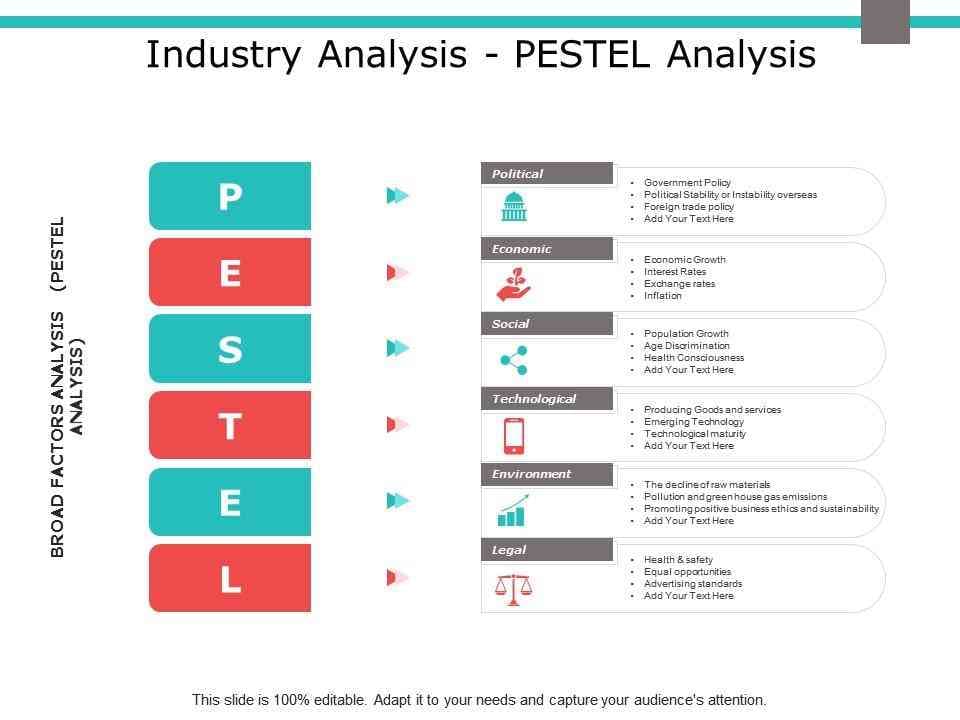
Let's explore what each of these factors entails.
How to Analyze Industries for Investment: A Comprehensive Guide
Let's return to the Investing.com article to learn about the PESTEL framework. This will give you a comprehensive checklist of external factors to consider.
Read the section titled 'Industry Trends and Drivers: Identifying the Winds of Change.' As you read about each of the six PESTEL factors, think about how they might apply to an industry you are familiar with.
Given your background in information technology, you have a front-row seat to the power of the Technological factor. You've seen how advancements in cloud computing (AWS, where you have expertise), AI, and automation can create entirely new business models while rendering others obsolete. Applying this same critical lens to the other five factors will make your industry analysis much more robust.
For instance, consider the Sri Lankan apparel industry.
- Political: Trade agreements with the EU or US.
- Economic: Exchange rate fluctuations (USD/LKR) impacting export competitiveness.
- Social: Growing consumer demand for ethically sourced and sustainable fashion ("fast fashion" backlash).
- Technological: Automation in textile manufacturing.
- Environmental: Regulations on water usage and chemical dyes.
- Legal: Labor laws and worker safety regulations.
A change in any of these factors could significantly impact the profitability and growth prospects of every company in that sector.
Conclusion
In today's lesson, we zoomed out from the individual company to the industry it operates in. You learned how to use a top-down approach to situate a company within the broader economic landscape and analyze the trends that will shape its future.
Key Takeaways:
- The top-down approach (Economy → Sector → Company) is a structured way to identify promising investment areas.
- Industries can be classified as cyclical or defensive based on their sensitivity to economic conditions.
- The Industry Life Cycle framework helps you understand an industry's maturity and future growth potential.
- PESTEL analysis provides a comprehensive checklist to identify the Political, Economic, Social, Technological, Environmental, and Legal trends affecting an industry.
- Analyzing these trends is not a one-time event but a continuous process. As the
Investing.comarticle notes, "constant vigilance" is required to adapt to market changes.
Preview of the Next Lesson:
Now that you have the tools to analyze an industry from the outside, how do you find out what company insiders are thinking? In our next lesson, we will learn to analyze the management discussion in an annual report to assess management quality and strategic decisions. This is where you'll see how a company's leadership team is interpreting and responding to the very industry trends we discussed today.