Hello! Welcome back to the course.
In our last lesson, we focused on using video and performance data to conduct effective post-training reviews. We established a framework for providing objective, evidence-based feedback. Now, we will explore how to use these same principles not just for looking back, but for moving forward.
This lesson addresses the learning outcome: Outline strategies for building player buy-in and confidence in set piece plans. A tactically brilliant set-piece plan is worthless if the players don't believe in it or lack the confidence to execute it under pressure. This lesson will bridge the gap between your analytical work and the human element of coaching, exploring how to get your players fully committed to your vision.
1. The Foundation of Buy-in: Credibility Through Preparation
Player buy-in doesn't come from motivational speeches alone. At the professional level, it is earned through competence. Players need to believe that your plans are based on sound analysis and give them the best chance of success. Your preparation is your most powerful tool for persuasion.
Let's explore this idea further.
Set-Piece Principles with Chris McLaughlin
The following article, 'Set-Piece Principles with Chris McLaughlin', discusses how a top-level analyst and coach approaches his work. It directly links the quality of a coach's preparation to their ability to get players and staff to buy into the plan.
Please read the first section of the article, which begins with 'One of the biggest takeaways for me...' and ends just before the image. Focus on the sentence: 'the level of buy-in from players and staff will ultimately depend on accuracy, reliability and consistency.'
As the article makes clear, buy-in is a direct result of the trust you build. When players know you've done your homework—merging data with video to understand an opponent's vulnerabilities—they are far more likely to commit to the plan you present.
This is where your skills from the previous lesson are crucial. You use data (like xG conceded from specific zones) and video (clips of an opponent's defensive errors) not just for feedback, but to justify your plan. You can tell your players: "We're using this routine because their left-sided center-back has been beaten at the back post in three of their last five games. Here's the proof."
This evidence-based approach is the bedrock of credibility. Once the plan is justified, it must be communicated with absolute clarity.
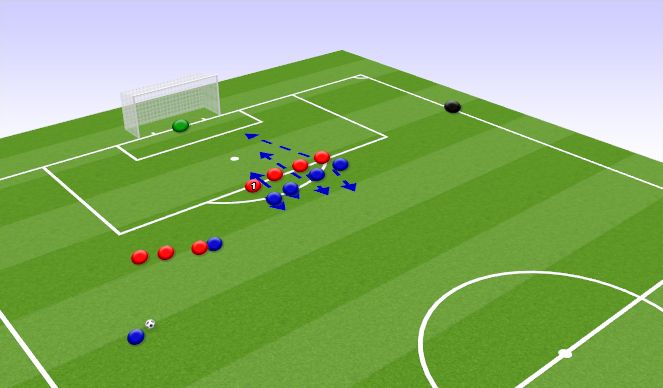
2. Engaging Players in the Process
Even with a well-justified and clearly communicated plan, you might face a common hurdle: some players find set-piece practice tedious. A key strategy for overcoming this is to foster a sense of ownership and purpose.
Set-Piece Principles with Chris McLaughlin
Let's return to the article on Chris McLaughlin's principles. This next section acknowledges the potential for player boredom and offers solutions.
Read the section beginning with 'Another takeaway from Chris' presentation...'. Pay attention to his focus on finding 'solutions' to change the players' mindset, such as through session design.
How can we apply this? Here are some practical strategies to engage players and create ownership:
- Make it Competitive: Frame your drills as a competition. For example, in an attacking vs. defending drill, keep score. The attacking team gets points for a shot on target or a goal; the defensive team gets points for a successful clearance. This adds intensity and focus.
- Explain the "Why": Continuously link the drill back to the opponent. "Remember, we're doing this because Chelsea leave this space open. This run will exploit that." This reminds players that the practice is not arbitrary but is targeted preparation for a specific challenge.
- Involve Senior Players: Solicit feedback from experienced players. "Does this timing feel right to you?" or "Where do you feel most comfortable starting your run from?" Giving key players a voice in the fine-tuning of a plan can turn them into advocates for it within the dressing room.
3. Building Confidence on the Training Pitch
Once players buy into the idea, you must build their confidence to execute it. Confidence is forged through successful repetition in a high-quality training environment.
The following video provides an excellent template for how a coach can build confidence during a live drill.
Ian Baraclough, Northern Ireland head coach • Set-pieces coaching course • CV Academy
Watch Northern Ireland's head coach, Ian Baraclough, as he leads a set-piece training session. Observe how he structures the practice and the specific language he uses to build player confidence.
Please watch the video from the beginning to 05:56. Pay attention to these three phases: Clear Instruction (00:08 - 01:16): Notice how he gives simple, clear roles to the players before the drill begins. Reinforcement (01:16 - 04:24): Listen to his constant feedback during the drill. He uses encouraging words like 'love that', 'great ball', and reinforces key principles like 'always stay alive' and attacking the first contact. This positive reinforcement is vital. Articulating the Philosophy (04:24 - 05:56): At the end, he explicitly states why they practice this way. He calls set pieces 'moves that happen during a game that you're in control of'. This framing is powerful—it empowers players by highlighting their agency in a chaotic game.
Baraclough's session demonstrates a clear model for building confidence:
- Start with Clarity: Everyone knows their job.
- Practice with Repetition: Players get multiple chances to execute their roles.
- Reinforce with Positivity: The coach constantly praises good deliveries, committed runs, and correct decisions.
- Empower with Philosophy: Players understand that this practice gives them control over key moments in a match.
4. Case Study: The Result of Buy-in and Confidence
When players fully buy into a set-piece system and have the confidence to execute it, the results can be formidable. Let's look at a case study of Arsenal under set-piece coach Nicolas Jover.
This analysis from 'The Goonerverse' breaks down how Arsenal uses specific routines to create chances. It's a fantastic example of what happens when a team has total confidence in its set-piece strategy.
Watch the following segments: The First Attempt (01:08 - 03:08): Observe the complex, coordinated movements. Players act as blockers and decoys to create space for a specific target. The chance is missed, but the underlying structure is clear. The Second Attempt & Goal (03:08 - 05:23): They run an almost identical routine, but with a slight tweak. The fact they score shows their unwavering confidence in the plan, even after an initial failure. The Ultimate Compliment (07:44 - 08:52): The narrator explains that Arsenal's routines are so well-mastered that even when opponents know what's coming, their power and precise execution are often too much to handle. This is the pinnacle of confidence.
This case study illustrates the end goal. The intricate movements and timing shown by Arsenal's players are impossible without every individual understanding and believing in their specific role. Their ability to execute a nearly identical play after missing a chance demonstrates a deep-seated confidence in the process, not just the outcome. This is the level of collective belief and execution you are aiming to build as a set-piece coach.
5. Maintaining Confidence on Matchday
All the work on the training ground culminates on matchday. Your communication and demeanor are crucial for ensuring that the confidence built during the week translates onto the pitch.
The England Football article, "How to help players adapt to game state, phases, and moments," offers some simple but effective strategies:
- Keep Briefings Simple: In pre-match and half-time talks, link your instructions back to what you've practiced. Use the same key words and simple triggers.
- Control Your Emotions: Players will look to you for guidance. By staying calm and supportive, even when a routine fails, you project confidence and help players stay focused rather than becoming frustrated.
- Use Positive Language: Even after a loss, focus on the process. A "win" can be defined by successfully executing a new routine, even if it didn't result in a goal this time. This reinforces belief in the plan for the next match.
Conclusion
Building player buy-in and confidence is not a secondary task; it is central to your success as a set-piece coach. It transforms your analytical work from theoretical plans into on-field actions.
Key Takeaways:
- Earn Credibility: Your buy-in starts with meticulous, evidence-based preparation. Show players why your plan will work.
- Communicate with Clarity: Use simple language and visual aids to ensure every player understands their role.
- Engage and Empower: Involve players in the process and make training sessions purposeful and competitive to foster ownership.
- Build Confidence Through Practice: Use clear instructions, positive reinforcement, and purposeful repetition to build mastery and self-belief.
- Maintain Composure: On matchday, your calm and consistent communication is key to maintaining the confidence you've built all week.
Preview of the Next Lesson:
In this module, we've focused on communicating with and managing our own players. We are now ready to move into the first stage of the match week cycle: opposition analysis. In the next lesson, Synthesise video and data to create a scouting report on an opponent's set piece tendencies, you will learn how to build the analytical foundation upon which all your game plans, and subsequent player buy-in, will be built.